
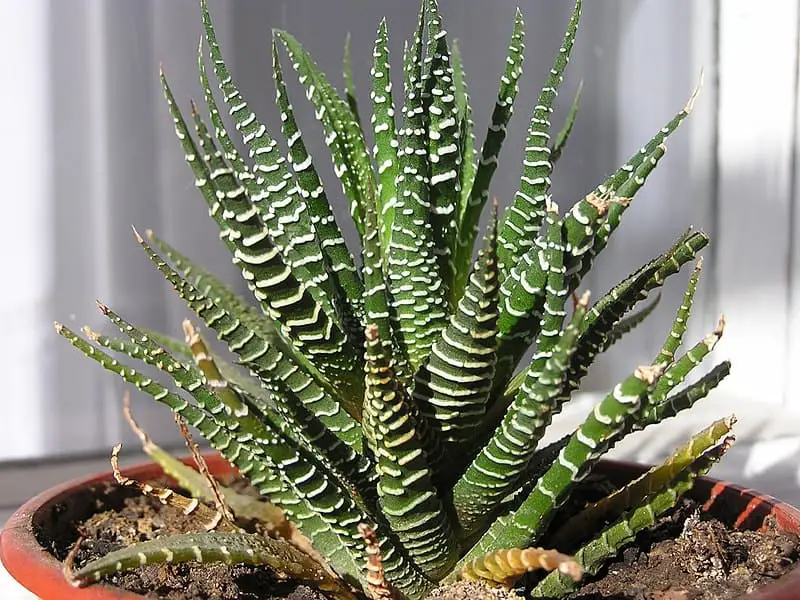
 Andrew Butko, CC BY-SA 3.0, via Wikimedia Commons
If you’ve been hunting for a small, stylish succulent that won’t give you stress, the Haworthia Zebra Plant is a perfect pick.
Its bold stripes and compact size make it an eye-catching accent for your desk, shelf, or windowsill. Plus it’s one of the easiest succulents you’ll ever grow.
So, if you are looking to add an easy succulent to your home read on and try the Haworthia Zebra plant.
You’ll discover why the Haworthia Zebra Plant is a must-have succulent—stylish, compact, and easy to grow indoors for any level of gardener. Here’s how:
- Haworthia Zebra Plant Care indoors entails a well-draining succulent potting mix and a pot with drainage holes.
- Place it in bright, indirect light.
- Watering should be done only when the soil is dry to the touch, roughly every other week.
- Monthly fertilization with a half-strength succulent fertilizer during the growing season is sufficient for these low-maintenance succulents.
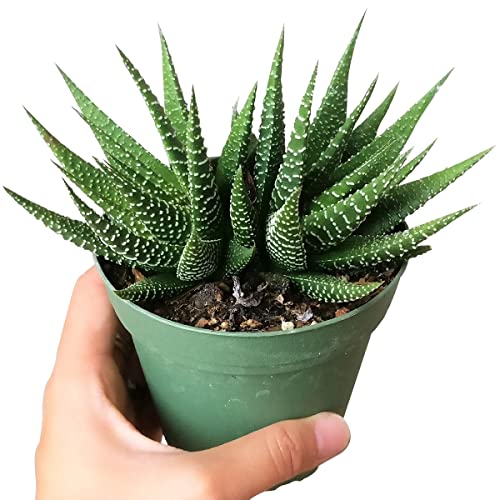
Zebra plant succulent care is easy and it is often recommended as the easiest succulent to grow for beginners.
This is not to be confused with the Zebra plant which is Calathea zebrina or with Aphelandra squarrosa, also called the Zebra plant.
I know this can be confusing when plants are called by their common names but the Haworthia Zebra plant is a succulent, not a leafy plant.
What Is A Zebra Plant Succulent?

This plant has recently been renamed and it is related to aloes. It is not a large plant growing only 6 inches high and wide making it perfect for small spaces.
Haworthiopsis attenuata, formerly Haworthia attenuata, commonly known as zebra Haworthia, is a small species of succulent plant from the Eastern Cape Province, South Africa. As an ornamental, it is one of the most commonly cultivated of the Haworthiopsis species. https://en.wikipedia.org/wiki/Haworthiopsis_attenuata
Zebra Plant Succulent Care

If you are looking for an easy-to-care-for succulent, the zebra plant is a great option.
These little plants are perfect for beginners and are easy to grow indoors.
In this blog post, we will discuss how to grow Haworthia, also known as the zebra plant succulent.
We will go over everything from planting to watering to fertilizing. So if you are ready to learn how to care for your zebra plant succulent, keep reading!
Zebra Plant Succulent Care In A Nutshell

Haworthia, also known as zebra plant succulent, is a great plant for beginners. These little plants are perfect for growing indoors and require very little care.
When it comes to planting Haworthia, there are a few things to keep in mind.
• First, make sure you choose a pot that has drainage holes. This is important because Haworthia plants do not like to sit in wet soil.
• Secondly, use a well-draining succulent potting mix or make your own by mixing together equal parts sand, peat moss, and perlite.
• Once you have your pot and potting mix ready, it is time to plant your Haworthia. Simply place the plant in the pot and lightly cover it with soil.
• Water your plant thoroughly and then place it in bright, indirect light.
• Watering is one of the most important aspects of Haworthia care. These plants do not like to sit in wet soil, so make sure you only water when the soil is dry to the touch. A good rule of thumb is to water your Haworthia every other week.
• If you live in a hot, dry climate, you may need to water more often.
• When it comes to fertilizing, Haworthia plants do not need much. In fact, too much fertilizer can actually burn the roots of these plants.
• Once a month during the growing season, give your plant a weak succulent fertilizer solution.
Haworthia Zebra Plant Care Reference Guide
| Characteristic | Details |
|---|---|
| Common Name | Haworthia Zebra Plant |
| Botanical Name | Haworthiopsis attenuata (formerly Haworthia attenuata) |
| Native Habitat | Eastern Cape Province, South Africa |
| Plant Type | Succulent, evergreen perennial |
| Growth Pattern | Rosette-forming with spiky striped leaves |
| Mature Size | Up to 6 inches tall and wide |
| Watering | Allow soil to fully dry before watering; typically every 2 weeks |
| Light/Sun Exposure | Bright, indirect light; tolerates some morning sun |
| Soil Type | Well-draining succulent or cactus mix (coco coir + perlite works well) |
| Soil pH | Neutral to slightly acidic (6.0–7.0) |
| Temperature | 60–80°F indoors; not frost-tolerant |
| Humidity | Average indoor humidity; prefers dry air |
| Bloom Time & Flower Color | Occasional small white flowers on tall stalks in summer |
| Potential Problems | Root rot from overwatering; leaf burn from direct sun |
| Repotting | Every 2–3 years or when crowded; propagate offsets easily |
| Hardiness Zones (USDA) | 9–11 (commonly grown indoors) |
Haworthia Varieties

Now that you know how to grow Haworthia, it is time to learn about the different types of these plants. There are many different species of Haworthia, but some of the most popular include:
Haworthia Attenuata: This type of Haworthia is native to South Africa and has long pointy leaves. The leaves of this plant are often striped with white or light green bands.
Haworthia Fasciata: is another species of succulent plant from the Eastern Cape Province, South Africa. This species is rare and most plants that are labeled as H. fasciata are actually Haworthia attenuata.
Haworthia Cooperi: This type of Haworthia is native to the Eastern Cape Province of South Africa. It grows in a rosette and has short green leaves that have darker lines through them.
Haworthia Retusa: This type of Haworthia is also called star cactus and has star-shaped rosettes. It is not a cactus but a succulent. The leaves of this plant are green often covered in white streaks.
No matter what type of Haworthia you choose, these plants are easy to care for and make a great addition to any succulent collection.
How To Grow Haworthia – The Details

Haworthia Light Requirements
Haworthia prefers bright indirect light. In the wild, it is often found in partial shade. Direct sunlight can cause sunburn.
They can be kept in an east-facing window because they can tolerate some morning sun.
Haworthia Soil Mix
These plants are often grown in a succulent mix but you can also amend a regular potting mix with vermiculite or pumice.
They do not like to sit in wet soil so use a mix that is fast draining. A mix of 60/40 coco coir to perlite will work very well for them.
Watering Haworthia Zebra Plant
These plants are used to growing in a dry environment. They should be watered deeply when you do water them.
Let the pot go completely dry before watering again. Overwatering can lead to root rot.
I think these plants should not be on a watering schedule. They should be watered when they are dry.
This can vary depending on your soil mix and the season and temperature inside your home.
Haworthia Fertilizer
Your plants do not need a lot of fertilizer. Fertilizing once a month is plenty. Use a half-strength fertilizer mix and water it in.
You don’t need to fertilize your Zebra plant at all during the winter months.
You can use a fertilizer made for cactus and succulents but any well-balanced fertilizer should work just fine.
Don’t over-fertilize. Too much fertilizer can burn the roots or even kill your plant. Less is more.
Zebra Plant Succulent Propagation
The Zebra plant is very easy to propagate. Your plant will grow offshoots from your mother plant.
All you need to do is make sure they have a bit of root attached when you separate them from the mother plant and repot them. Easy Peasy!
Haworthia Zebra Plant FAQs

Embarking on the journey of caring for a Haworthia Zebra Plant introduces a series of inquiries.
From understanding its watering needs to its propagation, it’s essential to equip oneself with the right knowledge to ensure the healthy growth of this succulent.
Let’s address some common questions to ease your gardening endeavor with the Zebra Plant:
Q. What kind of light does a Haworthia Zebra Plant need?
A. Haworthia Zebra Plant thrives in bright, indirect light. While it can tolerate some morning sun, direct sunlight, especially in the hot afternoons, can cause sunburn to the leaves.
Q. How often should I water my Haworthia Zebra Plant?
A. Watering should be done when the soil is completely dry, which is typically every other week.
The frequency might increase during hotter, drier periods and decrease in cooler, humid conditions.
Q. What type of fertilizer is best for a Haworthia Zebra Plant?
A. A balanced or succulent-specific fertilizer diluted to half-strength, applied monthly during the growing season, is ideal. It’s advisable to withhold fertilizer during the winter months.
Q. How can I propagate my Haworthia Zebra Plant?
A. Propagation is straightforward. Simply separate the offshoots growing from the mother plant, ensuring they have some roots attached, and repot them into a well-draining succulent mix.
Zebra Plant Succulent Care Final Thoughts
 Haworthia Zebra Succulent – 4″ from California Tropicals
The above steps are everything you need to know about how to grow and care for Haworthia succulents. These plants are easy to care for and make a great addition to any succulent collection
Now that you know how to grow and care for Haworthia succulents, it is time to get out there and start growing your own!
Read more: Zebra Plant Care Indoors
🌵 Indoor Succulents Growing Guides
From quirky “living stones” to elegant echeverias, discover care guides, benefits, and unique succulents perfect for brightening your indoor space.
-
- 🍬 Jelly Beans Succulent Care
- 💧 How to Care for Aloe Plants Indoors
- 🎄 Zygocactus (Christmas Cactus) Care Indoors
- 🐾 Bear Paw Succulent Care
- 🌱 Dwarf Jade Plant Care
- 🪨 Lithops (Living Stones) Plant Care
- 🌼 Echeveria Care Indoors
- 🥒 Pickle Plant Succulent Care
- 🕯️ Candlestick Plant (Succulent) Care
- 🐠 Fishbone Cactus Care
- 🌿 Burro’s Tail Plant Care
- 🌙 Moonstone Succulent Care
- 🦴 Dancing Bones Cactus Care
- ✨ Echeveria Elegans Benefits
- 🌹 Crown of Thorns Cactus Care
- ⭐ Echeveria Orion Care
- See all articles in our Indoor Succulents category
 Steve S. is the creator of