
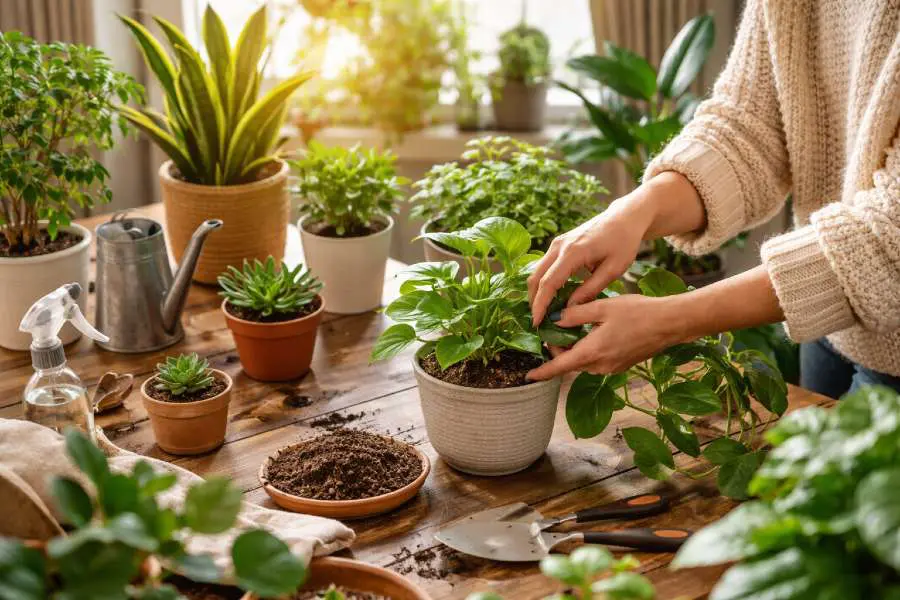
If you’ve ever wondered, “How much time does indoor gardening take?” you’re not being lazy — you’re being realistic. A lot of beginner plant owners like the idea of greenery, but they don’t want another daily responsibility that turns into guilt the moment life gets busy.
Here’s the good news: indoor gardening usually takes less time than people expect, and it becomes easier after the first couple of weeks. Most of the time is front-loaded (setup, learning what “normal” looks like, and getting your plants into a steady rhythm). After that, it’s mostly light maintenance.
In this guide — built around the real-life question behind how-much-time-does-indoor-gardening-actually-take — we’ll break down the actual time commitment by day, week, and month, and show you how to keep the routine calm and simple.
What You’ll Learn
- ⏱️ A realistic time breakdown for beginners (daily, weekly, monthly)
- 🪴 The tasks that actually matter vs. the tasks people overdo
- ✅ A simple weekly routine that prevents “plant emergencies”
- ⚠️ The mistakes that make indoor gardening take way longer than it should
- 🌿 How to choose plants that match your schedule (not your ideal fantasy schedule)
⏳ The Honest Time Commitment for Indoor Gardening
Most beginner indoor gardeners (houseplant-first) land in a pretty steady rhythm that looks like this:
- Daily: 30 seconds to 2 minutes of visual checking
- Weekly: 10–25 minutes for soil checks + watering
- Monthly: 20–45 minutes for light cleanup, rotation, and small fixes
If you’re thinking, “Wait… that’s it?” — yeah, for most people, that’s really it. Indoor gardening often becomes a small habit, not a time-consuming hobby.
The reason it looks bigger from the outside is because you mostly see the dramatic moments online: repotting days, plant hauls, pest battles, full grow-light setups, and complicated routines. But the steady, normal weeks? Those are boring… and that’s exactly what you want.
🧠 Why Indoor Gardening Feels Like It Takes More Time at First
In the beginning, the “time cost” isn’t just minutes — it’s mental bandwidth. When you’re new, you don’t know what’s normal, so you end up checking things more often than you need to.
Examples of common beginner thoughts:
- “This leaf is lighter… is it dying?”
- “The soil still looks wet — should I water anyway?”
- “Should I move it closer to the window… or farther?”
- “Do I need fertilizer? Do I need a special lamp? Do I need a different pot?”
That uncertainty creates anxiety, and anxiety creates extra “checking time.” The fix isn’t obsessing harder. The fix is having a simple routine and a few rules that keep you from spiraling.
✅ A Beginner Rule That Saves Time Immediately
Rule: Only do plant tasks on purpose.
If you catch yourself doing random “just in case” actions (extra watering, moving plants daily, pruning constantly), indoor gardening starts eating your time and creating problems that didn’t exist.
Instead, treat plant care like a quick weekly check-in. You’re not chasing perfection. You’re keeping things stable.
🪴 The Setup Week: Where Most Time Happens
Let’s be honest: the first week can take a little longer. That’s normal. It’s the week you:
- Choose plant locations (based on light)
- Make sure pots have drainage
- Do an initial watering correctly (not too often, not too little)
- Learn what your plants look like when they’re “fine”
This might take 30–90 minutes spread across a week if you’re starting from zero. After that, your time drops fast.
📅 The Real Indoor Gardening Schedule (Daily / Weekly / Monthly)
🌞 Daily: a quick “walk-by check” (not a chore)
Daily indoor gardening is mostly noticing your plants as you naturally pass through your home. You’re not doing tasks — you’re just observing.
Here’s what you’re looking for:
- Leaves look firm and normal
- Plant isn’t suddenly drooping hard
- No obvious pest damage (rare, but good to catch early)
- No standing water in saucers
Time: 30 seconds to 2 minutes.
And here’s what you are not doing daily:
- Watering everything
- Misting on a schedule
- Moving plants from room to room
- “Fixing” normal leaf changes
🚿 Weekly: the soil-check routine that keeps everything easy
Weekly care is the sweet spot for beginners because it prevents problems without demanding constant attention.
A realistic weekly routine looks like this:
- Check the soil first. Touch the top 1 inch (or 2 inches for larger pots).
- If damp: skip watering.
- If dry: water slowly until water drains out the bottom.
- Empty saucers if water collects (most beginner plants hate “wet feet”).
Time: about 10–25 minutes for a small collection (5–15 plants).
The biggest time-saver here is simple: checking before watering. Watering on a strict schedule causes more issues than it prevents, and those issues are what steal your weekends.
🧽 Monthly: maintenance that’s helpful but not stressful
Monthly tasks are mostly small, optional improvements — the kind that makes plants look better and grow more evenly.
- Rotate plants a quarter turn for even growth
- Remove dead or fully yellow leaves
- Wipe dust off broad leaves (better light absorption)
- Adjust distance to windows if seasons shift light
Time: 20–45 minutes depending on how many plants you have.
🧩 What Changes Your Time the Most (And How to Control It)
1) Plant choice: calm plants vs. constant monitoring
Some plants forgive mistakes and keep growing. Others punish small inconsistencies and require faster reactions. If your goal is low time, start with forgiving plants.
Beginner-friendly, time-friendly types often include:
- ✅ Pothos and philodendrons (easy, adaptable)
- ✅ Snake plants (low water, low drama)
- ✅ ZZ plants (slow growth, very forgiving)
- ✅ Spider plants (hardy and flexible)
If you start with plants that demand constant moisture, humidity, or perfect light, you’re not failing — you’re just picking a harder schedule than you intended.
2) Drainage: the hidden time bomb
Poor drainage quietly creates extra work. When water can’t drain, soil stays wet too long, roots struggle, and then you’re troubleshooting yellow leaves, fungus gnats, and slow decline.
Time-saving baseline: use pots with drainage holes whenever possible, and avoid letting plants sit in water.
3) The “plant count cliff”
Time scales with how many plants you have, but it doesn’t scale smoothly. There’s a cliff where your routine stops feeling casual.
- 1–7 plants: easy to manage, perfect for beginners
- 8–15 plants: still manageable, but you’ll want a weekly routine
- 16–30+ plants: now it’s a real hobby (and needs structure)
If you want indoor gardening to stay a small habit, keep your collection small until the routine feels effortless.
✅ A Beginner Weekly Routine You Can Copy
If you want something simple you can stick to, use this two-pass method:
- Pass 1 (5–10 minutes): soil checks only, no watering yet
- Pass 2 (5–15 minutes): water only what actually needs it
This routine keeps you from “watering everything because you already grabbed the watering can,” which is one of the most common beginner habits that leads to extra work later.
Next: once houseplants feel easy, you can expand into beginner-friendly food options indoors — and a great low-time step is microgreens, because they grow fast and don’t require a long-term commitment.
⚠️ The Time Traps That Make Indoor Gardening Feel Hard
1) Watering on a schedule instead of checking soil
This is the #1 trap. Schedules feel responsible, but plants don’t drink based on calendars. When you water too often, you create problems that take far more time to fix than a simple soil check.
2) Overcorrecting every small change
A plant losing an older leaf sometimes is normal. A slightly lighter leaf can be normal. When beginners treat every change like an emergency, indoor gardening becomes exhausting. Small adjustments beat big “rescue missions.”
3) Starting with high-maintenance plants (accidentally)
Some plants are gorgeous but demanding. If you start with a plant that needs high humidity, constant moisture, or very specific light, your time commitment rises quickly — not because you’re doing something wrong, but because the plant needs more monitoring.
4) Too many plants too fast
This is how people end up overwhelmed. A small collection teaches you patterns. A large collection teaches you stress. Build slowly and let your routine stay easy.
5) Turning plant care into random daily tasks
The best time-saving mindset is “weekly routine + daily glance.” If you’re constantly doing little tasks every day, it starts to feel like maintenance work instead of a relaxing hobby.
🌿 Conclusion: Indoor Gardening Is Usually a Small Weekly Habit
So, how much time does indoor gardening actually take? For most beginners, it’s a few minutes of noticing plants during the week, plus one simple weekly check-in for watering. Once your plants are stable, indoor gardening becomes predictable and low-stress.
If you want it to stay easy, focus on three things: choose forgiving plants, check soil before watering, and keep your collection small until the routine feels natural. That’s the formula for a calm, beginner-friendly indoor garden that doesn’t steal your time.
Explore More on Indoor Vegetable Grower
❓ How Much Time Does Indoor Gardening Take FAQs
How much time does indoor gardening actually take per week for beginners?
Most beginners spend about 10–25 minutes per week once their plants are established, plus quick daily visual checks that take under two minutes.
Do indoor plants need daily watering?
No. Most indoor plants do not need daily watering. A quick daily glance is helpful, but watering should be based on soil dryness, not a calendar.
What makes indoor gardening take more time than it should?
The biggest time traps are watering on a schedule, starting with high-maintenance plants, and growing your collection too fast before your routine is set.
Is indoor gardening realistic if I work long hours?
Yes. If you choose forgiving plants and use a simple weekly routine, indoor gardening can fit into a busy schedule without requiring daily hands-on work.
Is how-much-time-does-indoor-gardening-actually-take a good beginner question to start with?
Yes. Understanding the time commitment helps beginners avoid overcomplicating plant care, choose the right plants, and build a routine that’s easy to maintain.
📚 Beginner Indoor Gardening References
If you’d like to learn more about indoor gardening basics from university and educational sources, the following references offer reliable, beginner-friendly information on houseplants, light, and indoor plant care.
🌿 Houseplant Care & Selection
- University of Maryland Extension
Selection and Care of Indoor Plants
- University of Wisconsin–Madison Extension
Houseplant Care Basics
- University of Illinois Extension
Houseplants: Care and Growing Information
☀️ Light, Environment & Indoor Conditions
- Iowa State University Extension
How to Care for Houseplants
- University of California Agriculture & Natural Resources
Caring for Indoor Houseplants
🧠 Additional Beginner Learning
- Cornell Cooperative Extension
Houseplants and Indoor Growing Resources
- University of Missouri Extension
Caring for Houseplants
These references provide general guidance that supports the beginner concepts covered in this guide. Indoor gardening success still depends on your home’s light, space, and routine — so use these as learning tools, not strict rules.



 Steve S. is the creator of