
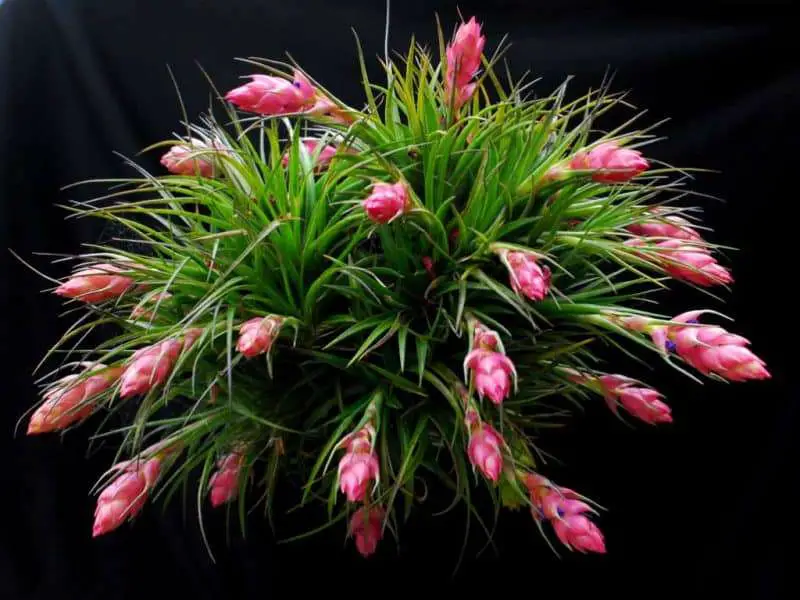
Welcome to your go-to guide on how to care for air plants indoors! These soil-free wonders are perfect for busy plant lovers and apartment gardeners alike.
With just the right mix of light, moisture, and airflow, you can turn any shelf, glass globe, or terrarium into a thriving mini-jungle of Tillandsia.
Whether you’re new to Tillandsia or just need a refresher, we’ll show you how to keep these soil-free wonders thriving with the right light, water, and humidity. Let’s make your indoor garden effortlessly stunning!
How To Care For Air Plants Indoors
- Caring for air plants indoors involves placing them in bright indirect light.
- Soak them in water weekly for about 20 minutes.
- Use a diluted liquid fertilizer every two weeks.
- Avoid potting them in soil; instead, display them in open containers or hang up to ensure proper airflow.
- Maintain a comfortable temperature range of 68-82°F and humidity levels between 40-60% for optimal growth.
What Are Air Plants?
Air plants, also known as Tillandsias, are some of the most fascinating plants in the world.

They don’t require any soil to grow and can be kept alive with just a little water and sunlight.  Air plants are perfect for people who don’t have a lot of time to care for plants, or for those who live in an apartment with no outdoor space.
In this blog post, we will discuss how to care for air plants indoors.
Tillandsia is a genus of around 650 species of evergreen, perennial flowering plants in the family Bromeliaceae, native to the forests, mountains and deserts of northern Mexico and south-eastern United States, Mesoamerica and the Caribbean to mid Argentina. Their leaves, more or less silvery in color, are covered with specialized cells (trichomes) capable of rapidly absorbing water that gathers on them. https://en.wikipedia.org/wiki/Tillandsia
Tillandsia has over 650 varieties but the two you are most likely to find are Tillandsia Ionantha and Tillandsia Xerographica.
Tillandsia ionantha are small plants a couple of inches tall with thin spiky leaves and bright-colored flowers.
While Tillandsia Xerographica has wider silvery leaves that curl downward in a ball shape. It can actually grow up to 3 feet.
We will cover everything from watering to light requirements to fertilizing.
So if you want to learn how to keep your air plants healthy and happy, keep reading!
How To Care For Air Plants Indoors
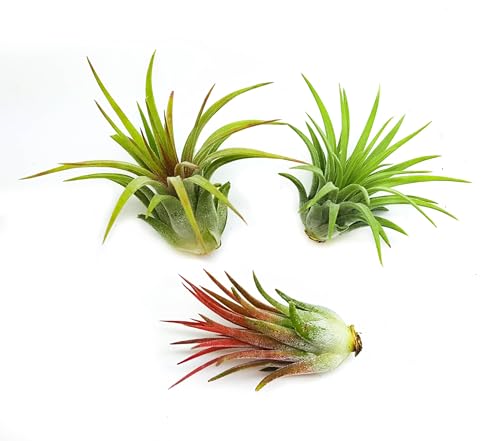
 One of the most important things to remember when caring for air plants is that they need light.
However, direct sunlight can be harmful to air plants, so it’s important to find a spot in your home that gets bright indirect light.
Tillandsia Plant Care Reference Guide
| Characteristic | Details |
|---|---|
| Common Name | Air Plant |
| Botanical Name | Tillandsia spp. |
| Native Habitat | Mexico, Central & South America, Southern U.S. |
| Plant Type | Epiphytic perennial |
| Growth Pattern | Clumping rosettes; forms offsets (“pups”) |
| Mature Size | 2″–36″ depending on species |
| Watering | Soak weekly for 20 mins; mist in between if dry |
| Light/Sun Exposure | Bright, indirect light |
| Soil Type | None (do not plant in soil) |
| Soil pH | Not applicable |
| Temperature | 68–82°F ideal; never below 50°F |
| Humidity | 40–60% preferred |
| Bloom Time & Flower Color | Varies by species; red, purple, pink, yellow |
| Potential Problems | Rot from poor airflow or overwatering |
| Repotting | Not needed; detach and display pups |
| Hardiness Zones (USDA) | 9–11 (typically grown indoors) |
How To Water Tillandsia Air Plants

Another important thing to remember is that air plants need to be watered regularly.
The best way to water air plants is to soak them in a bowl of water for about 20 minutes, then allow them to dry out completely before putting them back in their pot or holder.
You will want to do this weekly
If your house is dry you can also mist your plants to give them some added humidity.
Air plants are used to getting rainwater and tap water can have chemicals like chlorine or chloramines in it.
Most city water now contains chloramines and it will not dissipate by letting the water stand overnight the way chlorine does.
If you don’t have rainwater putting an inexpensive water filter on your tap should do the trick.
Fertilizing Air Plants
Fertilizing air plants is also important, but you should only fertilize them every two weeks or so.
Use a diluted liquid fertilizer and add it to the water you soak them in.
Be sure to follow the directions on the fertilizer label, as too much fertilizer can harm air plants.
How To Pot Air Plants

Air plants are true epiphytes. They grow on trees and not in soil. So do not put them in any kind of soil.
There are many decorative ways to display Tillandsia plants. You can keep them in a bowl or even hang them up.
Putting them in glass balls is very popular but it’s a bad idea because it cuts off airflow and we already know air plants eat air.
Since you are going to be soaking them you want something you can easily take your plants out of.
If you want to soak them pot and all make sure you can drain all the water out afterward. Otherwise, they may rot.
Air Plant Temperature And Humidity
Air plants prefer temperatures between 68-82 degrees Fahrenheit. If you are comfortable chances are your air plants are too.
They can tolerate brief periods of colder or hotter temperatures, but prolonged exposure to extreme temperatures will damage the plant.
Don’t let temperatures drop below 50° because these are tropical plants after all.
Air plants prefer humidity levels between 40-60%.
Propagating Tillandsia
Propagating tillandsia is a great way to create new plants without having to purchase them.
Your mother plant will die after flowering so you will want to remove the pups to keep growing your air plant.
Simply remove offsets or pups from the mother plant and replant them in their own pot or container filled with a well-draining growing media.
Once replanted, keep the offsets in a bright, indirect light location and water regularly. With a little bit of care, your new air plants will thrive!
Tillandsias FAQs
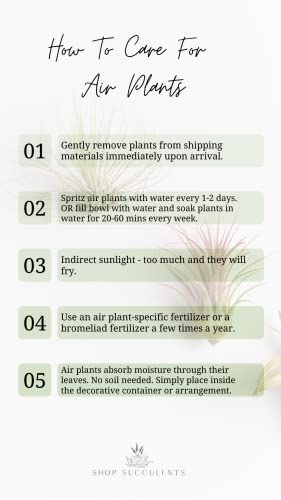
Embarking on the journey of nurturing air plants (Tillandsias) can be both intriguing and enlightening given their unique nature of growth without soil.
While they require minimal care, certain questions might arise to ensure they thrive well indoors.
Here are some frequently asked questions and their thorough responses to aid you in caring for your air plants:
Q. How often should I water my air plants?
A. Air plants should be soaked in water for about 20 minutes weekly. If your home is dry, a regular misting between soakings will help keep them hydrated.
Q. What type of water is best for air plants?
A. Rainwater is ideal, but if unavailable, filtered tap water is a good alternative to avoid harmful chemicals like chlorine or chloramines that are present in regular tap water.
Q. How should I fertilize my air plants?
A. Fertilize your air plants every two weeks using a diluted liquid fertilizer mixed with the water you soak them in. Follow the instructions on the fertilizer label to prevent over-fertilizing.
Q. How do I propagate air plants?
A. Propagate air plants by removing offsets or pups from the mother plant post flowering, and replanting them in their own containers. Place them in bright, indirect light and maintain regular watering to help them thrive.
How To Care For Air Plants Indoors Final Thoughts

Now that you know how to care for air plants indoors, all you need to do is put these tips into action! With a little bit of care, your air plants will thrive and you can enjoy their beauty for years to come. Thanks for reading!
Want to grow bold, beautiful bromeliads? These easy-care guides will help you master bromeliads and air plants indoors.
🌺 Bromeliads Care Guides
- 🌿 How to Care for Bromeliads (Pillar Guide)
- 🪴 Growing Bromeliads in Pots
- 🌞 Bromeliad Care Indoors
- 🚿 Air Plants for Bathrooms
- ☀️ Do Air Plants Need Sun?
- 💧 How Long to Soak Air Plants
- 🌬️ How to Take Care of Air Plants
- 🏡 How to Care for Air Plants Indoors
- 🌸 Do Air Plants Bloom?
- 🌀 Tillandsia Caput Medusae Care
- 🌵 Air Plants vs Succulents
- 🌱 Are Bromeliads Air Plants?
- See all articles in our Bromeliads Care category
 Steve S. is the creator of