

Looking to add charm and color to your plant collection? With Moonstone succulent care, you’ll enjoy a resilient, low-maintenance plant that looks like a living gemstone. 🌱✨
 Succulents Box Moonstones Pachyphytum (2 inch) Rare Healthy Live Succulent
Moonstone succulents are a beautiful addition to any garden or home. Here’s some quick tips on how to grow them:
Moonstone Succulent Care Tips:
- Moonstone succulents, scientific name Pachyphytum oviferum, thrive with bright, indirect sunlight, well-draining soil, and minimal watering.
- These drought-tolerant plants prefer watering only when the soil is completely dry.
- For optimal growth, use a cactus or succulent potting mix and provide lukewarm water to prevent shock.
- Fertilize sparingly with a diluted succulent fertilizer every other month.
- Propagation is easily done through seeds, offsets, or leaf cuttings.
They are easy to care for, and with the right information, you can grow your own Moonstone succulents at home!
In this blog post, we will discuss everything you need to know about Moonstone succulent care.
See more Moonstone Succulents on Amazon
What Are Moonstone Succulents Or Pachyphytum Oviferum
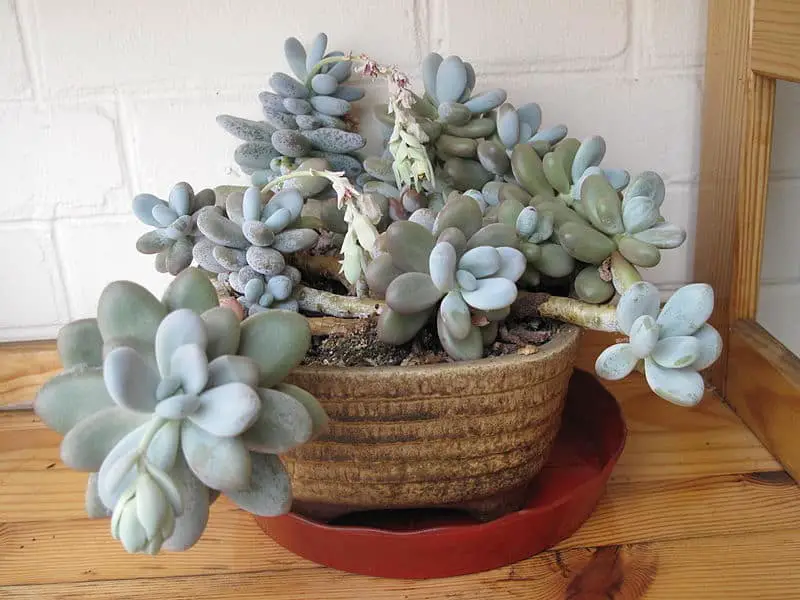
Moonstone succulents are a type of stonecrop plant that is native to Mexico.
The scientific name for Moonstone succulents is Pachyphytum oviferum.
They are a part of the Crassulaceae family, which includes other popular succulent plants such as Sedum and Echeveria.
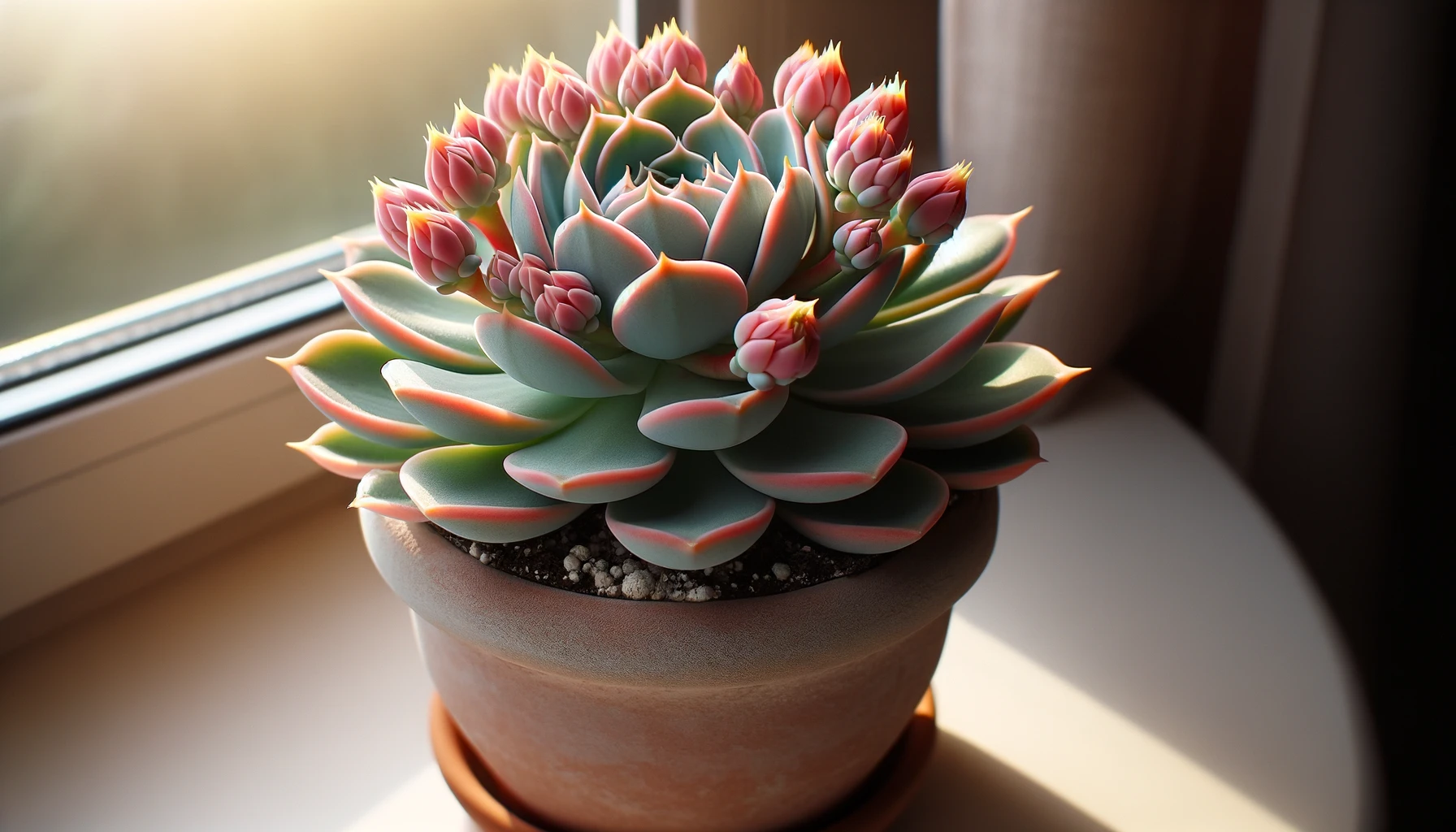
Moonstone succulents are characterized by their fleshy, blue-green or pink leaves that grow in rosettes.
The leaves of Moonstone succulents are often covered in a powdery white substance, which is why they are also known as “powdered sunstones.”
Moonstone succulents can grow to be 4 inches tall and up to 12 inches wide.
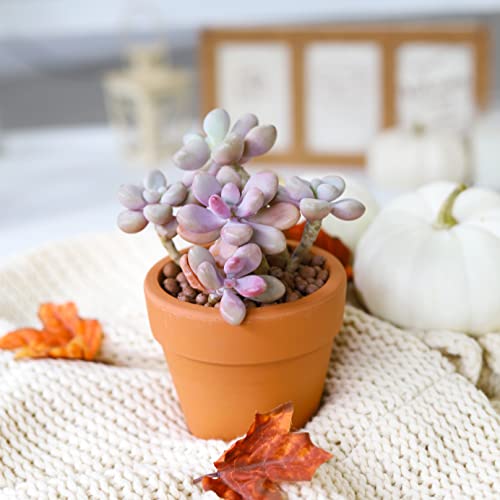
Moonstone succulents are a popular choice for gardens and homes because they are low-maintenance plants. They are also inexpensive.
They are tolerant of neglect and can survive in a variety of conditions. Moonstone succulents are also known for their ability to purify the air.
Moonstone Succulent Care
If you are looking for a plant that is both beautiful and easy to care for, Moonstone succulents are a great option!
We will cover topics such as watering, light requirements, and soil preferences. By following these simple tips, you can ensure that your Moonstone succulents thrive!
Watering Moonstone Succulents
Watering your Moonstone succulents is an important part of Moonstone succulent care.
But because Moonstone succulents are drought-tolerant plants, they do not require a lot of water.
So you are much better off underwatering them rather than overwatering them.
They should not be watered on a schedule instead it is best to only water your Moonstone succulents when the soil is completely dry.
If the soil is too wet, it can cause the roots of your Moonstone succulents to rot.
When watering Moonstone succulents, be sure to use lukewarm water. Cold water can shock the plants and cause them to lose their leaves.
To avoid overwatering your Moonstone succulents, it is best to use a well-draining potting mix.
You can also add some perlite or sand to the potting mix to improve drainage.
Moonstone Succulent Plant Care Reference Guide
| Characteristic | Details |
|---|---|
| Common Name | Moonstone Succulent |
| Botanical Name | Pachyphytum oviferum |
| Native Habitat | Central Mexico, rocky cliffs and slopes |
| Plant Type | Succulent, perennial |
| Growth Pattern | Compact rosette-forming, slow-growing |
| Mature Size | 4 inches tall, up to 12 inches wide |
| Watering | Infrequent; only when soil is completely dry |
| Light/Sun Exposure | Bright, indirect sunlight; some direct morning sun |
| Soil Type | Well-draining cactus/succulent mix with sand or perlite |
| Soil pH | Slightly acidic to neutral (6.0–7.5) |
| Temperature | 60–80°F ideal; not frost-tolerant |
| Humidity | Low; thrives in dry indoor air |
| Bloom Time & Flower Color | Late winter to early spring; pink to red flowers |
| Potential Problems | Root rot from overwatering; mealybugs; leaf drop from cold shock |
| Repotting | Every 2–3 years or when pot-bound; refresh soil mix |
| Hardiness Zones (USDA) | 9–11 |
Light Requirements For Moonstone Succulents
 FOLIAGEMS Live Succulent Plants from USKC (2″Pot Pachyphytum Oviferum-Pink Moonstone)
Moonstone succulents prefer bright, indirect sunlight. If you live in an area with intense sun, it is best to provide some shade for your Moonstone succulents.
Too much direct sunlight can cause the leaves of Moonstone succulents to turn yellow or brown. If your Moonstone succulents are not getting enough sunlight, they may become etiolated, which means they will stretch out and become leggy.
Moonstone succulents can tolerate a wide range of light conditions, but they prefer bright, indirect sunlight.
If you are growing Moonstone succulents indoors, be sure to place them near a sunny window.
You can also use a grow light to provide the plants with the right amount of light.
Soil Preferences For Moonstone Succulents
Moonstone succulents prefer well-draining soil. A cactus or succulent potting mix is a good option for Moonstone succulents.
You can also add some perlite or sand to a regular potting mix to improve drainage.
Moonstone succulents do not like to sit in wet soil, so be sure to use a well-draining potting mix.
Fertilizing Moonstone Succulents

Moonstone succulents do not require a lot of fertilizer. If you choose to fertilize your Moonstone succulents, use a cactus or succulent fertilizer.
Be sure to dilute the fertilizer to half strength and only fertilize Moonstone succulents every other month.
Over-fertilizing can cause the leaves of Moonstone succulents to turn yellow or brown.
Pests And Diseases Of Moonstone Succulents
Moonstone succulents are relatively resistant to pests and diseases. However, they can be susceptible to mealybugs, scale insects, and root rot.
Mealybugs are small white insects that feed on the sap of Moonstone succulents. Scale insects are small brown or black insects that attach themselves to the leaves of Moonstone succulents.
Root rot is a disease that can be caused by overwatering or planting Moonstone succulents in poorly draining soil.
If your Moonstone succulents become infested with pests you can treat them with insecticidal soap or neem oil.
Propagating Moonstone Succulents
Moonstone succulents are relatively easy to propagate. They can be propagated by seed, offsets, or leaf cuttings.
To propagate Moonstone succulents by seed, sow the seeds in a cactus or succulent potting mix. Be sure to keep the soil moist but not wet.
Moonstone succulent offsets can be removed from the mother plant and planted in their own pots.
To propagate Moonstone succulents by leaf cuttings, cut a leaf from the mother plant and allow it to callous over for a few days. Then, plant the leaf cutting in a cactus or succulent potting mix.
Moonstone Succulent FAQs

Nurturing a Moonstone succulent can be a rewarding experience with its captivating rosettes and plump, powdery leaves enhancing your space.
This resilient plant from Mexico is a straightforward venture into the succulent world for both novices and seasoned gardeners.
With a handful of care essentials and proactive measures against common pests and diseases, your Moonstone succulent is bound to flourish.
Let’s delve into some frequently asked questions that might pop up as you embark on your Moonstone succulent care journey.
Q. How often should I water my Moonstone succulent?
A. Watering should only be done when the soil is completely dry.
Over-watering is a common misstep, so it’s crucial to check the soil’s moisture level before watering.
Q. What is the ideal light condition for a Moonstone succulent?
A. Moonstone succulents prefer bright, indirect sunlight, although they can adapt to a range of light conditions.
Too much direct sun can cause leaf discoloration, while insufficient light may lead to leggy growth.
Q. How do I prepare the soil for Moonstone succulents?
A. Utilize a well-draining cactus or succulent potting mix. You can enhance drainage by adding perlite or sand to a regular potting mix. Ensuring the soil drains well is vital to prevent root rot.
Q. What is the right way to fertilize Moonstone succulents?
A. Minimal fertilization is required. Use a cactus or succulent fertilizer diluted to half strength, and apply every other month.
Over-fertilization can lead to yellow or brown leaves, indicating stress in the plant.
Moonstone Succulent Care Final Thoughts

Moonstone succulents are beautiful plants that are easy to care for. With the right amount of light, water, and fertilizer, Moonstone succulents will thrive.
Be sure to keep an eye out for pests and diseases, and propagate Moonstone succulents by seed, offsets, or leaf cuttings.
Follow the Moonstone succulent care tips in this blog post and you and your Moonstone succulent will both be happy.
Thanks for reading! I hope you found this post helpful. Happy planting!
🌵 Indoor Succulents Growing Guides
From quirky “living stones” to elegant echeverias, discover care guides, benefits, and unique succulents perfect for brightening your indoor space.
-
- 🍬 Jelly Beans Succulent Care
- 💧 How to Care for Aloe Plants Indoors
- 🎄 Zygocactus (Christmas Cactus) Care Indoors
- 🐾 Bear Paw Succulent Care
- 🌱 Dwarf Jade Plant Care
- 🪨 Lithops (Living Stones) Plant Care
- 🌼 Echeveria Care Indoors
- 🥒 Pickle Plant Succulent Care
- 🕯️ Candlestick Plant (Succulent) Care
- 🐠 Fishbone Cactus Care
- 🌿 Burro’s Tail Plant Care
- 🌙 Moonstone Succulent Care
- 🦴 Dancing Bones Cactus Care
- ✨ Echeveria Elegans Benefits
- 🌹 Crown of Thorns Cactus Care
- ⭐ Echeveria Orion Care
- See all articles in our Indoor Succulents category
 Steve S. is the creator of