
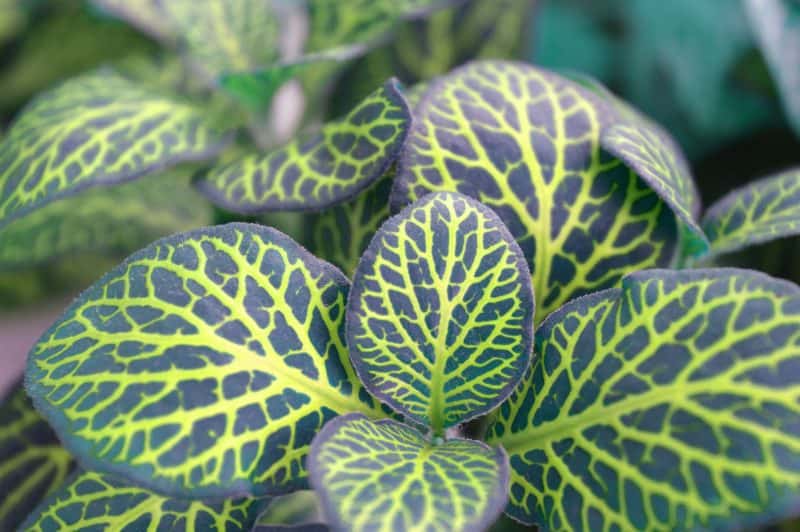
Looking for a nerve plant care guide that’s easy to follow? You’re in the right place! In this post, you’ll learn how to water, feed, and keep your Fittonia thriving indoors, plus how to avoid common problems like yellowing leaves or wilting.

This includes tips on watering, fertilizing, and pruning. We’ll also talk about common problems that nerve plants can experience and how to solve them.
So if you’re ready to learn everything there is to know about nerve plants, keep reading! Here’s some quick tips to get you started:
- The Fittonia, or Nerve Plant, flourishes in low to moderate light, avoiding direct sunlight.
- Keep the soil moist, allowing the top inch to dry before re-watering.
- Fittonia prefers humid conditions. Using a pebble tray or humidifier can maintain humidity.
- During the growing seasons of spring and summer, apply a balanced, half-strength fertilizer once or twice a month, reduce feeding in fall and winter.
What Is A Nerve Plant Anyway?

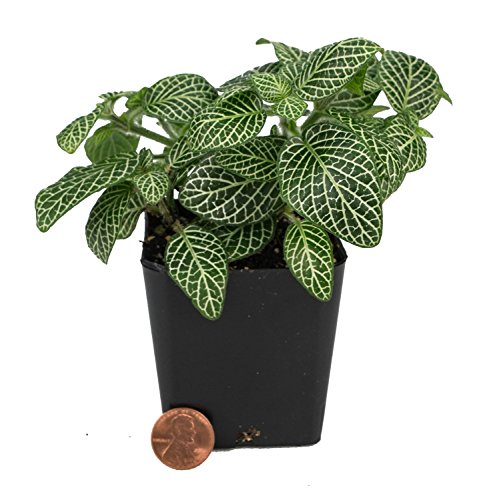
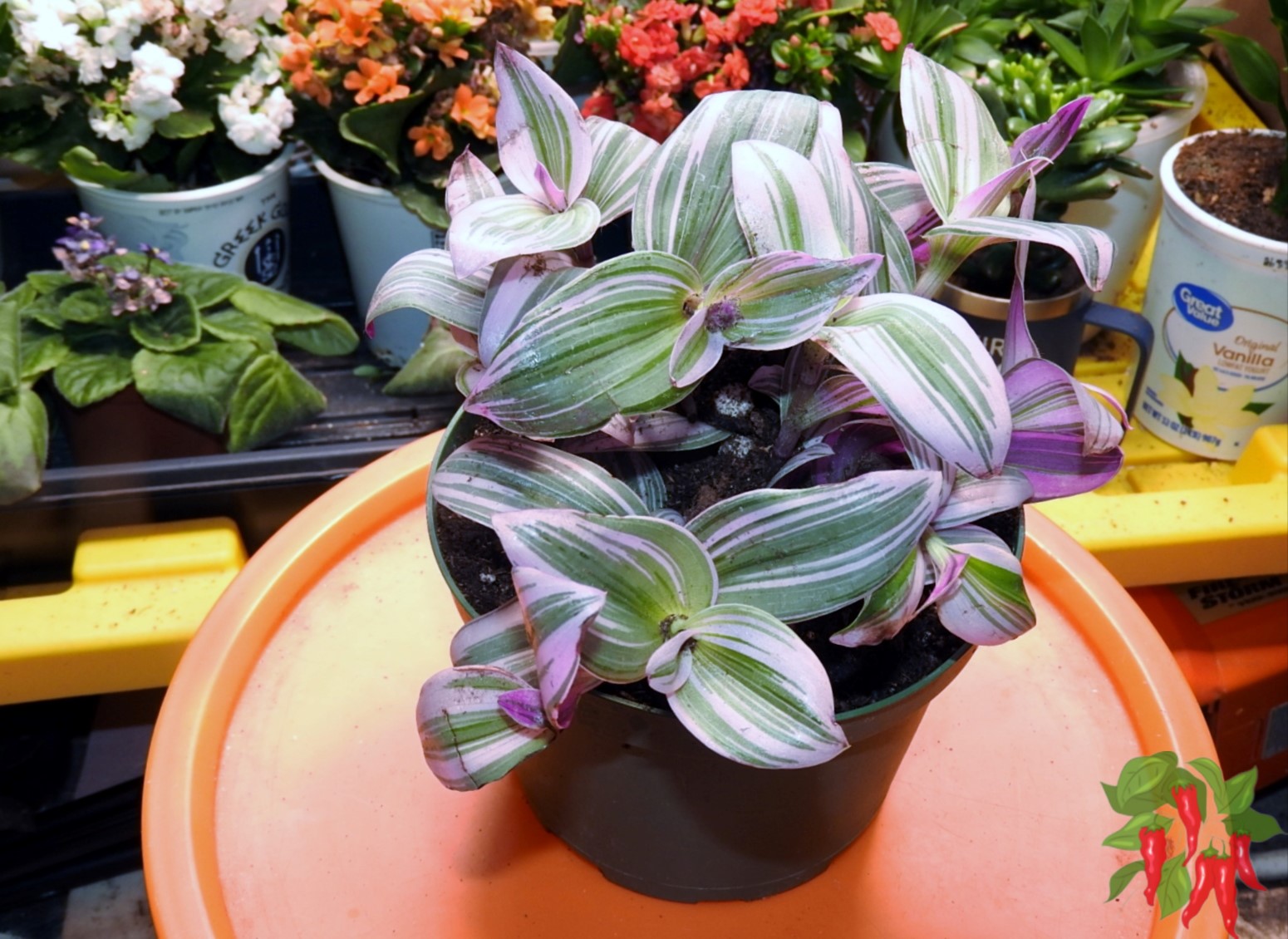
Sprig & Stone Fittonia albivenis ‘Mini White’ – Nerve Plant
The nerve plant or Fittonia is a small tropical plant that makes a very attractive houseplant. Here is some background on this plant:
Fittonia (nerve plant) is a genus of flowering plants in the acanthus family Acanthaceae, native to tropical rainforests in South America, mainly Peru.
The most commonly grown are F. albivenis and its cultivars. They are spreading evergreen perennials growing 10–15 cm (4–6 in) tall.
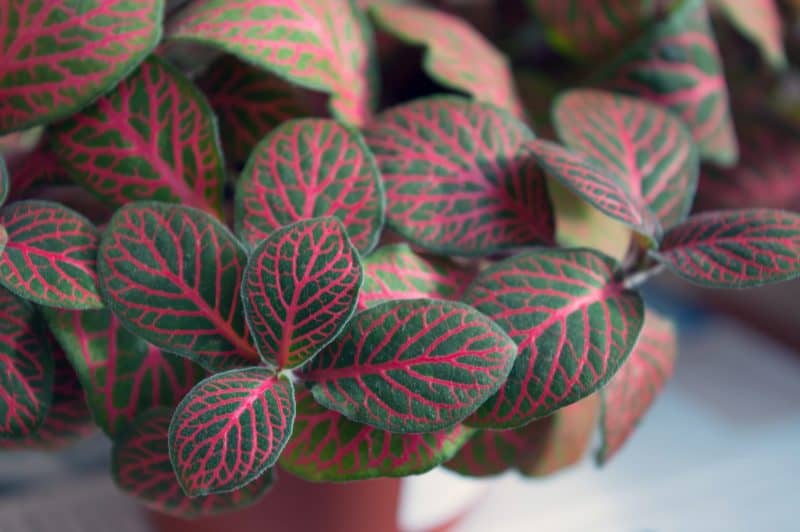
They bear lush green leaves with accented veins of white to deep pink and have a short fuzz covering their stems.
Small buds may appear after a time where the stem splits into leaves. They can also be propagated by allowing the trimmings of the tip to grow roots in about 1-2 weeks.[3]
Flowers are small with a white to off-white color. Plants are best kept in a moist area with mild sunlight and temperatures above 55 °F (13 °C), therefore in temperate areas, they must be grown as houseplants.
Without water for a few days, this plant is known to “faint” but is easily revived with a quick watering. Its spreading habit makes it ideal as a groundcover. Fittonia – Wikipedia
Now that we know what Fittonia is let’s learn how to grow a nerve plant and keep it healthy.
Types of Nerve Plants
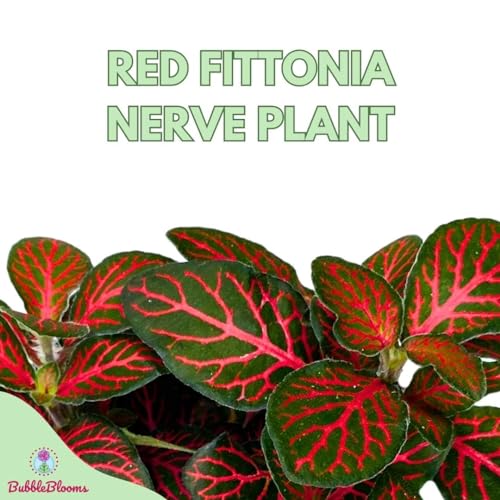
Nerve plants are a type of tropical plant that gets its name from its distinctive leaf veins, which resemble nerves.
These eye-catching plants are native to rainforests and make a beautiful addition to any indoor garden.
Nerve plants come in a variety of colors, including green, pink, and purple. They can also be found in both variegated and solid-colored varieties.
In addition to their visually striking leaves, nerve plants are also known for their ability to survive in low-light conditions.
As long as they are getting sufficient moisture, they will thrive in almost any environment.
Whether you are a seasoned gardener or a beginner looking for an easy-care plant, nerve plants are a great option.
With their beautiful foliage and low-maintenance requirements, they are sure to add interest to any indoor space.
Nerve Plant Care Guide In A Nutshell
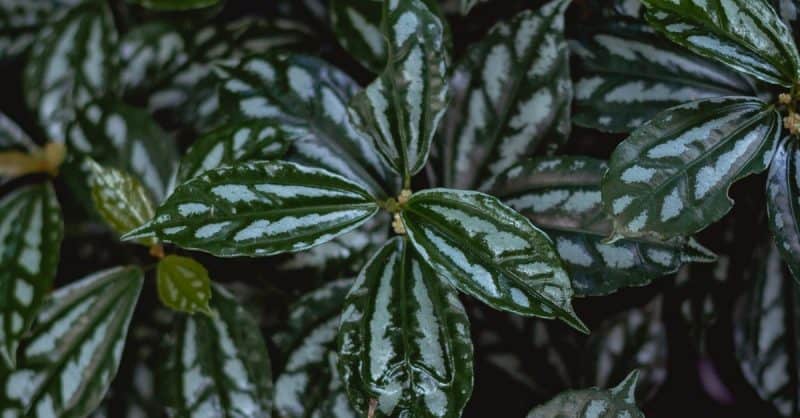
Nerve plants (Fittonia albivenis) are native to the rainforests of South America, where they grow in shady, moist conditions.
These beautiful plants are known for their vibrant leaves, which are often variegated with shades of green, pink, and white.
Nerve plants make excellent houseplants and can brighten up any indoor space.
However, they can be a bit finicky and require careful care to thrive. Here are some tips for keeping your nerve plant healthy and happy:
• Nerve plants prefer low to moderate light conditions and should not be placed in direct sunlight.
• The soil should be kept moist but not soggy. Allow the top inch of soil to dry out before watering again.
• Nerve plants are sensitive to drafts, so make sure they are not placed near windows or doors.
• Fittonia albivenis will do best in humid conditions. Use a pebble tray or humidifier to maintain the desired level of humidity.
• Regular fertilization is important for nerve plants. Use a balanced fertilizer at half strength once or twice a month during the growing season (spring and summer). Cut back on fertilization in the fall and winter months.
With a little TLC, nerve plants can make beautiful and long-lasting houseplants.
If you’re not sure houseplants are worth the trouble maybe this will change your mind Benefits Of Keeping Indoor Plants For Improved Lifestyle (indoorvegetablegrower.com)
Fittonia Nerve Plant Care Reference Guide
| Characteristic | Details |
|---|---|
| Common Name | Nerve Plant, Mosaic Plant, Silver Threads |
| Botanical Name | Fittonia albivenis |
| Native Habitat | Tropical rainforests of South America (mainly Peru) |
| Plant Type | Evergreen perennial houseplant |
| Growth Pattern | Low-growing, creeping, spreading |
| Mature Size | 3–6 inches tall, 12–18 inches spread |
| Watering | Keep soil consistently moist; allow top 1 inch to dry before watering |
| Light/Sun Exposure | Bright, indirect light; tolerates low light but avoid direct sun |
| Soil Type | Well-draining mix with peat moss or coco coir and perlite |
| Soil pH | Slightly acidic to neutral (6.0–7.0) |
| Temperature | 60–85°F (16–29°C); avoid cold drafts |
| Humidity | High humidity (60%+); use pebble tray or humidifier |
| Bloom Time & Flower Color | Occasional small white to off-white flowers, not showy |
| Potential Problems | Wilting when dry, yellow leaves from overwatering, root rot, crispy leaves from low humidity |
| Repotting | Every 1–2 years in spring; use fresh, well-draining mix |
| Hardiness Zones (USDA) | 10–11 (grown indoors elsewhere) |
Best Temperature and Humidity For Nerve Plants
Nerve plants are beautiful, low-maintenance houseplants that are loved for their colorful foliage.
These tropical plants are native to Central and South America, and they thrive in warm, humid environments.
If you’re thinking about adding a nerve plant to your home, it’s important to give it the care it needs to thrive.
The ideal temperature range for nerve plants is between 60 and 85 degrees Fahrenheit.
They also prefer high humidity levels, so be sure to mist their leaves regularly or set them on a pebble tray filled with water.
The Right Soil for Nerve Plants
In order to keep your nerve plant healthy and looking its best, it’s important to choose the right type of soil.
Nerve plants prefer soil that is moist but well-drained, so one good choice is a potting mix that contains both peat moss and perlite.
Another good choice is coco coir either with or without perlite.
You want a growing medium that holds water but still allows roots to breathe. Coco coir is superior to peat-based soil mixes in this respect.
In addition, nerve plants do best in an environment with high humidity, so you may want to mist the leaves periodically or set the pot on a tray of pebbles and water.
The Right Light For Fittonia
Fittonia is a beautiful, low-maintenance plant that is perfect for adding a splash of color to any indoor space.
But in order for this plant to thrive, it is important to provide the right type of light.
Fittonia prefers bright, indirect light, such as that found near a window.
The morning sun is OK like from an east window but the afternoon sun can burn the leaves.
If the leaves start to turn yellow or brown, that is a sign that the plant is not getting enough light.
Another way to tell if your Fittonia is getting too much or too little light is to look at the leaves.
If they are getting crispy that means the plant is getting too much light and should be moved to a shadier spot.
If the leaves are pale green or yellow, that means the plant is not getting enough light and needs to be moved to a brighter location.
With the right amount of light, your Fittonia will thrive and add a touch of beauty to your home.
Watering Nerve Plants

When it comes to watering nerve plants, the key is to keep the soil moist without drowning the roots.
These plants are native to humid tropical rainforests, so they’re used to regular watering.
However, too much water can cause the leaves to yellow and drop off.
Signs of overwatering include brown or yellow leaves, wilting, and stunted growth.

One way to water a nerve plant is to use a moisture meter to check the soil before watering.
These meters can be found online or at most garden stores, and they allow you to check the moisture level without having to stick your fingers in the dirt.
If the meter shows that the soil is dry, give the plant a good drink until water starts to drain out of the bottom of the pot.
Then let the soil dry out completely before watering again.
Of course, you can just use your fingers to do this. Personally, I lift the plant to find out if it needs to be watered.
If you do this a few times you will be able to tell if a pot is wet, dry, or in between. Anyone can develop a feel for this over time.
Nerve plants are relatively low-maintenance, but paying attention to their watering needs will help them stay healthy and happy.
Propagating Nerve Plants

Nerve plants are fairly easy to care for and make an excellent addition to any indoor garden. They are also easy to propagate.
For those looking to add more nerve plants to their collection, propagation is a relatively simple process.
New plants can be propagated from stem cuttings taken from an existing plant. Use clean sharp shears and cut the stem at a 45° angle.
You will want a cutting with several nodes and a few leaves. They can be taken any time although some say spring cuttings root faster.
You can dip the end of the cutting in rooting powder to speed up the rooting process but this usually isn’t needed.
The cuttings should be placed in a pot filled with moistened potting mix and placed in a warm, humid location.
After a few weeks, the cuttings will develop roots and can be transplanted into their own pots.
Repotting Nerve Plants
Nerve plants are relatively small, so they can be easily propagated in pots. However, over time, they will eventually outgrow their pots and need to be repotted.
The best time to repot a nerve plant is in the spring before the plant begins to actively grow.
When choosing a new pot, be sure to select one that is only slightly larger than the current pot.
To repot a nerve plant, carefully remove it from its current pot and Shake off any loose soil.
Then, place the plant in the new pot and fill it in with fresh potting mix. Be sure to water thoroughly after repotting.
Because the nerve plant requires regular watering make sure you choose a potting mix that is well-draining.
Peat based soil mixes amended with perlite work well for this and coco coir is also an excellent potting medium.
Are Nerve Plants Poisonous?

According to the ASPCA nerve plants are not poisonous to dogs or cats. I assume they are not toxic for people either.
But it is a houseplant and not a vegetable so don’t try to eat it.
Additional Common Names: Jewel Plant, Silver Nerve, Mosaic Plant, Silver Threads
Scientific Name: Fittonia verschaffeltiiFamily: AcanthaceaeToxicity: Non-Toxic to Dogs, Non-Toxic to Cats, Non-Toxic to Horses
Toxic Principles: Non-toxic Nerve Plant | ASPCA
Nerve Plant FAQs
 Fittonia Jolly Lemon Nerve Plant Air Purifying House Plant, 2.5 inch Pot
When diving into the world of Nerve Plants, or Fittonias, a bunch of questions might pop up regarding their care, common issues, and how to ensure they thrive indoors.
In this section, we’ve gathered some frequently asked questions to provide you with a deeper understanding and solutions to common problems you might encounter on your Fittonia journey.
Q. Why are the leaves of my Fittonia turning yellow?
A. Yellowing leaves on a Fittonia often signal over-watering. It’s essential to let the top inch of soil dry before watering again to prevent this issue.
Q. How can I prevent root rot in my Fittonia?
A. Root rot occurs when the soil around the roots becomes waterlogged. Ensure your Fittonia is in well-draining soil and the pot has good drainage to prevent this common problem.
Q. What do dry and wrinkled leaves indicate?
A. Dry and wrinkled leaves often point to inadequate humidity or excessive direct sunlight. Placing your plant in indirect sunlight and maintaining a humid environment can rectify this issue.
Q. My Fittonia wilts when I miss a watering session. Is this normal?
A. Yes, Fittonias can be quite dramatic when a watering session is missed, leading to wilting or fading. However, a good soaking will perk your plant right back up, especially in a terrarium-like environment.
Q. How can I identify and fix common problems with my Fittonia?
A. Keeping an eye on leaf color and ensuring the right balance of water, light, and humidity will help you identify and fix common problems. For instance, yellowing leaves often indicate over-watering or nutrient deficiencies.
Now that you’re equipped with some solutions to common problems, you’re one step closer to mastering the art of Fittonia care. Happy gardening!
Nerve Plant Care Guide Final Thoughts

So, now you know how to grow and care for your Fittonia.
With a little bit of effort, you can have a beautiful, healthy plant that will add a splash of color to any room in your home.
Just remember to water regularly, keep an eye out for pests, and provide plenty of bright indirect light.
With a little bit of care, your Fittonia will thrive for years to come.
Consider trying a closely related houseplant the Purple Waffle Plant.
🌿 Indoor Houseplant Growing Guides
Want to fill your home with lush, vibrant greenery? These expert indoor houseplant guides will help you grow everything from exotic blooms to hardy foliage with ease!
- 🌿 Benefits of Keeping Indoor Houseplants (Pillar Guide)
- 🌱 Can You Grow Gladiolus Indoors? 11 Easy Gladioli Growth Tips
- 🍃 Pink Wandering Jew: Easy Nanouk Tradescantia Care
- 🌾 Tī Plant Care Indoors: 7 Proven Tips To Transform Your Space
- 🪴 Rubber Plant Care Indoors: 11 Best Care Tips For Beginners
- 🍀 Ficus Benjamina Indoors: 6 Easy Growth Tips For Beginners
- 🌼 How To Care For Peace Lily Indoors: 13 Easy Care Growth Tips
- 🌹 Bubble Gum Plant Care: 11 Tips And Tricks For Beginners
- 🌺 Hibiscus Plant Care Indoors: 7 Growth Tips For Beginners
- 🍂 Growing Jacob’s Ladder Indoors: Comprehensive Guide
- 🌷 Purple Shamrock Plant Care: 13 Tips And Tricks For Beginners
- 🌿 Creeping Jenny In Pots: 13 Lysimachia nummularia Growth Tips
- 🏡 Vertical Gardening Ideas: Best Small Space Garden Ideas
- 🪴 Chinese Money Plant Care Indoors: 7 Easy Growth Tips
- 🌳 9 Triangle Ficus Care Secrets for a Lush, Healthy Plant
- 🍌 Ice Cream Banana Tree Care: 15 Tip Complete Growth Guide
- 🌱 How to Make a Nerve Plant Thrive: 10 Tips and Tricks
- 🌸 African Violet Care Indoors: 11 Easy Care Tips For Beginners
- 🌺 Alternanthera Party Time Care: 7 Easy Growth Hacks
- 🌼 Geranium Care In Pots: 9 Geranium Growth Tips For Beginners
- 🌿 Purple Velvet Plant Care: 7 Easy Growth Tips And Tricks
- See all articles in our Indoor Houseplants category
 Steve S. is the creator of