
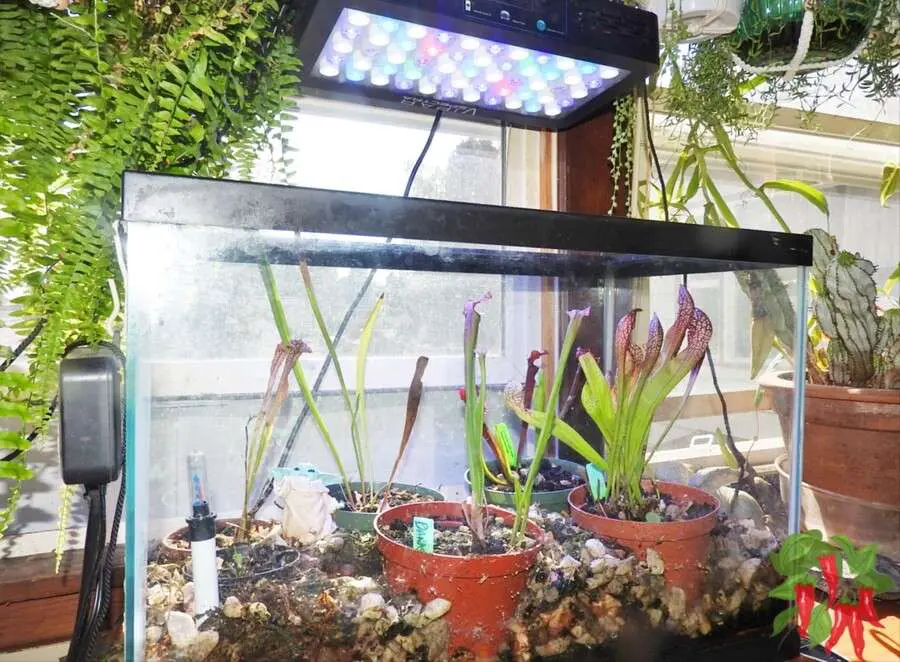
Can You Grow Sarracenia Pitcher Plants Indoors?
Ever wondered if a Sarracenia pitcher plant terrarium could actually thrive indoors? 🌱 You’re not alone and I set up one myself, and the results might surprise you.
In this post, you’ll see what worked, what didn’t, and how you can enjoy these stunning carnivorous plants right inside your home.
Can You Grow Sarracenia Pitcher Plants Indoors? Terrarium Setup, Video & Care Guide
Imagine having tall, trumpet-shaped pitchers right in your living room, a little slice of a wild bog turned into a thriving Sarracenia Pitcher Plant Terrarium. 🌱
These carnivorous plants are usually grown outdoors, but I wanted to see if they could adapt to life inside under grow lights.
In this post, I’ll walk you through my own experiment with a DIY pitcher plant terrarium setup, including the layers I used, how I managed water and light, and the little adjustments I made along the way.
You’ll get practical Sarracenia care tips, learn whether they can truly handle indoor growing, and see how different varieties like Scarlet Belle, Judith Hindle, Dana’s Delight, and even a Venus flytrap are settling into my tank.
Spoiler: it hasn’t all been smooth sailing — I’ve had a few challenges (hello, crispy pitchers 😬), but also some exciting successes. Let’s dive in!
What Are Sarracenia Pitcher Plants?

If you’ve ever been fascinated by carnivorous plants, you’ve probably come across the Sarracenia pitcher plant.
Native to the bogs and wetlands of North America, these striking plants have evolved tubular leaves shaped like elegant trumpets.
Instead of relying on rich soil for nutrients, they attract and trap insects inside their pitchers, digesting them slowly to supplement their diet.
Native Habitat & Growing Conditions 🌿
In the wild, Sarracenia thrive in boggy areas of the southeastern United States, where the soil is acidic, wet, and nutrient-poor.
They’re used to sitting in waterlogged conditions with plenty of sunlight. Because their natural environment is so different from a typical indoor setting, recreating those conditions in a carnivorous plant terrarium takes a bit of creativity.
Why They’re Popular 🌸🪴
Gardeners and houseplant lovers are drawn to Sarracenia pitcher plants for their dramatic appearance.
Their upright pitchers can be streaked with red, green, or even purple, and some hybrids like Sarracenia ‘Scarlet Belle’ and Sarracenia ‘Judith Hindle’ display gorgeous veining and flared hoods.
Beyond their looks, these plants also act as natural pest control, reducing the number of gnats, flies, and other insects indoors.
Temperate vs. Tropical Pitcher Plants ☀️❄️
It’s important to know that Sarracenia are temperate pitcher plants, unlike tropical Nepenthes (often grown in a carnivorous plant terrarium as well).
This means they require a winter dormancy period — usually 2 to 4 months of cooler temperatures and reduced light.
Without this seasonal rest, they can weaken and eventually decline.
Tropical pitcher plants, on the other hand, keep growing year-round and don’t need dormancy, which is why they’re often easier to keep indoors long-term.
What Are Carnivorous Plants?
Carnivorous plants are plants that derive some or most of their nutrients from trapping and consuming animals or protozoans, typically insects and other arthropods, and occasionally small mammals and birds. They have adapted to grow in waterlogged sunny places where the soil is thin or poor in nutrients, especially nitrogen, such as acidic bogs. They can be found on all continents except Antarctica, as well as many Pacific islands. In 1875, Charles Darwin published Insectivorous Plants, the first treatise to recognize the significance of carnivory in plants, describing years of painstaking research. https://en.wikipedia.org/wiki/Carnivorous_plant
Can You Really Grow Sarracenia Indoors? Pros & Cons
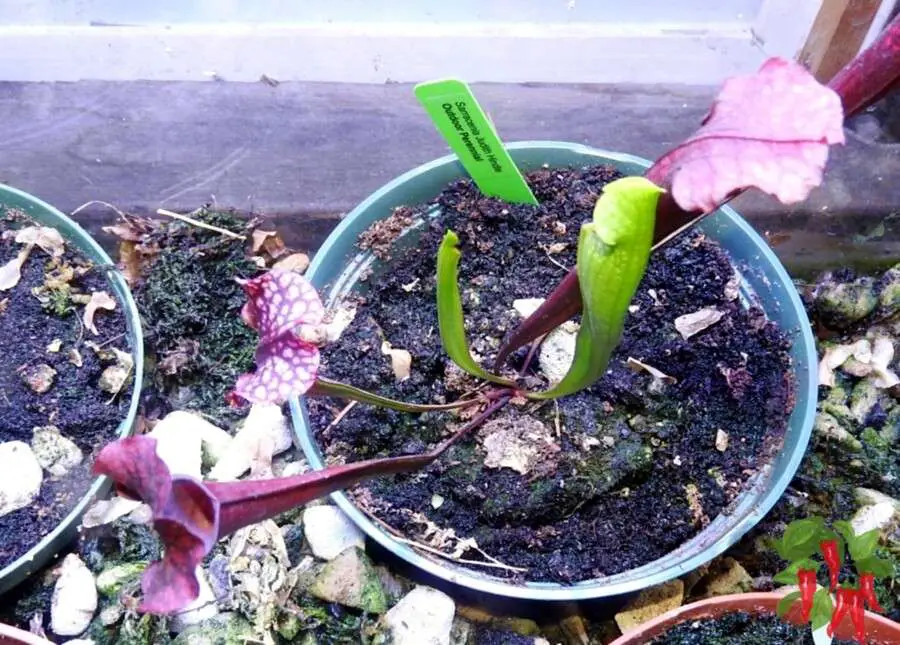
When most people think of Sarracenia pitcher plants, they picture them outside in a sunny bog, happily catching flies on their own. 🌞
🪰 But if you’ve ever dreamed of creating a Sarracenia Pitcher Plant Terrarium inside your home, you’re probably wondering: is it actually possible?
The short answer is yes — but it comes with a few challenges you’ll need to plan for.
🌟 Pros of a Pitcher Plant Terrarium Setup
- Beautiful and unusual: With their tall, colorful pitchers, Sarracenia make a living piece of art in your space.
- Natural pest control: Even indoors, they’ll catch stray flies, fruit flies, or gnats when available.
- Hands-on gardening fun: Caring for a carnivorous plant terrarium is a rewarding experiment — you’ll get to watch new pitchers form up close.
- Great for hybrids: Varieties like Scarlet Belle and Judith Hindle often stay more compact, making them excellent for indoor display.
⚠️ Cons & Challenges
- High light requirements: Sarracenia need intense light and outdoors they thrive in full sun, but indoors you’ll need strong grow lights (and be careful not to burn them, as I learned when my Sarracenia flava got crispy under too much light 😬).
- Dormancy is non-negotiable: These temperate carnivorous plants need a winter rest. Without it, they’ll decline over time. That means you’ll have to move them somewhere cool or even refrigerate them for a couple of months after a couple of years.
- Root sensitivity: Transplanting into a terrarium can stress them out, especially if roots are damaged — I noticed some of mine struggled to adapt at first.
- Feeding indoors: Unlike outdoors, where bugs fly right into their traps, an indoor pitcher plant terrarium setup might need your help. Fish food flakes or dried insects work, but never use meat or cheese.
👉 Bottom line: If you’re up for the challenge of providing strong light, pure water, and a dormancy cycle, then yes — you can absolutely grow Sarracenia indoors. And the payoff? A one-of-a-kind, exotic centerpiece that’s as fascinating as it is beautiful.
4. Terrarium Setup: What You Need
When you’re putting together a Sarracenia Pitcher Plant Terrarium, the secret is recreating their natural boggy environment while making it manageable indoors.
My setup is a little different from a traditional carnivorous plant terrarium — I rely on a base of pebbles, then keep my Sarracenia in individual pots filled with coco coir instead of peat. This makes it much easier to lift the pots out later when it’s time for dormancy.
Here’s how I built it step by step:
A. Choosing Your Container 🪴
- Size & depth: Sarracenia vary a lot in height. Hybrids like Scarlet Belle stay compact, but tall species such as Sarracenia flava can reach up to 3 feet. If you want to include taller types, go with a deeper tank or aquarium.
- Open vs. closed: Sarracenia need airflow. An open or vented terrarium prevents mold and keeps the pitchers from rotting. A sealed terrarium is usually too humid.
- Accessibility: By sinking your pots into a bed of pebbles, you can easily remove them later for seasonal care, like putting them in a cool spot for dormancy.
B. Layering and Substrate / Soil Mix 🌱
Unlike tropical houseplants, Sarracenia pitcher plants thrive in nutrient-poor bog soil. Here’s the layering method I used:
- Drainage layer: A thick base of rinsed pebbles forms a water reservoir and keeps humidity high.
- Moisture-retaining layer: A thin layer of long-fiber New Zealand sphagnum moss on top of the pebbles acts as a barrier so finer material doesn’t clog the bottom.
- Containers with coco coir: Instead of planting directly into the terrarium, I keep each plant in its own 6-inch pot. I use coco coir mixed with perlite or sand rather than peat. It’s clean, sustainable, and easy to remove when I need to give the plants a rest period.
💡 Why coco coir? It holds moisture well, drains quickly, and doesn’t contain added fertilizer (which would harm carnivorous plants).
C. Lighting Requirements 💡
- Bright light is essential — these bog plants naturally grow in full sun. Indoors, you’ll need a strong grow light.
- My setup: I’m using a 165-watt aquarium LED with both white and blue spectrum. It was so bright that I actually had to raise it up after my Sarracenia flava got a little sunburned from too much light!
- PAR target: Around 400 µmol is a sweet spot. If you notice pitchers turning crispy or bleaching, adjust the light’s height or intensity.
- Daily schedule: Run your lights for 12–16 hours to mimic long summer days.
D. Watering & Water Quality 💧
Sarracenia are bog dwellers, so they need constant access to water.
- Reservoir style: Since my terrarium is mostly pebbles, I keep a shallow water level in the base. The pots wick up moisture from below, staying evenly damp without sitting in stagnant water.
- Water quality: Stick to distilled, rain, or reverse-osmosis (RO) water — avoid tap or softened water, since minerals will damage the roots.
- Water gauge tip: I added a simple gauge in the corner of my terrarium to see the water level at a glance. It makes upkeep much easier!
E. Temperature & Dormancy ❄️🌞
- Dormancy required: Unlike tropical Nepenthes, Sarracenia care involves a winter dormancy. These pitcher plants need 2–4 months of cooler temperatures (around 35–50°F / 2–10°C) and shorter days.
- My trick: Because the plants are in individual pots set into the pebble layer, I can simply lift them out and place them in a cool basement or even the refrigerator for their winter nap.
- What to expect: Pitchers may brown and die back, but don’t worry — healthy rhizomes will push out fresh, vibrant growth in spring.
F. Feeding & Nutrition 🪰
- Natural diet: Outdoors, Sarracenia pitcher plants catch flies and gnats on their own. Indoors, you might need to supplement.
- What to feed: Drop a few fish food flakes or small dried insects into the pitchers once in a while.
- What NOT to feed: Avoid meat, cheese, or fertilizer — these can rot the traps and harm your plant.
- Observation: In my own pitcher plant terrarium setup, I noticed the plants still produce pitchers even indoors, but I give them a little extra nutrition since they can’t catch as many bugs inside.
✨ With the right container, proper carnivorous plant terrarium layers, strong lighting, and a simple dormancy plan, you can absolutely keep these fascinating plants thriving indoors.
And if you use pots inside the pebble base (like I did), moving them for dormancy becomes quick and stress-free.
Case Study: My Sarracenia Terrarium Experiment
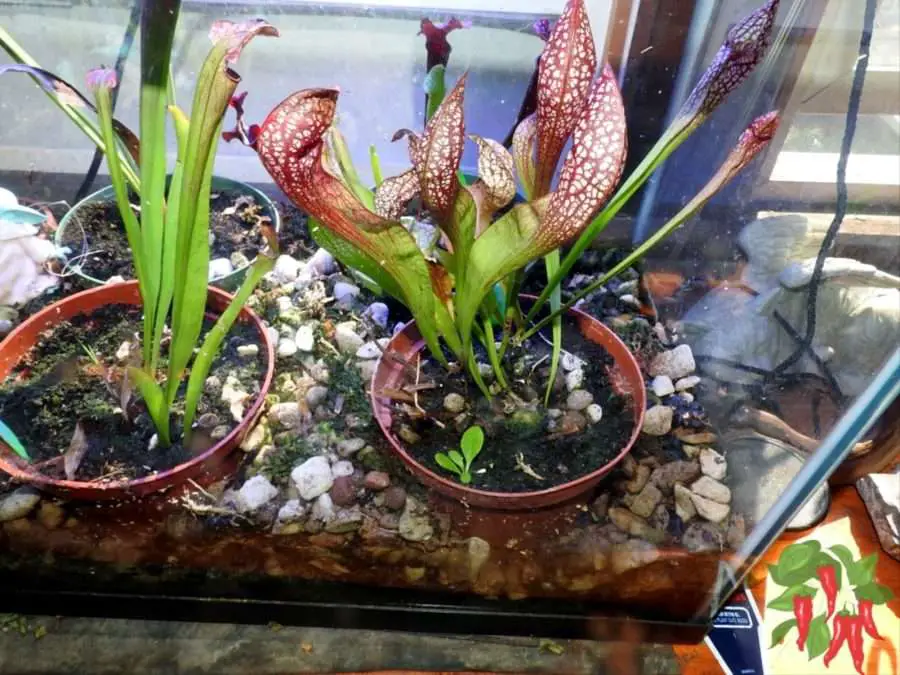
When I first decided to try a Sarracenia Pitcher Plant Terrarium, I wanted something simple but functional.
Instead of planting directly into the terrarium, I went with a base of pebbles and set 6-inch pots filled with coco coir into that layer.
To keep things tidy, I added a blanket of long-fiber New Zealand sphagnum moss on top of the pebbles, and I installed a little water-level gauge in the corner so I’d always know how much moisture was in the reservoir.
This way, the pots wick up water without sitting in soggy soil, and when dormancy season comes, I can just lift them out and pop them into a cool space or even the fridge — no messy repotting needed.
The Plants in My Terrarium 🌱
Here’s who’s growing in my setup so far:
- Scarlet Belle (Sarracenia × ‘Scarlet Belle’) – a compact, brightly patterned hybrid that’s doing great indoors.
- Judith Hindle (Sarracenia × ‘Judith Hindle’) – another hybrid that’s thriving, pushing out fresh pitchers already.
- Dana’s Delight (Sarracenia × ‘Dana’s Delight’) – still adapting, but showing promise for new growth.
- Sarracenia flava – one of the tallest species (can reach 3 feet outside). Mine got a little singed from too much light at first, but it’s bouncing back with a fresh pitcher.
- Venus Flytrap (Dionaea muscipula) – not a Sarracenia, but I tucked one in to see how it would do. It’s hanging on, but struggling more than the others.
Challenges I’ve Run Into ⚠️
- Root loss: Since these plants were dug up from outdoors, some had damaged roots and took time to adjust.
- Light burn: My grow light was initially too close, and my flava’s leaves crisped from the intensity.
- Adaptation period: After moving them indoors, growth slowed for a couple weeks. Pitcher plants don’t rebound overnight.
What’s Working So Far ✅
- New pitchers forming: Even the stressed plants are starting to send up fresh growth, which is a great sign.
- Scarlet Belle & Judith Hindle are thriving: They’re tough hybrids and are handling the transition well.
- Easy dormancy plan: With the pots resting in pebbles, I can lift them out and move them into a cool spot for their winter rest with minimal fuss.
✨ This experiment is still ongoing, but so far the results are encouraging — showing that with the right pitcher plant terrarium setup, even Sarracenia care indoors can be successful.
6. Maintenance Tips & Common Mistakes to Avoid
Caring for a Sarracenia Pitcher Plant Terrarium isn’t complicated once you know the rules, but these plants definitely have their quirks.
A little attention to detail goes a long way toward keeping your Sarracenia pitcher plants healthy and thriving indoors.
🌱 Common Mistakes to Avoid
- Too much light too close: Strong grow lights are essential, but if they sit right on top of the pitchers, you’ll end up with crispy, sunburned leaves.
- Using tap or hard water: Minerals build up quickly in a carnivorous plant terrarium and can burn roots. Stick with rain, distilled, or RO water only.
- Adding fertilizer or compost: Sarracenia evolved in nutrient-poor bogs. Fertilizer, plant food, or kitchen scraps like meat or cheese will harm them.
- Skipping dormancy: These are temperate plants that need a winter rest. Without it, their health declines year after year.
- Letting soil dry out: Pitcher plants like consistently wet conditions — dry soil can stress or even kill them.
🌟 Pro Tips for Success
- Raise your lights if pitchers start showing signs of bleaching or burn.
- Use a water gauge or tray system to keep moisture steady without guessing.
- Adjust watering in winter: keep soil damp but reduce the water level during dormancy.
- Feed sparingly indoors: a few fish food flakes or dried insects in the pitchers every few weeks is plenty.
- Divide mature rhizomes every 2–3 years when repotting to keep plants vigorous and multiply your collection.
✨ By avoiding the common pitfalls and following these simple sarracenia care tips, you’ll give your pitcher plant terrarium setup the best chance to flourish year after year.
Sarracenia Pitcher Plant Terrarium FAQs
Can you grow a Sarracenia pitcher plant terrarium indoors?
Yes, you can! Sarracenia pitcher plants will grow indoors if you give them strong light, mineral-free water, and a plan for winter dormancy. A terrarium or even a repurposed fish tank works well as long as there’s good airflow and proper lighting.
What is the best pitcher plant terrarium setup?
Start with a drainage layer (pebbles, LECA, or lava rock), add long-fiber sphagnum moss, and use a peat moss and perlite or sand mix. Keep the soil wet with pure water and provide bright light—either full sun or high-output grow lights.
Do Sarracenia pitcher plants need dormancy indoors?
Yes. Sarracenia are temperate carnivorous plants, so they require 2–4 months of dormancy at cooler temperatures (35–50°F). You can achieve this in a cool room, garage, or even by placing the pots in the refrigerator.
How much light do Sarracenia need inside?
They need very bright light—12 to 16 hours a day. Outdoors, they thrive in full sun. Indoors, use strong LED grow lights and keep an eye out for bleaching or burnt pitchers if the light is too intense.
What water should I use for a carnivorous plant terrarium?
Always use rainwater, distilled water, or reverse-osmosis (RO) water. Tap or softened water contains minerals and salts that will harm pitcher plants over time.
What soil mix is best for Sarracenia care?
A nutrient-poor, acidic mix works best—typically peat moss mixed with perlite or silica sand. Avoid compost, fertilizer, or enriched potting soil, which will kill the plants.
How do I feed Sarracenia indoors?
If insects aren’t available naturally, feed them with fish food flakes or small dried insects. Place the food directly inside the pitchers. Never feed meat, cheese, or fertilizer—these will rot the pitchers.
Which Sarracenia species are best for terrariums?
Compact hybrids such as ‘Scarlet Belle’ or ‘Judith Hindle’ are ideal for terrariums. Larger species like Sarracenia flava can grow up to 3 feet tall and may outgrow smaller enclosures.
Can I use a DIY fish tank carnivorous plant terrarium?
Yes! An aquarium makes a great carnivorous plant terrarium if you add proper drainage layers, keep a visible water level, and provide strong lighting. Leave the lid vented for air circulation to prevent mold and fungus.
How often should I repot or divide Sarracenia?
Repot every 2–3 years into fresh soil mix. This is also the best time to divide the rhizomes to create new plants and keep the mother plant healthy.
Growing Sarracenia Pitcher Plants Indoors: Conclusion
So, can you grow a Sarracenia Pitcher Plant Terrarium indoors? 🌱 The answer is yes — as long as you’re willing to recreate their bog-like conditions and give them a proper winter dormancy.
With the right setup, your pitcher plant terrarium can be a stunning living display and even help with natural pest control in your home.
Key Takeaways 🌟
- Soil: Stick with nutrient-free media like coco coir, sphagnum moss, and perlite or sand.
- Water: Use only rain, distilled, or RO water — never tap water. Keep the soil damp to wet.
- Light: Provide full sun outdoors or strong grow lights indoors (12–16 hours daily). Raise the light if pitchers start to burn.
- Dormancy: Temperate sarracenia pitcher plants need 2–4 months of cool rest each winter. A fridge or cool basement works if you don’t have outdoor space.
From my own experiment, I’ve learned that not every plant will thrive right away — some may lose pitchers or struggle with the transition indoors.
My Scarlet Belle and Judith Hindle bounced back quickly with new growth, while my Sarracenia flava and Venus flytrap needed more patience.
The good news? Most carnivorous plant terrarium residents are tough and will return strong after adjusting.
If you’ve been curious about trying a pitcher plant terrarium setup, I say go for it! It’s a fun, educational, and eye-catching way to enjoy these incredible plants up close. 🌿✨
👉Use these carnivorous plant terrarium ideas for inspiration. Happy growing, and as always — stay green! 🌱💧
Want to grow strange, beautiful carnivorous plants? These expert guides will help you grow and care for Venus Flytraps, Pitcher Plants, Sundews, and more indoors.
🪰 Carnivorous Plants Care Guides
- 📘 Carnivorous Plant Care (Pillar Guide)
- 🌿 How to Grow Sundews Indoors
- 🪴 Cephalotus Follicularis Care
- 🌱 How to Propagate Carnivorous Plants
- 🪰 How to Grow Venus Flytrap
- 🌸 Growing Butterworts Indoors
- 🌴 Nepenthes Truncata Care
- 🐍 Cobra Lily Care
- 🧪 Sarracenia Pitcher Plant Care
- 🫧 Bladderworts: The Forgotten Carnivorous Plants
- 🌿 Nepenthes Pitcher Plant Care
- 💧 Water Quality for Carnivorous Plants
- 🦟 What to Feed Your Venus Flytrap
- 🌟 Best Indoor Carnivorous Plants
- See all articles in our Carnivorous Plants Care category
Sarracenia Pitcher Plant Care Reference Guide
| Characteristic | Details |
|---|---|
| Common Name | Pitcher Plant |
| Botanical Name | Sarracenia spp. |
| Native Habitat | Bogs and wetlands of North America (southeastern U.S.) |
| Plant Type | Carnivorous perennial |
| Growth Pattern | Rosette-forming with tubular pitcher leaves |
| Mature Size | 6 inches to 3 feet tall, depending on species |
| Watering | Keep soil wet with distilled, rain, or RO water; never allow to dry out |
| Light/Sun Exposure | Full sun outdoors; strong grow lights indoors (12–16 hrs/day) |
| Soil Type | Nutrient-poor mix: sphagnum peat moss + perlite or sand (no fertilizer) |
| Soil pH | Acidic, 4.0 – 5.5 |
| Temperature | 60–85°F (16–29°C) during active growth; cooler (35–50°F / 2–10°C) for dormancy |
| Humidity | Moderate to high (50–80%) |
| Bloom Time & Flower Color | Spring; large nodding flowers in red, yellow, or purple depending on species |
| Potential Problems | Root rot from poor drainage, lack of dormancy, mineral toxicity, insufficient light |
| Repotting | Every 2–3 years in fresh carnivorous plant mix; divide rhizomes to propagate |
| Hardiness Zones (USDA) | Zones 6–9 (varies by species) |


 Steve S. is the creator of