
Looking for a houseplant that’s practically foolproof? Growing hens and chicks indoors gives you a hardy, cheerful succulent that thrives with little effort.
If you are looking for a houseplant you cant kill try growing Hens and Chicks indoors.
Even the name Sempervivum means always living. This houseplant is for everyone from green to brown and even black thumbs. Here’s some tips:
- Hens and Chicks (Sempervivum) are a low-maintenance succulent, ideal for both indoor and outdoor gardening.
- They thrive in bright light and require well-draining soil, with watering allowed to dry out between intervals.
- They tolerate a wide range of temperatures, making them a hardy choice for various climates.
- Propagation is simple by separating chicks from the mother plant, ensuring a continuous growth cycle.
What Are Hens and Chicks?

Hens and Chicks is an alpine evergreen succulent. It is also known as houseleek and liveforever as its Latin name implies. There are about 50 species in the genus.
It grows in a rosette and produces smaller offsets (chicks) from the mother plant (hens) to me the plant somehow reminds me of a bird’s nest looking at it from above.
While it is very cold hardy and even tolerates snow and hard frost well it is often grown as a houseplant.
The name Sempervivum has its origin in the Latin semper (“always”) and vivus (“living”), because this perennial plant keeps its leaves in winter and is very resistant to difficult conditions of growth.
The common name “houseleek” comes from the Anglo Saxon word “leac”, meaning plant, since these are literally plants that grow on houses.
They were believed to ward off fire and lightning strikes. Some Welsh people still hold the old folk belief that having it grow on the roof of the house ensures the health and prosperity of those who live there. Sempervivum – Wikipedia
Hens And Chicks Grow Great Inside And Outside

Hens and chicks are a type of succulent that is known for their ability to thrive in sunny, dry conditions.
These plants are native to the Mediterranean region, where they are often found growing on rocky slopes and hillsides.
Hens and chicks require very little water and can tolerate long periods of drought.
In terms of light, these plants prefer full sun but can also do well in partial shade.
Hens and chicks are relatively low-maintenance plants that make an excellent addition to any rock garden or xeriscape.
They are also well-suited for growing in containers as houseplants and will add interest to any porch or patio.
Finally, there is a houseplant that is almost impossible to kill!
Growing Hens And Chicks Indoors

If you have this plant growing outdoors there is no need to move it inside during the winter.
Most species are hardy down to -30° Fahrenheit. But you might want to bring some babies in for a houseplant.
We will tell you everything you need to know about growing Hens and Chicks indoors including light needs, watering and fertilizing, and more.
So read on for more details and don’t worry, you will be a Sempervivum expert when you’re done no green thumb needed.
Hens and Chicks Plant Care Reference Guide
| Characteristic | Details |
|---|---|
| Common Name | Hens and Chicks |
| Botanical Name | Sempervivum spp. |
| Native Habitat | Mountains of Europe, Mediterranean rocky slopes |
| Plant Type | Evergreen succulent, perennial |
| Growth Pattern | Rosette with offsets (“chicks”) around the mother plant |
| Mature Size | 2–6 inches tall, 6–12 inches wide (with offsets) |
| Watering | Allow soil to fully dry between waterings; drought-tolerant |
| Light/Sun Exposure | Full sun to bright indirect light indoors |
| Soil Type | Well-draining mix (cactus/succulent soil or coco coir + perlite) |
| Soil pH | Slightly acidic to neutral (6.0–7.5) |
| Temperature | Hardy down to -30°F; ideal indoors at 65–75°F |
| Humidity | Low humidity preferred; avoid excess moisture |
| Bloom Time & Flower Color | Summer; star-shaped flowers in pink, red, or yellow |
| Potential Problems | Overwatering leading to root rot; mealybugs in rare cases |
| Repotting | Seldom needed; propagate by separating chicks |
| Hardiness Zones (USDA) | Zones 3–9 |
Growing Sempervivium In A Nutshell

Hens and chicks are a type of succulent known as Sempervivum. They are easy to care for and make great houseplants.
• Hens and chicks need bright light and can tolerate direct sun. The best place for them is a south-facing windowsill. If you don’t have a south-facing window, you can also use grow lights.
• Hens and chicks like to be on the dry side, so be sure to let the soil dry out completely between watering. Hens and chicks will do best in a well-draining potting mix.
• You can propagate hens and chicks by dividing the offsets (the “chicks”). Hens and chicks make great houseplants because they are easy to care for and they look great all year round. Give them a try!
Hens and Chicks Lighting
Hens and chicks prefer full sun. They can tolerate shade but will not grow as fast.
A south-facing window is perfect for them but you can also use LED grow lights to provide more light.
Sempervivum Temperature
These plants are extremely hardy and one of the few succulents that can survive ice and snow. They are hardy to about -30° Fahrenheit.
But you will want to keep them warmer and hopefully, your house or apartment isn’t that cold. They will do fine at just 65-75°.
Hens and Chicks Soil
Many people recommend cactus or succulent soil for these plants. Whatever you use it should be well draining.
I used to use them but now I grow all my houseplants in coco coir. It holds moisture well and yet drains fast.
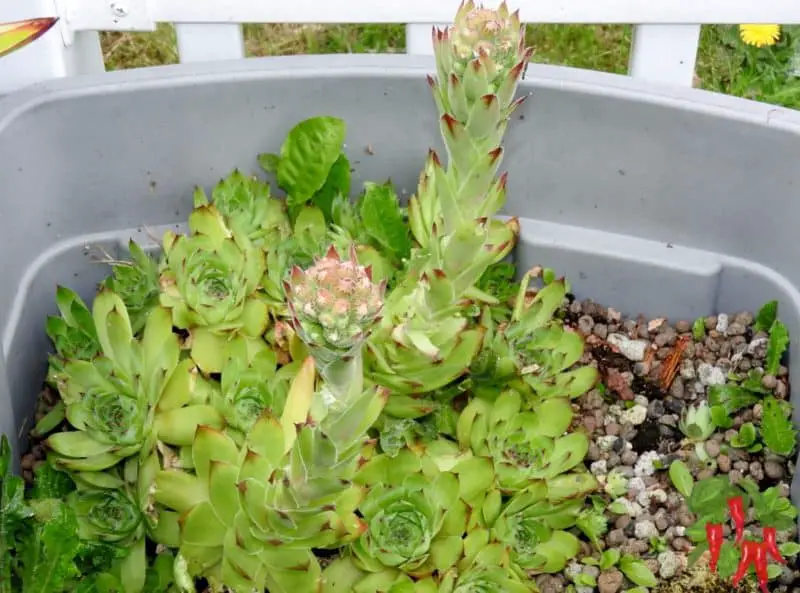
It also is lighter and does not compact like some potting mixes. The flowering Sempervivium in this picture is growing in pure coco coir.
There is a pebble mulch on top but it is not needed. You can mix coco coir with perlite to speed up drying time but it is not really necessary.
Watering Hens And Chicks
The plant is drought-tolerant and can thrive indoors with very little water.
When watering hens and chicks, be sure to use a light hand. Allow the soil to dry out completely between waterings, as too much water can lead to root rot.
Hens and chicks are also known as Sempervivum, which means “always alive.” This is fitting, as the plant is very hardy and can survive in a wide range of conditions.
As far as I can tell overwatering is about the only way you could possibly kill this plant.
With proper care, your hens and chicks will thrive indoors and out for many years to come.
Propagating Hens And Chicks
These plants are extremely easy to propagate. Simply separate “chicks” from their mother plant.
Choose offsets that have already rooted if possible.
If no rosettes have roots you can wait longer for them or carefully separate them and set them in moist coco coir to root.
There are some people that claim you can root Sempervivum from leaves but I don’t really think this works.
Besides they are so easy to propagate from rosettes that I can’t see any reason to do this.
Sempervivum Flowering
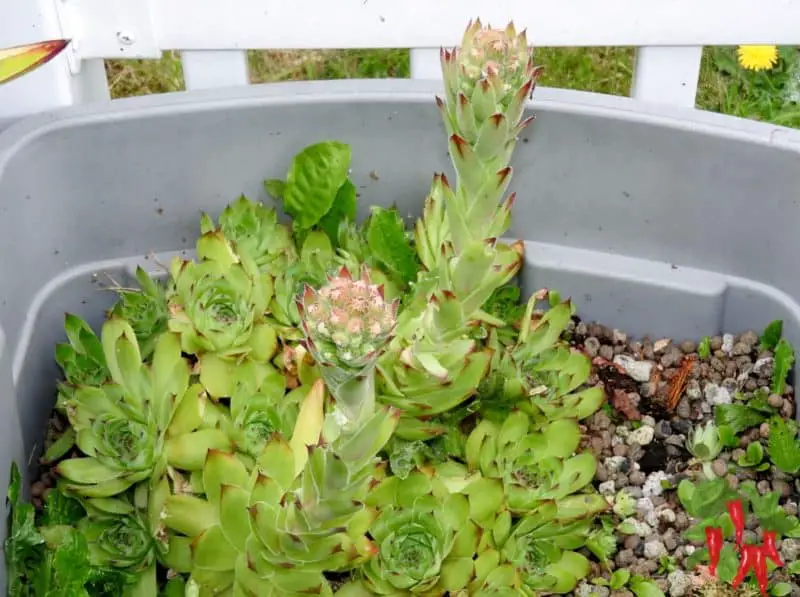
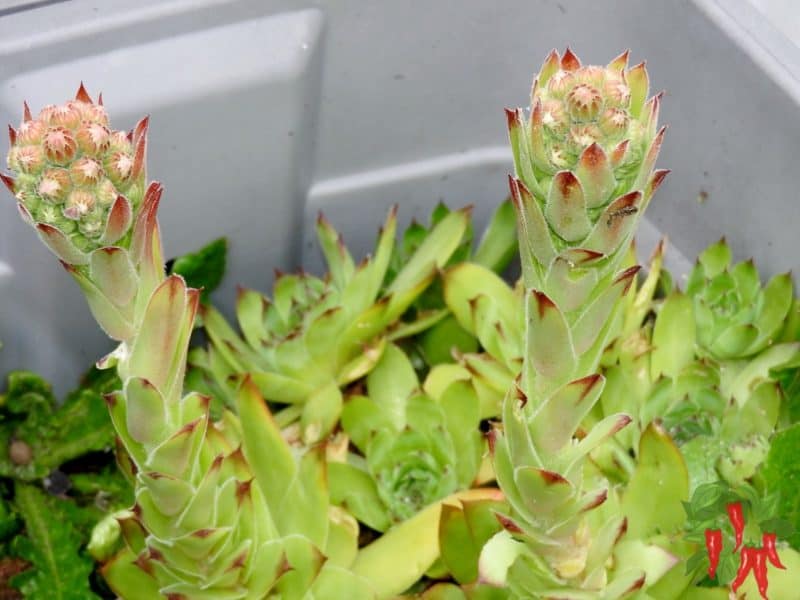
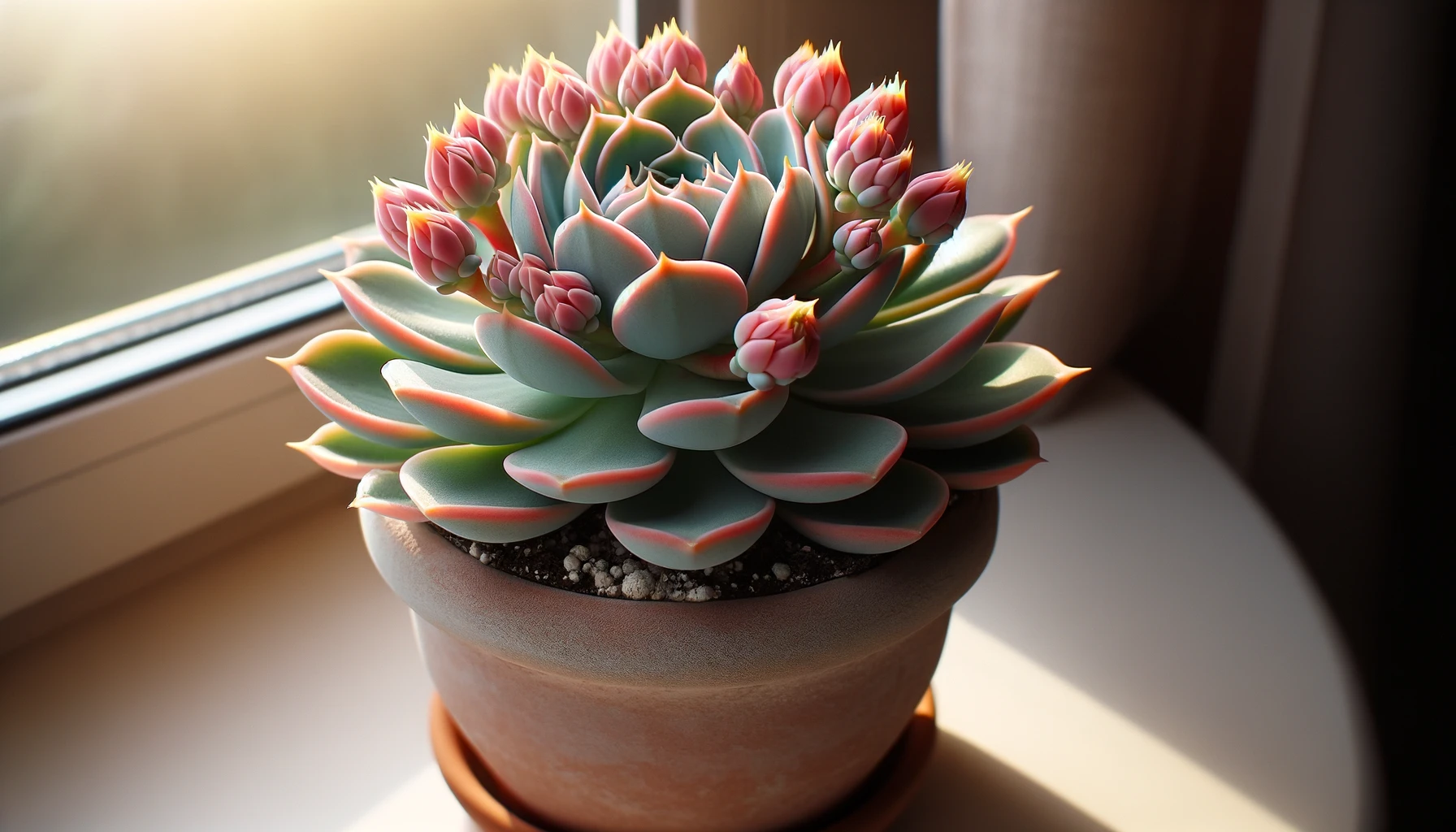
I have had these hens and chicks for quite a while but for some reason, they started to flower this year.
I don’t think this is something that happens very often and these plants are probably at least 5 years old.
The spikes are really cool looking. Unfortunately, I found out the plants die after flowering. Kind of sad but there are plenty of plants to take their place.
Sempervivum FAQ

Embarking on the journey of growing Hens and Chicks indoors can be an exhilarating endeavor.
With their hardy nature and minimal care demands, they make a robust addition to your indoor green space.
The following Frequently Asked Questions (FAQs) are tailored to equip you with the insights needed to nurture these resilient succulents.
From lighting preferences to propagation techniques, we’ve got you covered on the essentials of Hens and Chicks care.
Q. What type of lighting is best for Hens and Chicks?
A. They prefer bright light, ideally from a south-facing window. If natural light is scarce, LED grow lights are a suitable alternative.
Q. How often should I water my Hens and Chicks?
A. Water sparingly, only when the soil has completely dried out. Over-watering can lead to root rot, a common issue with succulents.
Q. What soil mix should I use for Hens and Chicks?
A. A well-draining soil is crucial. You can use a mix of coco coir and perlite or a commercial cactus or succulent mix.
Q. How do I propagate Hens and Chicks?
A. Propagation is done by separating the chicks from the mother plant. Choose offsets that have rooted and plant them in a well-draining soil mix.
Q. Why are my Hens and Chicks flowering?
A. Flowering is a natural phase, though it leads to the mother plant’s death post-flowering. However, with the chicks, the plant continues its lifecycle seamlessly.
Growing Hens And Chicks Indoors Final Thoughts
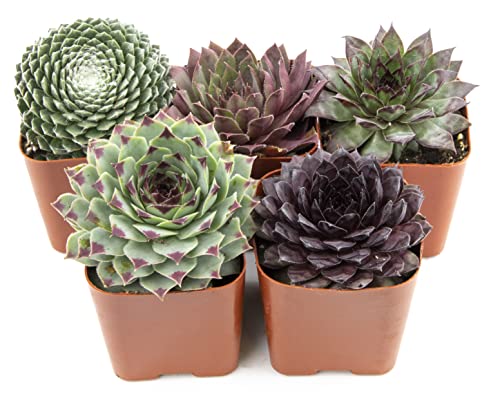
Overall, growing hens and chicks indoors is a great way to improve your lifestyle.
These plants are easy to care for and can thrive in a wide range of conditions.
Additionally, they are known to be drought-tolerant and can survive with very little water.
Propagating these plants is also extremely easy, so you can have many plants to enjoy for many years to come.
If you are looking for a hardy and low-maintenance plant to improve your indoor space, hens and chicks are a great option.
Benefits Of Keeping Indoor Plants For Improved Lifestyle (indoorvegetablegrower.com)
🌵 Indoor Succulents Growing Guides
From quirky “living stones” to elegant echeverias, discover care guides, benefits, and unique succulents perfect for brightening your indoor space.
-
- 🍬 Jelly Beans Succulent Care
- 💧 How to Care for Aloe Plants Indoors
- 🎄 Zygocactus (Christmas Cactus) Care Indoors
- 🐾 Bear Paw Succulent Care
- 🌱 Dwarf Jade Plant Care
- 🪨 Lithops (Living Stones) Plant Care
- 🌼 Echeveria Care Indoors
- 🥒 Pickle Plant Succulent Care
- 🕯️ Candlestick Plant (Succulent) Care
- 🐠 Fishbone Cactus Care
- 🌿 Burro’s Tail Plant Care
- 🌙 Moonstone Succulent Care
- 🦴 Dancing Bones Cactus Care
- ✨ Echeveria Elegans Benefits
- 🌹 Crown of Thorns Cactus Care
- ⭐ Echeveria Orion Care
- See all articles in our Indoor Succulents category
 Steve S. is the creator of