
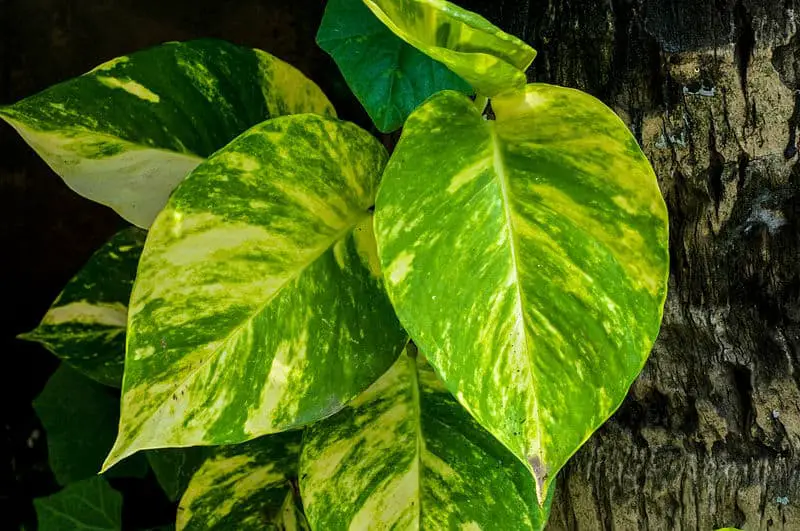
If you’ve been searching for a foolproof houseplant, you’ll love Pothos indoor plant care.
This hardy vine thrives in low light, forgives missed waterings, and rewards you with cascading greenery that instantly brightens your space.
Whether you’re a first-time plant owner or adding to your collection, Pothos makes plant care feel effortless.
Pothos indoor plant care is extremely easy and this lush green vine also called devil’s ivy can thrive in a variety of environments.
If you’re looking for an easy-to-care-for houseplant, then Pothos is a great choice. Here’s some quick care tips:
- Pothos, also known as Devil’s Ivy, is a hardy indoor plant that requires minimal care.
- It thrives in a variety of light conditions and needs water only when the soil feels dry.
- Being a fast grower, occasional trimming helps manage its growth.
- It can be propagated easily through stem cuttings and is known for its air-purifying qualities.
What Is Pothos Anyway? Overview

Pothos (Epipremnum aureum), also known as devil’s ivy, is an attractive trailing vine that is easy to care for, making it a great choice for beginners.
Epipremnum aureum is a species in the arum family Araceae, native to Mo’orea in the Society Islands of French Polynesia. Epipremnum aureum – Wikipedia
It tolerates low light and minimal watering, making it an ideal plant for bathrooms or offices.
Pothos is also known for its ability to purify the air, making it a welcome addition to any home.
The leaves are heart-shaped and can be variegated with shades of green, yellow, and white.
Pothos is a fast-growing plant, so it may need to be trimmed back occasionally to keep it from taking over its space.
With proper care, Pothos can thrive for many years and become a treasured part of any indoor garden.
9 Things You Need To Know About Pothos Indoor Plant Care

1. Devil’s ivy is a great indoor plant that is easy to care for
Pothos (Epipremnum aureum) is a stunning trailing plant that is perfect for beginners.
Also known as devil’s ivy, Pothos is very easy to care for and can thrive in a wide range of conditions.
It is an ideal plant for those with busy schedules, as it doesn’t require much attention.
Pothos can be grown in soil or water and will tolerate low light levels. However, it will produce more leaves if it is kept in a bright spot.
This versatile plant can also be trained to climb, making it a great choice for adding greenery to any space.
Whether you’re looking for an easy-care houseplant or hoping to add some green to your walls, Pothos is the perfect plant for you.
2. It doesn’t need a lot of sunlight or water to thrive
Pothos, also known as Devil’s Ivy, is a hardy plant that can thrive in a variety of conditions.
It is a popular choice for indoor gardening, as it doesn’t need a lot of sunlight or water to survive.
In fact, Pothos is known for being tolerant of neglect.
However, if you want your plant to thrive, it’s important to give it some basic care.
3. Pothos Indoor Plant Care Tips
 Pothos (‘N Joy’) – 6” from California Tropicals
Pothos Plant Care Reference Guide
| Characteristic | Details |
|---|---|
| Common Name | Pothos, Devil’s Ivy |
| Botanical Name | Epipremnum aureum |
| Native Habitat | Mo’orea, Society Islands (French Polynesia) |
| Plant Type | Evergreen tropical vine |
| Growth Pattern | Trailing or climbing vine |
| Mature Size | Up to 6–10 ft indoors (20+ ft outdoors) |
| Watering | Water when top 1 inch of soil is dry; avoid overwatering |
| Light/Sun Exposure | Bright, indirect light; tolerates low light |
| Soil Type | Well-draining potting mix with organic matter |
| Soil pH | 6.1 – 6.5 (slightly acidic) |
| Temperature | 65–85°F (18–29°C) |
| Humidity | Average household humidity; enjoys higher humidity |
| Bloom Time & Flower Color | Rare indoors; small green-white spathes in the wild |
| Potential Problems | Yellowing leaves (overwatering/low light), root rot, toxic to pets |
| Repotting | Every 1–2 years or when root-bound |
| Hardiness Zones (USDA) | 10–12 (grown indoors elsewhere) |
4. Watering Pothos
Water Pothos when the top inch of soil is dry. Allow the plant to dry out completely before watering again, as too much moisture can cause the roots to rot.
5. Pothos Lighting
Pothos prefers bright, indirect light but can also tolerate low light conditions.
If the leaves start to turn yellow, this is a sign that the plant is not getting enough light.
6. Pothos Fertilization
Pothos plants are not heavy feeders so fertilizing them once a month with a complete fertilizer should be enough.
Make sure to follow directions and don’t over-fertilize. Less is more when it comes to fertilizing.
7. Pothos Pot Size
Pothos prefers to be in smaller pots. Some plants actually prefer to be slightly root-bound.
If you place devil’s ivy in a large pot it will spend time growing roots instead of leaves.
So keeping it in a small pot is just fine and it can get quite large like this.
7. Propagating Devils Ivy
You can propagate devil’s ivy by cutting off a stem and planting it in water or soil
Devil’s ivy, also known as Pothos or Epipremnum aureum, is a popular houseplant.
One of the reasons devil’s ivy is so popular is that it is easy to propagate.
To propagate by stem cuttings, simply cut a piece of stem about six inches long and remove the bottom leaves.
The cutting can then be placed in water or soil. Within a few weeks, roots will begin to form and the plant will start to take off.
By propagating devil’s ivy, you can create new plants for your home without having to purchase them from a nursery.
8. The leaves of the plant are poisonous, so keep it away from pets and children
The Pothos plant is a common houseplant that is easy to care for and typically grows well indoors.
However, it is important to note that the leaves of the Pothos plant are poisonous.
If ingested, they can cause stomach pain, vomiting, and diarrhea in both pets and humans.
As a result, it is important to keep this plant out of reach of both children and pets.
If you have a Pothos plant in your home, be sure to keep it on a high shelf where it will be out of reach.
With a little bit of care, you can enjoy this beautiful plant without putting your family at risk.
9. Devil’s ivy is a great way to add some life to your home décor
Devil’s ivy, also known as Pothos or Epipremnum aureum, is a fast-growing vine that is native to the Society Islands of French Polynesia.
It is a popular houseplant due to its easy care requirements and its ability to thrive in a wide range of conditions.
Devil’s ivy can be found in a variety of colors, including green, yellow, and white.
The plant is known for its vigorous growth habit; it can reach up to 20 feet in length if left unchecked.
However, it can easily be controlled by pruning. Devil’s ivy makes an excellent addition to any home décor.
It can be trained to grow along shelves or mantels or left to trail down from a hanging pot.
This hardy plant is tolerant of low light levels and irregular watering schedules, making it the perfect choice for busy homeowners.
So if you’re looking for a way to add some life to your décor, consider Devil’s ivy!
Pothos Varieties

Pothos is a delightful and easy-to-grow houseplant that comes in a variety of colors and leaf shapes.
The most common variety, the Golden Pothos, has heart-shaped leaves that are variegated with shades of green and yellow.
The Marble Queen Pothos is another popular variety, characterized by its white and green swirling leaves.
For something a little different, the Neon Pothos features bright chartreuse leaves, while the Emerald Pothos has deep green leaves with a glossy sheen.
No matter which variety you choose, Pothos is sure to add a touch of elegance to your home.
Pothos Training
One of the most popular ways to grow Pothos is to train them to climb.
This can be done by simply attaching the plant to a support with some string or yarn.
As the plant grows, it will naturally begin to twine around the support, creating a beautiful cascading effect.
Another option is to allow the plant to trail off of a shelf or windowsill.
Pothos plants also work great in hanging baskets where the trailing vines make a very attractive display.
Either way, Pothos make an excellent addition to any indoor space.
Growing Pothos In Aquariums
Some folks actually grow Pothos in their aquariums. If you keep fish you might want to try this method of growing Pothos.
You don’t actually submerge the entire plant in the aquarium only the stems are used without any potting mix.
You can place them in a hang on back filter or directly into the tank itself. This is a simple aquaculture project.
These roots will pull nitrates from your tank and help reduce the need for water changes. Here is a video that explains the process a bit more.
Pothos Plant Care FAQs

Diving into the world of Pothos plant care is like unlocking a green thumb’s treasure chest, especially for the novice gardeners among us.
This resilient houseplant not only enhances the aesthetic appeal of indoor spaces but also purifies the air.
While it’s a low-maintenance companion, a handful of care tips can go a long way in keeping your Pothos plant lush and vibrant.
Now, let’s delve into some common queries about Pothos plant care.
Q. How often should I water my Pothos plant?
A. Water your Pothos when the top inch of soil feels dry to the touch. It’s crucial to allow the soil to dry out between waterings to prevent root rot.
Q. What is the ideal lighting condition for Pothos?
A. Pothos prefers bright, indirect light but can also tolerate low light conditions. If the leaves start yellowing, it might need more light.
Q. How do I fertilize my Pothos plant?
A. Fertilize Pothos once a month using a balanced, water-soluble fertilizer. Follow the instructions on the fertilizer packaging to avoid over-fertilizing.
Q. Can I propagate my Pothos plant?
A. Yes, simply cut a 6-inch stem below a leaf node and place it in water or soil. Roots will start to grow within a few weeks, making propagation a breeze.
Pothos Indoor Plant Care Final Thoughts

Pothos plants are a great option for those looking for an easy-to-care-for houseplant.
They are versatile and can thrive in a variety of conditions.
Additionally, Pothos plants are beautiful and come in a variety of colors and leaf shapes.
With a little bit of care, you can enjoy this plant for many years to come.
So if you’re looking for a new houseplant, be sure to give Pothos a try!
🌿 Indoor Houseplant Growing Guides
Want to fill your home with lush, vibrant greenery? These expert indoor houseplant guides will help you grow everything from exotic blooms to hardy foliage with ease!
- 🌿 Benefits of Keeping Indoor Houseplants (Pillar Guide)
- 🌱 Can You Grow Gladiolus Indoors? 11 Easy Gladioli Growth Tips
- 🍃 Pink Wandering Jew: Easy Nanouk Tradescantia Care
- 🌾 Tī Plant Care Indoors: 7 Proven Tips To Transform Your Space
- 🪴 Rubber Plant Care Indoors: 11 Best Care Tips For Beginners
- 🍀 Ficus Benjamina Indoors: 6 Easy Growth Tips For Beginners
- 🌼 How To Care For Peace Lily Indoors: 13 Easy Care Growth Tips
- 🌹 Bubble Gum Plant Care: 11 Tips And Tricks For Beginners
- 🌺 Hibiscus Plant Care Indoors: 7 Growth Tips For Beginners
- 🍂 Growing Jacob’s Ladder Indoors: Comprehensive Guide
- 🌷 Purple Shamrock Plant Care: 13 Tips And Tricks For Beginners
- 🌿 Creeping Jenny In Pots: 13 Lysimachia nummularia Growth Tips
- 🏡 Vertical Gardening Ideas: Best Small Space Garden Ideas
- 🪴 Chinese Money Plant Care Indoors: 7 Easy Growth Tips
- 🌳 9 Triangle Ficus Care Secrets for a Lush, Healthy Plant
- 🍌 Ice Cream Banana Tree Care: 15 Tip Complete Growth Guide
- 🌱 How to Make a Nerve Plant Thrive: 10 Tips and Tricks
- 🌸 African Violet Care Indoors: 11 Easy Care Tips For Beginners
- 🌺 Alternanthera Party Time Care: 7 Easy Growth Hacks
- 🌼 Geranium Care In Pots: 9 Geranium Growth Tips For Beginners
- 🌿 Purple Velvet Plant Care: 7 Easy Growth Tips And Tricks
- See all articles in our Indoor Houseplants category
 Steve S. is the creator of