Why Start Growing Vegetables In Coco Coir?
Thinking about switching from soil to coco coir? Coco coir is one of the most effective, sustainable, and easy‑to‑use growing mediums for vegetables indoors and outdoors.
With better root development, improved drainage, and superior aeration, coco coir can help you grow healthier, more productive crops.
In this guide, you’ll learn step‑by‑step how to start growing vegetables in coco coir, prepare it properly, and feed your plants for maximum success.
Did you know growing vegetables in coco coir will produce better crops than growing them in soil?
A lot of vegetable gardeners are unfamiliar with coco coir, but it is far superior to peat-based potting mixes for vegetables and even houseplants.
Is Coco Coir Good For Growing Vegetables?
Coco coir works great for growing vegetables. The Dutch are master growers and farmers. Because of their cold damp climate, most of their vegetables and flowers are grown indoors in greenhouses. They grow most of their crops in coco and you should too.
I am going to show you how to prepare coco coir to grow vegetables indoors or out and get better healthier crops doing it. But first, we need to look at the difference between coco coir and peat.
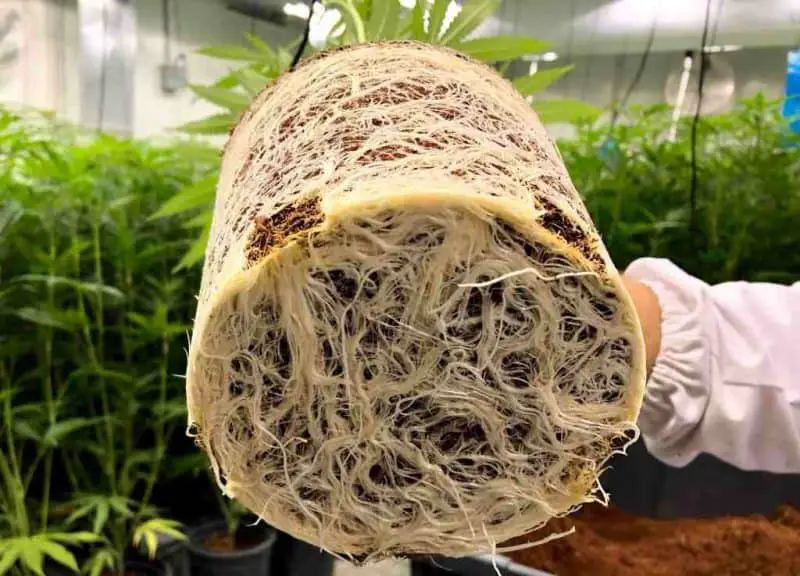
Do you think you can get roots like this in potting mix? More roots mean more fruits and roots just love growing in coco coir.
Coco Coir Vs Peat
Most commercial potting soil is peat based. So is a lot of the media in greenhouse grown crops here in the US. It’s different here because we have lots of peat bogs to harvest. And that is the first problem with peat….
- Peat is strip mined and destroys our wetlands. Coco coir is a renewable resource made from coconut shells.
- Peat is very acidic and hard to wet so it is treated with lime and wetting agents. Coco is pH neutral and has fantastic water retention.
- Peat based soil mixes compact over time but coco does not compact.
- Peat based mixes must be amended with other things like perlite so they will drain and dry out faster. It is almost impossible to over water coco.
- Coco can be reused multiple times but peat can not be because the lime and wetting agents are gone.
- Coco is ready to go without amending it. Drainage and water retention are unmatched
ProMix is one of the most common peat based mixes and is used in many greenhouses here. Because of how it drains it must be mixed with perlite, often quite a lot. You have to let it dry before you can water it again and generally you alternate feed and then water.
Coco coir is actually considered a hydroponic medium because of how fast it drains, how much air it holds, and the fact that you feed it every time you water. This leads to much faster growth than any potting soil will give you.
Coco holds a bit less than 10% of its weight in water while sphagnum peat moss holds up to 20 times its weight. Sphagnum peat moss therefore takes longer to dry out. While this may be good for people who want to water less it also means over watering can become a problem.
Coco drains freely so it needs to be watered more often but it also maintains a higher level of oxygenation even when wet. Plant roots need oxygen to grow and stay healthy just as much as they need water.
What Can I Grow In Coco Coir?
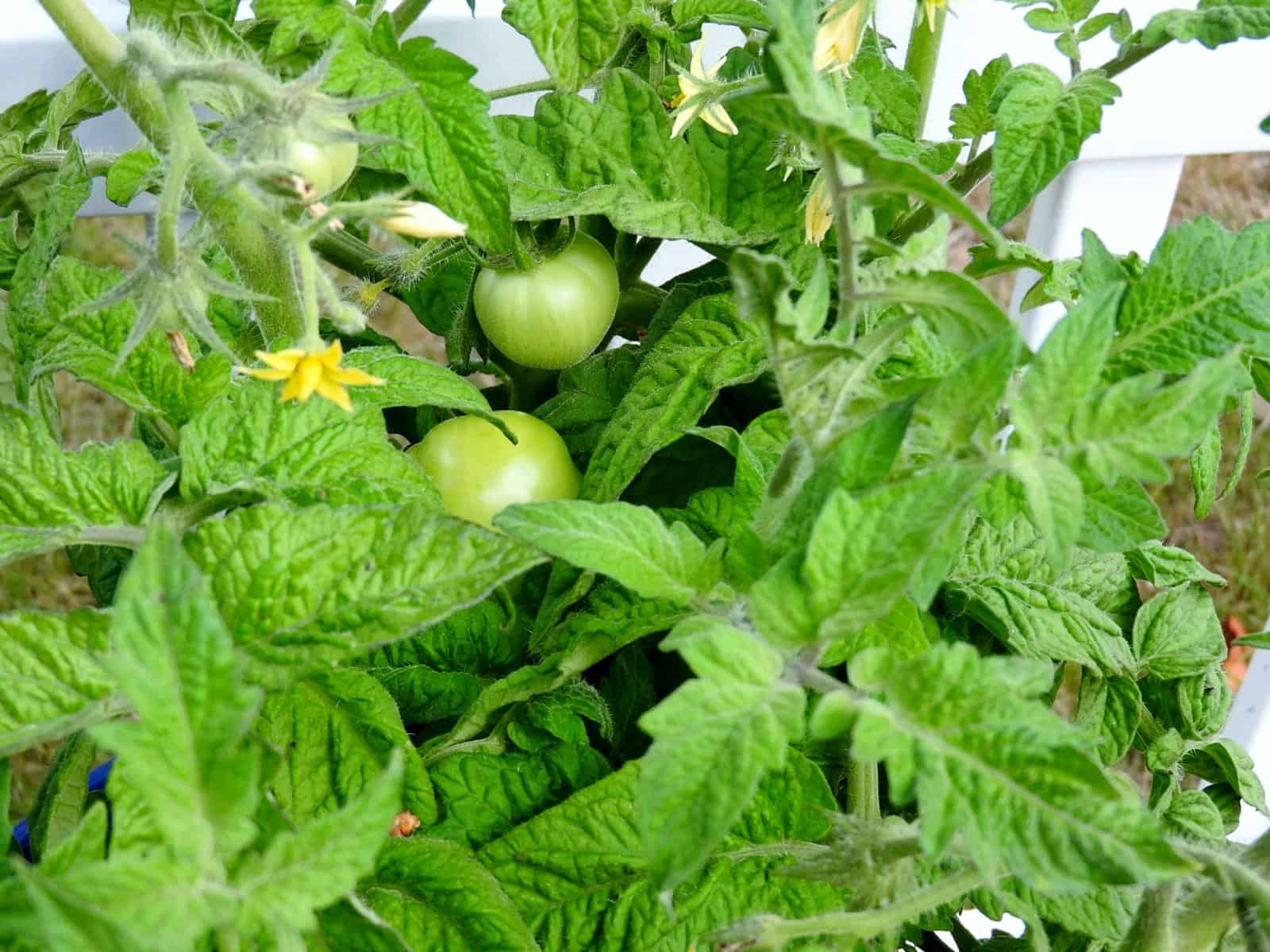
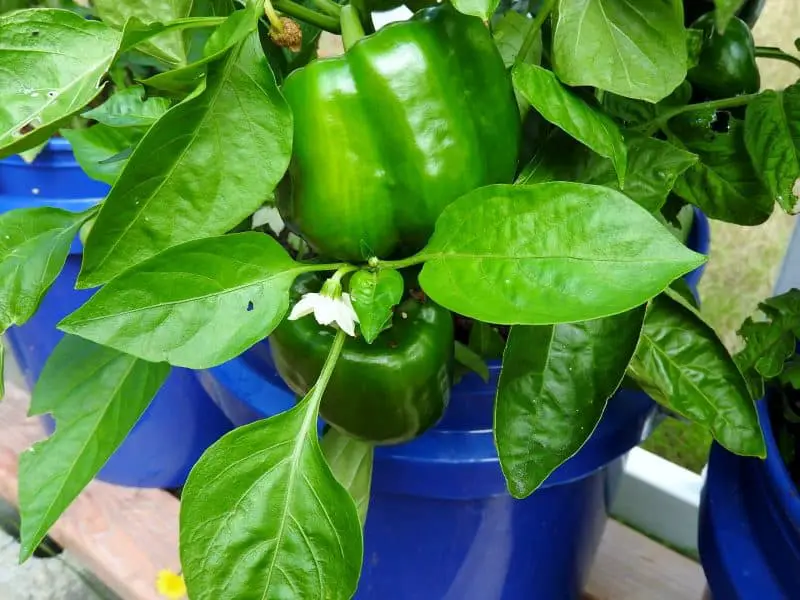
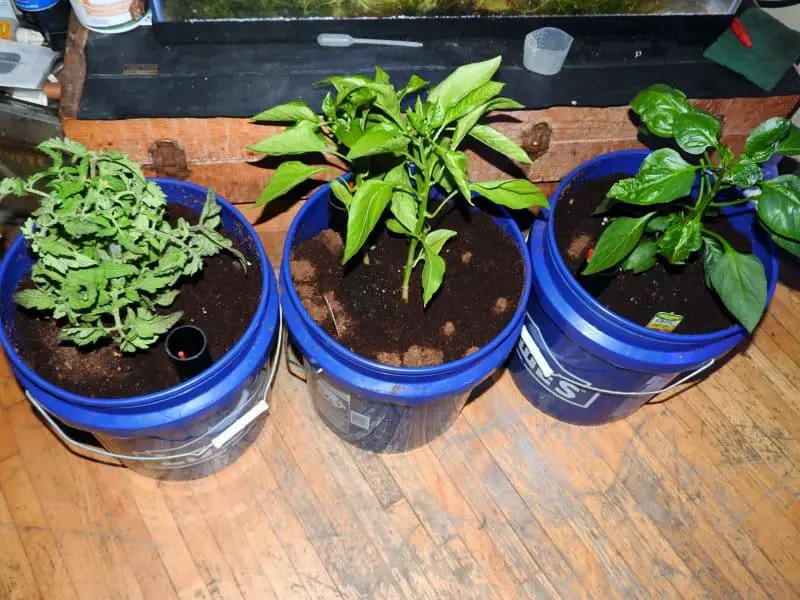
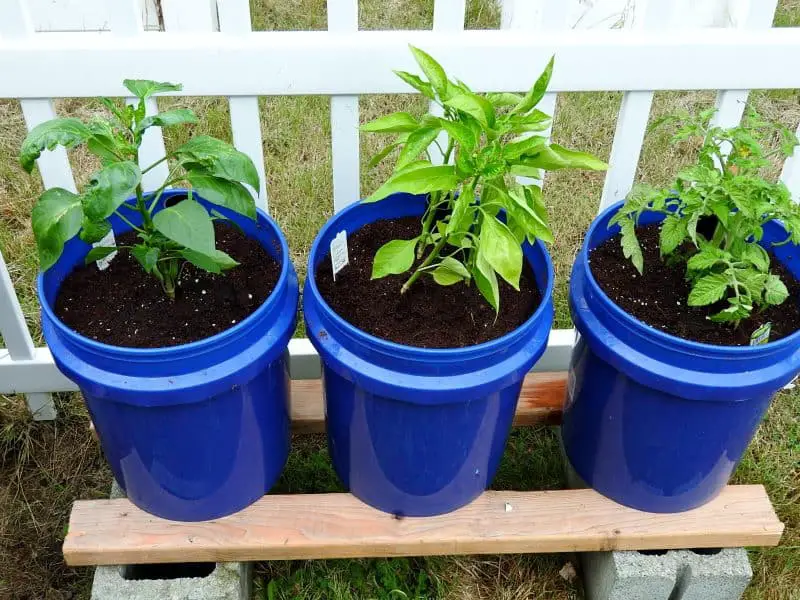
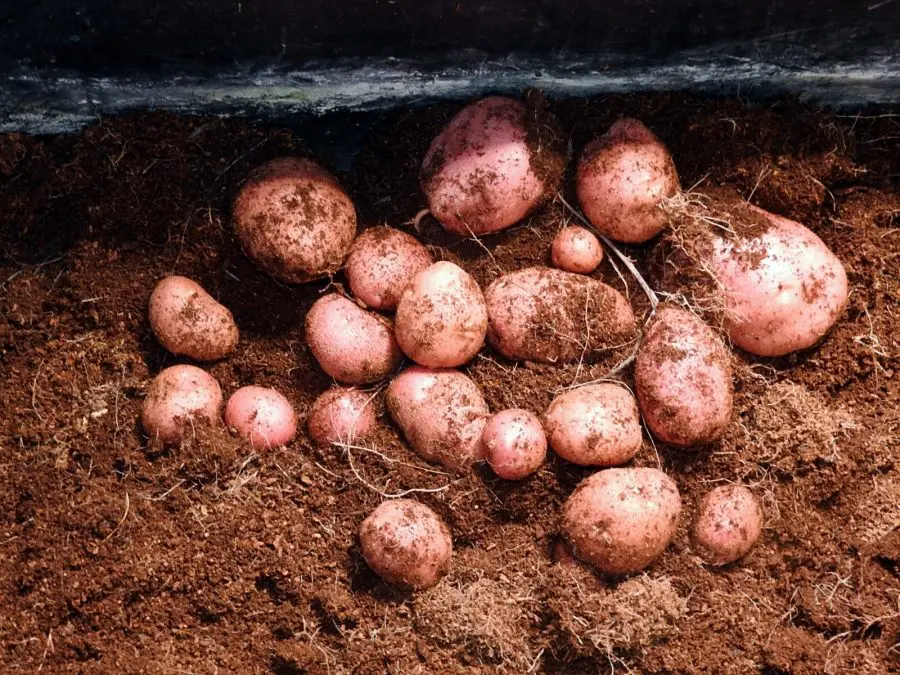
Coco is such a versatile grow media you can really grow anything in it. I grow tomatoes and peppers in 5 gallon GroBuckets filled with coco. This year I grew potatoes in coco and they turned out perfect.
If you are growing carrots in coco they grow straight without forking because there are no rocks to hit and no tight soil to slow growth. Lettuce can be direct seeded into coco without needing to start transplants. In fact, direct seeding works great for most plants.
How To Prepare Coco Coir For Planting
Coco must be prepared before planting but it is important to use a quality product like Canna Coco. All coco is not created equally. Coconut palms grow by the sea and so they absorb a lot of salt.
Some coco is not rinsed and is so salty plants won’t grow well in it. They often sell cheap coco for use as bedding for reptiles but don’t buy it because it is not suitable for agricultural purposes.
I have tried numerous brands over the years but Canna has the best coco in my opinion. It is very well rinsed and has a great texture too. Coco is sold loose in bags or as bricks. I prefer using the bricks. They are easier to carry and free from pests that can make a home in loose coco.
So Canna bricks come 2 to a pack. Each brick makes about 5 gallons of finished coco. They can be broken in half to make a smaller amount.
They are easy to rehydrate. They actually come in a bag you can use to soak them in. But I like to put mine in a tub and cover them with a weak CalMag nutrient solution. I will get to that in a minute.
Most coco comes from India and the husks are actually a waste product so they are a renewable resource, unlike peat. Unless you live under a rock you know India was first hit really hard by Covid and the tariffs will probably impact price too.
As a result, right now the price of coco is really high compared to what it was. I am pretty sure making coco wasn’t a priority so it is probably a supply chain issue that hopefully will resolve itself.
Coco Chemistry
Every grow media has what is called a CEC (cation exchange capacity) and the higher it is the more nutrients it can hold on to. Think of each CEC as a draw in your refrigerator. The more draws you have. the more food you can store.
Peat has a very high CEC of 100-200 but coco is less at 40-60. That’s a good thing bad thing. It means peat can hold on to more nutrients but they may not all be available to your plants.
But in coco you have to feed more often because there is a smaller nutrient reserve. It also means your plants get to use more of what you feed them.
Coco wants to hold on to salts, particularly potassium. But when it does that it has to empty the drawers that hold calcium and magnesium to do it. Remember there are only so many drawers in your fridge.
In order to counteract this tendency, we need to feed our plants with CalMag which is a mix of calcium and magnesium, and usually some nitrogen is added in. I use a product called CaliMagic for this.
It is the best on the market. It adds more calcium and magnesium than others and also less nitrogen which can sometimes be not wanted or needed during fruiting. You will need to add some CalMag with every feeding to keep things balanced.
Feeding Your Coco Garden
Coco can be fed organics or synthetics. Worm castings make great organic fertilizer in coco so add them if you have them. They cant burn your plants. Something like bat guano is a different story though.
I like to use both but prefer synthetics for my base nutrients. The reason being if I overfed my plants I can flush out the excess nutrients easily. That is hard to do with organic nutrients and measuring how much to use is largely guesswork.
With synthetic nutrients, for example, if I want to feed my tomatoes at 600 ppms I can easily mix up a nutrient solution at that strength.
As mentioned before coco has a unique soil chemistry and there are nutrients formulated specifically for use in coco. Canna has been making nutrients for coco longer than just about anyone else, They make organic and synthetic nutrients for coco and if you follow their directions you cant go wrong.
Canna Bio is a 2 part organic nutrient mix. You use one on young plants and the other on flowering plants like tomatoes. Just follow their directions.
Watering Coco
Also because coco is a hydroponic medium it needs to stay moist to keep the chemistry balanced and keep your veggies growing. Moist does not mean soaking wet. More plants are killed by overwatering than under watering or almost anything else.
Don’t let it dry out and if it does never add just plain water. Always add a bit of fertilizer with it. Plain water would wash out the calcium and magnesium and unbalance things.
When you do water you want to see some runoff from the pot. This helps keep salt from building up in your pot. Don’t let your pot sit in the runoff. Empty the tray or saucer and get rid of it.
If you use the same size pots it will be easy to know when to water. Lift up your pots. They should feel light. If they are heavy they don’t need to be watered yet. You will get a feel for it after a while.
Coco will turn lighter on top as it dries but if you poke your finger in the pot you may find it is still moist just below the surface an inch or two.
Starting Seeds In Coco Coir
You can start seeds directly in coco. It is great for germination because it holds moisture but it is easy for seeds to pop up through it.
You want to start in small pots and as the plants grow you transplant them to a larger pot. You do not want a small plant in a big pot. Because roots grow so well in coco transplanting is pretty easy.
Wait until roots are coming out of the pot you are using. Squeeze the sides a bit and then put your hand over the top of the pot and turn it upside down.
It should come out pretty easily. If it doesn’t try giving the bottom of the pot a tap and press on the sides a bit. Don’t try to pull it out by the stem whatever you do.
Small plants have small root systems so they can’t drink much. If you put a sprout in too big of a pot the soil will stay wet to long and the roots may rot.
Can You Plant Directly In Coco Coir?
Some plants that are fast growing can be planted directly. Lettuce is a good example. Radishes too. Plant some extra seeds and then thin your plants out as they grow. I would not direct seed slower starting plants like tomatoes or peppers. Those are better grown in coco too but as transplants.
The One Drawback For Coco
Nothing is ever perfect and everything has a downside. With coco it is called the fungus gnat. They are pesky little flies that can barely fly at all. They don’t bite either.
But they do like to lay their eggs in your coco and their larvae can eat your roots. Unless they are really bad I have never really seen them damage a plant and they have a short life cycle in soil. Some people can’t get rid of them and some people never see one.
There are several ways to deal with them. The first thing you want to do is hang some yellow sticky traps. If you have them they will get stuck on the trap. If you find them there they have probably laid some eggs in your pots.
You can cover the tops of your pots with some landscape fabric and weigh it down with a bit of sand. This prevents them from laying their eggs and it also prevents any in the soil from getting out. Cycle broken so bye bye.
There also is a naturally occurring bacteria called bacillus thuringiensis that will kill them and is harmless to humans or pets. It can be used as a soil drench or a spray. It is really the larvae you want to kill. The traps should take care of the fliers which only live a couple of weeks.
A No Brainer Coco Watering System
If you want an easy way to water your vegetables consider using self watering planters. They are also called SIPs or sub irrigated planters because they water from the bottom up.
You fill these on top through a tube and the water goes to a cavity in the bottom that holds the water. The water then wicks up through the coco coir. Here is a recent review I did.
GroBucket Self Watering 5 Gallon Bucket System Review Easy Growing
There is an overflow hole to prevent over watering. There is a float in the tube to show you the water level. When the float goes down it is time to water again. You will never again need to guess when it is time to water your plants.
The reservoir should last at least a couple of days depending on plant size and temperature. Mine were out in the sun but indoors it would probably last longer.
They are very simple, use no electricity, and have no moving parts. They work great with coco and will last for many years.
See the GroBucket self watering planter on Amazon
Canna Coco Is What I Use And Recommend
All coco coir is not created equally. Some cheaper brands contain high levels of salt making them unsuitable for growing plants.
Canna coco is prebuffered and very low in salts.
It also has consistently high quality and I have tried other brands but it still remains the best quality coco coir on the market.
It is available as coco bricks or loose and ready-to-use.


Coco has unique properties and requires a fertilizer made for coco for best results. Canna started the coco revolution and Coco A & B is still the best.
The Coco Coir Advantage: Boosting Plant Health and Happiness
Using coco coir for your plants comes with a host of advantages that can help your indoor garden thrive.
It’s superb water retention and drainage capabilities ensure that your plants receive the right amount of moisture without the risk of overwatering.
The excellent aeration provided by coco coir promotes strong root growth, ultimately leading to healthier, more vigorous plants.
Plus, its natural resistance to pests and diseases means you’ll be creating a safer environment for your green friends.
Coco Coir in Context: Limitations and Considerations
While coco coir is a fantastic growing medium, there are a few things to keep in mind before making the switch.
One potential limitation is that coco coir can sometimes contain high levels of salt, which could harm your plants.
To avoid this issue, it’s important to thoroughly rinse and buffer your coco coir before use.
Additionally, coco coir doesn’t provide essential nutrients for plant growth, so you’ll need to supplement with a balanced fertilizer to ensure your plants receive the necessary nutrients.
FAQ: Growing Vegetables in Coco Coir
Is Coco Coir good for growing vegetables?
Yes. Coco coir delivers fast root growth, excellent aeration, and consistent moisture—leading to healthier, more productive plants than typical peat-based mixes.
Do I need to rinse or buffer coco before planting?
If your coco isn’t labeled “pre-rinsed/pre-buffered,” rehydrate it, then soak with a mild Cal-Mag solution (pH ~6.0) and drain to remove excess salts.
What pH should I use for nutrients in coco?
Keep your feed solution between pH 5.8–6.2 (closer to 5.8 for seedlings, up to ~6.2 for fruiting crops).
How often should I water coco?
Water when the top looks lighter and the pot feels light—often daily for vigorous plants. Aim for 10–20% runoff and don’t let pots sit in drainage.
How strong should nutrients be in coco (EC/PPM)?
Seedlings: ~0.4–0.8 mS/cm (200–400 ppm 500-scale).
Vegetative: ~1.0–1.6 mS/cm (500–800 ppm).
Fruiting: ~1.6–2.2 mS/cm (800–1100 ppm). Always include some Cal-Mag.
Does coco need special fertilizers?
Use coco-specific nutrients or add a Cal-Mag supplement regularly to keep calcium and magnesium balanced.
Should I mix coco with perlite?
Optional. Straight coco works great; a 70/30 coco-perlite blend adds extra air and faster drainage—handy for large, thirsty plants.
Can I sow vegetable seeds directly in coco?
Yes for fast growers (lettuce, radishes, greens). Start slower crops (tomatoes, peppers) in small pots or cells, then up-pot as roots fill.
What container sizes work well with coco?
Leafy greens/herbs: 1–3 gal; bush beans/peppers: 3–5 gal; tomatoes/potatoes: 5–10 gal. Use containers with good drainage (SIPs also work well).
Is coco coir sustainable compared to peat?
Generally yes. Coco is a by-product of coconut processing and is renewable; peat extraction depletes slow-forming bogs.
Can I reuse coco coir?
Often. After harvest, remove roots, flush well, and rebuffer with Cal-Mag. Skip reuse if you had root diseases or severe pest issues.
How do I prevent or control fungus gnats in coco?
Use yellow sticky traps, a BTi drench for larvae, and a breathable top cover (fabric/sand) to block egg laying. Avoid standing water.
Does tap water hardness matter in coco?
Yes. Very hard water can raise pH/alkalinity; very soft water lacks Ca/Mg. Adjust pH and tailor Cal-Mag use based on your water’s EC and alkalinity.
Do self-watering planters (SIPs) work with coco?
Absolutely. Coco wicks well. Keep the reservoir topped and still feed with nutrients (light strength) rather than plain water.
What’s the best way to hydrate coco bricks?
Use warm water with a light Cal-Mag dose, let expand fully, fluff to break clumps, then drain excess and verify pH/EC are in range before planting.
Growing Vegetables In Coco Coir Final Thoughts
I have been growing vegetables in coco for many years and I think it is the absolute best grow media for just about any plant. You can even grow cactus or succulents in coco if you do a 50/50 coco and perlite mix.
It takes a bit of effort to grow with coco because you need to prepare it instead of just dumping potting soil out of a bag. Watering is a bit different too. The increased growth you get makes it well worth the effort though. Once you start to grow in coco you will never go back.
Apartment Kitchen Garden – Growing A Hydroponic Garden In An Apartment
Curious about using coco coir for gardening? These expert guides will help you master coco coir for vegetables, succulents, microgreens, and more.
🥥 Coco Coir Growing Guides
- 📘 Coco Coir vs Peat Moss (Pillar Guide)
- 🌵 Is Coco Coir Good for Succulents?
- 🪴 Coco Coir for Indoor Plants
- 🌱 Soil vs Coco: Which is Better?
- 🌿 Coconut Coir for Microgreens
- 🥗 Growing Vegetables in Coco Coir
- 🥬 How to Grow Vegetables in Coco Coir
- 🧱 How to Use Coco Coir Bricks
- 🏡 Growing Vegetables in Coco Coir Indoors
- 🪟 Using Coco Coir in a Vivosun Stackable Planter
- 🌟 Benefits of Growing Vegetables in Coco Coir
- See all articles in our Coco Coir category
 Steve S. is the creator of