
One of the problems with gardening advice on the internet is that the same information gets repeated over and over. Eventually, something can start sounding like a fact simply because you’ve seen it on dozens of websites, even when the original advice was incomplete, oversimplified, or just plain wrong.
Houseplant lighting is a good example. You’ve probably read that tropical houseplants need “bright indirect light,” that direct sunlight will scorch their leaves, or that certain plants will grow in low light. There’s some truth behind all three statements, but none of them tells the whole story.
How bright is bright indirect light? Does direct sun really burn tropical plants? And when someone calls a ZZ Plant or Chinese Evergreen a low-light plant, how little light are we actually talking about?
In this article, I want to take a closer look at some common houseplant light myths and put those vague terms into perspective. I’ll also show you some simple ways to judge the light in your own home, including a shadow test you can do without buying a light meter.
What You’ll Learn
- Why direct sunlight doesn’t automatically scorch tropical houseplants
- What “bright indirect light” really means
- Why low light should never be confused with no light
- How window direction changes the light your plants receive
- Why moving a plant just a few feet from a window can matter
- How to use a simple shadow test to estimate light levels
- Why day length and seasonal changes matter
Quick Answer: Houseplant Light Advice Needs Context
Direct sunlight isn’t automatically bad for tropical houseplants, “bright indirect light” isn’t one specific amount of light, and a low-light plant still needs light to grow. The right amount depends on the plant, the intensity and duration of the light, its distance from the window, window direction, and even the time of year.
Houseplant Light Levels at a Glance
| Light Situation | What It Means | What to Remember |
|---|---|---|
| Direct Sun | Sunlight falls directly on the leaves. | Some plants tolerate or enjoy it; others may need acclimation or protection. |
| Bright Indirect Light | A brightly illuminated location without strong direct sun for much of the day. | Window direction, distance, curtains, and season all change how bright it really is. |
| Low Light | A location receiving substantially less usable light. | Low-light tolerant does not mean no-light tolerant. |
Myth #1: Direct Sunlight Will Scorch Tropical Houseplants
I see warnings about direct sunlight all the time. You’ll read that a tropical houseplant needs bright indirect light because direct sunlight will scorch its leaves.
That can happen, but it doesn’t mean every tropical plant will scorch as soon as sunlight touches its leaves. A lot depends on the plant and the conditions it has been growing in.
Aloe is an interesting example. It’s a succulent, so you might assume you could move it straight into strong sunlight. Yet Aloe that has been growing in lower indoor light is commonly acclimated gradually before being exposed to much stronger sun.
Meanwhile, plants such as Lithops and Desert Rose can grow in very strong sunlight. So simply saying that direct sun burns houseplants doesn’t tell you enough. You need to know what plant you’re growing and what light conditions it has adapted to.
Outdoor Sun and Sun Through a Window Aren’t the Same
Another thing that’s often overlooked is the difference between growing a plant outdoors in full sun and putting it in a sunny window indoors.
Those are different growing environments. Window glass changes the light reaching the plant, and indoor plants don’t experience sunlight in exactly the same way as plants sitting outside under an open sky.
That doesn’t mean you can put every houseplant against a sunny window without thinking about it. It means that saying “avoid direct sunlight” without explaining the plant, window direction, duration, and intensity leaves out important information.
Acclimation Matters Too
A plant that has been growing in relatively low light may react badly if it’s suddenly moved into much stronger sunlight. That doesn’t necessarily mean the plant can never tolerate that amount of light.
Giving the plant time to adjust can make a big difference. This is why I prefer looking at the individual plant rather than following a blanket rule that says tropical houseplants should never receive direct sun.
Myth #2: “Bright Indirect Light” Tells You Exactly Where to Put a Plant
“Give it bright indirect light” may be the most repeated lighting instruction in houseplant care. It’s generally useful advice, but there’s an obvious problem: what the heck does bright indirect light actually mean?
How bright is bright? How far should the plant be from the window? Does an east-facing window count? What about a south-facing window behind a sheer curtain?
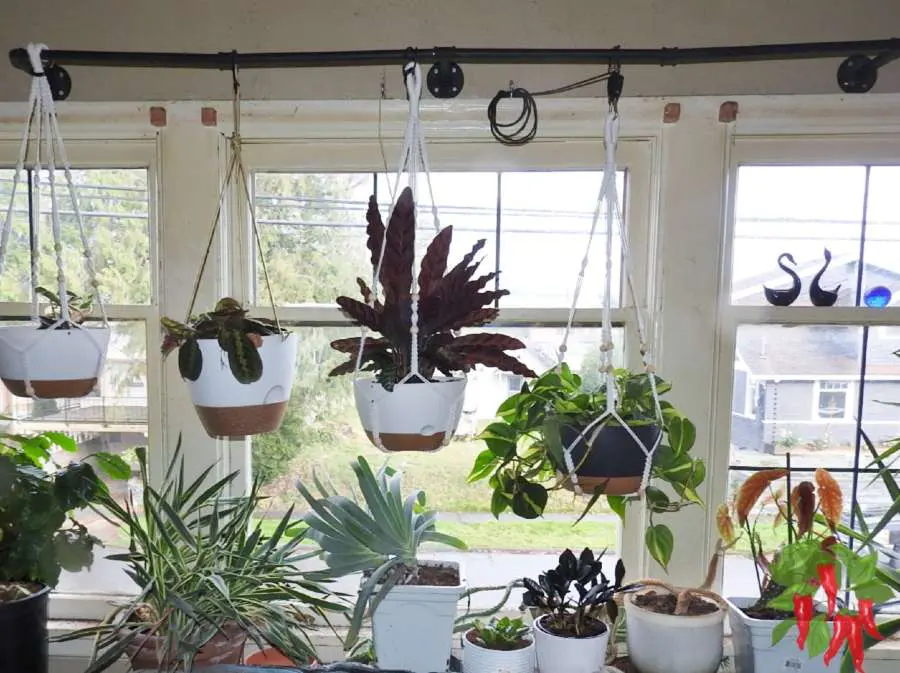
For me, an east-facing window is one of my favorite locations for many tropical houseplants. They get some direct morning sun followed by fairly bright light for the rest of the day, without the hotter, stronger afternoon sun you can get through a west-facing window.
But even that isn’t a universal rule. Some plants need more light if you want them to flower well or reach their full potential. That’s why I think it’s more useful to understand the light you actually have than to rely entirely on labels like “bright indirect light.”
How Can You Tell How Much Light a Room Really Has?
This is where measuring light can be helpful. I have a PAR meter, so I can measure the light levels at different locations around my home and see how much usable light is actually reaching a plant.
Most people aren’t going to buy a PAR meter just to decide where to put a houseplant, and you really don’t need one. Phone light-meter apps can give you a rough idea of how light changes around a room, and there’s an even simpler method that requires no equipment at all.
Try the Shadow Test
The shadow test is an easy way to get a general idea of the light available in a particular location. Hold your hand between the light source and a surface and look at the shadow it creates.
- Strong light: You should see a distinct shadow with relatively sharp edges.
- Bright indirect light: You’ll still see a shadow, but the edges will be softer or fuzzier.
- Low light: The shadow will be very faint or you may have difficulty seeing one at all.
It’s not as precise as a light meter, but that’s really not the point. It gives you a simple way to compare different locations in your home instead of trying to guess what someone means by “bright indirect light.”
Distance From the Window Makes a Bigger Difference Than You Might Think
Another problem with houseplant light recommendations is that we often talk about window direction without talking about distance from the window.
A plant sitting close to a bright window and another plant several feet back in the same room are not necessarily receiving anything close to the same amount of light.
Light intensity can drop dramatically as you move away from the light source. The exact change inside a room is complicated by window size, angle, reflections, surrounding buildings, trees, and other factors, but the practical lesson is simple: moving a plant two or three feet can make a surprisingly large difference.
That’s also something you can demonstrate with a light meter or even a phone app. Take a reading near the window and then take another a few feet farther into the room. You may be surprised by how quickly the reading changes.
Using Window Direction to Your Advantage
Window direction gives you a useful starting point, but it isn’t a complete measurement of light. Trees, buildings, roof overhangs, curtains, latitude, and the season can all change what actually reaches your plants.
East-Facing Windows
For me, an east-facing window is one of the best locations for many tropical houseplants. The plants receive some direct morning sun and then continue to receive fairly bright light as the day goes on.
That morning sunlight gives them additional light without exposing them to the hotter afternoon sun you might get in a west-facing window. I’ve found this works well for many of the tropical plants I grow.
That doesn’t mean an east window is enough for everything. Some plants may grow there but need stronger light to flower well or develop the growth you’re looking for.
South-Facing Windows
A south-facing window can provide a lot of light. If you’re growing a plant that needs plenty of light but shouldn’t immediately be exposed to strong direct sun, you have several ways to adjust the conditions.
One option is a sheer curtain. It can filter the incoming sunlight while still keeping the area bright. Another option is simply moving the plant farther back from the window.
This is where distance becomes useful. Instead of deciding that a south window is either “good” or “bad” for a particular plant, you can change the plant’s position until you’ve created a light level that works for it.
West-Facing Windows
West-facing windows can receive strong afternoon sunlight. That can be useful for plants that want more light, but it may be more than some plants are accustomed to, especially if they’ve previously been growing under relatively low indoor light.
Again, you have options. Distance from the window, a sheer curtain, or gradual acclimation can all help you work with the light you have.
North-Facing Windows
North-facing windows are where plant selection becomes more important. If that’s the natural light you have available, you need to look for plants that tolerate lower light levels.
ZZ Plants, Aglaonema or Chinese Evergreens, Peace Lilies, and many ferns are examples of plants that can work in lower-light locations.
But there’s an important distinction between a plant tolerating low light and reaching its full potential there. Some plants will stay alive and continue growing, but growth may be slower, flowering may be reduced, and colorful or variegated foliage may become less pronounced.
Myth #3: A Low-Light Plant Doesn’t Need Much Light
This may be the houseplant lighting myth that bothers me the most. You’ll see lists of “low-light plants,” and it’s easy to come away thinking these plants hardly need light at all.
Low light does not mean no light.
Even a ZZ Plant needs light. All green plants need light to photosynthesize and grow. Calling something a low-light plant simply means it can tolerate lower light levels better than plants with higher light requirements.
And “tolerate” is an important word. A plant may survive in low light without necessarily thriving there.
You may see slower growth, smaller new leaves, stretching toward the available light, reduced flowering, or a loss of some foliage color. A plant that’s staying alive isn’t necessarily getting the amount of light it would prefer.
Low-Light Tolerant Is a Better Way to Think About It
I think it’s more useful to think of these plants as low-light tolerant rather than plants that actually prefer darkness.
That small change in wording makes a big difference. Your ZZ Plant may tolerate the darker corner of a room better than many other houseplants, but that doesn’t mean the darkest corner is where it will grow its best.
If you have very limited natural light, choose plants that tolerate those conditions. But if you can give the same plant a little more usable light without exposing it to conditions it can’t handle, you’ll often get better growth.
Light Duration Matters Too
Light intensity is only part of the picture. You also need to think about how long your plant receives useful light during the day.
That’s another reason I like east-facing windows for many tropical houseplants. They get some direct morning sun, and then they continue receiving fairly bright light during the day. You’re not just looking at how bright the light is at one particular moment. The plant is receiving light over a period of time.
This is also why two locations that look similar to us may produce very different results. One plant may receive several hours of useful light, while another spends much of the day in considerably dimmer conditions.
Don’t Forget About Seasonal Changes in Light
The light coming through your windows doesn’t stay the same throughout the year. Here in the Northern Hemisphere, our days become much shorter during winter. The sun is also lower in the sky, and where I live, cloudy winter skies are common.
Put those things together and your houseplants can receive considerably less light during winter than they did in the same location during summer.
That’s important when you’re trying to figure out why a plant that grew well beside a particular window during summer suddenly slows down several months later. The plant hasn’t moved, but its lighting conditions have changed.
Why I Use LED Grow Lights
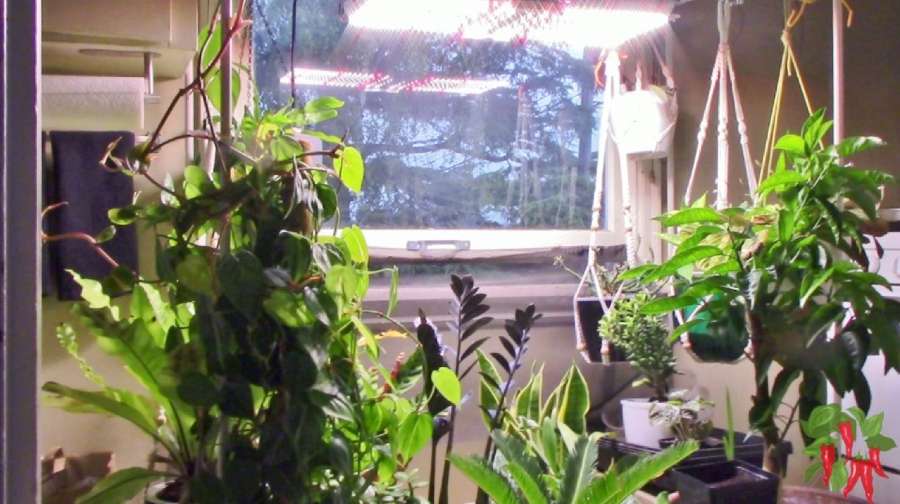
This is one reason I use LED grow lights for many of my plants. With artificial lighting, I can keep the amount and duration of light much more consistent throughout the year.
That doesn’t mean every houseplant needs a grow light. If you have good natural light, use it. But supplemental lighting can be especially useful during winter or in rooms where the available window light simply isn’t enough.
Stop Thinking of Houseplant Light as Three Fixed Categories
I think this is where a lot of online houseplant advice gets confusing. We try to divide light into neat categories: low light, bright indirect light, and direct sunlight.
Those descriptions can be useful as a starting point, but light doesn’t really work as three fixed boxes. There’s a range, and the amount of light reaching your plant changes with window direction, distance from the window, time of day, season, weather, curtains, trees, buildings, and other obstructions.
Then you have the plant itself. Different plants have different requirements, and even plants capable of adapting to lower light may perform better when given more.
That’s why I don’t think there’s much value in memorizing rules like “tropical plants can’t take direct sun” or “ZZ Plants grow in low light.” Those statements leave out too much information.
A Simple Way to Evaluate Light in Your Own Home
You don’t need to turn your home into a laboratory to grow healthy houseplants. I enjoy measuring light with a PAR meter because I want to know what’s happening in my growing areas, but you can learn quite a bit just by paying attention.
Start with the window direction. Look at whether direct sunlight reaches the plant and for how long. Pay attention to how far the plant sits from the window. Try the shadow test. Then watch the plant.
If you’re curious, you can also experiment with a light-meter app on your phone. It won’t replace a PAR meter, but it can help you compare one location with another and see just how much the light changes as you move around the room.
Most importantly, let the plant tell you how it’s doing. Weak or stretched growth, smaller leaves, reduced flowering, and fading coloration can all be clues that a plant would benefit from more light.
Is Your Plant Surviving or Thriving?
That’s probably the question I would ask before calling any houseplant a low-light plant.
A plant can stay alive for quite a while under less-than-ideal conditions. That doesn’t necessarily mean you’ve found its preferred light level.
If your plant is producing healthy new growth, maintaining good leaf size and color, and flowering when it’s a species you expect to flower indoors, you’re getting a much better indication that the lighting is working.
The goal isn’t to give every tropical houseplant the maximum amount of light possible. It’s to understand what your particular plant needs and then use the light you have to give it the best conditions you reasonably can.
❓ Houseplant Light Myths FAQs
What does bright indirect light mean for houseplants?
Bright indirect light generally means a brightly illuminated location where the plant isn’t exposed to strong direct sunlight for long periods. An east-facing window often works well for many tropical houseplants because it provides some gentler morning sun followed by bright light during the day.
Can tropical houseplants get direct sunlight?
Some can. Whether direct sunlight causes damage depends on the plant, the intensity and duration of the sunlight, and what conditions the plant is accustomed to. Plants moved from lower light into much stronger sunlight may need time to acclimate.
Can low-light plants grow without sunlight?
Low-light plants still need light. Plants such as ZZ Plants and Chinese Evergreens tolerate lower light better than many houseplants, but low light should never be confused with no light.
How can I tell if a room has enough light for plants?
Try the shadow test. A clearly defined shadow suggests stronger light, a softer shadow suggests bright indirect light, and a very faint or absent shadow suggests lower light. You can also use a phone light-meter app to compare different locations.
Does moving a plant away from a window reduce its light?
Yes. Light can decrease substantially as you move farther into a room. Moving a houseplant only a few feet away from a window can make a significant difference in the amount of light reaching its leaves.
Do houseplants need less light in winter?
Their need for light doesn’t disappear in winter, but the natural light available indoors often decreases because days are shorter, the sun is lower, and cloudy weather may reduce light even further. Supplemental grow lights can help provide more consistent lighting.
🌿 Final Thoughts: Put Houseplant Light Myths in Perspective
The problem with most houseplant light myths isn’t that there’s no truth behind them. It’s that a short piece of advice gets repeated until all the qualifications disappear.
Yes, some plants can scorch in strong sunlight. Yes, bright indirect light works well for many tropical houseplants. And yes, some plants tolerate low light much better than others. But none of those statements should be treated as an absolute rule.
Look at the plant you’re growing, the window you have, how far the plant is from that window, how long it receives useful light, and how those conditions change throughout the year. If you do that, terms like direct sun, bright indirect light, and low light become much more useful.
And remember the biggest distinction of all: low-light tolerant doesn’t mean no light, and surviving isn’t necessarily the same thing as thriving.
🌿 Final Thoughts: Put Houseplant Light Myths in Perspective
The problem with most houseplant light myths isn’t that there’s no truth behind them. It’s that a simple piece of advice gets repeated over and over until all the qualifications disappear.
Yes, some plants can scorch in strong sunlight. Bright indirect light works well for many tropical houseplants. And some plants tolerate low light much better than others. But none of those statements tells you everything you need to know about the light a particular plant needs.
I think it’s much more useful to look at the plant you’re actually growing and the conditions in your home. Consider the direction of the window, how far the plant sits from it, how many hours of useful light it receives, and how those conditions change with the seasons.
You don’t need a PAR meter to do this. Pay attention to the shadows in the room, try moving a plant closer to or farther from a window, and most importantly, watch how the plant responds. If you want to experiment a little more, a phone light-meter app can help you compare one location with another.
For me, east-facing windows remain a great starting point for many tropical houseplants, while LED grow lights give me more control when natural light isn’t enough or winter days become short and cloudy.
The biggest thing I’d remember is this: low-light tolerant doesn’t mean no light, and keeping a plant alive isn’t necessarily the same thing as helping it thrive. Once you get beyond the labels and start looking at the light your plants are actually receiving, houseplant lighting becomes a lot easier to understand.
More Houseplant Myths
I’m taking a closer look at some of the houseplant advice that gets repeated online to see what actually holds up. If you enjoy separating useful growing advice from gardening myths, explore the rest of the series:
- Exploding the Winter Dormancy Myth – Why slower winter growth doesn’t necessarily mean your tropical houseplants have gone dormant.
- Do Houseplants Clean the Air? The NASA Study Myth – What the famous NASA research actually showed and how the air-cleaning claim became exaggerated.
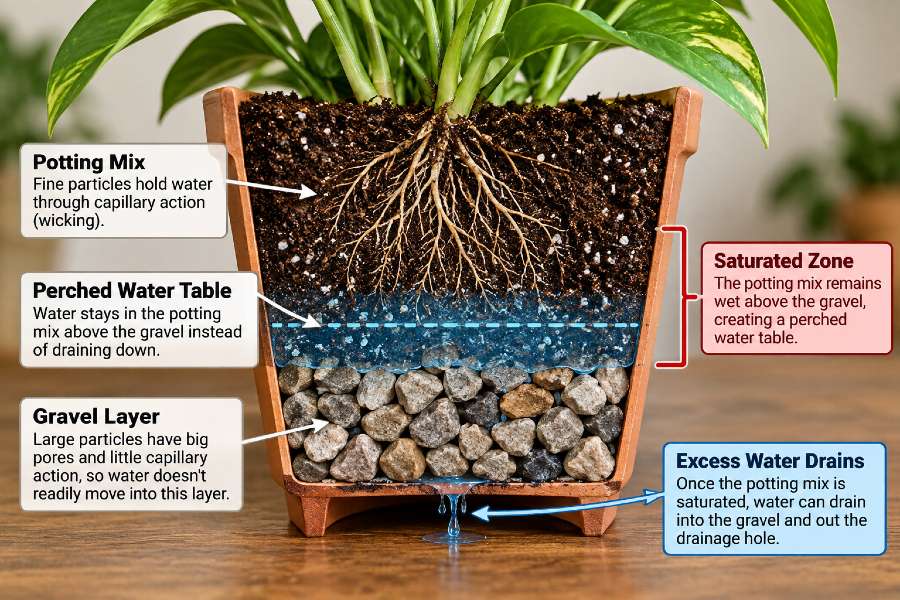
- Gravel in the Bottom of Pots: Does It Improve Drainage? – Why adding gravel or broken pottery beneath your potting mix doesn’t improve container drainage the way many gardeners have been told.
- Humidity for Tropical Houseplants: What Actually Works? – Why misting, pebble trays, and grouping plants aren’t reliable ways to control humidity in a dry room.
📚 References
University of Minnesota Extension – Lighting for Indoor Plants and Starting Seeds
A detailed guide to low, medium, and high indoor light levels, light duration, window exposure, signs of inadequate light, and supplemental grow lighting.
University of Illinois Extension – Lighting for Houseplants
Explains indoor light intensity, window direction, distance from windows, seasonal changes, light duration, and the lighting requirements of common houseplants.
Penn State Extension – Low Light Houseplants
Looks at how houseplants respond to lower indoor light and discusses the differences between plants that tolerate shade and those that require brighter conditions.
 Steve S. is the creator of