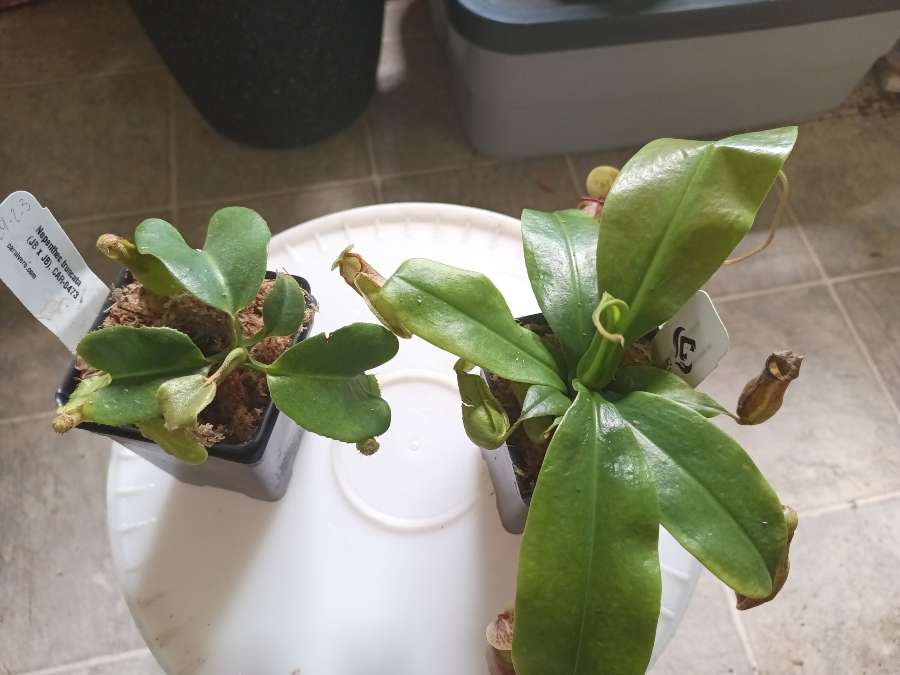
Growing Nepenthes indoors is a great way to enjoy tropical pitcher plants with some truly unusual foliage. These carnivorous plants produce hanging pitchers that can be colorful, surprisingly large, and fascinating to watch develop.
I’ve grown several Nepenthes varieties in my indoor terrariums, and two have really stood out: Nepenthes truncata and Nepenthes ‘Gaya’.
My previous truncata produced pitchers about eight inches long, with beautiful red coloration under my grow lights. Gaya impressed me with its colorful pitchers and attractive growth habit. Both performed so well that I decided to purchase them again.
I’m planning to add these plants to my living room terrariums, where I already grow sun pitchers. The lighting, temperature, and humidity should provide a good environment for them.
In this guide, I’ll share what makes these two Nepenthes special, how I grow them indoors, and why I think they’re worth considering for a tropical terrarium.
What You’ll Learn
- Why Nepenthes truncata and Gaya are two of my favorite tropical pitcher plants.
- What makes truncata’s large red pitchers so impressive.
- Why Gaya is worth growing for its colorful pitchers.
- How these plants fit into an indoor terrarium.
- What they need for lighting, humidity, watering, and healthy growth.
- How I use a wicking system to keep the growing medium moist without flooding the roots.
Quick Answer: Can You Grow Nepenthes Indoors?
Yes. Growing Nepenthes indoors can be very successful when you provide adequate light, suitable temperatures, consistent moisture, and good humidity. Nepenthes truncata and Nepenthes ‘Gaya’ are two varieties I’ve grown successfully in terrariums.
Truncata stands out for its large pitchers and beautiful red coloration under strong grow lights. Gaya produces attractive, colorful pitchers and has also performed very well for me.
Both can be manageable terrarium plants while young, although they can grow larger and eventually develop climbing stems as they mature. A roomy terrarium with good lighting and airflow gives them a promising start.
Nepenthes Indoor Growing at a Glance
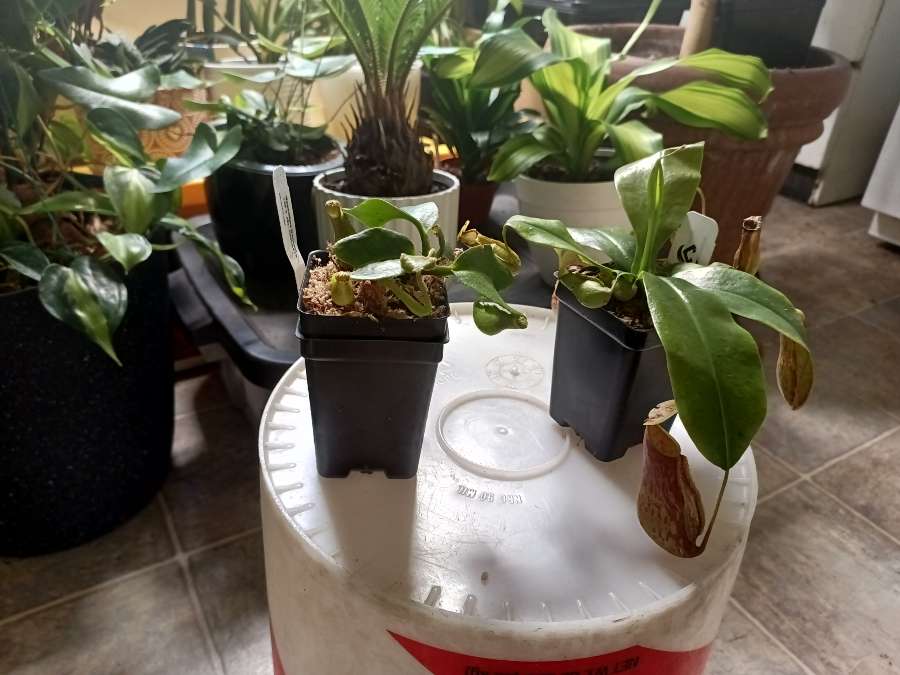
Both Nepenthes truncata and Nepenthes ‘Gaya’ are excellent candidates for indoor terrariums because of their manageable growth habits. Truncata is particularly well suited to this type of growing because it develops broad, spreading leaves rather than quickly producing long climbing vines. Gaya also maintains a compact, attractive growth habit when young. Both appreciate good lighting, humidity, and airflow, making them appealing choices for a tropical terrarium.
| Growing Requirement | Recommendation |
|---|---|
| Plants Featured | Nepenthes truncata and Nepenthes ‘Gaya’ |
| Light | Bright, indirect light or suitable full-spectrum grow lights |
| Temperature | Generally 65–85°F, with some nighttime cooling |
| Humidity | Around 60–80% is helpful for pitcher development |
| Watering | Keep the growing medium consistently moist but not waterlogged |
| Water Quality | Rainwater, distilled water, or low-mineral reverse osmosis water |
| Growing Medium | Airy, low-nutrient mix such as long-fiber sphagnum moss with perlite or orchid bark |
| Growth Habit | Truncata develops broad, spreading foliage and grows slowly. Gaya has a compact, bushy growth habit when young. |
| Terrarium Growing | Good candidates for suitably sized, ventilated tropical terrariums |
| Dormancy | No required winter dormancy |
Why I Bought These Two Nepenthes Again
When I purchased my previous group of Nepenthes, I believe there were six or eight different plants in the shipment.
Some were varieties I expected to be average growers and selected for pitchering under lower light conditions and not directly under a grow light, while others looked more promising.
Two plants really surprised me with how well they performed.
The first was Nepenthes truncata. It developed impressive pitchers and beautiful coloration in my bedroom terrarium. The second was Nepenthes ‘Gaya’, which produced colorful pitchers and became another favorite.
Both plants did so well that when I had an opportunity to purchase them again, I decided to get another of each.
These new plants came from Carnivero, a nursery I’ve ordered from before. I’ve been pleased with their shipping and the quality of the plants I’ve received. They also offer some unusual varieties that aren’t always easy to find.
That’s simply my experience as a customer. This isn’t a sponsored recommendation, and I’m not receiving any affiliate commission.
Nepenthes truncata: Impressive Large Pitchers
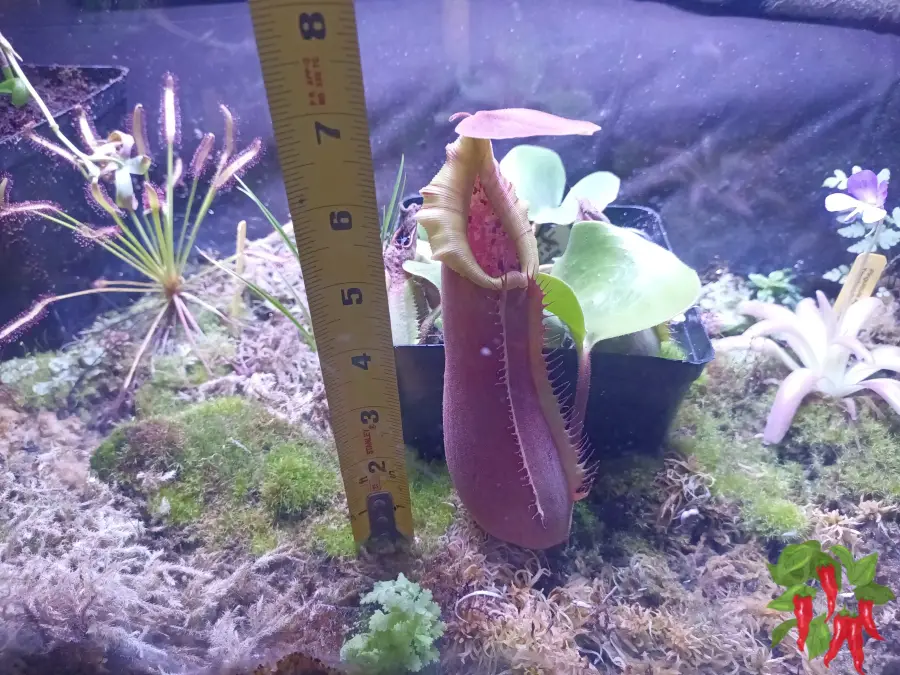
Nepenthes truncata is a tropical pitcher plant native to the Philippines. It’s known for its broad, distinctive leaves and the ability to produce exceptionally large pitchers as it matures.
One thing I particularly like about truncata is that you don’t necessarily need an enormous plant to enjoy impressive pitchers.
My previous plant was still relatively small, yet it was producing pitchers about eight inches long inside my bedroom terrarium.
Even more impressive was the coloration. Under my grow lights, the pitchers developed a beautiful red color that made the plant stand out.
Why Truncata Works in My Terrarium
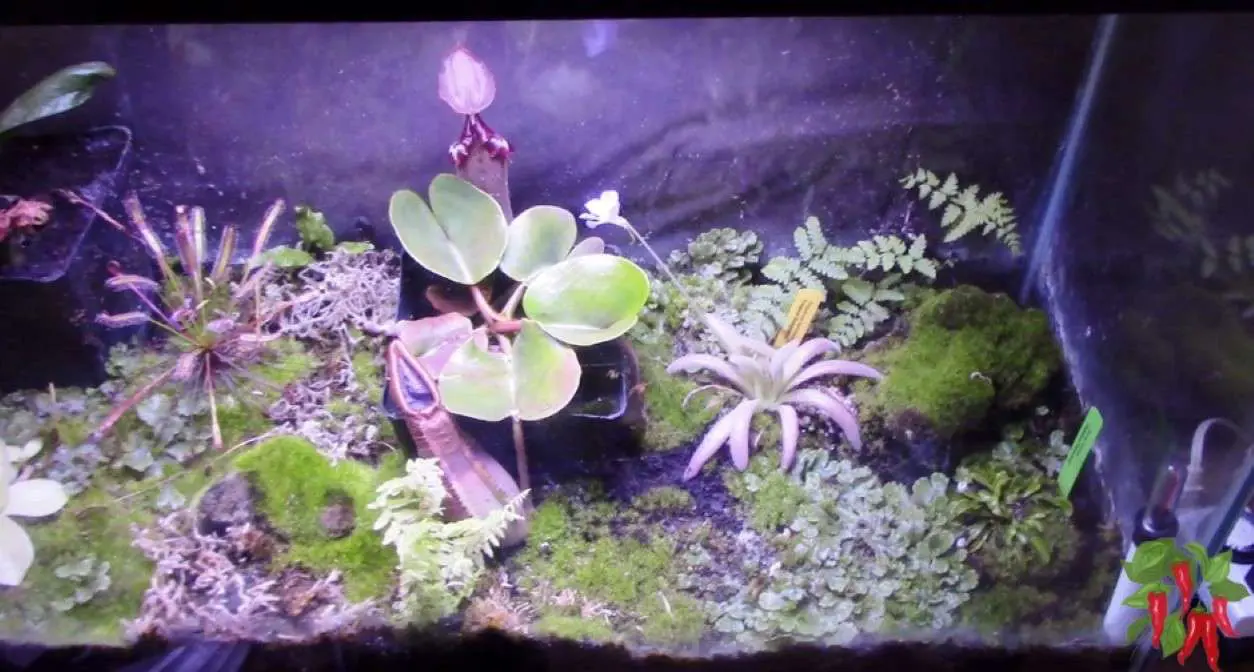
Truncata is generally a slower-growing Nepenthes, particularly compared with some vigorous climbing hybrids. That makes it easier to manage in a terrarium during its younger years.
It doesn’t immediately send long vines climbing through the enclosure, and you can enjoy its pitchers while the plant is still fairly compact.
However, truncata isn’t a permanently small plant. Mature specimens can develop very large leaves and pitchers, so it’s important to allow room for future growth.
For my setup, I like the combination of its relatively slow growth, large pitchers, and strong coloration under artificial lighting.
Nepenthes ‘Gaya’: Beautiful Colorful Pitchers
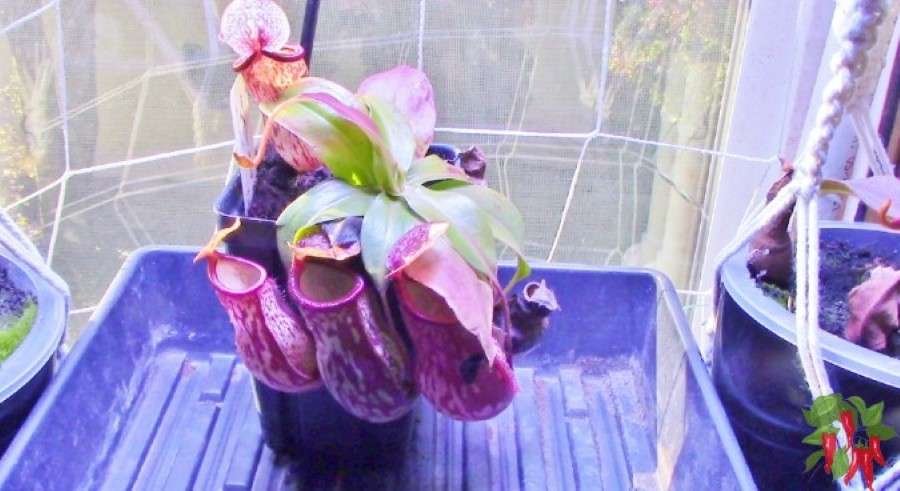
Nepenthes ‘Gaya’ is a popular tropical pitcher plant hybrid, commonly sold as a relatively adaptable choice for indoor growing.
Unlike truncata, which really caught my attention because of its pitcher size, Gaya impressed me with the appearance and coloration of its pitchers.
My previous Gaya grew very well under my terrarium lights, and its pitchers developed attractive colors.
The new plant is actually quite large compared with the one I received the first time. It already has several pitchers, although their colors are somewhat faded after being packed and shipped.
I’m expecting the new pitchers to develop stronger coloration once the plant has adjusted to my lighting and growing conditions.
Why I Like Gaya for Indoor Growing
Gaya is a good choice for growers who want colorful pitchers without starting with one of the more demanding Nepenthes species.
It can develop a fairly bushy appearance when young, which makes it attractive in a terrarium or other indoor growing setup.
Like other Nepenthes, Gaya can eventually produce longer climbing stems as it matures. However, its younger growth can be manageable in a reasonably sized terrarium.
For me, the real attraction is the pitchers. They add a lot of color and interest to the terrarium, especially when the plant receives enough light.
Watch My Nepenthes truncata and Gaya Video
In the video below, I’ll show you the two Nepenthes I recently received from Carnivero. I’ll explain why I decided to grow these varieties again, share my experience with their pitcher development, and talk about my plans to move them into my living room terrariums.
How to Grow Nepenthes Indoors Successfully
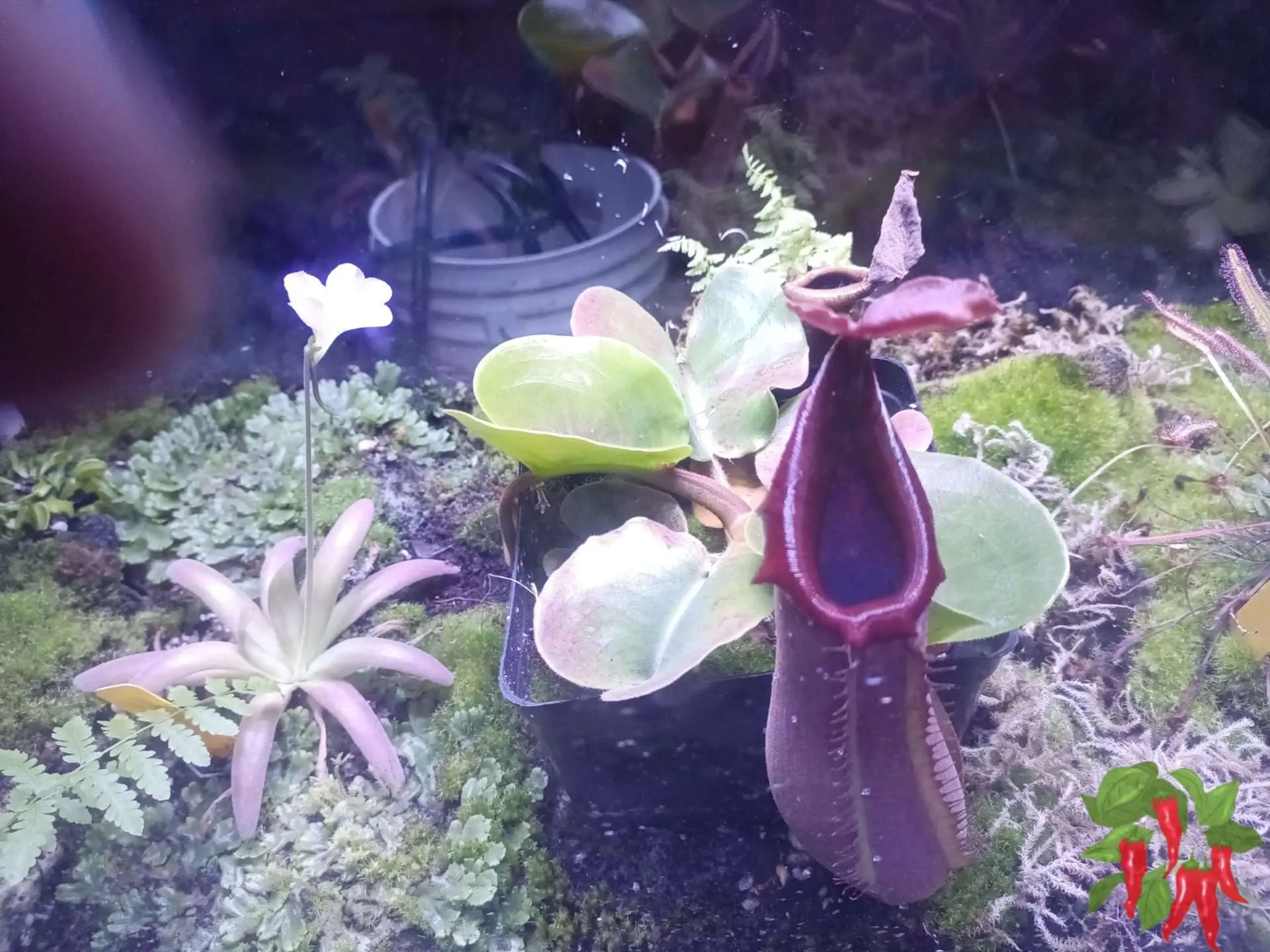
One of the things I like about growing Nepenthes indoors is that you can create a suitable environment without needing a greenhouse. A well-designed terrarium provides the warmth, humidity, and lighting these tropical plants appreciate.
Both Nepenthes truncata and Nepenthes ‘Gaya’ have performed very well for me under artificial lighting. In fact, their performance in my previous terrarium was the main reason I decided to grow them again.
Although these plants are carnivorous, their care is different from American pitcher plants such as Sarracenia. Nepenthes are tropical plants that generally prefer an airy growing medium rather than constantly saturated bog conditions.
Lighting for Nepenthes Indoors
Good lighting is one of the most important parts of growing Nepenthes indoors, especially if you want colorful pitchers.
These plants generally appreciate bright, indirect light. They can also grow very well under artificial lighting, which is how I grow mine.
My previous Nepenthes truncata developed a beautiful red coloration under the lights in my bedroom terrarium. The pitchers reached about eight inches long, even though the plant itself wasn’t particularly large.
Nepenthes ‘Gaya’ also responded well to my lighting. Its pitchers developed much stronger coloration than those on the newly shipped plant.
Using Grow Lights for Nepenthes
Full-spectrum LED grow lights are a practical choice for indoor Nepenthes, particularly when you’re growing them in terrariums.
For a starting point, consider the following:
- Light duration: Around 12–14 hours daily works well for many indoor setups.
- Light intensity: Provide bright light without placing the plants so close to the LEDs that the leaves become stressed.
- Light distance: Adjust the distance based on the strength of your fixture and the plants’ response.
- Pitcher coloration: Good lighting can encourage stronger red and other colorful pigments in the pitchers.
Watch your plants rather than relying entirely on a fixed lighting schedule or distance. Healthy leaves, steady growth, and regular pitcher production are good signs that the conditions are working.
Some Nepenthes develop red pigmentation on their leaves under stronger light. A little coloration can be normal, but widespread bleaching, dry patches, or damaged foliage may indicate excessive light.
Temperature Requirements for Nepenthes truncata and Gaya
Nepenthes come from tropical regions, but not all species prefer exactly the same temperatures. Some naturally grow at lower elevations in warmer conditions, while others grow in cooler mountain environments.
Nepenthes truncata occurs across different elevations in the Philippines, and cultivated plants may vary in their temperature preferences depending on their origin.
Nepenthes ‘Gaya’ is a hybrid that generally adapts well to intermediate indoor growing conditions.
For these two plants, a reasonable starting range is:
- Daytime temperatures: Approximately 70–85°F.
- Nighttime temperatures: Around 60–70°F.
- Temperature changes: A modest nighttime drop can be beneficial, particularly for plants with intermediate growing preferences.
These are general guidelines rather than strict requirements. Individual plants may tolerate conditions outside these ranges, especially when they have gradually adjusted to their environment.
My living room terrariums already provide conditions suitable for the sun pitchers I grow there. I’m planning to add the new truncata and Gaya because I expect the temperature and humidity to work well for them, too.
I’ll be watching how they respond as they settle into their new environment.
Humidity: Why Terrariums Work So Well
Humidity is another important consideration when growing Nepenthes indoors.
These plants naturally grow in tropical environments where the air is often much more humid than the air inside a typical home.
Many Nepenthes grow and produce pitchers well with humidity around 60–80%, although some adaptable hybrids can manage lower levels once established.
Consistent humidity is particularly helpful when new pitchers are developing.
Signs Your Nepenthes Needs More Humidity
Low humidity can sometimes interfere with pitcher development. You may notice:
- New tendrils that fail to develop pitchers.
- Young pitchers drying before they fully open.
- Pitchers that remain smaller than expected.
- Drying pitcher lids or edges, particularly after a sudden change in conditions.
However, humidity isn’t the only reason a Nepenthes stops producing pitchers. Insufficient light, recent shipping, temperature stress, and changes in growing conditions can also contribute.
When a newly purchased plant loses older pitchers or temporarily stops making new ones, give it time to adjust before making major changes.
Maintaining Humidity in a Terrarium
A terrarium makes it easier to maintain higher humidity because the enclosure slows moisture loss to the surrounding room.
That’s one reason I like growing tropical carnivorous plants this way.
However, humidity shouldn’t come at the expense of airflow. A completely stagnant, constantly wet environment can encourage fungal problems and damage sensitive plant tissue.
Provide some ventilation or gentle air circulation, especially in enclosed terrariums with consistently high humidity.
Why I Like Growing Nepenthes in Terrariums
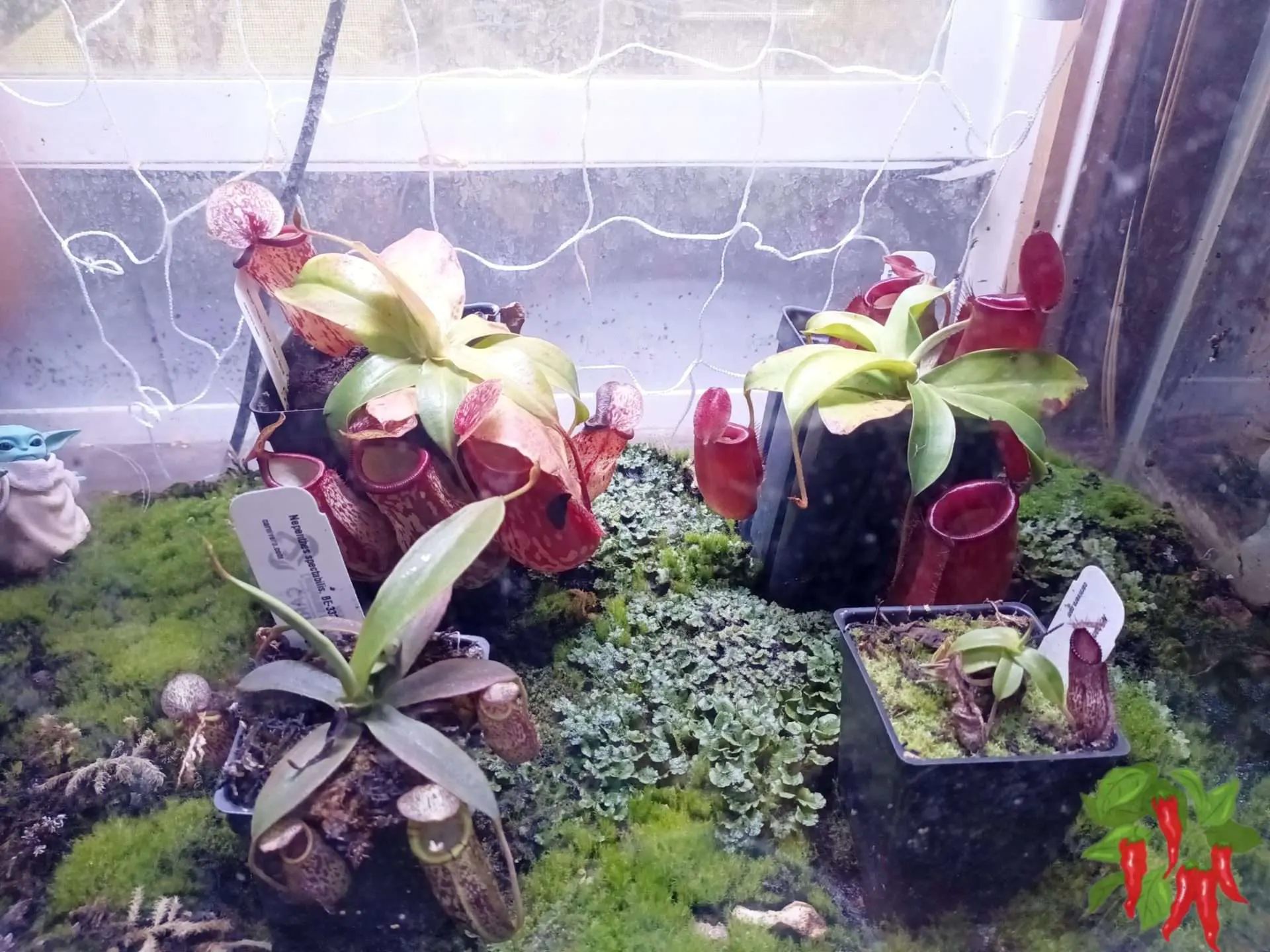
For me, a terrarium is one of the most practical ways to grow tropical pitcher plants indoors.
Instead of trying to maintain high humidity throughout an entire room, I can create a smaller environment where the plants receive the conditions they need.
My bedroom terrarium worked particularly well for Nepenthes truncata. That’s where the plant developed those impressive eight-inch pitchers and deep red coloration.
Now I’m planning to grow the new truncata and Gaya in my living room terrariums, alongside my sun pitchers.
These terrariums already have good lighting, suitable temperatures, and the humidity needed for tropical carnivorous plants.
Compact Growth Makes These Plants Appealing
Another reason I chose these particular Nepenthes is their growth habit.
Some Nepenthes can develop long climbing vines that eventually become difficult to manage in a confined space.
Truncata and Gaya can remain relatively compact during their younger growth stages, allowing you to enjoy their pitchers without immediately dealing with long vines.
Truncata is especially interesting because it can produce impressively large pitchers while the plant is still relatively small.
Of course, neither variety remains permanently compact. Truncata can eventually become a substantial plant, while Gaya may develop longer climbing stems as it matures.
For a terrarium, the important thing is choosing plants that fit your available space now while allowing room for future growth.
Watering Nepenthes Indoors
One of the biggest differences between Nepenthes and many American pitcher plants is how they grow around water.
American pitcher plants such as Sarracenia typically grow in wet, nutrient-poor habitats and often do well with their pots standing in shallow water during the growing season.
Nepenthes are different.
Many grow in tropical forests, sometimes as terrestrial plants and sometimes in mossy or epiphytic environments. Their roots appreciate moisture, but they also need oxygen.
That means you want the growing medium to remain moist without keeping the entire root system submerged.
Keep the Growing Medium Moist, Not Flooded
For my Nepenthes, the goal is consistent moisture.
You don’t want the roots drying out completely, but you also don’t want the pot sitting in deep water with no air reaching the root zone.
A loose, well-aerated growing medium helps maintain that balance.
Water thoroughly when needed, allowing excess water to drain away. Check the growing medium rather than relying entirely on a calendar.
Growing Nepenthes in Self-Watering Planters
I like using self-watering systems for many of my indoor plants, and Nepenthes can also do well with a properly designed wicking setup.
The important distinction is that the water should move upward into the growing medium without leaving the entire root system flooded.
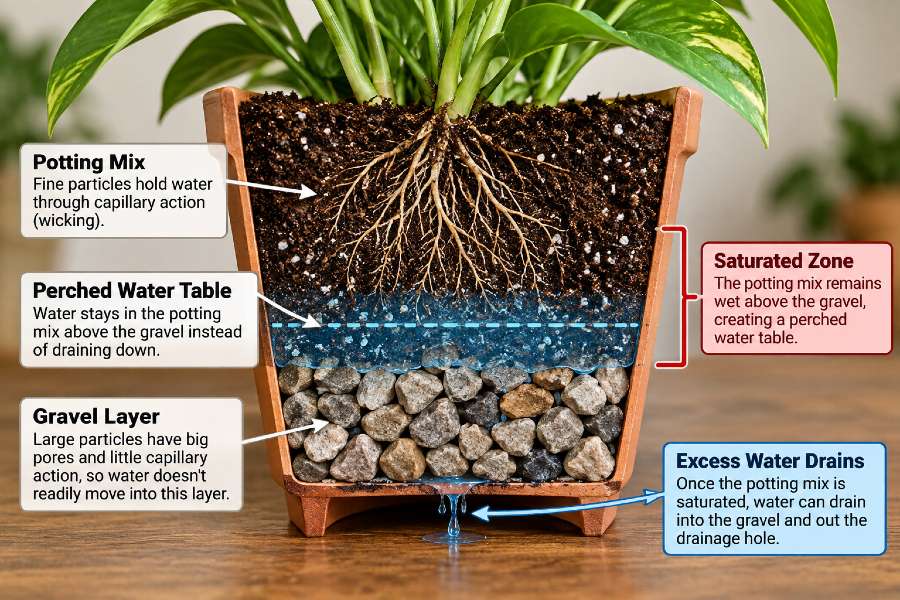
My living room terrariums use a setup where water reaches slightly into the bottom of the growing container. Moisture then moves upward through the medium by capillary action.
This allows the growing medium to stay moist while the upper portion remains more aerated.
How My Wicking Setup Works
The basic idea is simple:
- A shallow water supply provides moisture at the bottom of the growing container.
- The growing medium draws water upward through capillary action.
- The roots receive moisture without the entire pot remaining underwater.
- The airy growing medium allows oxygen to reach the roots.
It’s a convenient system because I don’t have to water every plant individually as often.
However, the growing medium and water level are important. A dense mix that stays saturated can still cause root problems, even in a self-watering container.
If you’re trying this method, monitor the moisture level throughout the pot. You want the medium damp and airy, not continuously soaked.
Best Growing Medium for Nepenthes
Nepenthes generally grow best in a loose, low-nutrient medium that holds moisture while allowing plenty of air around the roots.
Unlike ordinary houseplants, these carnivorous plants aren’t typically grown in rich potting soil.
One common option is long-fiber sphagnum moss mixed with perlite. Orchid bark can also be included to create a more open structure.
Best Growing Medium for Nepenthes
Nepenthes need a growing medium that holds moisture while allowing oxygen to reach their roots. There are several ways to accomplish this, and growers have their own preferences.
Many carnivorous plant growers use mixes containing peat moss, long-fiber sphagnum moss, perlite, or orchid bark. These can work very well, especially when properly matched to the plant and watering method.
Personally, I prefer to keep things simple. I grow my Nepenthes in straight coco coir.
I’ve had excellent results with this approach. My previous Nepenthes truncata produced pitchers about eight inches long, and my Gaya also grew exceptionally well in my terrarium.
Why I Prefer Coco Coir
Coco coir has several advantages for the way I grow my plants:
- Excellent moisture retention: Coco coir holds water well, helping keep the roots consistently moist.
- Works with my wicking system: Water moves upward through the coir from the reservoir below.
- Simple to use: I don’t have to mix several ingredients to prepare the growing medium.
- Good root environment: Quality coco coir can retain moisture while maintaining air spaces, provided it isn’t packed too tightly or kept saturated.
- Proven results: I’ve had healthy growth and excellent pitcher development using this method.
One thing to watch is the quality of the coco coir. Use a clean, low-salt product without added fertilizer. Properly washed and buffered coir is preferable because carnivorous plants can be sensitive to excessive mineral buildup.
I’m not suggesting that peat or sphagnum-based mixes don’t work. Plenty of growers use them successfully. I simply prefer a straightforward growing medium that works with my watering system.
For me, straight coco coir does the job without making things more complicated than they need to be.
Why I Prefer Coco Coir for Nepenthes
There are several reasons I like using coco coir:
- Good moisture retention: Coco coir holds water and helps keep the roots consistently moist.
- Works with wicking systems: Moisture moves upward through the growing medium from the water reservoir below.
- Lightweight structure: Quality coco coir provides a suitable balance of moisture retention and air space when it isn’t overly compacted.
- Easy to manage: I don’t need to prepare complicated mixtures with several different ingredients.
- Consistent results: I’ve had excellent growth and pitcher development using this method.
One important consideration is the quality of the coco coir. Choose a clean, low-salt product that has been properly washed and buffered. Nepenthes can be sensitive to excessive dissolved minerals, so avoid coir containing added fertilizer or high salt levels.
Other growers successfully use long-fiber sphagnum moss, perlite, and orchid bark mixtures. Those can work well, too, but they aren’t necessary for the way I grow my plants.
For my terrarium setup, straight coco coir combined with a carefully managed water level has worked very well.
What Kind of Water Should You Use?
Water quality matters when growing carnivorous plants.
Nepenthes generally prefer water with relatively low dissolved mineral content. In areas with hard tap water, mineral buildup can become a problem over time.
Good choices include:
- Collected rainwater from a clean source.
- Distilled water.
- Reverse osmosis water with low dissolved mineral content.
- Tap water only when its mineral content is sufficiently low.
If you’re unsure about your tap water, a total dissolved solids (TDS) meter can help you evaluate its mineral content.
For self-watering systems, periodically flushing the growing medium from the top can also help reduce accumulated minerals and keep the root environment fresh.
Feeding Nepenthes Indoors
One of the interesting things about growing Nepenthes indoors is watching their pitchers develop and capture insects.
Unlike ordinary houseplants, Nepenthes have adapted to growing in environments where nutrients can be scarce. Their pitchers help them obtain nutrients by trapping and digesting insects.
However, that doesn’t mean you need to constantly feed them.
Do Indoor Nepenthes Need Insects?
Nepenthes can grow without regular insect feeding, especially when they’re receiving good light and suitable growing conditions.
They produce their energy through photosynthesis, just like other green plants. Insects provide additional nutrients that can support growth.
In an open growing area, a Nepenthes may occasionally catch a fungus gnat, fly, or other small insect on its own.
Inside a closed terrarium, there may be fewer insects available.
If you want to provide supplemental feeding, you can occasionally place a suitably sized insect into an established pitcher. Small insects are generally better than large ones, particularly for young plants.
Avoid overfeeding. Too much material inside a pitcher can cause it to rot prematurely.
Should You Fertilize Nepenthes?
Nepenthes have sensitive roots and don’t need the rich fertilizer programs commonly used for ordinary houseplants.
Some experienced growers use very dilute fertilizers or carefully measured pitcher feeding, but these methods aren’t necessary for beginners.
For most indoor growers, I’d concentrate on getting the lighting, temperature, humidity, and watering right before worrying about supplemental nutrients.
Healthy growing conditions are much more important than trying to force faster growth with fertilizer.
How to Encourage Large, Colorful Nepenthes Pitchers
The pitchers are the main attraction of these plants, and they’re certainly what caught my attention with truncata and Gaya.
My previous Nepenthes truncata produced pitchers around eight inches long, even though the plant itself was relatively small. Under my terrarium lights, those pitchers also developed beautiful red coloration.
Gaya impressed me for a different reason. Its pitchers developed attractive colors and patterns that made the plant stand out.
There are several things you can do to encourage healthy pitcher development.
Provide Plenty of Suitable Light
Lighting makes a big difference in how Nepenthes grow and how their pitchers develop.
Plants receiving insufficient light may continue producing leaves but develop few pitchers.
Good lighting can also encourage stronger coloration, although the amount of red or other pigmentation depends partly on the plant’s genetics.
My experience with truncata and Gaya has been that both respond very well to artificial lighting.
Maintain Consistent Humidity
Sudden changes in humidity can interfere with pitcher development, particularly when plants are moved from a greenhouse into a much drier home.
A terrarium helps provide more consistent conditions.
That’s one reason I like growing these plants in enclosed growing spaces with appropriate ventilation.
Keep the Roots Healthy
A Nepenthes with damaged roots may stop producing pitchers while it recovers.
Keep the growing medium moist and well-aerated, and avoid allowing the entire pot to remain flooded.
Healthy roots support healthy leaves, and healthy leaves provide the energy needed to develop new pitchers.
Give Newly Shipped Plants Time to Adjust
My new Gaya arrived with several pitchers, but their coloration was somewhat faded after shipping.
That’s not unusual. Existing pitchers may decline after a plant experiences changes in light, humidity, temperature, or handling.
I’m more interested in how the new pitchers develop once the plant settles into my terrarium.
Don’t judge a newly purchased Nepenthes entirely by the condition of its older pitchers. Give it time to produce new growth under your conditions.
Common Problems When Growing Nepenthes Indoors
Even when you provide good growing conditions, Nepenthes can occasionally develop problems. Fortunately, many issues can be traced to lighting, moisture, humidity, or a recent change in the growing environment.
My Nepenthes Isn’t Producing Pitchers
If your Nepenthes is growing leaves but not producing pitchers, check the lighting first.
Insufficient light is a common reason for poor pitcher production. Low humidity, temperature stress, and recent relocation can also contribute.
Give the plant consistent conditions and watch for pitcher development on new leaves.
Pitchers Are Turning Brown
Nepenthes pitchers don’t last forever. Eventually, older pitchers begin to dry and turn brown.
This is a normal part of the plant’s growth cycle.
However, if several young pitchers suddenly die, look for recent changes in humidity, temperature, watering, or light.
Shipping stress can also cause older pitchers to decline.
Leaves Are Turning Yellow
Yellow leaves can result from several causes, including aging, excessive moisture, root problems, and unsuitable lighting.
One older leaf turning yellow isn’t necessarily a concern.
If several leaves are yellowing at once, check the growing medium and root conditions.
Remember, Nepenthes like moisture, but their roots still need oxygen.
The Growing Medium Stays Too Wet
This is especially important when using a self-watering planter or wicking system.
If the growing medium becomes constantly saturated, reduce the water level or adjust the mix to improve aeration.
The goal is to maintain moisture without eliminating the air spaces around the roots.
Pests on Indoor Nepenthes
Nepenthes can occasionally attract common houseplant pests, including mealybugs, scale insects, aphids, and spider mites.
Inspect new plants before introducing them to an established terrarium.
If you discover pests, isolate the affected plant when possible and identify the pest before choosing a treatment.
For small infestations, careful manual removal may be enough. Carnivorous plants can be sensitive to some pesticides and sprays, so avoid applying a treatment unless it’s appropriate for Nepenthes.
Where I Bought My Nepenthes truncata and Gaya
Both of these plants came from Carnivero, a nursery that specializes in carnivorous plants and offers a variety of unusual Nepenthes.
I’ve ordered from them before, and I’ve been pleased with the plants and the way they’re packaged for shipping.
They carry everything from more affordable varieties to unusual collector plants that can be considerably more expensive.
Some Nepenthes can be difficult to find, particularly if you’re looking for a specific species, hybrid, or selected form.
For me, the important thing is receiving a healthy plant that’s properly identified and packaged carefully enough to survive shipping.
I purchased these plants myself. This isn’t a sponsored recommendation, and I don’t receive an affiliate commission from Carnivero.
Are Nepenthes Toxic to Cats and Dogs?
Nepenthes are not generally regarded as highly poisonous houseplants, but that doesn’t mean every species or hybrid has been thoroughly evaluated for pet safety.
If you have cats or dogs, it’s best to keep your pitcher plants where pets cannot chew the leaves or pitchers.
Eating plant material can cause digestive upset even when the plant isn’t known to contain dangerous toxins.
Terrariums have an advantage here because they can help keep curious pets away from the plants.
For more information about houseplants and pet safety, visit the ASPCA Toxic and Non-Toxic Plants Database.
Frequently Asked Questions About Growing Nepenthes Indoors
Are Nepenthes good indoor plants?
Yes. Many Nepenthes can grow successfully indoors when provided with adequate lighting, humidity, suitable temperatures, and consistent moisture. Adaptable hybrids such as Gaya are often good choices for growers who are new to tropical pitcher plants.
Can Nepenthes grow in a terrarium?
Yes. Terrariums can provide the humidity and stable growing conditions Nepenthes appreciate. Choose an enclosure with sufficient space, good lighting, and some airflow. Remember that even compact young plants may eventually outgrow their terrariums.
How big do Nepenthes truncata pitchers get?
Nepenthes truncata is known for producing exceptionally large pitchers. Mature plants can develop pitchers exceeding 12 inches, with some specimens producing much larger traps under favorable conditions. My previous plant produced pitchers about eight inches long while it was still relatively small.
Is Nepenthes Gaya easy to grow indoors?
Nepenthes ‘Gaya’ is generally considered an adaptable hybrid and can be a good choice for indoor growers. It appreciates bright light, consistent moisture, and moderate to high humidity. I’ve had excellent results growing it under artificial lighting in a terrarium.
Do Nepenthes need direct sunlight?
No. Nepenthes generally prefer bright, indirect light or suitable artificial grow lights. Some can tolerate gentle direct sunlight, but intense sun through a window may overheat or damage the leaves, particularly inside a glass terrarium.
How often should I water Nepenthes?
Watering frequency depends on the growing medium, pot size, temperature, and humidity. Keep the medium consistently moist without allowing the roots to remain waterlogged. A properly managed wicking system can help maintain moisture between waterings.
Do Nepenthes need to eat insects?
Nepenthes obtain energy through photosynthesis, so they don’t need constant insect feeding to survive. Captured insects provide additional nutrients that can support growth. Occasional supplemental feeding is possible, but good growing conditions should come first.
Do Nepenthes go dormant in winter?
No. Tropical Nepenthes don’t require the winter dormancy associated with American pitcher plants such as Sarracenia. They can continue growing throughout the year when provided with suitable temperatures, lighting, and moisture.
Will Nepenthes truncata and Gaya stay compact?
Both can have manageable growth habits when young, making them appealing for terrariums. However, neither is permanently compact. Truncata can develop large leaves and pitchers, while Gaya can eventually produce longer climbing stems. Plan for their mature growth rather than assuming they’ll always fit in a small enclosure.
Final Thoughts on Growing Nepenthes Indoors
Growing Nepenthes indoors has been one of the more enjoyable parts of keeping tropical carnivorous plants.
There are so many interesting species and hybrids available, and each one has something different to offer. Some produce enormous pitchers, others have unusual shapes, and many develop beautiful colors and patterns.
Out of the six or eight Nepenthes I grew previously, truncata and Gaya were the two that really stood out.
My truncata produced pitchers about eight inches long and developed beautiful red coloration under my bedroom terrarium lights. Gaya impressed me with its colorful pitchers and how well it grew under the same general conditions.
That’s why I decided to purchase both varieties again.
I’m looking forward to getting them established in my living room terrariums, where I already grow sun pitchers. The lighting, temperature, and humidity should give them a good environment, and my wicking system will help maintain consistent moisture without flooding the roots.
If you’re interested in growing Nepenthes indoors, I think both of these plants are worth considering. They offer two different kinds of pitcher appeal, and you can enjoy them while they’re still relatively manageable in size.
As always, pay attention to how your plants respond. Give them good light, consistent moisture, and suitable humidity, and let their growth tell you how they’re doing.
Happy gardening, and don’t forget to stay green!
References and Further Reading
- Carnivero – Carnivorous plant nursery and Nepenthes growing information.
- International Carnivorous Plant Society – Cultivation information and educational resources for carnivorous plants.
- Royal Horticultural Society – How to Grow Nepenthes – General guidance on tropical pitcher plant care.
- ASPCA – Toxic and Non-Toxic Plants – Pet safety reference.
Explore More Carnivorous Plant Guides
Interested in growing more carnivorous plants indoors? These guides cover Nepenthes care, terrarium growing, watering, and other fascinating plants you can grow at home.
- Nepenthes truncata Care: 13 Tips and Tricks for Beginners – Learn more about growing this impressive species and encouraging its large pitchers.
- Nepenthes Pitcher Plant Care: 11 Easy Tips and Tricks – A broader guide to caring for tropical pitcher plants indoors.
- How to Build a Carnivorous Plant Terrarium – Explore ways to create an indoor growing environment for carnivorous plants.
- Water Quality for Carnivorous Plants – Find out why water quality matters and which types are best for sensitive roots.
- 5 Best Indoor Carnivorous Plants for Beginners – Discover other interesting carnivorous plants to grow indoors.
- Carnivorous Plant Care Indoors – Learn the basics of growing flytraps, pitcher plants, and sundews.
 Steve S. is the creator of