
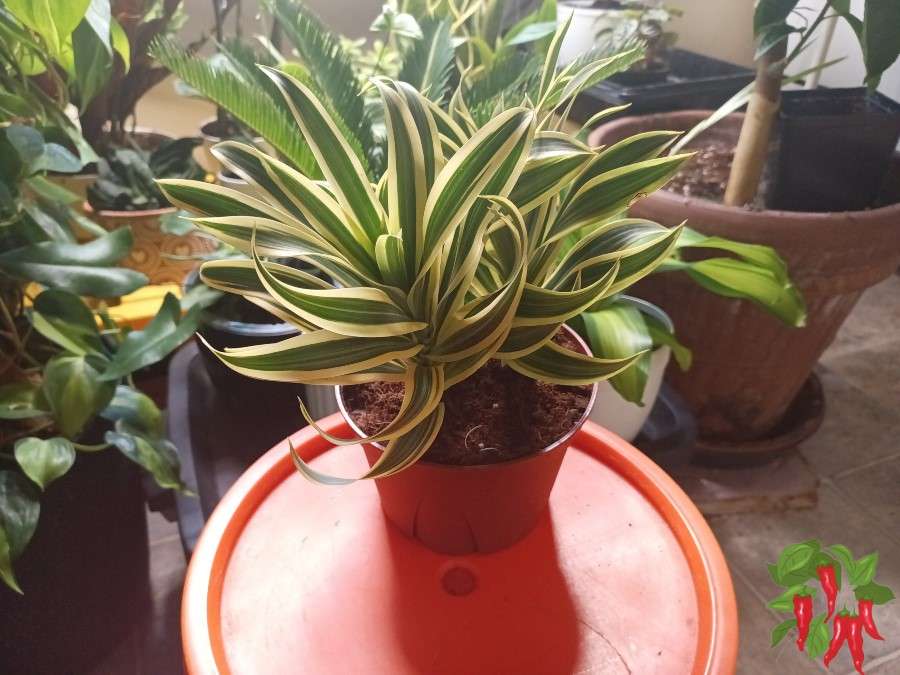
I’ve been adding quite a few Dracaenas to my indoor plant collection, but Song of India gives me something a little different. Most of the Dracaena fragrans varieties I’ve been growing have the familiar upright cane form.
Song of India belongs to Dracaena reflexa, and as it matures it develops a much more branched, shrub-like shape.
That’s one of the reasons I wanted to grow this one. Song of India has dark green leaves edged with bright yellow-green variegation, but I’m just as interested in the way the plant develops.
Instead of simply becoming a taller cane plant, it can branch and become fuller and bushier with age.
Song of India is also a slow-growing Dracaena. Indoors, it can eventually reach around 3 to 6 feet tall and 1 to 3 feet wide, but you aren’t going to get there overnight.
That slower growth should make it easy to manage as a smaller houseplant while still giving it the potential to become a substantial floor plant later.
What You’ll Learn
- How I grow Song of India Dracaena indoors
- How much light Song of India needs
- How and when to water Dracaena reflexa
- How large Song of India can eventually become
- Why it grows more like a branching shrub than a typical corn plant
- How Dracaena reflexa differs from Dracaena fragrans
- The difference between Song of India and Song of Jamaica
- How pruning can help control its shape and encourage branching
- Whether Song of India is toxic to cats and dogs
Quick Answer: Song of India Dracaena Care Indoors
Song of India Dracaena care indoors is fairly straightforward. Give the plant bright indirect light, use a well-draining potting mix, and allow the upper portion of the mix to dry somewhat between thorough waterings. Song of India is a slow-growing, branching Dracaena that can eventually reach about 3 to 6 feet tall and 1 to 3 feet wide indoors. Good indirect light also helps show off its bright yellow-green and dark green variegation.
Find Your Song of India Dracaena on Amazon
Song of India Dracaena at a Glance
| Botanical name | Dracaena reflexa ‘Song of India’ |
| Common name | Song of India Dracaena |
| Growth habit | Upright, branching and shrub-like |
| Foliage | Dark green with bright yellow to yellow-green margins |
| Light | Bright indirect light; tolerates medium light |
| Water | Water thoroughly, then allow the upper potting mix to dry somewhat |
| Indoor height | About 3–6 feet |
| Indoor spread | About 1–3 feet |
| Growth rate | Slow |
| Time to mature | Several years; potentially 5–10 years under suitable conditions |
| Humidity | Average household humidity is generally suitable |
| Pet safety | Toxic to cats and dogs if eaten |
What Is Dracaena reflexa?
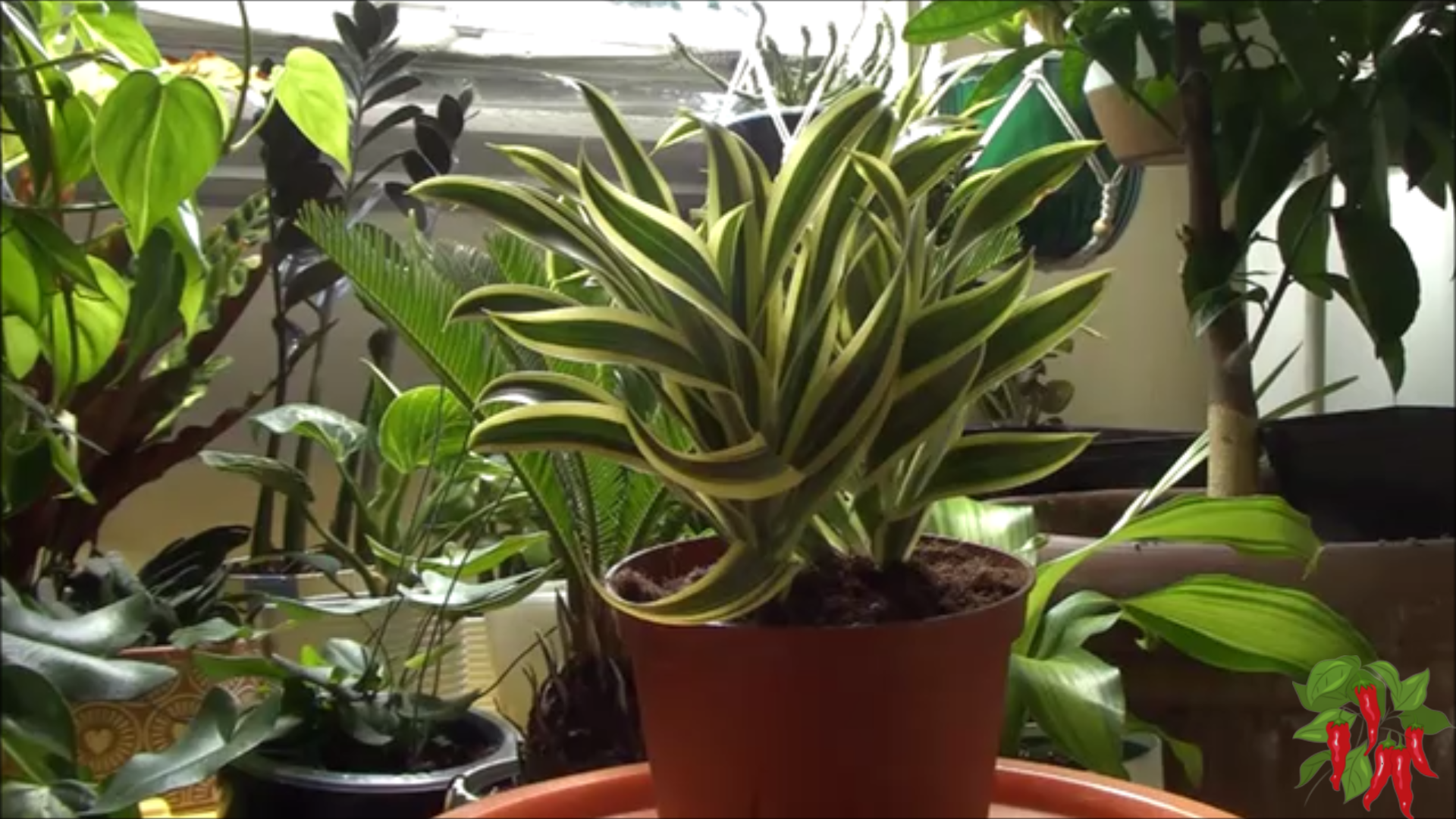
Dracaena reflexa is a tropical Dracaena with a different growth habit from the Dracaena fragrans varieties I’ve been adding to my collection. Instead of relying primarily on upright canes topped with large clusters of leaves, D. reflexa develops a more branched form as it matures.
Young plants can still look fairly upright, but branching becomes more noticeable as the plant gets older. Those branches carry clusters of leaves along multiple stems, which is what eventually gives the plant its fuller, shrub-like appearance.
Pruning also gives you some control over that growth. Cutting back a stem can encourage new growth below the cut, so an older Dracaena reflexa can be shaped into a bushier plant instead of simply being allowed to grow taller.
Dracaena reflexa comes from tropical areas around the western Indian Ocean, including Madagascar and nearby islands. It can become a much larger plant outdoors in a suitable tropical climate, but indoor growth is considerably more manageable.
What Is Song of India Dracaena?
Song of India is a colorful selection of Dracaena reflexa. Its leaves have darker green centers surrounded by bright yellow to yellow-green margins.
The leaves are shorter than the long, arching foliage you see on many corn plants and grow closely around the stems. As those stems begin branching, each branch develops its own foliage. Over time, that creates the bushier appearance that first interested me in this Dracaena.
That’s really why I’m adding Song of India to my collection. I already have several Dracaena fragrans cultivars with different leaf colors and patterns. Song of India adds both colorful foliage and a different growth form.
Dracaena reflexa vs. Dracaena fragrans
I’ve been growing and adding quite a few Dracaena fragrans varieties, including plants with dark green, yellow, lime, white, and striped foliage. Song of India gives me something different because it belongs to Dracaena reflexa.
| Feature | Song of India / D. reflexa | D. fragrans |
|---|---|---|
| Growth habit | Branching and shrub-like with age | Generally more upright and cane-forming |
| Leaves | Shorter leaves clustered around branching stems | Generally longer leaves concentrated in larger rosettes |
| Branching | Develops a naturally branched form as it matures | Typically maintains a stronger upright cane form |
| Overall appearance | Bushier and more shrub-like | More of a cane-and-rosette or corn-plant appearance |
These are general differences rather than rules that every individual plant will follow exactly. Age, pruning, and growing conditions all influence the final shape.
Still, the branching habit is one of the main reasons Song of India looks so different from the Dracaena fragrans cultivars I’m growing.
Song of India vs. Song of Jamaica
Song of India isn’t the only named Dracaena reflexa you’re likely to encounter. Song of Jamaica is another similar selection, and the names can be confusing when you’re shopping for these plants.
Both have the branching, shrub-like growth associated with Dracaena reflexa. The easiest difference to notice is the foliage. Song of India has dark green centers with bright yellow to yellow-green margins, giving the plant a strong contrast.
Song of Jamaica has a darker, more subdued variegated appearance. The plants share similar overall growth habits and general care, but they are worth treating as different selections rather than two names for the same plant.
I’m growing Song of India, so that’s the plant this guide focuses on. I don’t currently grow Song of Jamaica, but it’s worth mentioning because you’re likely to run across the name when you’re looking at Dracaena reflexa plants.
How Big Does Song of India Get Indoors?
Song of India is slow growing, but that doesn’t mean it stays small. Indoors, I would plan for a mature plant to reach approximately 3 to 6 feet tall and 1 to 3 feet wide.
It can take years to reach that size. That’s an advantage if you’re starting with a smaller plant because you can enjoy it on a table or plant stand before eventually finding room for it as a larger floor plant.
The eventual width depends partly on how much the plant branches and how you prune it. If you encourage multiple branches, you can develop a fuller plant rather than simply allowing a few stems to keep getting taller.
That’s something I’m particularly interested in watching as mine grows. Rather than treating pruning only as a way to control height, I can use it later to help develop the shrub-like shape that makes Song of India different from my corn plants.
Why I’m Growing Song of India Indoors
I’ve already got quite a few Dracaena fragrans varieties, so I wasn’t looking for another Dracaena simply because it had a different stripe down the leaf.
Song of India gives me a chance to grow a different species and see how its branching growth compares with the corn plants in my collection.
I also like the foliage. The yellow-green margins brighten up the plant, while the shorter leaves and multiple stems should give it a very different appearance as it matures.
And because it’s slow growing, I don’t need to find room for a six-foot shrub right away. I’ll be able to watch the plant develop, add my own observations as it grows, and eventually see just how bushy I can get it through natural branching and pruning.
Song of India Dracaena Light Requirements
Song of India does best with bright indirect light. That’s where I plan to start mine. The plant can handle medium indoor light, but this isn’t one I’d deliberately put in a dark corner if I have a brighter location available.
Light is especially important with Song of India because so much of the appeal comes from its variegated foliage. The combination of dark green centers and bright yellow-green margins gives this plant its distinctive look.
You don’t need intense direct sunlight to get good growth. In fact, strong direct sun through a window can be hard on the foliage. A location that provides plenty of indirect light gives you a good balance.
Can Song of India Grow in Lower Light?
Song of India can tolerate medium light and some lower-light conditions, but growth will generally be slower as available light decreases. A darker location may also make it harder to maintain the bright appearance you’re growing this plant for.
Lower light also changes how quickly the plant uses water. If you move Song of India farther from a useful light source, expect the potting mix to remain moist longer.
That’s one reason I don’t separate light and watering when I think about indoor plant care. Change one growing condition and you often need to adjust another.
Keeping Song of India’s Variegation Bright
Those yellow-green margins are one of the main reasons to grow Song of India. Good indirect light gives the plant the conditions it needs to produce healthy new foliage while maintaining the contrast between the darker centers and lighter margins.
If your plant is growing in a dim location and the new foliage isn’t looking as colorful, I’d try better indirect light before changing everything else about your care routine.
Watch the new growth rather than expecting older leaves to change dramatically. The leaves produced under your current conditions give you a better indication of how the plant is responding.
How I Water Song of India Dracaena
I’ll use the same basic watering approach that works well for my other Dracaenas. I water thoroughly so the entire root zone receives moisture, then allow the potting mix to dry down somewhat before watering again.
I don’t want Song of India sitting in constantly saturated potting mix. Roots need both moisture and air, and allowing some drying between waterings helps provide that balance.
I also don’t plan to put it on a fixed watering schedule. Light, temperature, container size, potting mix, and the season all affect how quickly a plant uses water.
How Often Should You Water Song of India?
Check the potting mix rather than counting days. Once the upper portion has dried, you can water thoroughly again and allow excess water to drain.
A plant receiving plenty of light may need water sooner than the same plant growing in a lower-light location. You’ll probably also notice that the pot dries at different rates during different parts of the year.
That’s why I prefer checking the plant and potting mix instead of deciding that every Dracaena needs water every seven or ten days.
Best Potting Mix for Dracaena reflexa
Song of India needs a potting mix that holds enough moisture for the roots without remaining soggy. Good drainage matters, but so does maintaining air space around the root system.
I’ll use my usual coco coir and perlite approach with this plant. Coco coir gives me moisture retention while the perlite opens the mix and improves drainage and aeration.
That works nicely with the way I water. I can thoroughly wet the root zone and then allow the mix to gradually dry rather than trying to keep it continuously moist.
A commercial indoor potting mix can work too. Pay attention to how it behaves after watering. If the mix remains heavy and wet for a long time, additional perlite can improve the structure.
Fertilizing Song of India
Song of India is a slow-growing plant, so I don’t see any reason to push it with a lot of fertilizer. More fertilizer isn’t going to turn a naturally slow-growing Dracaena into a fast-growing shrub.
A balanced houseplant fertilizer can be used during active growth according to the product directions. I prefer moderate feeding rather than continually adding fertilizer to the pot.
If growth slows during the darker months, nutrient use will also decrease. Adjusting fertilizer to the plant’s actual growth makes more sense to me than fertilizing on the same schedule throughout the entire year.
Temperature and Humidity
Song of India is a tropical plant, but normal indoor temperatures should work well. You don’t need to turn your home into a greenhouse to grow it.
I would protect the plant from cold drafts and sudden temperature changes. A spot next to a frequently opened exterior door or pressed against a cold winter window isn’t ideal.
Average household humidity should generally be adequate. If your home becomes extremely dry, especially during winter heating season, watch the foliage for signs that the plant isn’t happy with the conditions.
How Song of India Develops Its Bushy Shape
This is where Song of India gets particularly interesting to me. A young plant may start with a fairly simple upright shape, but Dracaena reflexa becomes more branched as it matures.
Instead of ending up with only a tall cane and a large cluster of leaves at the top, the stems can divide into branches. Each branch carries its own foliage, gradually creating the shrub-like form that makes Song of India look so different from many corn plants.
This won’t happen overnight. Song of India is slow growing, and a young plant can take time to develop that mature structure. That’s something I’ll be watching as mine grows.
Pruning Song of India for a Bushier Plant
You don’t have to prune a young Song of India simply because you brought it home. I’ll first let mine establish itself and see how it naturally develops.
Once the plant has some size, pruning gives you a way to influence its shape. Cutting back a healthy stem can encourage new shoots below the cut. Instead of allowing one stem to continue getting taller, you can use pruning to encourage additional branching.
That’s a little different from how I think about pruning a tall corn plant. With Song of India, pruning isn’t only about reducing height. It can become part of developing the full, bushy shape you’re looking for.
When Should You Prune Song of India?
I wouldn’t be in a hurry. Let a small plant put on some growth first. Once stems become long enough that you want more branching or need to control the plant’s shape, pruning becomes useful.
Where you make the cut will influence where new growth develops. New shoots can emerge below the cut, eventually creating additional leafy branches.
This also means you can gradually shape an older Song of India rather than trying to create the finished plant all at once.
Choosing a Pot for Song of India
I’ll keep the container fairly close to the size of the root system rather than putting a small Song of India into an oversized pot. Too much unused potting mix can hold moisture much longer than the roots need.
The container should also provide good drainage. When I water thoroughly, I want excess water to be able to leave the pot rather than collecting around the root system.
Container stability may become more important as the plant gets older. A mature, branched Song of India can become top-heavy, so eventually a sturdy pot can help support the wider upper growth.
When to Repot Song of India
I don’t repot plants simply because a certain number of months have passed. Song of India grows slowly, so there’s no reason to automatically move it into a larger container every year.
I’ll watch the root system and the way the plant behaves in its current pot. When the roots have filled the available space, the plant becomes difficult to water properly, or it clearly needs additional room, I’ll move it up gradually.
Going up one reasonable container size is generally better than moving a small plant directly into a very large pot.
How to Propagate Song of India Dracaena
One advantage of eventually pruning Song of India is that healthy material you remove can potentially become another plant.
Stem cuttings can be used to propagate Dracaena reflexa. That makes pruning useful in two ways: the original plant can produce new growth below the cut while the removed section can be rooted separately.
Because Song of India grows slowly, I wouldn’t expect instant results. But once mine becomes large enough to need pruning, propagation is something I’ll probably try rather than throwing away healthy cuttings.
Common Song of India Dracaena Problems
Song of India is fairly easy to grow once you get the basics right, but the leaves can tell you quite a bit when something is off. Brown tips, yellowing leaves, fading color, or leaf drop are all reasons to take a closer look at light, watering, and the root zone.
Brown Leaf Tips and Edges
Brown tips can show up on Dracaenas for several reasons. Inconsistent watering, very dry conditions, or a buildup of minerals and fertilizer salts in the potting mix can all contribute.
If brown tips keep appearing, I would look at the overall growing conditions rather than simply trimming off the damage. Check how you’re watering, how quickly the potting mix dries, and whether you’ve been fertilizing heavily.
You can trim away damaged brown tips for appearance if you want. I like to follow the natural shape of the leaf rather than cutting straight across it.
Yellow Leaves
An occasional older leaf turning yellow isn’t necessarily a problem. Song of India naturally loses older foliage as the stems grow and mature.
If several leaves start yellowing together, check the potting mix. A mix that stays wet for too long can cause problems, particularly if the plant is also growing in lower light.
Don’t automatically add water because the leaves don’t look right. Check the root zone first. If the potting mix is already wet, more water isn’t going to help.
Song of India Losing Its Bright Color
The yellow-green margins are one of the best features of Song of India. If new foliage becomes less colorful than you expect, take a look at the amount of light the plant receives.
Song of India can tolerate medium indoor light, but brighter indirect light is a better choice for showing off its variegated foliage. If the plant is sitting in a particularly dim location, moving it closer to a good source of indirect light may help.
Pay attention to the new growth after making a change. Existing leaves won’t necessarily change their appearance, so the new foliage gives you a better indication of how the plant is responding.
Leaf Drop
Some loss of older lower leaves is part of the way a Dracaena develops. As Song of India matures, losing older foliage also helps expose the stems and makes its branching structure more visible.
Sudden or heavy leaf loss is different. If that happens, look for a recent change such as overly wet or dry potting mix, cold temperatures, a draft, or a major change in light.
Song of India Dracaena Pests
Song of India can occasionally attract common houseplant pests such as spider mites, mealybugs, and scale.
The branching growth gives you plenty of places to inspect. Look along the stems, around leaf clusters, and on both sides of the foliage. Mealybugs often look like little pieces of white cotton, while scale can resemble small bumps attached to the stems or leaves.
Spider mites are much smaller. Fine webbing, tiny speckles, or foliage that starts looking dull can be signs that you need to inspect the plant more closely.
I like to keep an eye on any new plant before putting it right in the middle of the rest of my collection. Finding a pest early on one plant is a lot easier than dealing with it after it has moved onto several.
Is Song of India Dracaena Toxic to Pets?
Yes. Song of India is a Dracaena, and Dracaena plants are considered toxic to cats and dogs. The ASPCA lists Dracaena species as containing saponins.
If eaten, symptoms can include vomiting, loss of appetite, increased salivation, and depression. Cats may also develop dilated pupils.
If you have a cat or dog that likes chewing houseplants, keep Song of India somewhere your pet can’t reach it.
You can find additional information from the ASPCA Animal Poison Control Center.
Frequently Asked Questions About Song of India Dracaena
Is Song of India a Dracaena?
Yes. Song of India is a variegated form of Dracaena reflexa. It belongs to the same Dracaena genus as the familiar corn plants, but its growth habit and foliage are noticeably different from many Dracaena fragrans varieties.
Is Song of India the same as Song of Jamaica?
No. The names refer to different selections of Dracaena reflexa. Song of India is known for its strong contrast between dark green leaf centers and bright yellow to yellow-green margins. Song of Jamaica has a darker and more subdued appearance. Their general care and branching growth habits are similar.
How big does Song of India get indoors?
A mature Song of India can reach roughly 3 to 6 feet tall and 1 to 3 feet wide indoors. It’s a slow grower, so a small plant can take years to develop into a large floor specimen.
How fast does Song of India grow?
Song of India is considered a slow-growing Dracaena. Rather than expecting a particular number of inches every year, I’d expect growth to vary with light, temperature, nutrition, age, and the overall growing conditions.
Can Song of India grow in low light?
Song of India can tolerate medium and somewhat lower indoor light, but I prefer bright indirect light for this plant. Better light supports healthy growth and helps you get the most from its colorful variegated foliage.
How often should I water Song of India?
I don’t use a fixed watering schedule. Water thoroughly, then allow the upper portion of the potting mix to dry somewhat before watering again. How quickly that happens depends on your light, temperature, container, potting mix, and time of year.
Does Song of India need high humidity?
Average household humidity is generally suitable. You don’t need greenhouse-level humidity to grow Song of India indoors.
How do I make Song of India bushier?
Give the plant time to mature because Dracaena reflexa naturally develops a more branched form with age. Once the stems are large enough, selective pruning can also encourage new shoots below the cuts and help you develop a fuller plant.
Can Song of India be pruned if it gets too tall?
Yes. You can cut back stems to control the height and shape of the plant. Song of India can produce new growth below a pruning cut, so pruning can help reduce height while also encouraging additional branching.
Final Thoughts
Song of India is an interesting addition to my Dracaena collection because I’m not just adding another leaf pattern. I’m adding a different species with a different way of growing.
I’ve got quite a few Dracaena fragrans varieties now, and I enjoy the differences between their green, yellow, lime, and white-striped foliage. Song of India takes that variety a step further.
Its yellow-green margins give me plenty of color, while the branching growth of Dracaena reflexa should eventually produce a much more shrub-like plant.
The basic care is still pretty simple. I’ll give mine bright indirect light, water thoroughly and let the potting mix dry down somewhat between waterings, and grow it in my usual well-draining coco coir and perlite mix.
What I’m really looking forward to is watching the shape develop. It’s a slow grower, so this is going to take some time, but eventually I should be able to use pruning along with its natural branching habit to develop a fuller plant instead of just another upright cane.
I’ll add my own photos and video as the plant settles in and grows. That should make it interesting to come back to this guide later and see how a young Song of India develops into the bushier plant I’m aiming for.
Find Your Song of India Dracaena on Amazon
- Explore More Dracaena Growing Guides
References
- North Carolina State Extension. Dracaena reflexa var. reflexa.
- University of Florida IFAS Extension. Dracaena reflexa.
- Royal Horticultural Society. Dracaena reflexa ‘Song of India’.
- ASPCA. Dracaena: Toxic and Non-Toxic Plants.

 Steve S. is the creator of