
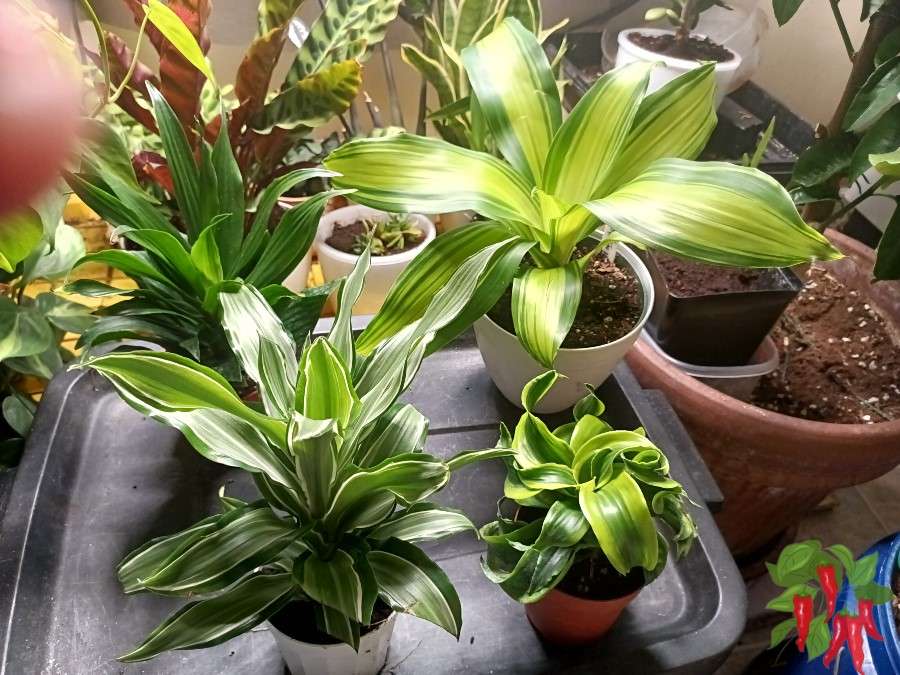
If you’ve started looking at Dracaena houseplants, it doesn’t take long before the names get confusing. Dracaena fragrans Varieties like Corn Plant, Mass Cane, Janet Craig, Golden Heart, Lemon Lime, Warneckii, and Tornado can look like completely different plants, but they are all closely related forms of Dracaena fragrans.
I’m growing six of these Dracaena varieties indoors so I can compare them under real household conditions. Some have dark green leaves, others have yellow or white striping, and one even has foliage that twists as it grows. Their basic care is similar, but their appearance and growth habits can be surprisingly different.
I’m also photographing and making a video about each plant as I grow it. That gives me a chance to show you the actual plants rather than relying on nursery photos. As these Dracaenas grow, I’ll continue updating this guide with what I see.
What You’ll Learn
- Six Dracaena fragrans varieties I’m growing indoors
- How their leaf colors and patterns differ
- Which varieties have more compact or upright growth
- How much light these Dracaenas need indoors
- How I water my Dracaena plants
- What to consider when choosing a variety for your home or apartment
Quick Answer: Which Dracaena fragrans Variety Should You Grow?
The six Dracaena fragrans varieties I’m growing share similar basic care requirements, so your choice can largely come down to the look you prefer and the space you have available. Janet Craig has classic dark green foliage, while Mass Cane gives you the familiar corn plant appearance. Golden Heart and Lemon Lime add brighter yellow and green coloring, Warneckii has contrasting striped foliage, and Tornado stands apart because of its unusual twisting growth.
For care, I give these plants good indirect light and allow the upper portion of the potting mix to dry before watering thoroughly. They tolerate normal household humidity and don’t need constantly wet soil.
Dracaena fragrans Varieties at a Glance
| Variety | Foliage | Growth | Standout Feature |
|---|---|---|---|
| Janet Craig | Solid dark green | Upright | Simple, deep-green foliage |
| Mass Cane | Green with a lighter central stripe | Tall and cane-forming | Classic corn plant appearance |
| Golden Heart | Golden center with broad green margins | Upright | Bright golden variegation |
| Tornado | Green, twisting foliage | Compact and twisting | Spiraling leaf arrangement |
| Warneckii | Green with contrasting light stripes | Upright | Strong striped pattern |
| Lemon Lime | Green with bright lime and yellow-green striping | Upright | One of the brightest-colored varieties |
I’ll continue updating this comparison as I grow these plants and see how their size, foliage, and growth habits develop under my indoor conditions.
What Is Dracaena fragrans?

Dracaena fragrans is a tropical African plant that has become one of the most familiar groups of indoor foliage plants. You may know it simply as a corn plant because the long, arching leaves of some varieties resemble corn foliage.
One reason the names become confusing is that you’re often looking at different cultivars of the same species. A Mass Cane and Golden Heart can look quite different sitting next to each other, but both are forms of Dracaena fragrans.
You’ll also encounter older names when researching these plants. Some Dracaenas that are now classified within Dracaena fragrans were previously sold and described under names such as Dracaena deremensis. Those older names are still common in plant listings and older gardening information.
For me, the interesting part isn’t getting hung up on all the old names. I want to see how these six plants actually differ when I grow them indoors under similar conditions.
Why I’m Growing Six Dracaena fragrans Varieties
I’ve grown Dracaenas before, but looking at individual plants made me realize just how much variety there is within this group. Some have broad green leaves, some have bright yellow variegation, and others look almost like completely different houseplants.
So rather than just showing you pictures from growers, I decided to grow six of them myself. I’ll be able to photograph the plants, make videos about them, and see how they respond to the conditions in my home.
That also lets me compare things that aren’t always obvious from a nursery description. Which one stays more compact? Which one holds its color best? How different does Tornado really look once it starts growing? Does Golden Heart continue producing the slightly twisted foliage I’m seeing on my new plant?
Those are things I’ll be watching as the plants mature. This guide isn’t meant to be frozen in time. I’ll update it as I learn more from actually growing all six.
1. Golden Heart Dracaena
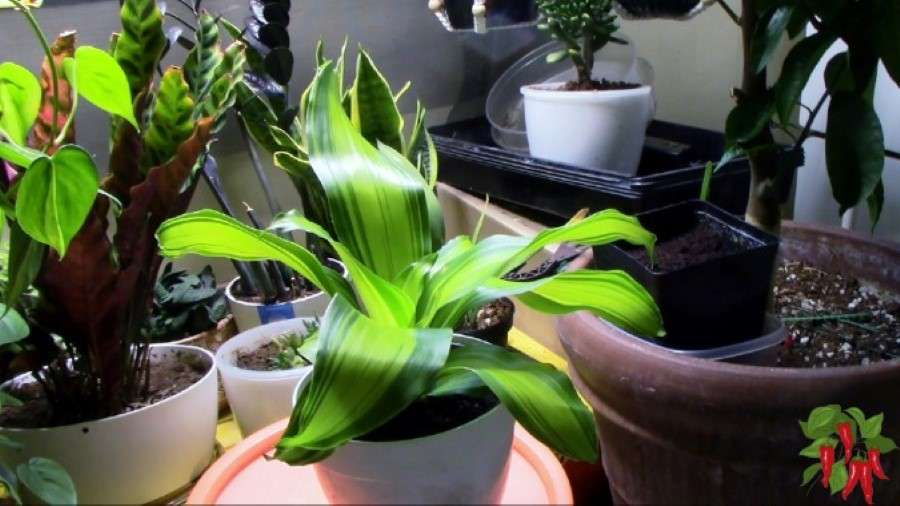
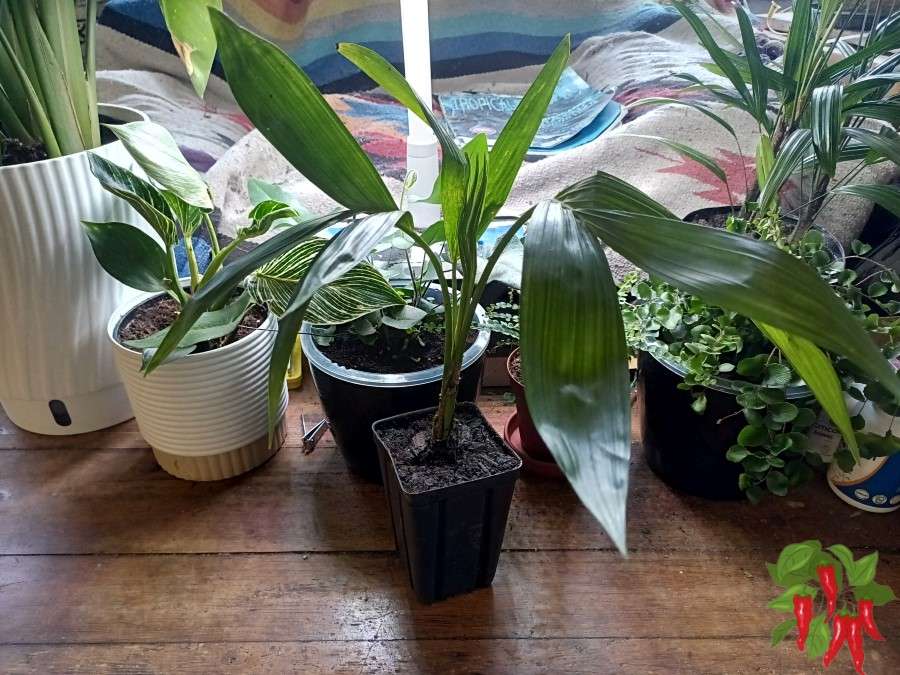
Golden Heart is one of the more colorful Dracaena fragrans varieties I’m growing. Its leaves have a bright golden center surrounded by broad green margins. You still get the familiar long Dracaena foliage, but the stronger contrast gives this cultivar a noticeably different appearance from a traditional Mass Cane.
This is actually my second Golden Heart. I ordered my first plant during winter, and it suffered freeze damage during shipping. I liked it enough that I decided to replace it. My current Golden Heart came from Andersen Farms and is now growing indoors with the rest of my Dracaena collection.
The new plant arrived with some curling and twisting in its foliage. I’m not yet sure whether that is simply how those particular leaves developed or whether it reflects the change from greenhouse conditions to my home. Rather than guessing, I’m watching the new growth to see what the plant does.
Like my other Dracaenas, I give Golden Heart bright, indirect light and allow the upper portion of the potting mix to dry before watering again. I don’t keep it continuously wet, and I don’t grow this one in a self-watering planter.
I’ve put together a complete guide based on the Golden Heart I’m growing, including my watering method, light, potting mix, size, and observations as the plant adjusts to my home.
2. Dracaena Tornado: The Compact Choice
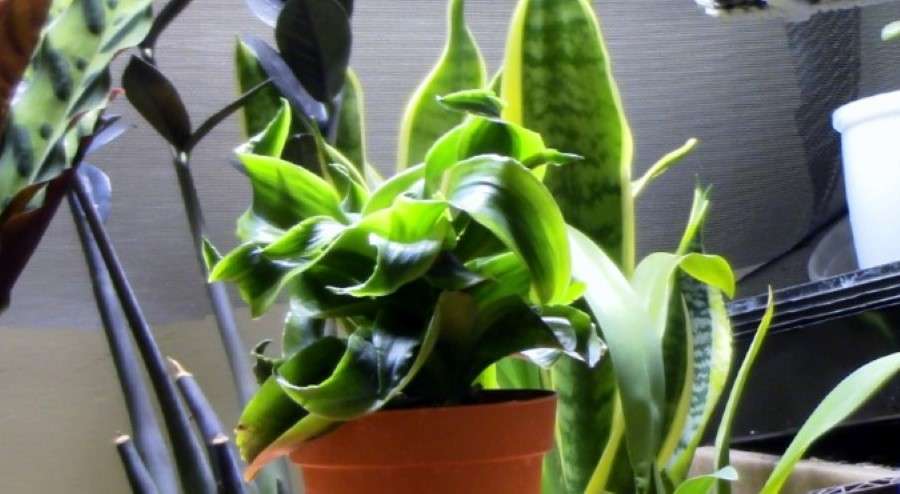
Tornado is probably the most unusual-looking Dracaena fragrans variety I’m growing. Instead of the long, relatively straight foliage you see on plants like Mass Cane or Golden Heart, Tornado produces leaves in tight, twisting whorls. That’s where the Tornado name comes from.
The biggest difference, though, is its size. Tornado is a compact Dracaena that typically stays around 12 to 18 inches tall indoors. It doesn’t develop into the tall cane-forming plant you see with some other Dracaena fragrans varieties.
Its central stem remains compact while new leaves continue developing in whorls. As the plant matures, it fills out into a dense rosette rather than putting most of its growth into height. A mature indoor plant may spread roughly 14 to 20 inches across.
That’s one reason Tornado caught my attention. If you like Dracaenas but don’t want a plant that may eventually become 5 or 6 feet tall, Tornado gives you a very different option. Its size works particularly well on a table, shelf, plant stand, or in an apartment where floor space is limited.
How I’m Growing My Tornado
I give my Tornado bright, indirect light. It can tolerate lower indoor light, but I still want it receiving enough light for healthy growth. Low-light tolerant doesn’t mean a plant can grow in a dark corner.
Watering is straightforward. I water thoroughly until excess water drains from the bottom of the pot. Then I let the upper portion of the potting mix dry before watering thoroughly again.
I don’t grow Tornado in a self-watering planter. I want the roots to go through that wet-and-dry cycle rather than keeping the potting mix continuously moist.
Why Choose Dracaena Tornado?
I’d look at Tornado if you want a Dracaena fragrans that’s small, slow-growing, and visually different from the traditional corn plant. The twisting foliage gives you plenty of interest even while the plant is young, and you don’t have to plan for it eventually becoming a large floor plant.
For complete growing information, including light, watering, potting mix, humidity, common problems, and pet safety, see my Dracaena Tornado care indoors guide.
3. Janet Craig: The Classic Dark Green Dracaena
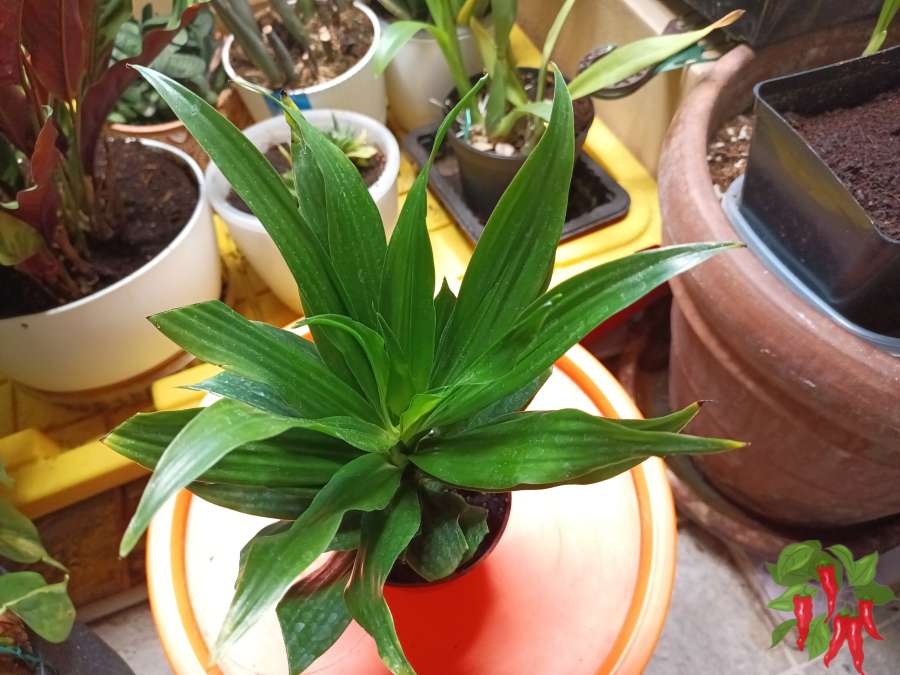
Janet Craig is probably one of the simplest-looking Dracaena fragrans varieties in my collection, but that’s also a big part of its appeal. Instead of yellow, lime, or white variegation, Janet Craig has solid dark green foliage.
The leaves grow upright before arching outward as they mature, giving the plant a full, tropical appearance without the brighter coloring you see on Golden Heart or Lemon Lime. When you put several Dracaena varieties next to each other, Janet Craig’s deep green foliage really stands out.
Janet Craig has been grown as a houseplant for a long time, and you’ll sometimes still see it listed under the older name Dracaena deremensis ‘Janet Craig.’ Today, it is generally included with Dracaena fragrans.
How I’m Growing My Janet Craig
I’m growing my Janet Craig under normal indoor conditions along with the other Dracaenas in this comparison. I give it good indirect light and water thoroughly when the upper portion of the potting mix has dried.
Because Janet Craig doesn’t depend on variegation for its appearance, I’m especially interested in seeing how it compares with my brighter Dracaena varieties as the plants mature. I’ll continue adding my observations as I grow it.
4. Mass Cane: The Traditional Corn Plant
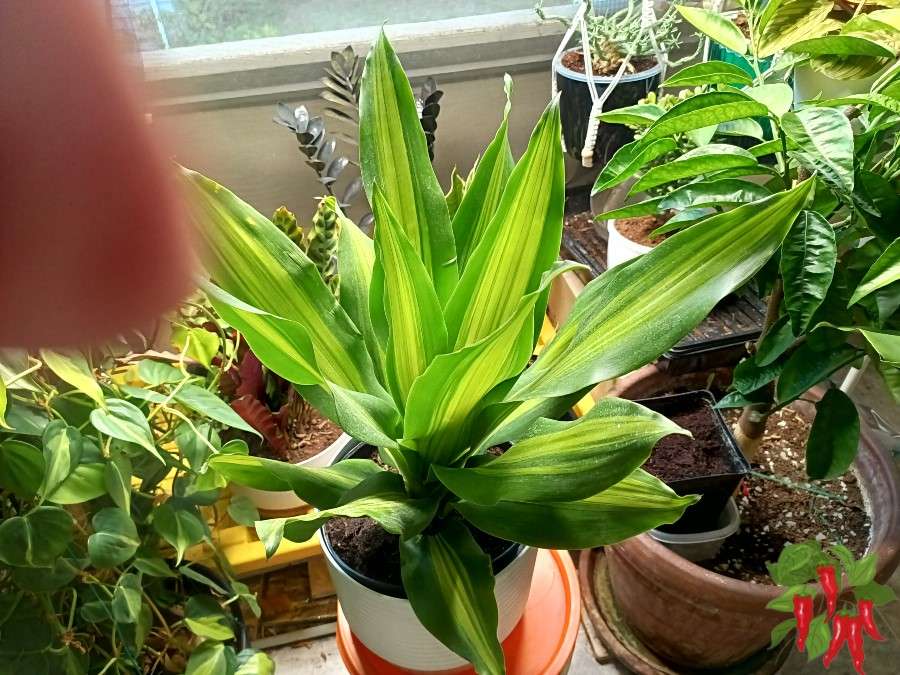
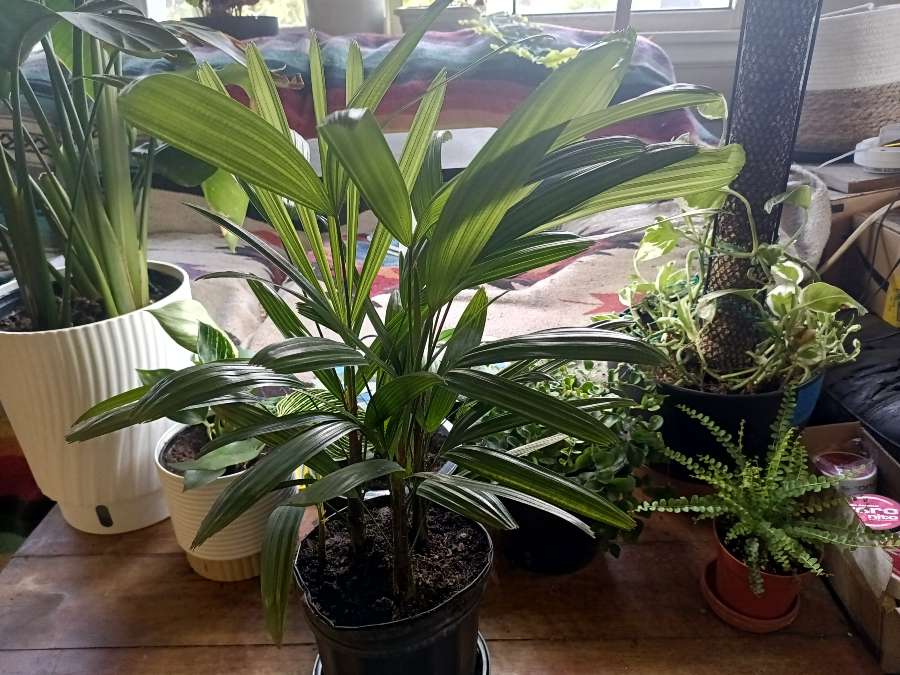
If there’s one plant in this group that really explains the name “corn plant,” it’s Mass Cane. This is the familiar cane-forming Dracaena with long, arching green leaves and a lighter stripe running through the center.
Mass Cane is commonly sold as Dracaena fragrans ‘Massangeana.’ Growers often produce it with several cut canes of different heights planted together in one container. New clusters of foliage grow from those canes, eventually creating the tiered appearance you often see on larger indoor specimens.
That growth habit makes Mass Cane quite different from my compact Tornado. Instead of staying small and forming a tight rosette, Mass Cane can eventually develop into a substantial floor plant.
How I’m Growing My Mass Cane
I give my Mass Cane good indirect light and let the upper portion of the potting mix dry between waterings. When it’s ready for water, I water thoroughly and allow the excess to drain.
I’m particularly interested in watching the cane growth and how the foliage develops compared with Golden Heart and the other varieties. Mass Cane gives me a good reference point because it has the traditional appearance most people associate with a corn plant.
5. White Jewel (Warneckii): Striking White-Striped Foliage
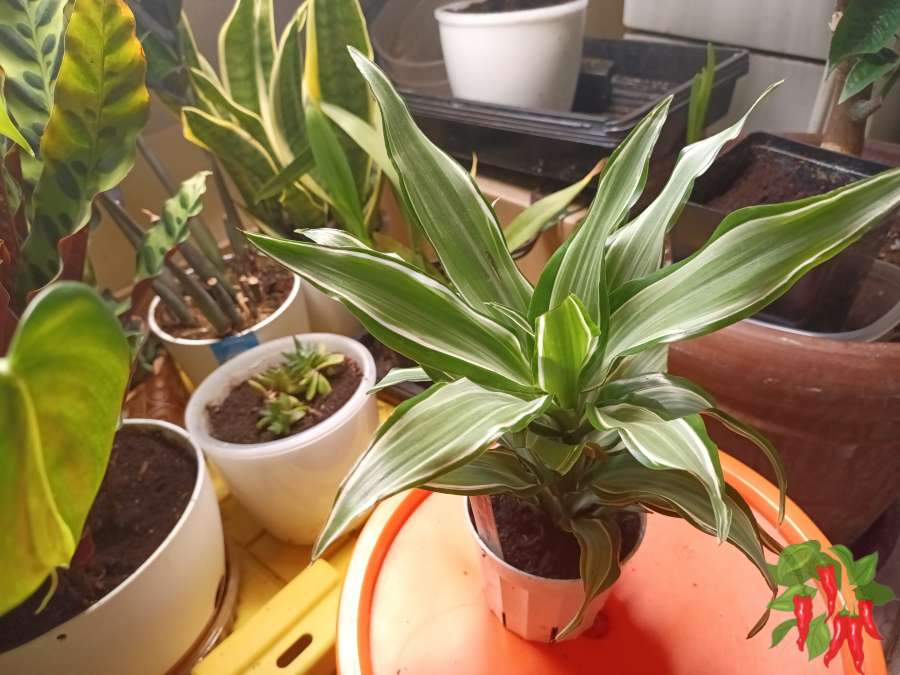
The Warneckii-type Dracaena I’m growing is sold as White Jewel. It has the striped foliage that makes this group easy to distinguish from solid-green Janet Craig or the yellow-centered Golden Heart.
White Jewel has green leaves marked with contrasting light-colored striping. The combination gives the plant a much brighter appearance than a solid-green Dracaena while still looking quite different from the yellow and lime coloring of Lemon Lime.
You’ll find plenty of confusing names when shopping for these plants. Warneckii is a name that has been used for striped Dracaenas for many years, while individual selections such as White Jewel may be sold under their own cultivar or trade names. For this comparison, White Jewel is the Warneckii-type plant I’m actually growing and photographing.
How I’m Growing My White Jewel
I’m giving White Jewel good indirect light. With a variegated Dracaena like this, I want enough light to support healthy growth and show off the striped foliage without putting the plant in harsh direct sun.
I water it the same basic way I grow my other Dracaenas. I let the upper portion of the potting mix dry and then water thoroughly, allowing excess water to drain from the container.
As my White Jewel grows, I’ll be watching how strongly it maintains its striping and how its overall size and growth habit compare with Janet Craig and the other upright varieties.
6. Lemon Lime: Bright Lime-Green Variegation
Lemon Lime is one of the brightest Dracaena fragrans varieties in this collection. Instead of the darker green appearance of Janet Craig, its leaves combine green with bright lime and yellow-green striping.
That coloring gives Lemon Lime a very different look even though its basic growth and care are similar to the other Dracaenas I’m growing. It’s a good example of just how different two cultivars of the same general group can appear when you put them side by side.
I’m adding Lemon Lime to this comparison as I grow the actual plant rather than trying to judge it from nursery photographs. That will let me see how well the coloring holds under household lighting and how the plant’s growth compares with Golden Heart, White Jewel, and Janet Craig.
How I’m Growing My Lemon Lime
I’m giving Lemon Lime good indirect light, especially because I want to maintain its brighter foliage. I’ll watch the plant over time to see how its coloring responds to the light conditions in my home.
For watering, I’ll follow the same approach I use with my other Dracaenas. I’ll allow the upper portion of the potting mix to dry before watering thoroughly and letting the excess drain away.
Once I’ve grown Lemon Lime for a while, I’ll be able to add more firsthand observations about its growth rate, mature appearance, and how it compares with the other colorful Dracaenas in my collection.
Is Dracaena fragrans Toxic to Pets?
Yes. Dracaena fragrans is considered toxic to both cats and dogs. According to the ASPCA, Dracaena plants contain saponins. If a pet chews or eats the leaves, symptoms can include vomiting, loss of appetite, increased salivation, and depression. Cats may also develop dilated pupils.
That applies to the Dracaena varieties I’m growing in this comparison, including Golden Heart, Tornado, Janet Craig, Mass Cane, White Jewel, and Lemon Lime. If you have a cat or dog that likes chewing houseplants, keep these plants where your pet can’t reach them.
You can find more information from the ASPCA Animal Poison Control Center.
Frequently Asked Questions
Are all corn plants Dracaena fragrans?
The houseplants commonly called corn plants are generally cultivars of Dracaena fragrans. However, plant labels can be confusing because you’ll still see older botanical names, particularly Dracaena deremensis, used for some cultivars. That’s one reason plants such as Janet Craig and Warneckii may appear under different names depending on where you shop.
What is the difference between Mass Cane and Dracaena fragrans?
Mass Cane isn’t a separate species. It’s a commonly sold form of Dracaena fragrans, usually associated with ‘Massangeana.’ It’s typically grown on thick canes with clusters of long green leaves featuring a lighter stripe through the center. It’s the plant many people picture when they hear the name corn plant.
Which Dracaena fragrans variety stays the smallest?
Of the varieties I’m growing, Tornado is my compact choice. Its leaves develop in tight, twisting whorls and the plant stays much smaller than a traditional cane-forming Dracaena. That makes it particularly interesting if you want the look of a Dracaena without eventually needing room for a large floor plant.
Which Dracaena fragrans varieties have variegated leaves?
Several of the plants I’m growing are variegated. Golden Heart has a golden center surrounded by green, Mass Cane has a lighter central stripe, White Jewel has contrasting light-colored striping, and Lemon Lime combines green with bright lime and yellow-green coloring. Janet Craig provides the contrast in my collection with its solid dark green foliage.
Is White Jewel a Warneckii Dracaena?
White Jewel is the Warneckii-type Dracaena I’m growing for this comparison. You’ll encounter Warneckii and related striped Dracaenas under several names in the houseplant trade, which can make identifying individual plants confusing. I prefer to include the name on the plant I’m actually growing rather than treating every striped Dracaena as identical.
Do colorful Dracaena varieties need more light?
I give my variegated Dracaenas good indirect light. Plants such as Golden Heart, White Jewel, and Lemon Lime are grown for their colorful foliage, so I want them receiving enough light to maintain healthy growth and good coloration. I still avoid harsh direct sunlight that could damage the leaves.
Can I grow Dracaena fragrans in an apartment?
Yes. Dracaenas adapt well to normal indoor conditions, which is one reason I’ve grown them for years. You also have quite a range of sizes to choose from. A compact plant such as Tornado can fit on a table or plant stand, while Mass Cane can eventually become a much larger floor plant.
Final Thoughts
What started as an interest in a few different corn plants has turned into a pretty interesting little Dracaena collection. Put these plants next to each other and it’s easy to see why the names can become confusing. They share many of the same basic growing requirements, but they certainly don’t all look alike.
Janet Craig gives me the classic dark green foliage. Mass Cane has the traditional corn plant appearance. Golden Heart brings in that broad golden center, while my White Jewel adds white striping. Lemon Lime gives me another completely different combination of bright greens, and then there’s Tornado, which looks like it decided straight leaves were just too boring.
The part I’m most interested in comes next. I’m growing these plants rather than simply collecting pictures of different cultivars. That means I can watch how they develop under real household conditions, photograph the changes, and share what I actually see.
I’ll continue updating this guide as the plants mature and I make individual videos about them. If another interesting Dracaena fragrans happens to join the collection along the way, don’t be surprised if that number in the title goes up too.
- Dracaena fragrans Varieties: Corn Plants I Grow Indoors
- Dracaena fragrans Cultivars
- Janet Craig Dracaena Care Indoors
- Warneckii Dracaena Care Indoors: White Jewel
- Dracaena Tornado Care Indoors
- Golden Heart Dracaena Care Indoors
- Dracaena Golden Heart Care
- Mass Cane Plant Care: How to Grow Dracaena Massangeana
- Corn Stalk Dracaena Plant Care
References
- NC State Extension. Dracaena fragrans. North Carolina State University.
- University of Florida IFAS Extension. Dracaena fragrans Corn Plant.
- Missouri Botanical Garden. Dracaena fragrans.
- ASPCA. Dracaena. Toxic and Non-Toxic Plants.
 Steve S. is the creator of