
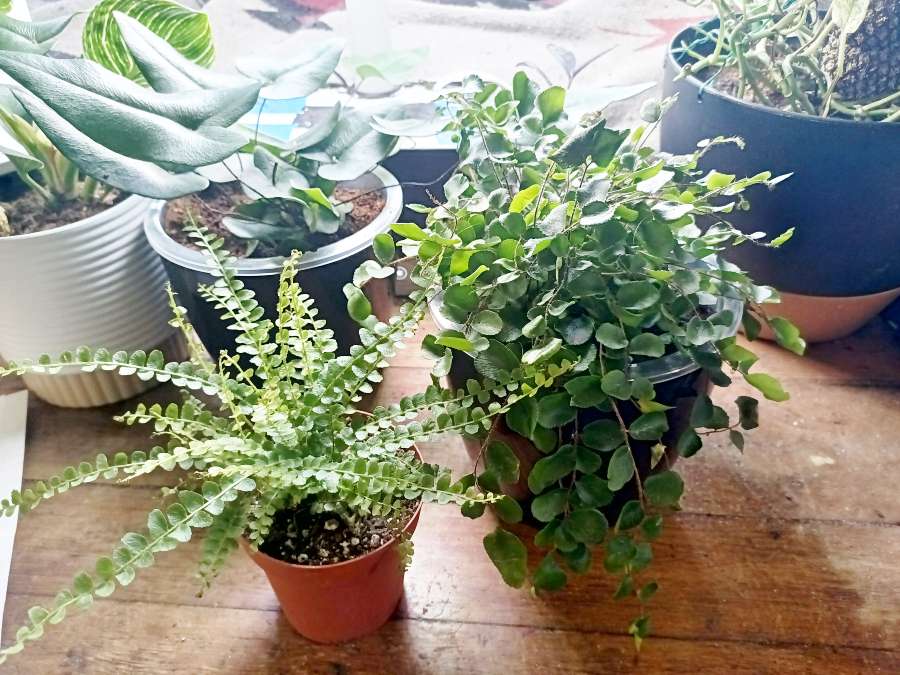
Lemon Button Fern Duffii, botanically known as Nephrolepis cordifolia ‘Duffii,’ is a compact fern with tiny rounded leaflets and gently arching fronds. It gives you the soft green appearance of a traditional fern without taking up nearly as much space as a Boston Fern.
I recently added one of these little ferns to my indoor plant collection. Mine is still in its original nursery pot, but I plan to move it into a self-watering planter like the other ferns I grow indoors.
A self-watering planter makes it easier for me to maintain the consistent moisture this fern prefers. The goal is to keep the potting mix lightly moist without leaving the roots sitting in soggy, waterlogged conditions.
Once you understand that balance, Lemon Button Fern ‘Duffii’ is a relatively easy plant to grow. Its compact size makes it especially useful for a desktop, shelf, plant stand, or bright windowsill.
What You’ll Learn
- How to identify Lemon Button Fern ‘Duffii’
- How much light it needs indoors
- How to keep the potting mix evenly moist
- Whether a self-watering planter is a good choice
- What soil, humidity, and temperature it prefers
- How to fertilize, prune, repot, and propagate it
- How to solve common Lemon Button Fern problems
Quick Answer
Grow Lemon Button Fern ‘Duffii’ in medium to bright indirect light. Keep its loose, well-draining potting mix evenly moist, but never soggy. Moderate humidity, temperatures between approximately 65 and 75°F, and protection from direct afternoon sun will help this compact fern remain full and green.
Lemon Button Fern ‘Duffii’ Care at a Glance
| Care Requirement | Recommended Conditions |
|---|---|
| Botanical name | Nephrolepis cordifolia ‘Duffii’ |
| Common names | Lemon Button Fern, Duffii Fern, Duffy Fern |
| Light | Medium to bright indirect light |
| Water | Keep evenly moist but not soggy |
| Humidity | Moderate to high; approximately 50–70% is helpful |
| Potting mix | Loose coco coir and perlite mix |
| Temperature | Approximately 65–75°F |
| Fertilizer | Diluted balanced fertilizer during active growth |
| Mature size | Approximately 8–12 inches tall and 10–14 inches wide |
| Pet safety | Listed by the ASPCA as non-toxic to cats and dogs |
| Difficulty | Easy to moderate |
What Is Lemon Button Fern ‘Duffii’?
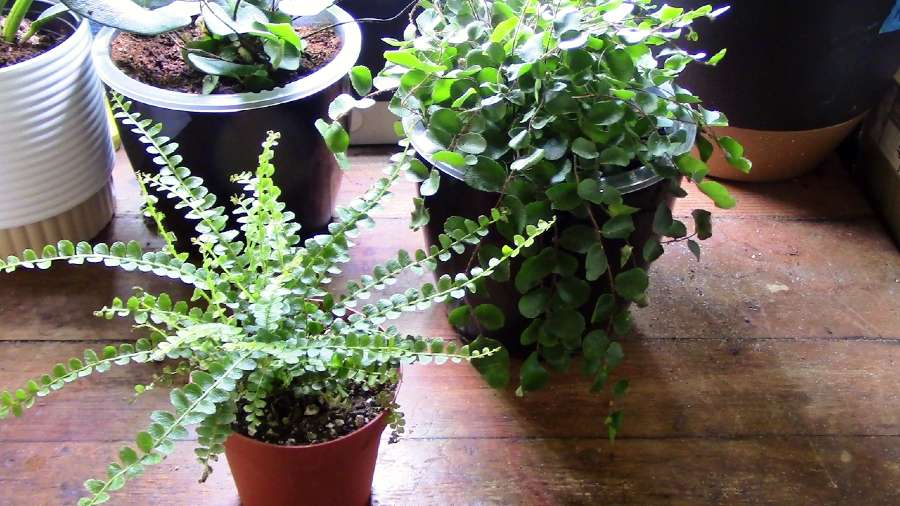
Lemon Button Fern ‘Duffii’ is a compact cultivar of Nephrolepis cordifolia. It belongs to the same genus as several larger sword ferns, but ‘Duffii’ remains much smaller and forms a dense mound of short, arching fronds.
Each frond is lined with tiny rounded leaflets that resemble green buttons. The foliage may release a light lemony fragrance when it is gently touched or brushed, which helps explain the plant’s common name.
The small leaflets give it a delicate appearance, but it is not as difficult to grow as some of the more demanding indoor ferns. It still needs dependable moisture, but it can grow well in a typical home when you provide enough indirect light and prevent the root ball from drying completely.
You can find a Lemon Button Fern ‘Duffii’ in a 4.5-inch decorative pot on Amazon.
See My Lemon Button Fern ‘Duffii’
In this short video, I show you my Lemon Button Fern ‘Duffii,’ take a closer look at its tiny rounded leaflets, and compare it with the larger Button Fern growing behind it. I also explain why I like self-watering planters for keeping indoor ferns consistently moist without leaving the potting mix soggy.
Lemon Button Fern vs. Button Fern
Lemon Button Fern and Button Fern are often confused because their common names and rounded leaflets sound similar. They are different plants with different growth habits and moisture preferences.
Lemon Button Fern is Nephrolepis cordifolia ‘Duffii.’ The larger Button Fern is Pellaea rotundifolia, a separate species with darker stems and larger, more leathery leaflets.
| Feature | Lemon Button Fern | Button Fern |
|---|---|---|
| Botanical name | Nephrolepis cordifolia ‘Duffii’ | Pellaea rotundifolia |
| Typical indoor height | Approximately 8–12 inches | Approximately 12–18 inches |
| Leaflets | Tiny, soft, and closely spaced | Larger, darker, and more leathery |
| Moisture preference | Consistently and lightly moist | Allows the surface to dry slightly more |
| Scent | May have a faint lemon fragrance | No characteristic lemon fragrance |
When shopping for either plant, check the botanical name on the label. Some nurseries and online sellers shorten Lemon Button Fern to “Button Fern,” which can make the two plants difficult to distinguish by name alone.
How Large Does Lemon Button Fern ‘Duffii’ Grow?
Lemon Button Fern ‘Duffii’ typically grows approximately 8 to 12 inches tall and 10 to 14 inches wide indoors. Container size, light, humidity, plant age, and general growing conditions can all affect its eventual size.
This is a genuinely compact fern. It should not develop the long, spreading fronds of a mature Boston Fern or occupy several feet of space like some larger indoor ferns.
The fronds will gradually arch outward as the plant fills its container. Give it a little open space so the foliage does not rub against a wall or become crowded by neighboring plants.
How Much Light Does Lemon Button Fern ‘Duffii’ Need?
Lemon Button Fern ‘Duffii’ grows best in medium to bright indirect light. It does not need intense sunlight, but it still needs enough light to maintain dense green growth.
An east-facing window is often a good location because it provides gentle morning light. A bright north-facing window can also work well. Near a south- or west-facing window, place the fern far enough from the glass to protect its foliage from strong afternoon sun.
You can use a sheer curtain when direct sunlight reaches the plant for an extended period. The tiny leaflets can develop pale patches and crispy edges when exposed to excessive sun and heat.
Signs the Light Is Too Strong
- Pale or bleached leaflets
- Dry brown patches on the fronds
- Crispy foliage on the window-facing side
- Potting mix drying much faster than expected
Move the plant farther from the window or filter the sunlight if these symptoms appear.
Signs the Fern Needs More Light
- Thin or widely spaced growth
- Fronds leaning strongly toward the window
- Loss of the plant’s dense, compact shape
- Very slow growth during spring and summer
- Potting mix remaining wet for unusually long periods
A full-spectrum LED grow light can supplement a dim window or provide the plant’s primary light. Begin with the distance recommended by the light manufacturer and adjust it if the fronds stretch, fade, or develop dry patches.
Best Indoor Locations for Lemon Button Fern
The best location combines indirect light, moderate humidity, and protection from sudden temperature changes. Its compact growth gives you several practical placement options.
Desktop or Home Office
Lemon Button Fern is small enough to fit on a desk without blocking your view or taking over the work surface. Place it near a bright window or add a small grow light if the office receives limited natural light.
Bright Windowsill
A wide east- or north-facing windowsill can provide suitable light. Keep the fronds from touching cold glass during winter, and watch for excessive heat if direct sunlight reaches the sill.
Plant Shelf or Small Stand
The compact plant fits easily among other small houseplants. Grouping it with other plants may help maintain a slightly more humid environment, but leave enough space for air to move around the fronds.
Bright Bathroom
A bathroom can provide the extra humidity this fern appreciates. However, the room still needs a bright window or a grow light. Humidity cannot make up for a location that remains too dark.
Avoid placing Lemon Button Fern beside a heating vent, air conditioner, fireplace, or drafty exterior door. Moving dry air can cause the small leaflets to lose moisture quickly and develop brown edges.
How to Water Lemon Button Fern ‘Duffii’
Lemon Button Fern ‘Duffii’ prefers potting mix that remains evenly moist. It should not dry out completely, but its roots also need air and can develop problems in constantly saturated soil.
Check the potting mix with your finger rather than watering on a fixed schedule. Water when the top half-inch begins to feel slightly dry. If the mix still feels damp beneath the surface, wait and check it again later.
When you water from the top, moisten the entire root ball until excess water drains from the bottom of the container. Empty any water that collects in the saucer or decorative outer pot.
How frequently you need to water will change throughout the year. A fern in a small pot near a bright window may use water quickly during warm weather. The same plant may dry much more slowly during the cooler, darker days of winter.
Signs Your Lemon Button Fern Needs Water
- The surface of the potting mix feels slightly dry
- The container feels lighter when lifted
- The fronds begin to lose their firm, upright appearance
- Leaflet edges start becoming dry or crispy
Try to water before the fronds wilt severely. The plant may recover from a brief dry period, but repeatedly allowing the root ball to dry can cause permanent browning and leaflet loss.
Signs You May Be Overwatering
- The potting mix remains wet for many days
- Fronds turn yellow while the soil is still wet
- The plant develops soft or darkened growth near the soil
- The potting mix has a sour or musty smell
- The roots appear brown, soft, or mushy
Overwatering is not simply the amount of water you pour into the pot. It occurs when the roots remain without enough oxygen because the mix stays saturated too long. Dense soil, poor drainage, low light, and an oversized container can all contribute to the problem.
Can You Grow Lemon Button Fern in a Self-Watering Planter?
A self-watering planter can work very well for Lemon Button Fern ‘Duffii.’ I use self-watering planters for several of my indoor ferns because they help keep the potting mix moist without requiring constant top watering.
The planter uses a wick or a section of potting mix to draw water from a lower reservoir. The plant can then access moisture as the root zone begins to dry.
The system still needs a loose, airy potting mix. A self-watering container cannot correct a dense mix that holds too much water and leaves too little oxygen around the roots.
Setting Up a Self-Watering Planter
- Choose a planter only slightly larger than the current root ball.
- Use an absorbent but well-aerated mix such as coco coir combined with perlite.
- Water from the top after repotting to moisten the mix and activate the wick.
- Allow the roots time to settle into the new container before relying completely on the reservoir.
- Check the soil during the first few weeks to learn how the system performs in your growing area.
- Clean the reservoir periodically to prevent stagnant water and mineral buildup.
Do not assume that a full reservoir automatically means the root zone has the correct moisture level. Check the potting mix occasionally, especially when the plant is newly repotted or seasonal conditions change.
Quick Tip: If the potting mix becomes completely dry, it may stop drawing water evenly from the reservoir. Water slowly from the top to rehydrate the mix and restart the wicking process.
Best Potting Mix for Lemon Button Fern ‘Duffii’
Lemon Button Fern needs a potting mix that holds dependable moisture while still allowing oxygen to reach the roots. Regular garden soil is too dense for an indoor container and can remain waterlogged for extended periods.
I prefer coco coir as the moisture-retentive part of the mix. Coco coir absorbs water well and can be combined with perlite to create additional drainage and air spaces.
A practical starting mix is approximately two parts buffered coco coir to one part perlite. You can adjust the ratio based on the container and your indoor conditions.
- Add more perlite if the mix remains wet too long.
- Use slightly more coco coir if a small container dries unusually fast.
- Avoid packing the mix firmly around the roots during repotting.
- Always use a container with drainage unless it is a properly designed self-watering planter.
A small amount of fine orchid bark can be added if you need more air space. Avoid making the mixture so coarse that it dries before the fern can access enough moisture.
Humidity Requirements
Lemon Button Fern ‘Duffii’ appreciates moderate to high humidity. A range of approximately 50 to 70% is useful, although an established plant may adapt to somewhat lower household humidity when its roots receive dependable moisture.
Humidity often becomes more challenging during winter when indoor heating dries the air. Brown leaflet edges and crispy fronds can appear when the fern loses moisture faster than its roots can replace it.
Practical Ways to Increase Humidity
- Run a small room humidifier near your plants.
- Group the fern with other houseplants.
- Place it in a naturally humid room that receives enough light.
- Keep it away from heating vents and other sources of hot, dry air.
A humidifier is the most dependable choice when your indoor air is consistently dry. Grouping plants can help create a slightly more humid area, but the plants still need space for gentle air circulation.
Misting only raises humidity for a short time. It may temporarily freshen the foliage, but it will not correct persistently dry room air. Constantly wetting the fronds without providing airflow can also encourage spotting or fungal problems.
Best Temperature for Lemon Button Fern
Lemon Button Fern grows well at ordinary indoor temperatures. A daytime range of approximately 65 to 75°F is comfortable for the plant.
It can tolerate small variations, but sudden temperature changes may damage the foliage. Protect the fern from cold windows, exterior doors, air conditioners, fireplaces, and heating vents.
Temperatures below approximately 55°F can slow growth and stress a tropical fern. Excessive heat can also cause problems by drying the potting mix and foliage more quickly.
If you move the plant outdoors during warm weather, wait until nighttime temperatures remain reliably mild. Place it in a shaded location and bring it back indoors before cool autumn nights arrive.
How to Fertilize Lemon Button Fern ‘Duffii’
Lemon Button Fern is not a heavy feeder. Too much fertilizer can damage its fine roots and cause dry brown tips on the foliage.
Apply a balanced liquid houseplant fertilizer diluted to half or quarter strength approximately once a month during active spring and summer growth. Always follow the product label and avoid exceeding its recommended rate.
Reduce or stop feeding during fall and winter when the plant’s growth slows. A fern growing under strong supplemental lighting may continue growing during winter, but it will usually need less fertilizer than it receives during summer.
Apply fertilizer to moist potting mix rather than dry roots. If you notice a white crust forming on the soil or around the container, flush the mix with clean water and allow the excess to drain.
Pruning and Cleaning the Fern
Lemon Button Fern does not require complicated pruning. Remove yellow, brown, or badly damaged fronds by cutting them close to the base with clean scissors.
Removing damaged fronds improves the plant’s appearance and makes room for healthy new growth. A brown frond will not turn green again, although you can leave partially green fronds in place if they still contribute to the plant.
The small leaflets can collect dust over time. Gently rinse the plant with lukewarm water or use a soft spray from the sink or shower. Allow the foliage to drain and dry in a warm location with good air movement.
Avoid using commercial leaf-shine products. The residue can coat the delicate foliage and is unnecessary for a naturally textured fern.
When and How to Repot Lemon Button Fern
Lemon Button Fern ‘Duffii’ grows well when slightly snug in its container. You do not need to repot it immediately after purchase unless the potting mix drains poorly, the roots are unhealthy, or the nursery pot has become completely filled with roots.
Signs It Is Time to Repot
- Roots circle tightly around the inside of the pot.
- Roots grow through the drainage holes.
- The potting mix dries much faster than it once did.
- Water runs around the root ball without soaking in.
- The plant has become top-heavy or crowded.
- The existing mix remains soggy and poorly aerated.
Spring and early summer are usually the best times to repot because the plant is entering active growth. Choose a container only one size larger than the current pot. Moving a small fern into a much larger container can leave too much damp mix surrounding its roots.
Steps for Repotting
- Water the fern lightly several hours before repotting.
- Prepare a clean container with suitable drainage.
- Remove the plant gently without pulling on its fronds.
- Loosen tightly circling roots with your fingers.
- Trim only roots that are dead, soft, or badly damaged.
- Position the fern at approximately the same depth at which it previously grew.
- Fill around the roots with fresh, lightly moistened potting mix.
- Water thoroughly and allow the excess to drain.
Keep the newly repotted plant in bright indirect light while it settles into its container. Wait several weeks before fertilizing so the roots have time to recover.
How to Propagate Lemon Button Fern ‘Duffii’
Division is the easiest way to propagate an established Lemon Button Fern. The process separates one mature clump into two or more smaller plants, each with its own roots and growing points.
Wait until the fern has produced a healthy, well-established root system. Dividing a very small or recently purchased plant can cause unnecessary stress.
Propagation by Division
- Remove the established fern from its container.
- Gently loosen some of the potting mix around the root ball.
- Identify natural sections with their own fronds and roots.
- Pull the sections apart carefully or cut through the root ball with a clean knife.
- Place each division into a small container filled with lightly moist potting mix.
- Water thoroughly and let the excess drain.
- Keep the divisions in warm, humid conditions with indirect light.
Keep the potting mix consistently moist while the divisions establish new roots. Avoid fertilizing immediately after propagation. Wait until you see fresh growth that indicates the roots have begun settling into their new containers.
Is Lemon Button Fern ‘Duffii’ Easy to Grow?
Lemon Button Fern is a relatively easy fern when you can provide dependable moisture. It does not demand an extremely bright location, and its compact growth makes it easier to place than a large Boston Fern.
The main challenge is preventing the root ball from drying completely without keeping it constantly soggy. A loose potting mix, a container with proper drainage, and regular moisture checks make that balance much easier to maintain.
I consider it a good choice for a beginner who checks plants regularly. A self-watering planter can make it even more manageable once you understand how quickly the plant uses water in your particular indoor growing area.
Is Lemon Button Fern Toxic to Pets?
The ASPCA lists Duffii Fern, also called Lemon Button Fern, as non-toxic to cats and dogs. This makes it a useful option for homes with pets that may occasionally investigate the plant collection.
Non-toxic does not mean that pets should be encouraged to chew the foliage. Eating a large amount of any plant material can cause temporary digestive upset, and repeated chewing can severely damage this small fern.
Common plant names can also be confusing. Check the botanical label for Nephrolepis cordifolia ‘Duffii’ before assuming a fern is pet-safe. Plants such as Asparagus Fern are not true ferns and have different safety considerations.
You can confirm its current listing on the ASPCA Duffii Fern plant profile.
Common Lemon Button Fern Problems
Changes in the fronds often provide the first sign that your Lemon Button Fern needs different growing conditions. Check the potting mix, roots, light, humidity, and recent care before making several changes at once.
Brown or Crispy Leaflets
Brown and crispy leaflets are commonly connected to dry potting mix, low humidity, excessive fertilizer, or direct sunlight. Check whether the root ball has become dry before assuming humidity is the only problem.
If the potting mix is dry, water the plant thoroughly and allow the excess to drain. Move it away from heating vents and strong afternoon sun. A humidifier may help when the room air remains consistently dry.
Remove completely brown fronds at the base. Damaged foliage will not turn green again, but the plant can produce healthy new fronds after you correct the underlying problem.
Yellow Fronds
An occasional older frond may naturally turn yellow and die. Several yellow fronds appearing at once can indicate that the potting mix is remaining wet for too long.
Check the drainage holes and feel the mix below the surface. If it is constantly saturated, allow it to lose some excess moisture and review the container, light level, and soil structure.
Yellowing can also occur when a severely dry plant is suddenly watered. Look at the recent watering history rather than assuming every yellow frond has the same cause.
Drooping Fronds
Drooping can result from either dry roots or unhealthy roots sitting in waterlogged soil. Feel the potting mix before adding more water.
If the mix is dry, water the root ball thoroughly. If it is wet and has been wet for many days, inspect the roots and improve the drainage rather than adding more water.
Fern Is Losing Its Leaflets
Leaflet loss can follow severe drying, low humidity, hot or cold drafts, excessive sun, or a sudden move to different growing conditions. The tiny leaflets may shed quickly after the plant becomes stressed.
Move the fern to a stable location with indirect light and consistent moisture. Avoid repeatedly relocating it while it adjusts. New growth is the best sign that the plant is recovering.
Pale or Weak Growth
Pale growth can develop when the fern receives excessive direct light, too little nutrition, or unhealthy root conditions. Weak, widely spaced fronds that lean toward a window often indicate insufficient light.
Review the light before adding fertilizer. Feeding a plant with damaged roots or inadequate light will not solve the underlying problem and can add more stress.
Lemon Button Fern Is Not Growing
Growth naturally slows during winter when days are shorter and indoor temperatures are cooler. Slow growth is not necessarily a problem when the existing foliage remains healthy.
During spring and summer, check the light, root condition, container size, and feeding routine. A completely root-bound plant or one kept in a dark location may produce very little new growth.
Root Rot
Root rot becomes a risk when the potting mix remains saturated and oxygen cannot reach the roots. Affected roots may appear brown or black and feel soft or mushy. The soil may also develop a sour smell.
Remove the fern from its container and trim badly damaged roots with clean scissors. Repot the remaining healthy plant in fresh, airy potting mix and a clean container with adequate drainage.
Reduce watering while the root system recovers, but do not allow the remaining roots to become completely dry.
Pests That May Attack Lemon Button Fern
Lemon Button Fern can occasionally attract spider mites, mealybugs, scale insects, or fungus gnats. Check beneath the fronds and around the base of the plant whenever you water.
Spider Mites
Spider mites thrive in warm, dry conditions. Early signs include pale stippling, faded leaflets, and fine webbing between the fronds.
Isolate the plant and rinse the foliage thoroughly, including the undersides. Repeat treatment may be necessary because the fern’s dense growth gives mites many places to hide.
Mealybugs and Scale
Mealybugs look like small pieces of white cotton, while scale insects form brown or tan bumps along the fronds and stems. Small infestations can be removed carefully by hand or with a cotton swab.
Test any insecticidal soap or other treatment on a small section first. Fern foliage can be sensitive, and a product that works well on a thick-leaved houseplant may damage delicate fronds.
Fungus Gnats
Fungus gnats are small flying insects associated with consistently moist organic potting mixes. Adults are mostly a nuisance, but a large larval population can indicate that the mix remains wetter than necessary.
Allow the surface to begin drying before watering again without letting the entire root ball dry. Yellow sticky traps can catch adults, while better drainage and careful watering make the pot less attractive for continued breeding.
Quick Tip: Inspect a new Lemon Button Fern before placing it beside your other plants. Keeping it separate for a short observation period can prevent an unnoticed pest from spreading through your collection.
Common Lemon Button Fern Care Mistakes
Allowing the Root Ball to Dry Completely
Lemon Button Fern does not store water the way a succulent does. Repeatedly allowing the entire root ball to dry can produce crispy fronds and permanent leaflet loss.
Keeping the Soil Constantly Soggy
Moist soil and waterlogged soil are not the same thing. The fern needs dependable moisture, but its roots also need oxygen. Use an airy potting mix and allow excess water to drain.
Using an Oversized Container
A large container holds more potting mix than a small root system can use. The unused mix may remain wet for a long time and increase the risk of root problems.
When repotting, move the fern into a container only slightly larger than its current root ball.
Placing It in Strong Afternoon Sun
The small leaflets can scorch when exposed to intense sunlight through a hot window. Bright indirect light is a safer choice for maintaining dense green foliage.
Assuming a Bathroom Is Bright Enough
A bathroom may provide excellent humidity but still be too dark for healthy growth. Use a window or grow light to provide the fern with adequate light.
Fertilizing a Stressed Plant
Fertilizer cannot repair damaged roots, dry soil, low light, or a pest infestation. Correct the growing conditions first and wait for signs of recovery before feeding the plant.
Frequently Asked Questions
How often should I water Lemon Button Fern ‘Duffii’?
Water when the top half-inch of potting mix begins to feel slightly dry. The actual interval will depend on light, humidity, temperature, pot size, and the type of potting mix you use.
Check the soil rather than automatically watering on a particular day. The plant will usually need water more frequently during warm, bright weather than during winter.
Can Lemon Button Fern grow in low light?
Lemon Button Fern can tolerate medium indirect light, but very low light may produce thin growth and keep the potting mix wet too long. Medium to bright indirect light is better for maintaining compact, healthy fronds.
Should I mist my Lemon Button Fern?
You can mist it occasionally, but misting only increases humidity for a short period. A humidifier is more effective when your home has persistently dry air.
If you mist the fern, provide gentle airflow so its dense foliage does not remain wet for an extended period.
Why is it called a Lemon Button Fern?
The small rounded leaflets resemble tiny green buttons. The foliage may also release a faint lemony scent when it is gently touched or brushed.
Can I keep Lemon Button Fern on a windowsill?
Yes. Its small size makes it well suited to a windowsill that receives indirect light. An east- or north-facing window is often a good choice.
Protect the fern from hot afternoon sun and keep its fronds from touching cold window glass during winter.
Final Thoughts on Growing Lemon Button Fern ‘Duffii’
Lemon Button Fern ‘Duffii’ is a good choice when you want the appearance of a traditional fern in a much smaller package. Its tiny rounded leaflets and dense green growth fit easily on a desktop, shelf, windowsill, or small plant stand.
The most important part of its care is maintaining consistent moisture without keeping the roots waterlogged. I plan to grow mine in a self-watering planter because that setup has worked well for my other moisture-loving ferns.
A self-watering planter is optional. You can grow a healthy plant in a regular container as long as it has drainage and you check the potting mix regularly.
Give your fern medium to bright indirect light, an airy coco coir and perlite mix, moderate humidity, and protection from hot or cold drafts. Once those basic conditions are in place, this compact little fern is quite manageable.
If you have limited room or simply enjoy miniature plants, Lemon Button Fern ‘Duffii’ is certainly one worth checking out.
You can find a Lemon Button Fern ‘Duffii’ in a 4.5-inch decorative pot on Amazon.
Where to Go Next
Continue Exploring Indoor Ferns
References
- North Carolina State Extension: Nephrolepis cordifolia
- ASPCA: Duffii Fern Toxicity Information
- Clemson Cooperative Extension: Pet-Safe Indoor Houseplants
- University of Minnesota Extension: Growing Tropical Ferns Indoors

 Steve S. is the creator of