
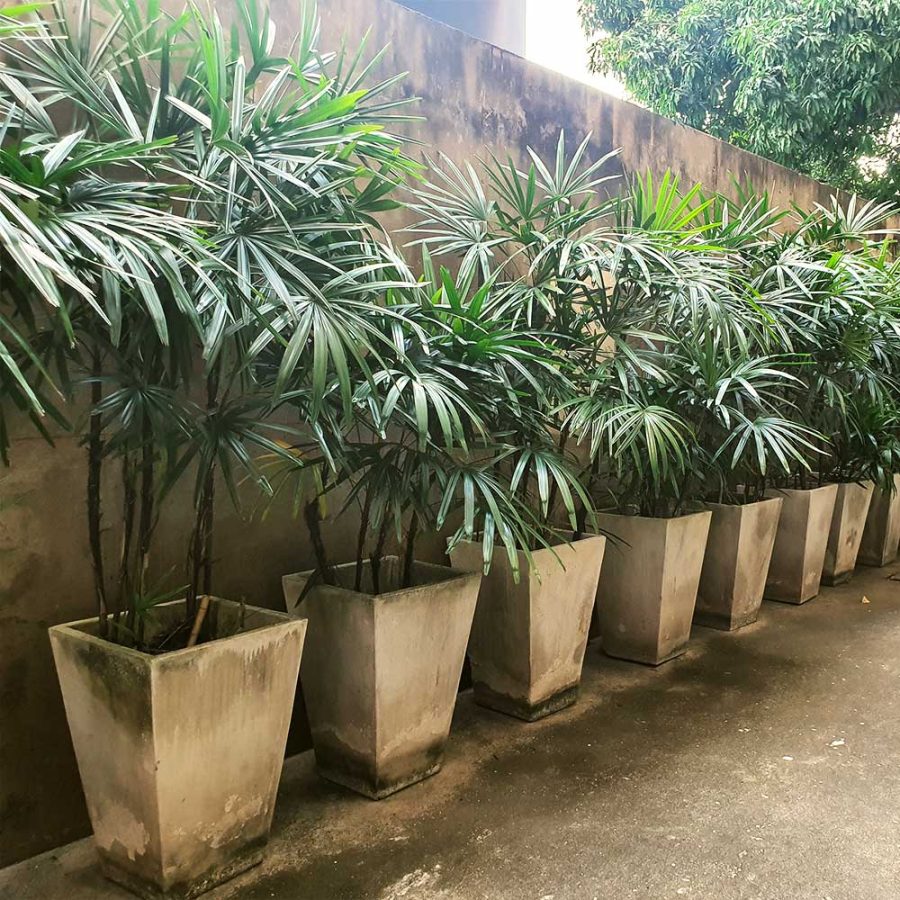
Best indoor palm trees bring height, graceful foliage, and a tropical look into your home, but some palms adapt to indoor conditions much better than others. The right choice depends on your available light, floor space, humidity, and how much attention you want to give the plant.
A Parlor Palm can live happily in an apartment without taking over the room. Kentia and Lady Palms require more floor space, but they are dependable choices for larger rooms. Majesty and Fishtail Palms look impressive, although they need brighter light and more consistent care.
This guide compares ten palms that can grow indoors. You will learn which ones tolerate moderate light, which stay relatively compact, and which need enough room to become substantial floor plants.
What You’ll Learn
- Which palm trees adapt best to indoor growing
- How the ten palms compare in size, light, and care
- Which palms work well in apartments and small homes
- Which choices tolerate moderate indoor light
- Which palms require brighter light and higher humidity
- How to match an indoor palm to your available space
Quick Answer: Parlor Palm, Kentia Palm, Lady Palm, and Bamboo Palm are among the most dependable palms for real indoor conditions. Parlor Palm is especially suitable for apartments, while Kentia and Lady Palms make attractive floor plants in larger rooms. Areca, Cat, Majesty, Fishtail, Pygmy Date, and Chinese Fan Palms can also grow indoors, but they generally need brighter light, more space, or more attentive care.
Best Indoor Palm Trees at a Glance
| Palm | Best Light | Typical Indoor Size | Care Level | Best Use |
|---|---|---|---|---|
| Parlor Palm | Moderate to bright indirect | 2–6 feet | Easy | Apartments and smaller rooms |
| Kentia Palm | Moderate to bright indirect | 6–10 feet | Easy to moderate | Large rooms and floor displays |
| Lady Palm | Moderate to bright indirect | 4–8 feet | Easy to moderate | Corners and narrow floor spaces |
| Bamboo Palm | Moderate to bright indirect | 4–8 feet | Moderate | Bright rooms with floor space |
| Areca Palm | Bright indirect | 6–10 feet | Moderate | Bright rooms and broad floor displays |
| Cat Palm | Bright indirect | 3–6 feet | Moderate | Humid rooms and grouped displays |
| Pygmy Date Palm | Very bright indirect | 4–8 feet | Moderate | Bright windows and sunrooms |
| Majesty Palm | Bright indirect | 6–10 feet or more | Demanding | Large, bright, humid rooms |
| Fishtail Palm | Bright indirect | 6–10 feet or more | Moderate to demanding | Large rooms with strong light |
| Chinese Fan Palm | Bright indirect | 6–10 feet or more | Moderate | Large rooms and bright entryways |
Mature plant size: Indoor size depends on light, container size, palm age, and growing conditions. Many palms grow slowly inside, but that does not mean they remain small. Kentia, Areca, Majesty, Fishtail, and Chinese Fan Palms can eventually become substantial floor plants.
Mature plant size: Indoor size depends on light, container size, palm age, and growing conditions. Many palms grow slowly inside, but that does not mean they remain small. Kentia, Areca, Majesty, Fishtail, and Chinese Fan Palms can eventually become substantial floor plants.
How These Indoor Palms Were Chosen
These palms were selected because they are commonly grown as houseplants or can adapt to indoor container growing when their needs are met. However, they do not all perform equally well inside.
The best choices tolerate indoor light, remain manageable in containers, and adapt to normal household temperatures. More demanding palms are included so you can compare them honestly before bringing home a plant that may require more room, light, or humidity than you can provide.
Ponytail Palm, Sago Palm, Cardboard Palm, and Traveller’s Palm are not included in this list because they are not true palms. They may have a palm-like appearance, but their growth habits and care requirements differ from those of true palms.
1. Parlor Palm: Best Overall for Most Homes
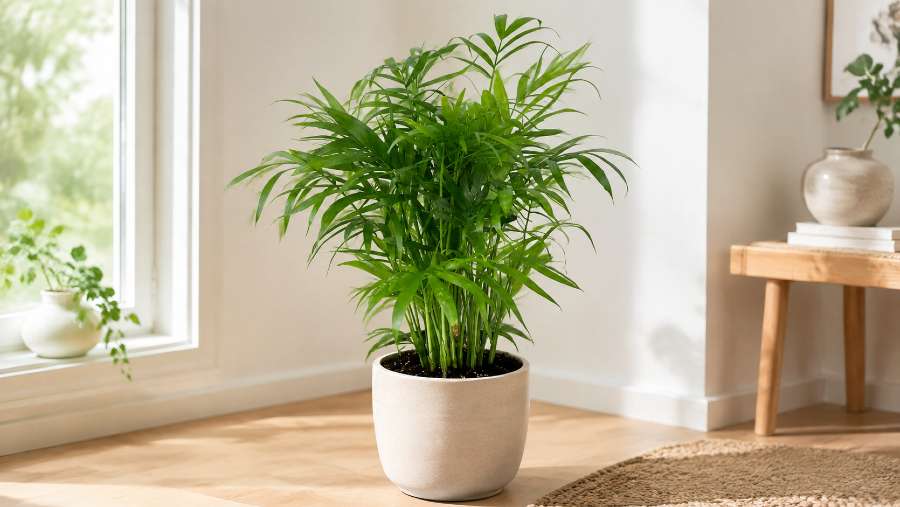
Parlor Palm (Chamaedorea elegans) is one of the most dependable palms for indoor growing. It tolerates moderate light, grows slowly, and does not require the large amount of floor space demanded by many other palms.
Its narrow stems and soft, arching fronds give you the tropical appearance of a larger palm in a more manageable plant. A young Parlor Palm fits easily on a plant stand or small table. As it matures, it can become an attractive floor plant without immediately overwhelming an apartment.
Why Parlor Palm Works Indoors
- Tolerates moderate indoor light
- Grows slowly and remains manageable
- Adapts to average household temperatures
- Does not require direct sunlight
- Fits apartments and smaller rooms
Parlor Palm grows best in moderate to bright indirect light. It can survive in lower light, but brighter indirect light usually produces fuller, healthier growth. Allow the upper part of the potting mix to begin drying before watering again.
Read the complete Parlor Palm indoor care guide for detailed advice about light, watering, soil, and long-term care.
Best for: Apartments, offices, moderate-light rooms, and beginning palm growers.
2. Kentia Palm: Best for an Elegant Floor Plant
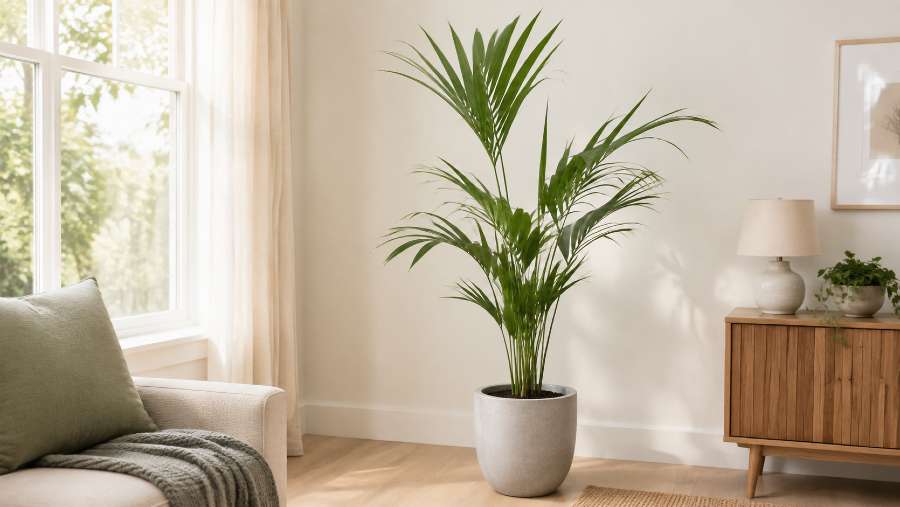
Kentia Palm (Howea forsteriana) is an excellent choice when you want a graceful palm for a living room, bedroom, or spacious office. Its long, arching fronds create a softer appearance than palms with stiff or heavily divided leaves.
This palm adapts well to indoor conditions and tolerates moderate light better than many large palms. It grows slowly, but it can eventually become tall and wide. Give it enough open space so its fronds are not constantly pressed against furniture or walls.
Why Kentia Palm Works Indoors
- Adapts well to indoor container growing
- Tolerates moderate indirect light
- Grows more slowly than many large palms
- Produces graceful, arching fronds
- Makes an impressive long-term floor plant
Kentia Palm is more forgiving than Majesty Palm, although it still needs good drainage and consistent care. Avoid keeping the potting mix constantly wet. A bright room with filtered light normally produces the best growth.
Read the complete Kentia Palm indoor care guide to learn how to manage its light, water, humidity, and growing space.
Best for: Living rooms, bedrooms, offices, and growers who want a tall but relatively adaptable indoor palm.
3. Lady Palm: Best for Upright, Controlled Growth
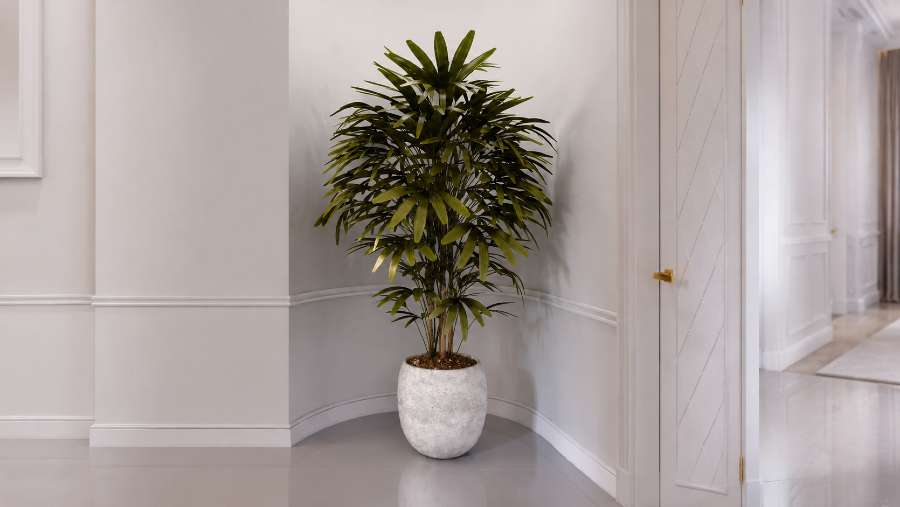
Lady Palm (Rhapis excelsa) grows as a cluster of upright, cane-like stems topped with deeply divided fan-shaped leaves. Its growth is denser and more vertical than the spreading form of an Areca or Cat Palm.
That upright habit makes Lady Palm useful in corners, beside furniture, and in places where you want height without extremely wide fronds. It grows slowly and responds well to container culture, although established specimens can become substantial floor plants.
Why Lady Palm Works Indoors
- Has an upright, relatively controlled growth habit
- Tolerates moderate indoor light
- Grows well as a long-term container plant
- Provides dense foliage without dramatically arching fronds
- Fits corners and narrow floor spaces better than wider palms
Lady Palm prefers bright indirect light but usually adapts to moderate light. Keep the potting mix lightly moist during active growth while allowing enough drainage to protect the roots.
Read the complete Lady Palm care guide for more information about its indoor growing requirements.
Best for: Corners, narrow floor spaces, offices, and rooms where you want upright tropical foliage.
4. Bamboo Palm: Best for a Fuller Palm Display
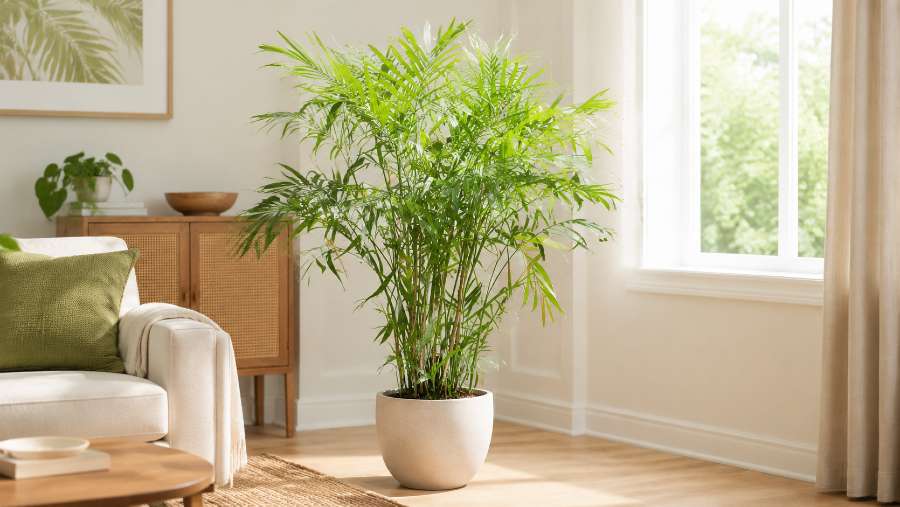
Bamboo Palm (Chamaedorea seifrizii) forms clusters of slender stems with soft green fronds. It creates a fuller display than Parlor Palm while remaining better suited to indoor growing than many large tropical palms.
This palm works particularly well when you have room for a substantial floor plant but do not want the broad, spreading form of an Areca Palm. It can provide visual height and dense foliage without producing a single heavy trunk.
Why Bamboo Palm Works Indoors
- Produces attractive clusters of cane-like stems
- Adapts to moderate or bright indirect light
- Creates a full tropical appearance
- Grows well as a container floor plant
- Handles indoor conditions better than many outdoor palms
Bamboo Palm appreciates consistent moisture and moderate humidity. It should not remain waterlogged, but allowing the potting mix to dry completely may lead to brown leaf tips and declining fronds.
Read the complete Bamboo Palm indoor care guide for detailed growing and troubleshooting advice.
Best for: Bright living rooms, offices, larger bedrooms, and anyone who wants a full, multi-stemmed palm.
5. Areca Palm: Best for Soft, Feathery Foliage
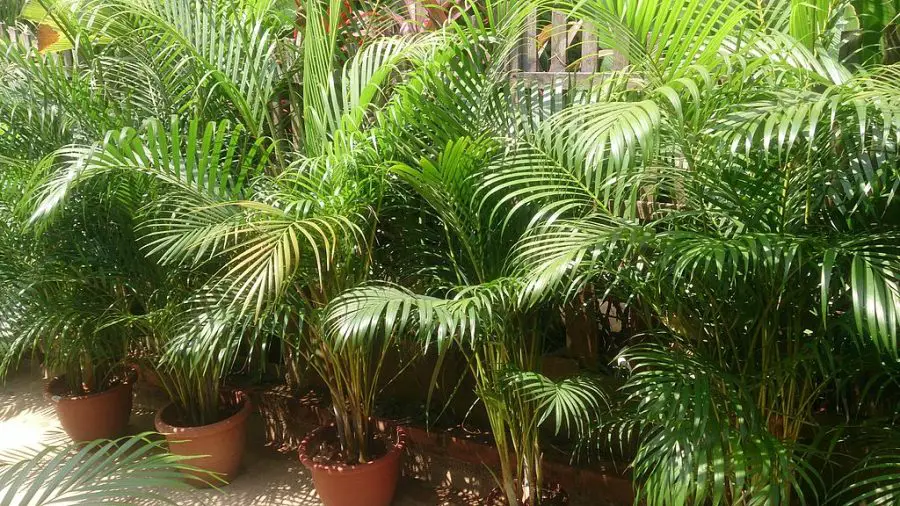 Photo by David J. Stang, CC BY-SA 4.0, via Wikimedia Commons
Areca Palm (Dypsis lutescens) produces numerous golden-green stems topped with long, feathery fronds. Its full growth and gently arching foliage make it one of the most recognizable indoor palms.
This palm works best when it has plenty of bright indirect light and enough open space for its fronds to spread. It can look compact when purchased, but a healthy plant may eventually become both tall and wide.
Why Choose an Areca Palm?
- Produces soft, feathery foliage
- Creates a full tropical display
- Grows as a cluster instead of a single trunk
- Responds well to bright indoor light
- Makes an attractive screen between living areas
Areca Palm prefers bright indirect light, consistent moisture, and moderate humidity. Strong direct afternoon sunlight can scorch its foliage, while insufficient light may produce thin or weak growth.
Brown leaf tips are common when the air is dry, watering is inconsistent, or mineral salts accumulate in the potting mix. Give this palm good drainage and avoid allowing its roots to remain constantly wet.
Read the complete Areca Palm indoor care guide for detailed information about light, watering, humidity, and preventing brown tips.
Best for: Bright living rooms, open floor plans, and areas where you want a broad, feathery palm display.
6. Cat Palm: Best for Dense Green Foliage
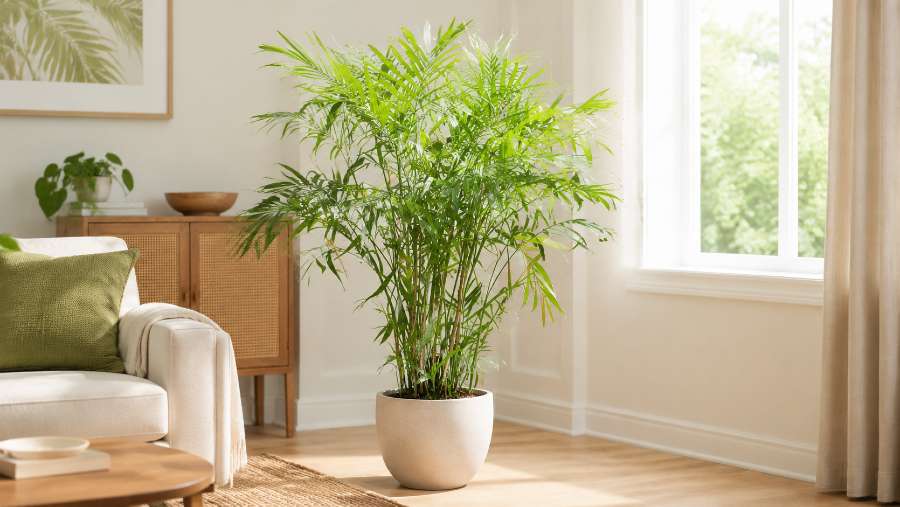
Cat Palm (Chamaedorea cataractarum) produces dense clusters of green fronds without developing a prominent aboveground trunk. Its bushy growth makes it look more like a tropical mound than a traditional single-trunk palm.
A mature Cat Palm needs more room than a Parlor Palm, but it generally remains shorter than many of the large palms in this guide. It works well as a substantial floor plant when you have a bright location and enough space for the fronds to spread.
Why Choose a Cat Palm?
- Produces thick, full-looking foliage
- Usually remains shorter than tall, trunk-forming palms
- Creates an attractive tropical floor display
- Works well in bright rooms with moderate humidity
- Fills open space without becoming extremely tall
Cat Palm prefers bright indirect light and more consistent moisture than many other indoor palms. Allowing it to become excessively dry can lead to drooping fronds and brown tips. At the same time, the container needs excellent drainage so the root zone does not remain waterlogged.
Read the complete Cat Palm indoor care guide for help preventing brown tips, drooping leaves, and watering problems.
Best for: Bright rooms, humid indoor spaces, and growers who prefer dense foliage over a tall trunk.
7. Pygmy Date Palm: Best for a Bright Window
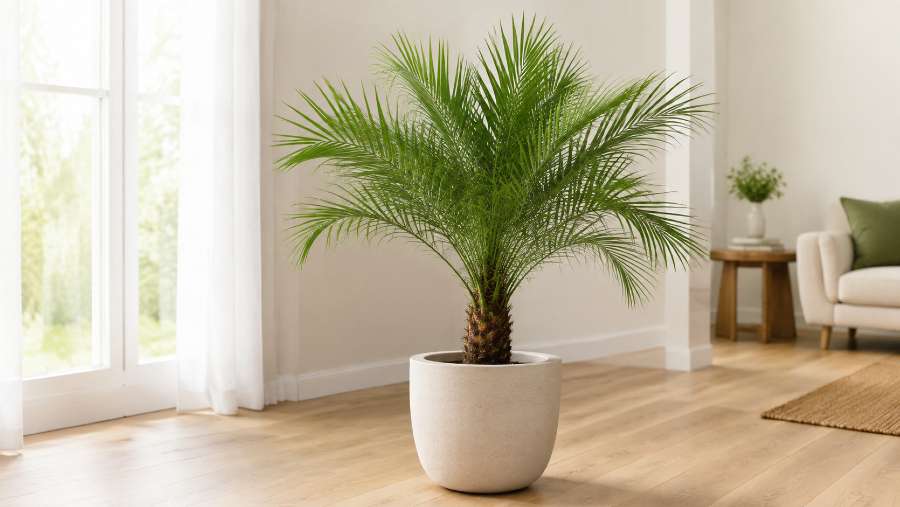
Pygmy Date Palm (Phoenix roebelenii) has finely divided, arching fronds and a more traditional palm-tree shape. Despite the word “pygmy” in its name, it is not a miniature houseplant. It can become a sizable floor plant even when grown in a container.
This palm needs stronger light than Parlor, Kentia, or Lady Palm. A very bright window, sunroom, or indoor growing area with supplemental lighting provides a better location than a dim corner.
Why Choose a Pygmy Date Palm?
- Has a recognizable palm-tree form
- Produces finely divided, arching fronds
- Handles brighter indoor locations
- Grows well as a substantial container specimen
- Provides more structure than a soft, clustering palm
Place Pygmy Date Palm where it receives abundant light and has enough room around its canopy. Rotate the container periodically so growth remains balanced instead of leaning toward the window.
Be careful when working near the base of its fronds. Date palms can produce sharp spines that make them a poor choice for narrow walkways or places where children and pets regularly brush past the plant.
Read the complete Pygmy Date Palm indoor care guide for its light, watering, potting, and long-term growing requirements.
Best for: Very bright windows, sunrooms, and open locations where its spiny frond bases will not create a hazard.
8. Majesty Palm: Best for Experienced Palm Growers
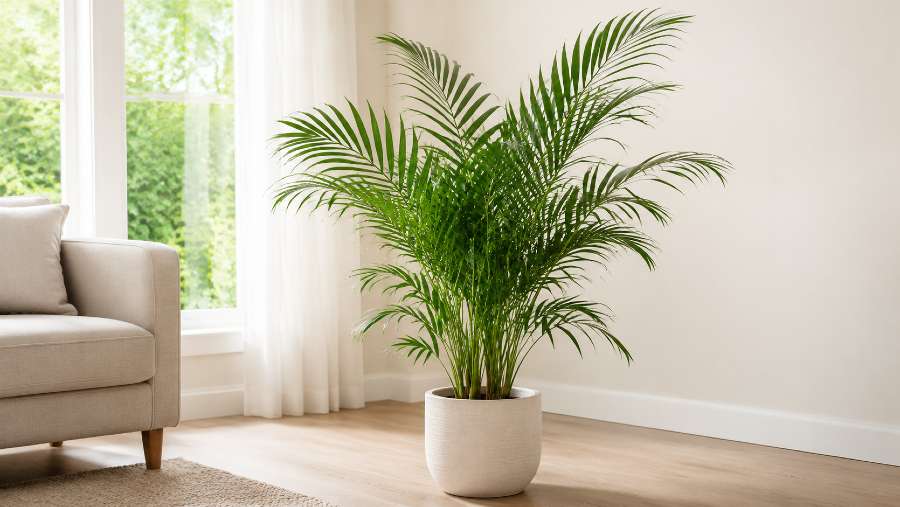
Majesty Palm (Ravenea rivularis) is widely sold as a houseplant because its tall, arching fronds create an immediate tropical display. It looks impressive when healthy, but it is more demanding indoors than its widespread availability suggests.
This palm needs abundant light, dependable moisture, good drainage, and moderate to high humidity. Dry indoor air, low light, and inconsistent watering can quickly lead to brown tips, yellowing fronds, and spider mite problems.
Why Choose a Majesty Palm?
- Creates an immediate tropical appearance
- Produces long, graceful fronds
- Fills a large, bright indoor space
- Responds well when light and humidity are dependable
- Provides a rewarding challenge for an attentive grower
Majesty Palm is not the best first palm for a darker apartment. Choose it when you have a bright location, enough floor space, and the ability to monitor moisture and pests regularly.
Read the complete Majesty Palm care guide before deciding whether your indoor conditions can support this demanding palm.
Think Before Choosing: Majesty Palm is beautiful, but Parlor, Kentia, and Lady Palms are more forgiving choices for average household conditions.
9. Fishtail Palm: Best for Distinctive Foliage
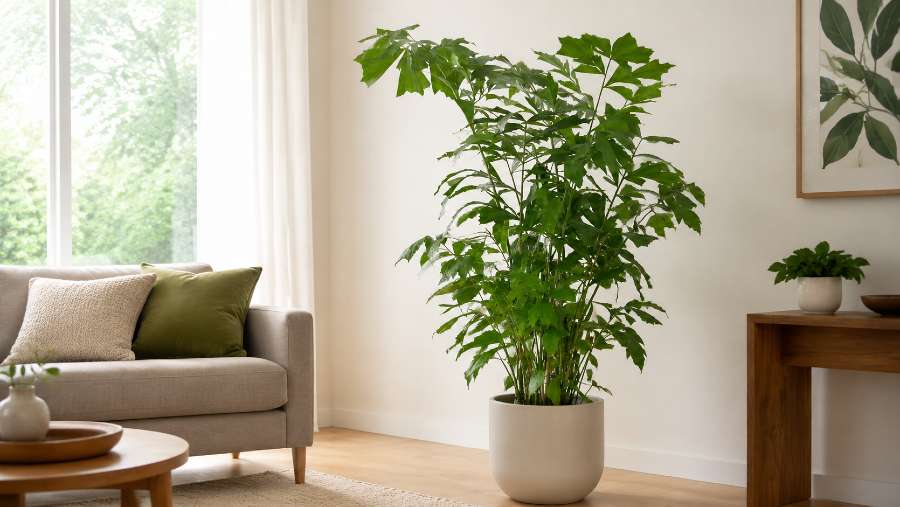
Fishtail Palm (Caryota mitis) gets its name from its broad leaflets, which resemble the divided tail of a fish. Its foliage looks noticeably different from the feathery fronds of an Areca Palm or the fan-shaped leaves of a Lady Palm.
This palm can grow quickly when provided with strong light, warmth, and consistent moisture. It is best suited to a large room where its stems and fronds have room to develop without crowding furniture or blocking a walkway.
Why Choose a Fishtail Palm?
- Produces unusually shaped leaflets
- Creates a bold tropical focal point
- Develops a full, multi-stemmed form
- Responds well to bright indirect light
- Works as a substantial specimen for a large room
Fishtail Palm needs more space than many buyers expect. It is a better match for a bright living room, atrium, or spacious office than a small apartment corner.
Read the complete Fishtail Palm indoor care guide to learn about its light, water, temperature, and space requirements.
Best for: Large, bright rooms and growers who want unusual foliage rather than the classic feathery palm look.
10. Chinese Fan Palm: Best for Fan-Shaped Leaves
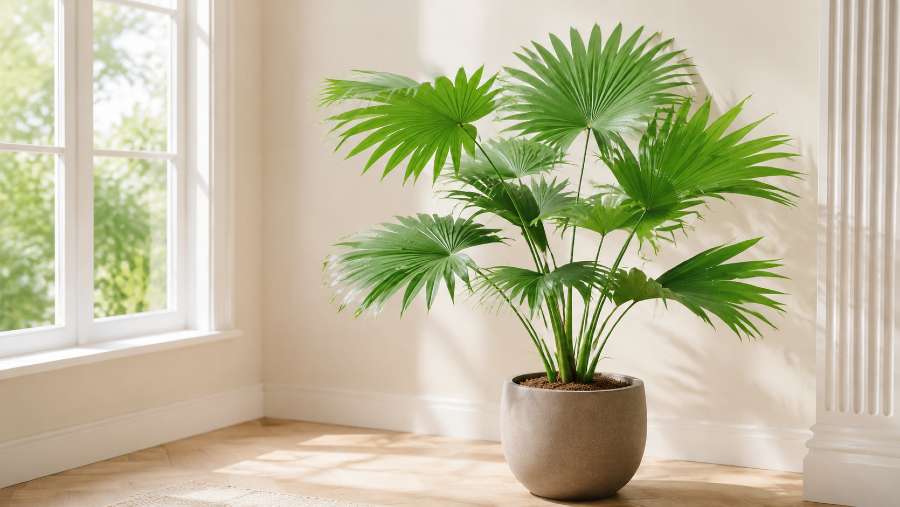
Chinese Fan Palm (Livistona chinensis) develops large, rounded leaves divided into long segments. The tips gradually droop as the leaves mature, giving this palm a graceful fountain-like appearance.
Young plants can be grown indoors in containers, but the leaves become broad and require considerable room. This is not a palm for a crowded shelf or a narrow corner. It works best where its fan-shaped leaves can spread without rubbing against walls and furniture.
Why Choose a Chinese Fan Palm?
- Produces dramatic fan-shaped foliage
- Creates a strong architectural appearance
- Handles bright indoor locations
- Works well as a young container specimen
- Makes an attractive focal point in a spacious room
Chinese Fan Palm needs bright light and enough open space for its leaves. Although container growing slows its development, it is naturally a large palm and may eventually outgrow an ordinary indoor location.
Read the complete Chinese Fan Palm indoor care guide to decide whether you have enough light and growing space for it.
Best for: Bright entryways, sunrooms, large offices, and spacious rooms where the leaves can spread.
Which Indoor Palm Is Right for You?
Start with the conditions you can provide rather than choosing by appearance alone. Light and available space will eliminate several choices immediately.
| Your Situation | Best Choices | Use More Caution With |
|---|---|---|
| Small apartment | Parlor Palm | Fishtail, Majesty, Areca, Chinese Fan |
| Moderate indirect light | Parlor, Kentia, Lady, Bamboo | Pygmy Date, Majesty, Fishtail |
| Bright indirect light | Areca, Cat, Bamboo, Kentia | None, provided each palm has enough space |
| Large open room | Kentia, Areca, Lady, Fishtail | Chinese Fan if leaf spread is limited |
| Beginning palm grower | Parlor, Kentia, Lady | Majesty and Fishtail |
| Higher indoor humidity | Cat, Areca, Bamboo, Majesty | Monitor all palms for spider mites |
Match the Palm to Your Available Light
Moderate Indirect Light
Parlor Palm, Kentia Palm, Lady Palm, and Bamboo Palm are the most practical choices when your room is bright enough to use comfortably during the day but does not receive strong sunlight.
These palms still benefit from being near a window. “Tolerates moderate light” does not mean that a palm will thrive indefinitely in a dark corner.
Bright Indirect Light
Areca Palm, Cat Palm, Majesty Palm, and Fishtail Palm perform best with abundant filtered light. An east-facing window, a bright west-facing room with filtered afternoon sun, or a location near a south-facing window can work well.
Very Bright Indoor Locations
Pygmy Date Palm and Chinese Fan Palm are better choices when you have a very bright window, sunroom, or supplemental grow lighting. Introduce plants to direct sunlight gradually because foliage grown in lower light can scorch when suddenly exposed to intense sun.
Practical Tip: Watch how sunlight moves through the room before choosing a palm. The brightest location in summer may become considerably darker during winter.
Consider Floor Space as Well as Height
Palm height receives most of the attention, but frond spread is often the bigger problem inside a home. A palm may fit beneath the ceiling while still blocking a window, crowding furniture, or extending into a walkway.
Parlor Palm is the easiest choice when floor space is limited. Lady Palm has a relatively upright habit, making it useful where you want height without extremely wide, arching foliage.
Areca, Cat, Majesty, Fishtail, and Chinese Fan Palms need more open space. Their fronds can spread well beyond the edges of the container as the plants mature.
Before purchasing a palm, measure both the available height and the usable width around its intended location. Leave room for the foliage to develop without constantly brushing against walls, curtains, furniture, or people.
Shared Indoor Palm Care Basics
Each palm has slightly different requirements, but most indoor palms respond well to the same basic approach: provide appropriate light, use a well-draining growing medium, water according to the plant’s actual needs, and protect the foliage from excessively dry air.
Once you choose a palm that matches your home, these shared care practices provide a good starting point.
Light
Place your palm in the brightest location appropriate for its species. Parlor, Kentia, Lady, and Bamboo Palms tolerate moderate indirect light. Areca, Cat, Majesty, Fishtail, Pygmy Date, and Chinese Fan Palms generally need brighter conditions.
Remember that indoor light decreases rapidly as you move away from a window. A palm positioned several feet into a room receives much less usable light than one growing close to the glass.
Rotate the container about one-quarter turn every week or two if the palm begins leaning toward the window. This encourages more balanced growth.
Watering
Most indoor palms prefer a growing medium that remains lightly moist but not constantly saturated. Check the moisture below the surface before watering instead of following a fixed weekly schedule.
When using a conventional container, water thoroughly enough to moisten the entire root zone. Allow excess water to drain, and do not leave the pot standing in a full saucer.
Parlor, Kentia, and Lady Palms tolerate brief periods of slight dryness better than moisture-loving Cat and Majesty Palms. Light, temperature, container size, and the growing medium all affect how quickly a palm uses water.
Potting Mix
Indoor palms need a growing medium that holds enough moisture for the roots without becoming dense or waterlogged. Buffered coco coir mixed with perlite provides a useful starting point.
- 2 parts buffered coco coir
- 1 part coarse perlite
- Optional fine orchid bark for additional airflow
Adjust the mixture for the palm and your watering habits. Add a little more perlite or bark when you need faster drainage. A slightly more moisture-retentive mixture can help Cat, Bamboo, and Majesty Palms, provided the container drains properly.
Humidity
Most indoor palms appreciate moderate humidity. Parlor, Kentia, and Lady Palms are reasonably adaptable, while Cat, Areca, Bamboo, Majesty, and Fishtail Palms are more likely to develop brown tips in very dry air.
A humidifier provides a more dependable increase in humidity than occasional misting. You can also group plants together, but leave enough space around the foliage for air movement and regular pest inspections.
Temperature
Normal household temperatures generally suit indoor palms. Keep them away from cold drafts, heating vents, air-conditioning outlets, fireplaces, and exterior doors that produce sudden temperature changes.
A palm sitting beside a heating vent may experience dry foliage and rapidly drying potting mix even when the rest of the room feels comfortable.
Fertilizing
Feed actively growing palms carefully during spring and summer. Use a fertilizer labeled for palms or indoor foliage plants, and follow its directions rather than assuming more fertilizer will produce faster growth.
Excess fertilizer can contribute to damaged roots, brown leaf tips, and mineral buildup in the container. Reduce or pause feeding when winter light levels are low and growth slows.
Common Indoor Palm Problems
Brown Leaf Tips
Brown tips may develop because of dry air, inconsistent watering, fertilizer buildup, damaged roots, or a combination of these conditions. Check the growing medium and drainage before assuming that humidity is the only cause.
Yellowing Fronds
An occasional older frond naturally turns yellow as it ages. Widespread yellowing may point to overwatering, poor drainage, inadequate light, root stress, or a nutritional problem.
Do not add fertilizer automatically. First check the light, root-zone moisture, container drainage, and overall condition of the plant.
Dry or Crispy Foliage
Crispy foliage commonly develops when the growing medium becomes excessively dry or the palm sits near a heating or cooling vent. Strong direct sunlight can also scorch foliage that was previously grown under filtered light.
Spider Mites
Spider mites are a common problem on indoor palms, especially during winter when heated air is dry. Look beneath the leaves for fine webbing, pale stippling, and tiny moving pests.
Isolate an affected palm from other plants and begin treatment promptly. Inspect nearby houseplants because spider mites can spread through a collection before the damage becomes obvious.
Slow or Weak Growth
Slow growth is normal for Parlor, Kentia, and Lady Palms. However, pale, stretched, or weak new growth may indicate insufficient light. Move the palm closer to an appropriate window or consider supplemental lighting.
Common Mistakes When Choosing and Growing Indoor Palms
- Choosing a palm by its current size without checking its mature spread
- Placing a high-light palm in a dark corner
- Assuming that every plant called a palm is a true palm
- Buying a Majesty Palm without considering its light and humidity needs
- Keeping the growing medium constantly saturated
- Allowing a moisture-loving palm to dry completely
- Repotting a small palm into an oversized container
- Applying fertilizer to correct problems caused by poor light or damaged roots
- Placing broad or spiny palms in narrow walkways
- Ignoring spider mites until several plants are affected
Decision Framework: Choose for light first, available width second, and appearance third. A palm that fits your actual growing conditions will remain attractive much longer than one selected only because it looks impressive at the store.
Are Indoor Palm Trees Safe for Cats and Dogs?
Pet safety depends on the exact plant. The ASPCA lists Parlor Palm as non-toxic to cats and dogs. It also lists Areca Palm as non-toxic to cats and dogs.
Even a non-toxic plant can cause mild digestive upset when a pet eats a large amount of foliage. Chewing can also badly damage a slow-growing palm, so placing the plant beyond your pet’s reach may still be worthwhile.
Pay close attention to botanical names when purchasing a plant. Sago Palm and Cardboard Palm are cycads rather than true palms. The ASPCA identifies cycads as toxic to cats and dogs, with all parts presenting a risk.
Check the ASPCA plant database or ask your veterinarian about the specific species before bringing any palm or palm-like plant into a home with pets.
Frequently Asked Questions
What is the easiest indoor palm tree to grow?
Parlor Palm is usually the easiest choice for beginning growers. It tolerates moderate indirect light, grows slowly, and remains more manageable than Areca, Majesty, Fishtail, and Chinese Fan Palms.
Which indoor palm handles lower light best?
Parlor, Kentia, and Lady Palms tolerate moderate or lower indoor light better than most palms. They still need usable light and should not be expected to grow well indefinitely in a windowless or extremely dark room.
What is the best indoor palm for a small apartment?
Parlor Palm is the best overall choice for a small apartment. It grows slowly and remains narrower and more manageable than most floor-sized palms. A young specimen can begin on a table or plant stand before becoming a floor plant.
How often should you water an indoor palm?
Watering frequency depends on the palm, light, temperature, container, and growing medium. Check moisture below the surface and water according to the plant’s condition rather than following a fixed schedule. Most indoor palms prefer lightly moist soil with good drainage.
Can an indoor palm grow in direct sunlight?
Some palms tolerate gentle morning sun or stronger light after gradual acclimation. However, foliage grown under filtered light can scorch when suddenly placed in intense direct sunlight. Parlor, Kentia, Lady, Bamboo, Areca, and Cat Palms generally perform well with bright indirect light.
Why are the tips of my indoor palm turning brown?
Brown tips can result from dry air, inconsistent watering, fertilizer buildup, poor root health, or excessively dry potting mix. Check all the growing conditions before trimming the damage or increasing watering.
Do indoor palm trees need a humidifier?
Not every indoor palm requires a humidifier. Parlor, Kentia, and Lady Palms often adapt to average household humidity. A humidifier can be useful for Areca, Cat, Bamboo, Majesty, and Fishtail Palms when heated winter air becomes very dry.
Can indoor palm trees stay small?
Container growing and indoor conditions slow palm growth, but they do not permanently turn a large palm into a small plant. Parlor Palm is the most manageable choice when space is limited. Kentia, Areca, Majesty, Fishtail, and Chinese Fan Palms can eventually become large indoor specimens.
Final Thoughts
The best indoor palm is the one that fits your home rather than the one that looks most dramatic at the garden center. Parlor Palm is the strongest all-around choice for apartments, moderate light, and beginning growers. Kentia and Lady Palms are excellent options when you want a larger, dependable floor plant.
Bamboo, Areca, and Cat Palms provide fuller foliage when you have brighter light and additional floor space. Pygmy Date, Majesty, Fishtail, and Chinese Fan Palms can create impressive displays, but they require more careful placement and may eventually become difficult to accommodate.
Start by measuring your available space and watching how the light moves through the room. Once you understand those two conditions, choosing the right palm becomes much easier.
Indoor Palm Tree Care: 11 Powerful Tips Complete Guide For Beginners
Where to Go Next
Continue exploring indoor palm care:
- Indoor Palm Tree Care: Complete Guide for Beginners
Learn the shared light, watering, humidity, potting, and maintenance needs of indoor palms. - Parlor Palm Indoor Care
Start with one of the easiest and most apartment-friendly indoor palms. - Kentia Palm Indoor Care
Grow an elegant floor palm that adapts well to indoor conditions. - Majesty Palm Care Indoors
See what this beautiful but demanding palm needs before bringing one home.
References
- Penn State Extension: Palms as Houseplants
- Clemson Cooperative Extension: Indoor Palms
- University of Minnesota Extension: Lighting for Indoor Plants
- Colorado State University Extension PlantTalk: Palms
 Steve S. is the creator of