Palm-like houseplants give you the bold foliage and architectural shape of a palm even though they belong to completely different plant families. Ponytail Palm, Sago Palm, and Cardboard Palm are three familiar examples.
These plants are grouped together at garden centers because of their palm-like appearance and common names. Botanically, however, Ponytail Palm is related to asparagus, while Sago and Cardboard Palms are cycads from an ancient group of seed-producing plants.
The differences matter. Ponytail Palm prefers bright light, excellent drainage, and periods of dryness. Sago and Cardboard Palms also need bright conditions, but both present a serious risk to cats and dogs.
This guide explains what each plant really is, how their growing requirements compare, and which one is the most practical choice for your home.
What You’ll Learn
- Why these plants are not true palms
- Which palm-like houseplant is easiest to grow
- How much light and water each plant needs
- How large these plants can become indoors
- Which choices are toxic to cats and dogs
- Why Traveller’s Palm is not recommended for most homes
Quick Answer: Ponytail Palm is the best palm-like houseplant for most homes. It grows slowly, handles periods of dryness, and the ASPCA lists it as non-toxic to cats and dogs. Sago and Cardboard Palms are slow-growing cycads with dramatic foliage, but both are toxic to pets and require careful placement. All three grow best in bright indoor light and well-draining potting mix.
Palm-Like Houseplants at a Glance
| Plant | What It Really Is | Best Light | Watering | Pet Safety |
|---|---|---|---|---|
| Ponytail Palm | A succulent-like member of the asparagus family | Bright light with some gentle sun | Allow the mix to dry substantially | ASPCA lists it as non-toxic |
| Sago Palm | A cycad | Bright indirect light or gentle sun | Allow partial drying between waterings | Highly toxic to pets |
| Cardboard Palm | A cycad | Bright indirect light or gentle sun | Allow partial drying between waterings | Toxic to pets |
Mature indoor size: Container size, plant age, light, and growing conditions affect the final dimensions. Ponytail Palm can eventually become a substantial floor plant but grows very slowly. Sago and Cardboard Palms usually remain shorter indoors, although their stiff fronds can spread several feet beyond the container.
Why Are These Plants Called Palms?
Common plant names usually describe appearance rather than botanical relationships. Ponytail, Sago, and Cardboard Palms all produce foliage that creates a tropical or palm-like shape, but none belongs to the palm family.
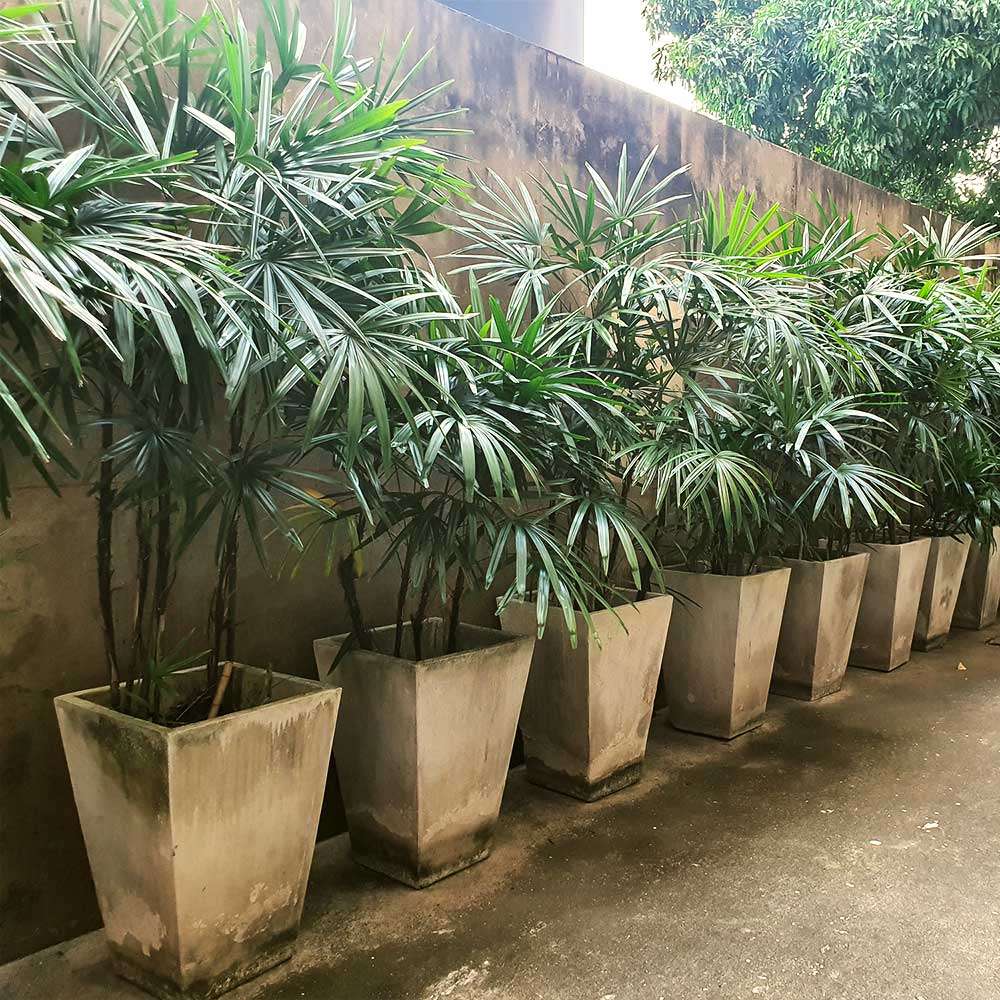
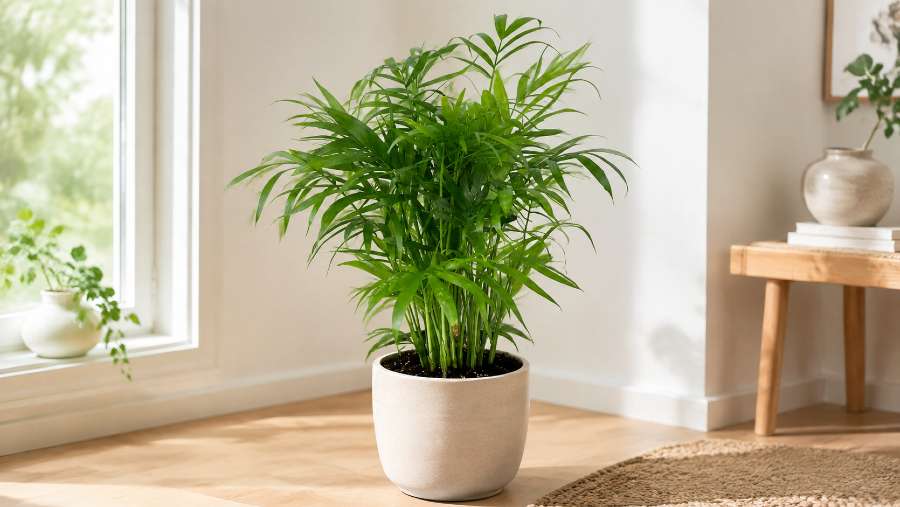
True palms belong to the Arecaceae family. Parlor, Kentia, Areca, Cat, Bamboo, and Majesty Palms are examples of true palms commonly grown indoors.
Ponytail Palm belongs to the asparagus family, Asparagaceae. Sago and Cardboard Palms are cycads. Cycads are ancient seed-producing plants with stiff leaves arranged around a central crown.
Understanding the difference helps you avoid treating every plant called a palm the same way. Ponytail Palm stores water in its enlarged trunk base, while true indoor palms generally need more consistent moisture. Cycads also have different growth patterns and serious toxicity concerns that do not apply to every true palm.
Important Distinction: Common names can be misleading. Check the botanical name before purchasing a palm-like plant, especially when children or pets live in the home.
1. Ponytail Palm
Beaucarnea recurvata
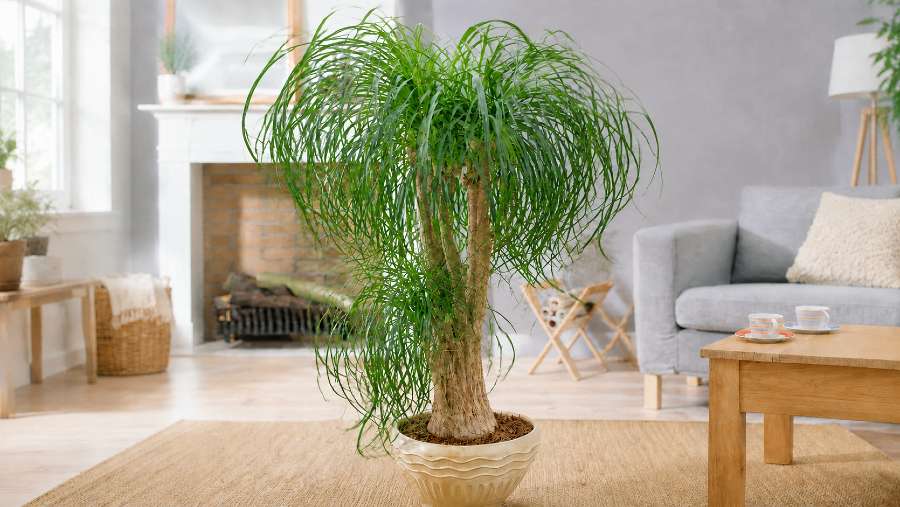
Ponytail Palm is the best palm-like houseplant for most homes. It develops a swollen trunk base topped by a fountain of long, narrow leaves that curl downward like a ponytail.
Despite its name and palm-like shape, it is not a true palm. It belongs to the asparagus family and grows more like a drought-tolerant succulent than a moisture-loving tropical palm.
The enlarged base, known as a caudex, stores water. This adaptation allows an established plant to tolerate periods of dryness much better than Parlor, Cat, Bamboo, or Majesty Palms.
Ponytail Palm Light Requirements
Place Ponytail Palm in bright indoor light. A south- or west-facing window can work well, although a plant previously grown under filtered nursery light should be introduced to intense direct sun gradually.
An east-facing window with gentle morning sun is also a good location. Ponytail Palm may survive in moderate light, but stronger light supports a thicker base, sturdier growth, and a fuller crown of leaves.
Watering a Ponytail Palm
Allow the growing medium to dry substantially before watering again. When it is time to water, moisten the entire root zone and allow the excess to drain.
Do not leave the container standing in water. Constantly wet growing medium can damage the roots and the swollen trunk base.
Water use changes with the season. A Ponytail Palm near a sunny summer window dries more quickly than the same plant during low winter light. Check the growing medium instead of following a fixed schedule.
Potting Mix for Ponytail Palm
Ponytail Palm needs a loose growing medium with excellent drainage. Buffered coco coir mixed with a generous amount of coarse perlite provides a practical starting point. Fine orchid bark can provide additional airflow.
- 1 part buffered coco coir
- 1 part coarse perlite
- Optional fine orchid bark
Use a container with drainage holes and avoid moving a small root system into an oversized pot. Excess growing medium around the roots can remain wet too long.
Ponytail Palm Size and Placement
Mature indoor size: Ponytail Palm commonly grows approximately 3–6 feet tall indoors, although old specimens can become larger. Its extremely slow growth allows a young plant to remain suitable for a table, stand, or windowsill for many years.
The arching leaves need more width as the crown matures. Keep the plant away from narrow walkways where people will repeatedly brush against the foliage.
Is Ponytail Palm Safe for Pets?
The ASPCA lists Ponytail Palm as non-toxic to cats and dogs.
Cats may still be attracted to its long, narrow leaves. Chewing can damage the plant, and eating a large amount of any plant material may cause digestive upset. Place it beyond your pet’s reach when possible.
Why Ponytail Palm Is the Best Overall Choice
Ponytail Palm combines attractive foliage with simple care, slow growth, and good drought tolerance. It also lacks the severe pet-toxicity risk associated with Sago and Cardboard Palms.
Choose it when you have a bright window and want a forgiving palm-like plant that does not require constantly moist growing medium or high humidity.
Read the complete Ponytail Palm indoor care guide.
2. Sago Palm
Cycas revoluta
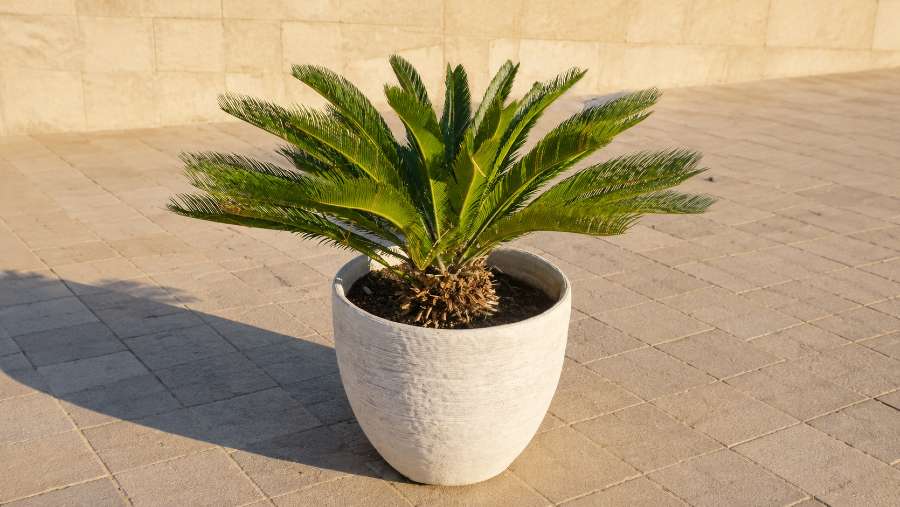
Sago Palm is a cycad rather than a true palm. It develops a thick central trunk topped by a symmetrical crown of dark green, feather-like leaves.
Its slow growth and strong architectural shape make it visually appealing, but it is not a suitable choice for every household. The plant is highly toxic to cats and dogs, and every part should be treated as potentially dangerous.
Sago Palm Light Requirements
Place Sago Palm in bright indirect light or a location receiving gentle direct sun. An east-facing window provides bright morning light, while a south- or west-facing exposure can work when intense sunlight is introduced gradually.
Weak light can produce sparse, stretched, or uneven new growth. Rotate the container periodically when the plant begins leaning toward the window.
Watering a Sago Palm
Allow the upper portion of the growing medium to dry before watering again. Water thoroughly, let the excess drain, and avoid leaving water inside the plant’s crown.
Sago Palm is more likely to suffer from constantly wet growing medium than from a brief period of slight dryness. A loose potting mix and a container with drainage holes are essential.
Sago Palm Size and Placement
Mature indoor size: Sago Palm commonly grows approximately 2–5 feet tall and wide indoors. Growth is extremely slow, but each new flush of leaves can increase its spread considerably.
The leaflets are stiff and pointed. Give the plant enough room that people do not brush against it when walking past.
Is Sago Palm Toxic to Pets?
Serious Pet-Safety Warning: The ASPCA identifies Sago Palm as toxic to cats and dogs. Every part of the plant presents a risk, with the seeds containing especially concentrated toxins.
Do not keep Sago Palm where a pet can reach fallen seeds, leaves, roots, or potting debris. If you believe an animal has chewed or swallowed any part of the plant, contact a veterinarian or animal poison-control service immediately. Do not wait for symptoms to appear.
Who Should Choose a Sago Palm?
Sago Palm is best reserved for a bright, pet-free home where its stiff foliage can be kept away from children and busy walkways. Its slow growth and symmetrical form make it a striking specimen, but its toxicity outweighs its decorative value in many households.
Read the complete Sago Palm indoor care guide.
3. Cardboard Palm
Zamia furfuracea
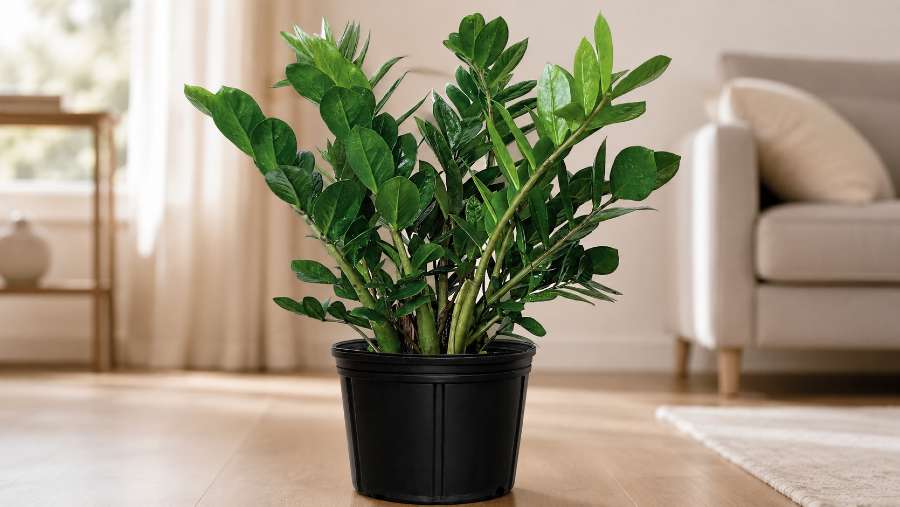
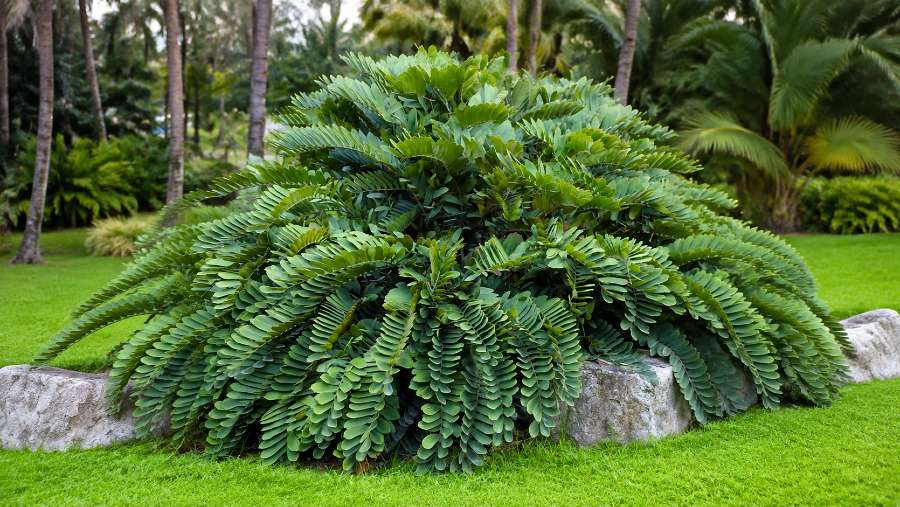
Cardboard Palm is another cycad rather than a true palm. It produces thick, stiff leaflets with a slightly fuzzy texture that gives the plant its unusual common name.
The foliage emerges from a short central stem, forming a broad, symmetrical crown. Its sturdy leaves create a stronger and more compact appearance than the soft, arching foliage of Ponytail Palm.
Cardboard Palm grows slowly and adapts to container culture, but it needs bright light and careful watering. It is also toxic to cats and dogs, making it unsuitable for many pet-owning households.
Cardboard Palm Light Requirements
Place Cardboard Palm in bright indirect light or a location receiving gentle direct sun. An east-facing window with morning sun works well. A south- or west-facing window can also provide suitable light when intense sunlight is introduced gradually.
Weak light can produce thin, uneven growth and a sparse crown. If the plant leans strongly toward the window, move it closer to the light and rotate the container periodically.
Watering a Cardboard Palm
Allow the upper portion of the growing medium to dry before watering again. Water thoroughly enough to moisten the root zone, then allow all excess water to drain.
Cardboard Palm does not tolerate constantly saturated growing medium. Reduce watering frequency when winter light is low and growth slows.
Avoid pouring water directly into the crown. Trapped moisture around new growth can encourage deterioration.
Potting Mix for Cardboard Palm
Use a loose, well-draining growing medium. Buffered coco coir mixed with coarse perlite and fine orchid bark provides both moisture retention and airflow around the roots.
- 2 parts buffered coco coir
- 1 part coarse perlite
- 1 part fine orchid bark
Choose a container with drainage holes. Move the plant into a pot only one size larger when its roots genuinely need additional space.
Cardboard Palm Size and Placement
Mature indoor size: Cardboard Palm commonly grows approximately 2–4 feet tall and 3–6 feet wide indoors. Its height remains manageable, but its stiff leaves can extend well beyond the edges of the container.
Give the plant open space around its foliage. Avoid narrow hallways and locations beside chairs where people will repeatedly brush against the rigid leaflets.
Is Cardboard Palm Toxic to Pets?
Serious Pet-Safety Warning: The ASPCA identifies Cardboard Palm and other Zamia species as toxic to cats and dogs.
Treat every part of the plant as potentially dangerous. Keep fallen leaves, seeds, roots, and potting debris away from animals. Contact a veterinarian or animal poison-control service immediately if you suspect that a pet has chewed or swallowed any part of the plant.
Who Should Choose a Cardboard Palm?
Cardboard Palm works best in a bright, pet-free home with enough floor space for its foliage. Choose it when you want a slow-growing architectural plant with a low, broad form.
Ponytail Palm is the more practical choice when you need a forgiving plant or have cats and dogs. Cardboard Palm should be selected for its distinctive appearance only after considering its width and toxicity.
Read the complete Cardboard Palm indoor care guide.
Which Palm-Like Houseplant Should You Choose?
| Your Priority | Best Choice | Why It Fits |
|---|---|---|
| Best overall choice | Ponytail Palm | Forgiving, drought-tolerant, slow-growing, and non-toxic to pets |
| Home with cats or dogs | Ponytail Palm | The ASPCA lists it as non-toxic to cats and dogs |
| Strong symmetrical form | Sago Palm | Produces a structured crown of dark green leaves |
| Low, broad architectural foliage | Cardboard Palm | Develops thick, rigid leaflets and a spreading crown |
| Most drought-tolerant | Ponytail Palm | Stores water in its enlarged trunk base |
| Lower-light room | None of these | All three perform best in a bright indoor location |
Decision Framework: Choose Ponytail Palm for ordinary homes and pet-owning households. Consider Sago or Cardboard Palm only when you have bright light, enough space, and no risk of children or pets reaching the plant.
Palm-Like Houseplants and Pet Safety
Pet safety is the most important difference among these three plants. Ponytail Palm is the only one the ASPCA lists as non-toxic to both cats and dogs.
Sago and Cardboard Palms are cycads, and both present a serious poisoning risk. Placing a toxic plant on a low stand or moving it to the corner of a room does not provide reliable protection from a curious animal.
Cycad debris also needs careful handling. Fallen leaflets, seeds, exposed roots, and material removed during repotting should be kept away from pets and disposed of securely.
If you have a cat or dog that investigates plants, choose Ponytail Palm rather than attempting to find a safe location for a Sago or Cardboard Palm.
Why Traveller’s Palm Is Not on This List
Traveller’s Palm (Ravenala madagascariensis) is another plant with a misleading common name. It is not a true palm and is more closely related to bird of paradise and banana plants.
Young Traveller’s Palms can grow temporarily in large indoor containers. Their broad leaves and dramatic fan-shaped arrangement create an impressive tropical display.
The problem is mature size. Traveller’s Palm can become extremely tall and develop a massive horizontal leaf spread. Even a young container plant needs abundant light, warmth, and increasing amounts of open space.
It may work temporarily in a greenhouse, conservatory, atrium, or exceptionally large sunroom. It is not a realistic long-term choice for most homes or apartments, so it has not been included as one of the three recommended palm-like houseplants.
Read the Traveller’s Palm growing guide.
Common Mistakes With Palm-Like Houseplants
- Treating every plant called a palm like a true tropical palm
- Keeping Ponytail Palm constantly moist
- Placing Sago or Cardboard Palm in weak indoor light
- Moving nursery-grown foliage directly into intense afternoon sun
- Using a dense growing medium that remains wet too long
- Repotting a slow-growing plant into an oversized container
- Choosing Cardboard Palm without considering its mature width
- Keeping toxic cycads where children or pets can reach them
- Assuming that removing the seeds makes a cycad safe
- Buying Traveller’s Palm without considering its eventual size
Frequently Asked Questions
What is the easiest palm-like houseplant to grow?
Ponytail Palm is the easiest overall choice. It grows slowly, tolerates periods of dryness, and adapts well to bright household conditions. Its main requirements are abundant light, excellent drainage, and protection from overwatering.
Is Ponytail Palm a true palm?
Ponytail Palm is not a true palm. It belongs to the asparagus family and stores water in an enlarged trunk base. Its long, arching foliage creates the palm-like appearance.
Are Sago and Cardboard Palms related?
Sago and Cardboard Palms are both cycads, although they belong to different genera. Sago Palm is Cycas revoluta, while Cardboard Palm is Zamia furfuracea.
Which palm-like houseplant is safe for cats and dogs?
The ASPCA lists Ponytail Palm as non-toxic to cats and dogs. Sago and Cardboard Palms are toxic cycads and should not be kept where pets can access any part of the plant.
Can palm-like houseplants grow in low light?
These three plants perform best in bright indoor light. Ponytail Palm may tolerate moderate light temporarily, but stronger light supports healthier growth. For a lower-light location, consider a true Parlor, Kentia, or Lady Palm instead.
Why is my Ponytail Palm trunk becoming soft?
A soft trunk base may indicate that the growing medium is remaining excessively wet or the roots have begun deteriorating. Check the drainage, reduce unnecessary watering, and inspect the roots and trunk for damage.
Final Thoughts
Ponytail Palm is the best of these three palm-like houseplants for most homes. Its slow growth, drought tolerance, unusual trunk, and non-toxic classification make it easier to place and maintain than the two cycads.
Sago and Cardboard Palms provide bold architectural foliage, but their toxicity makes them poor choices for homes with cats, dogs, or young children. Both also need bright light, excellent drainage, and enough open space for their rigid leaves.
Traveller’s Palm belongs in the larger palm-like conversation, but its eventual height and leaf spread make it unrealistic for most indoor spaces. Choose a plant that fits your available light, floor space, watering habits, and household safety needs.
Continue Exploring Indoor Palms
Compare true palms with their palm-like relatives:
- Best Indoor Palm Trees: 10 Choices for Real Homes
Compare true indoor palms by light, size, care level, and available growing space. - Indoor Palm Tree Care: Complete Guide for Beginners
Learn the shared watering, light, humidity, and potting needs of true indoor palms. - Indoor Palms That Stay Small
Find manageable true palms for apartments and smaller rooms. - Indoor Palm Light Requirements
Match a true indoor palm to the natural or supplemental light in your home.
References
- North Carolina Extension: Ponytail Palm
- North Carolina Extension: Sago Palm
- North Carolina Extension: Cardboard Cycad
- ASPCA: Toxic and Non-Toxic Plant Database
 Steve S. is the creator of