
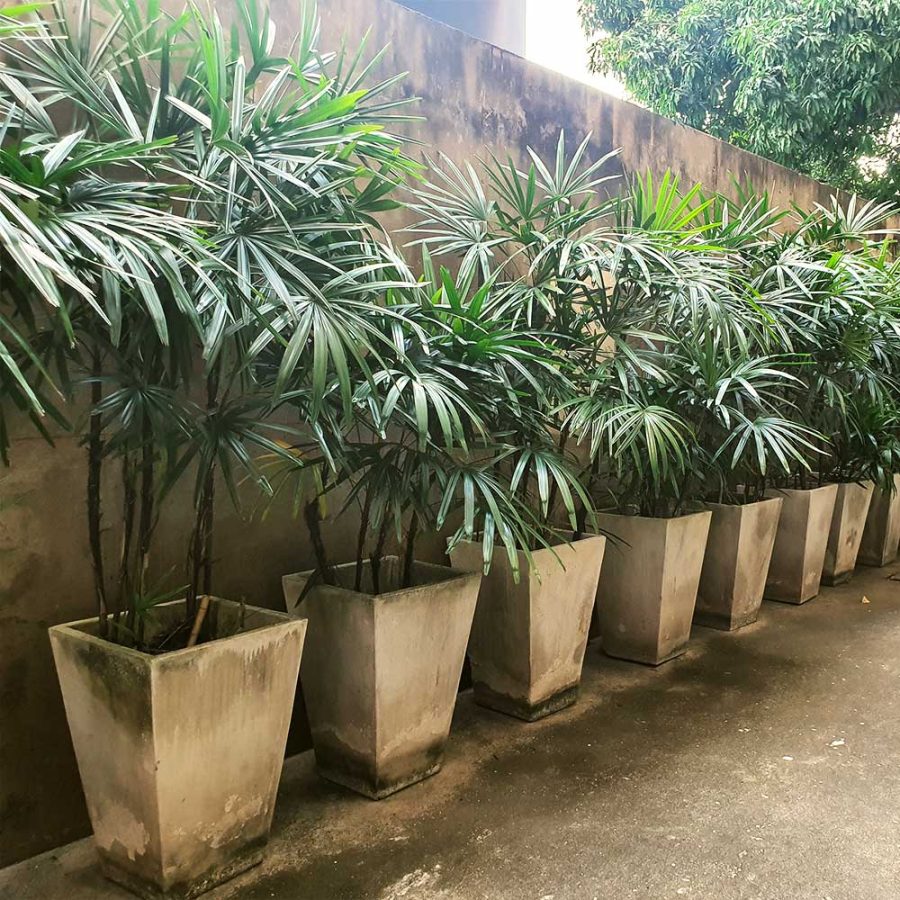
Indoor palm light requirements vary considerably from one species to another. Parlor, Kentia, and Lady Palms tolerate moderate indoor light, while Pygmy Date, Majesty, Fishtail, and Chinese Fan Palms need a much brighter location.
Light is one of the most important conditions to consider before choosing an indoor palm. A palm placed in inadequate light may survive for a while, but its growth can gradually weaken. New fronds may become smaller, older foliage may yellow, and the growing medium may remain wet longer than expected.
The phrase bright indirect light can also be confusing. Light that appears bright to your eyes may not provide enough energy for a palm, especially when the plant sits several feet away from the nearest window.
This guide compares the light requirements of 10 popular indoor palms. You will learn which palms tolerate lower light, which ones need a bright window, and when a grow light may be necessary.
What You’ll Learn
- How much light different indoor palms need
- Which palms tolerate moderate or lower indoor light
- Which palms need bright indirect light
- How distance from a window affects usable light
- Which window directions work best for palms
- How to recognize insufficient light and leaf scorch
- When supplemental lighting may be helpful
Quick Answer: Parlor, Kentia, and Lady Palms tolerate moderate or lower indoor light better than most palms. Bamboo Palm grows well in moderate to bright indirect light. Areca, Cat, Majesty, Fishtail, and Chinese Fan Palms generally need bright indirect light, while Pygmy Date Palm needs a very bright location and may tolerate gentle direct sun after gradual acclimation. No indoor palm can grow indefinitely in a completely dark or windowless room without suitable supplemental lighting.
Indoor Palm Light Requirements at a Glance
| Palm | Best Indoor Light | Useful Window | Low-Light Tolerance |
|---|---|---|---|
| Parlor Palm | Moderate to bright indirect | North or east | High |
| Kentia Palm | Moderate to bright indirect | North or east | High |
| Lady Palm | Moderate to bright indirect | North or east | High |
| Bamboo Palm | Moderate to bright indirect | East or filtered south | Moderate |
| Areca Palm | Bright indirect | East or filtered south | Low |
| Cat Palm | Bright indirect | East or filtered south | Low to moderate |
| Majesty Palm | Bright indirect | East, south, or west | Low |
| Fishtail Palm | Bright indirect | East or filtered south | Low |
| Chinese Fan Palm | Bright indirect | East, south, or west | Low |
| Pygmy Date Palm | Very bright indirect or gentle sun | South or west | Very low |
Light note: Window direction provides only a starting point. Trees, neighboring buildings, roof overhangs, curtains, window size, season, latitude, and the palm’s distance from the glass all change the amount of light it receives.
Understanding Indoor Light Levels
Indoor light is usually described as low, moderate, bright indirect, or direct. These labels are useful, but they can become subjective because your eyes adjust quickly to different light levels.
Lower Indoor Light
A lower-light location still receives usable natural light. It may be near a north-facing window, beside an obstructed east-facing window, or farther from a brighter window.
Parlor, Kentia, and Lady Palms tolerate these conditions better than the other palms in this guide. Their growth will usually be slower, and the foliage may become less dense than it would in brighter indirect light.
A dark hallway, interior bathroom, or windowless corner is not simply a low-light location. If no meaningful daylight reaches the leaves, the palm will require a suitable grow light.
Moderate Indirect Light
Moderate indirect light is common near a north- or east-facing window or a short distance from a brighter south- or west-facing window. The plant receives useful daylight without prolonged exposure to intense sun.
Parlor, Kentia, Lady, and Bamboo Palms generally adapt well to moderate indirect light. Cat Palm may tolerate it, but brighter indirect light usually supports fuller growth.
Bright Indirect Light
Bright indirect light is found close to a well-exposed window where the palm receives abundant daylight without being heated by intense direct sun for long periods.
A sheer curtain can soften strong sunlight from a south- or west-facing window. Moving the palm slightly to the side of the window can also provide strong light without placing the leaves directly in the sun’s path.
Areca, Cat, Majesty, Fishtail, and Chinese Fan Palms generally perform best in bright indirect light. They may decline gradually when placed too far into a room.
Direct Sunlight
Direct sunlight reaches the leaves without being filtered by a curtain or blocked by another object. Gentle morning sun is less intense than afternoon sun passing through a south- or west-facing window.
Pygmy Date Palm benefits from very bright conditions and may tolerate some direct sunlight. However, any palm previously grown under filtered nursery light should be introduced to stronger sun gradually. Sudden exposure can scorch foliage that has not had time to adjust.
Quick Tip: Watch the location throughout the day before placing your palm. A space that receives gentle morning light may be suitable, while the same position can become much hotter and brighter during late-afternoon sun.
Why Distance From the Window Matters
Usable light decreases rapidly as you move a palm away from a window. A location that looks bright from across the room may provide only a fraction of the light available near the glass.
This is especially important for Areca, Cat, Majesty, Fishtail, Chinese Fan, and Pygmy Date Palms. These palms should normally remain reasonably close to a bright window unless supplemental lighting is provided.
Furniture, curtains, outdoor trees, balconies, and neighboring buildings can reduce light further. A large unobstructed north-facing window may provide more useful light than a shaded south-facing window beneath a deep roof overhang.
Seasonal changes also matter. A location that supports a palm during summer may become significantly darker during winter when days are shorter and the sun remains lower in the sky.
A Simple Shadow Check
During the brightest part of the day, hold your hand several inches above a white surface near the palm:
- Little or no visible shadow: The location may provide lower light.
- A soft but recognizable shadow: The location likely has moderate or bright indirect light.
- A dark shadow with sharp edges: Direct sunlight is reaching the location.
This check provides only a rough estimate. A light meter gives you a more consistent way to compare locations, especially when you are deciding where to place a higher-light palm.
Best Indoor Palms for Different Window Directions
Window direction influences the intensity and duration of indoor light, but it does not tell the entire story. Outdoor trees, neighboring buildings, roof overhangs, curtains, and seasonal changes can make two windows facing the same direction perform very differently.
| Window Direction | Typical Light | Good Palm Choices | Main Consideration |
|---|---|---|---|
| North-Facing | Lower to moderate indirect light | Parlor, Kentia, and Lady | Keep the palm close to the window and watch winter light |
| East-Facing | Bright indirect light with gentle morning sun | Parlor, Kentia, Lady, Bamboo, Areca, Cat, and Fishtail | One of the easiest exposures for indoor palms |
| South-Facing | Strong light with possible direct sun | Majesty, Chinese Fan, Pygmy Date, Areca, and Fishtail | Use distance or a sheer curtain when sunlight becomes intense |
| West-Facing | Strong afternoon light and heat | Pygmy Date, Chinese Fan, and Majesty | Acclimate carefully and protect foliage from sudden scorching |
You can grow a moderate-light palm near a south- or west-facing window by moving it away from the glass or filtering the strongest sunlight. However, moving a high-light palm farther into a room does not always provide an adequate substitute for a bright window.
Best Indoor Palms for Lower Light
Only a few commonly available palms adapt reasonably well to lower indoor light. Even these palms need usable natural or supplemental light. Lower-light tolerance describes their ability to maintain themselves under reduced light, not an ability to grow in darkness.
Parlor Palm
Chamaedorea elegans
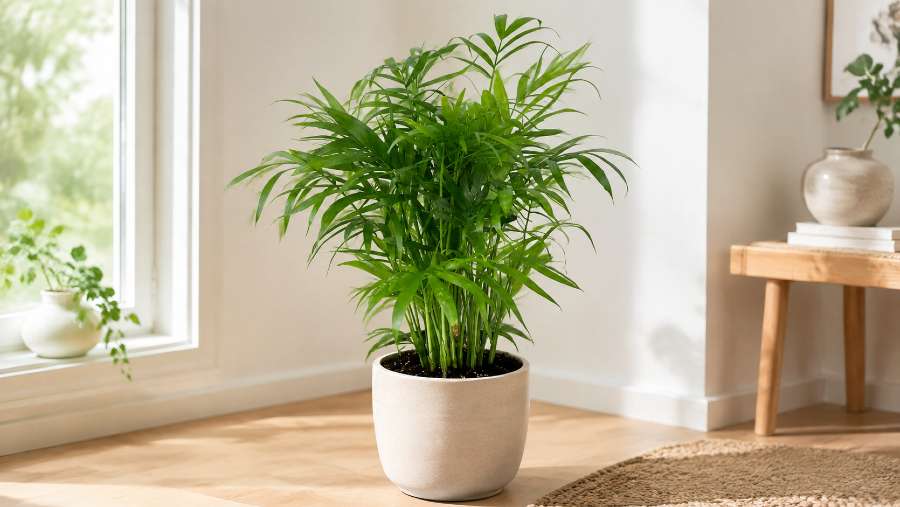
Parlor Palm is the strongest overall choice for a lower-light room. It tolerates moderate indoor light, grows slowly, and remains more manageable than most floor-sized palms.
A north-facing window can provide enough light when it is reasonably large and unobstructed. An east-facing window is even better because gentle morning light encourages stronger growth without commonly scorching the foliage.
Parlor Palm may survive farther from a window than the higher-light palms in this guide, but its growth will slow. Extremely weak light can produce thin stems, sparse foliage, and growing medium that stays wet for too long.
Best placement: Near a north- or east-facing window or a short distance from a brighter filtered window.
Read the complete Parlor Palm indoor care guide.
Kentia Palm
Howea forsteriana
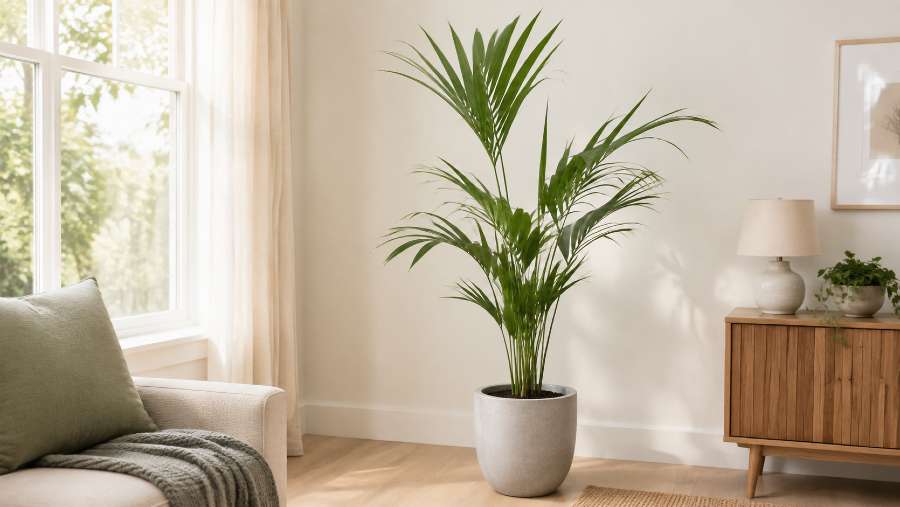
Kentia Palm adapts to moderate indoor light better than many large palms. Its naturally slow growth also means that it does not require the same rapid energy production as a faster-growing palm.
Lower-light tolerance does not mean that any dim corner will work. A Kentia Palm receiving inadequate light may produce smaller fronds, lean toward the window, and gradually lose older foliage.
Bright indirect light remains preferable when available. A healthy Kentia Palm may tolerate some gentle morning sun, but protect a nursery-grown plant from an abrupt move into intense direct sunlight.
Best placement: Near a north- or east-facing window or beside a filtered south-facing window.
Read the complete Kentia Palm indoor care guide.
Lady Palm
Rhapis excelsa
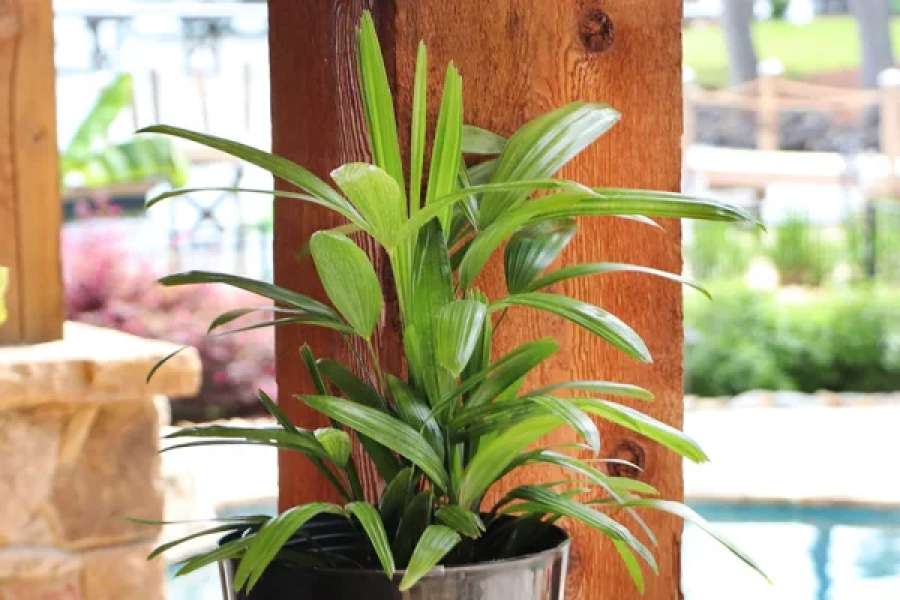
Lady Palm is another dependable choice for moderate or lower indoor light. Its upright stems and slow growth make it useful in rooms that cannot accommodate a broad, sun-loving palm.
It can grow near a bright north-facing window or in the filtered light of an east-facing exposure. Brighter indirect light usually produces denser growth and reduces the tendency of the stems to lean toward the window.
Strong direct sunlight can bleach or scorch foliage that developed under lower light. Introduce any increase in sun gradually.
Best placement: Close to a north- or east-facing window or several feet back from a bright filtered southern exposure.
Read the complete Lady Palm care guide.
Best Low-Light Choices: Parlor, Kentia, and Lady Palms are the three most dependable choices for a north-facing window, a dimmer room, or a corner that still receives usable daylight. A truly windowless hallway or dark interior room will require a suitable grow light.
Indoor Palm for Moderate to Bright Indirect Light
Bamboo Palm
Chamaedorea seifrizii
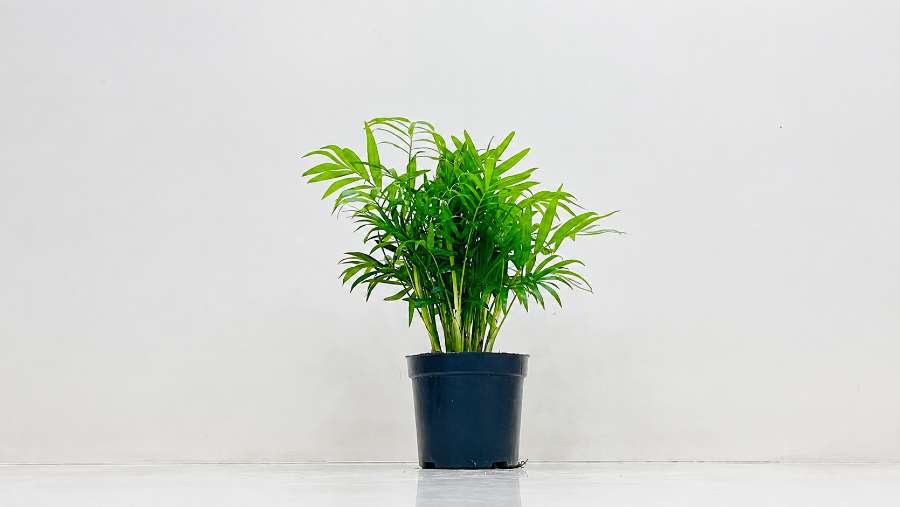
Bamboo Palm grows best in moderate to bright indirect light. It can adapt to less light than Areca, Majesty, Fishtail, and Pygmy Date Palms, but it normally needs more light than Parlor Palm.
An east-facing window provides a helpful combination of bright daylight and gentler morning sun. A filtered south-facing window can also work well, particularly during the darker winter months.
A Bamboo Palm placed too far from a window may develop sparse growth and long stems reaching toward the light. Rotate the container about one-quarter turn every week or two if the plant begins leaning noticeably.
Best placement: Near an east-facing window or close to a south-facing window with filtered sunlight.
Read the complete Bamboo Palm indoor care guide.
Indoor Palms That Need Bright Indirect Light
The following palms should generally remain close to a bright window. They may stay alive for a time in moderate light, but prolonged insufficient light commonly leads to weaker growth and declining foliage.
Areca Palm
Dypsis lutescens
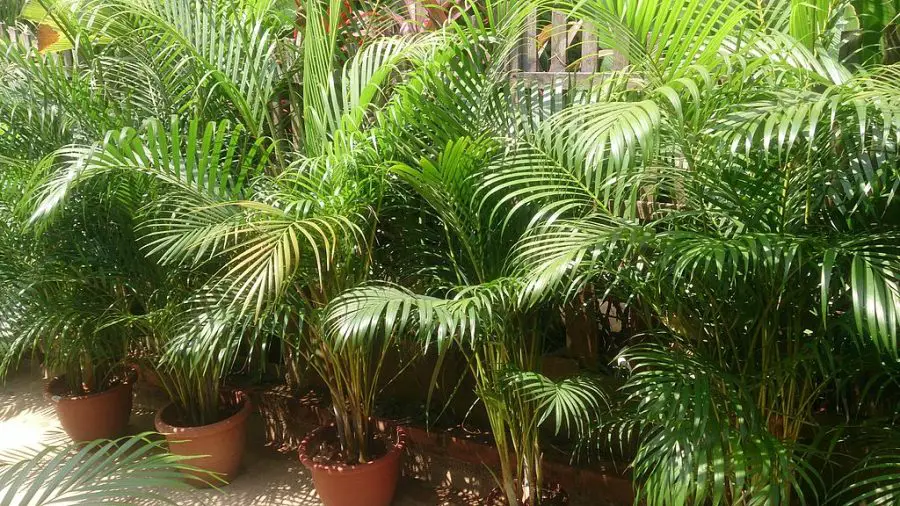 Photo by David J. Stang, CC BY-SA 4.0, via Wikimedia Commons
Areca Palm needs abundant bright indirect light to maintain its full, feathery growth. An east-facing window is often ideal, while a south- or west-facing window may require a sheer curtain during periods of intense sun.
This palm is commonly placed in decorative corners where its foliage looks impressive. If that corner sits far from a window, however, the light may be too weak to maintain the plant over the long term.
Best placement: Close to an east-facing window or near a filtered south-facing window.
Read the complete Areca Palm indoor care guide.
Cat Palm
Chamaedorea cataractarum
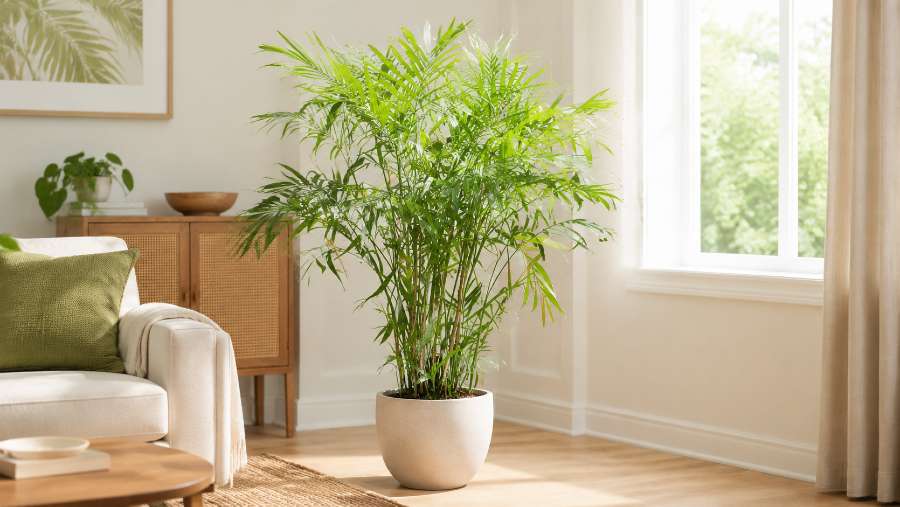
Cat Palm generally performs best in bright indirect light. It may tolerate moderate light, but brighter conditions support the dense growth that gives this palm its lush appearance.
A bright east-facing window works well. Filtered light near a southern exposure can also provide the intensity Cat Palm needs without exposing the foliage to prolonged harsh sun.
Light and watering interact closely with this moisture-loving palm. A Cat Palm in weaker light uses water more slowly, so continuing the same watering routine can leave its root zone excessively wet.
Best placement: Near an east-facing window or a bright south-facing window with filtered sunlight.
Read the complete Cat Palm indoor care guide.
Majesty Palm
Ravenea rivularis
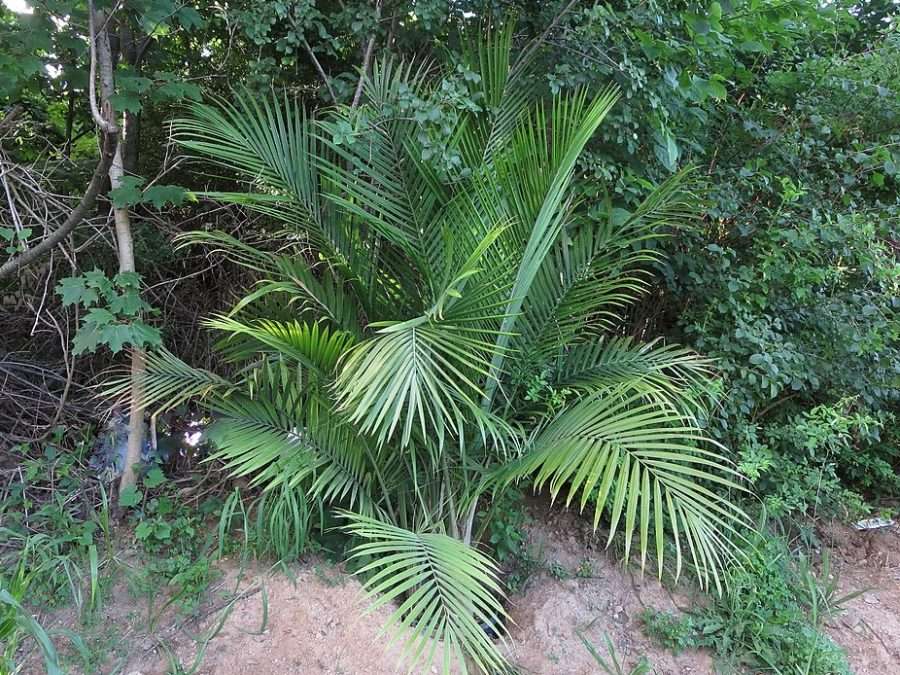
Majesty Palm needs considerably more light than its common use as a temporary indoor decoration sometimes suggests. It performs best close to a large, bright window.
A bright east-, south-, or west-facing exposure can work. Strong direct sunlight should be introduced gradually, particularly when the palm was grown under filtered greenhouse conditions.
Majesty Palm also prefers consistent moisture. Stronger light increases water use, while weak light slows it down. Check the root zone frequently instead of watering on a fixed schedule.
Best placement: Close to a large east-, south-, or west-facing window with protection from sudden intense sun.
Read the complete Majesty Palm indoor care guide.
Fishtail Palm
Caryota species
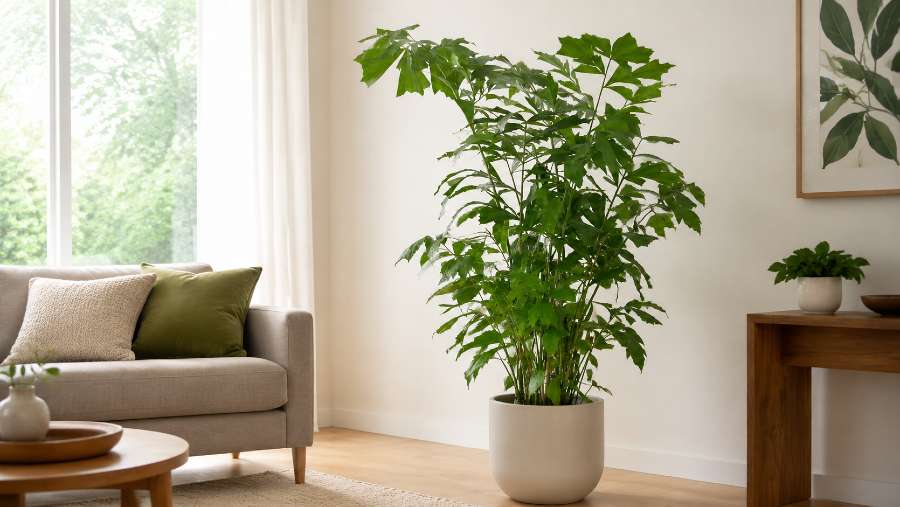
Fishtail Palm grows best in bright indirect light. Its distinctive leaflets and relatively vigorous growth need more energy than a dim corner can provide.
An east-facing window or a filtered southern exposure normally provides suitable light. Protect foliage from abrupt exposure to intense afternoon sun, especially when moving the plant outdoors for summer.
Fishtail Palms can become large. Keeping the plant in weak light to slow its growth is not a healthy size-control method. Choose a palm that fits your space instead of limiting a high-light palm’s energy supply.
Best placement: Close to an east-facing window or near a bright south-facing window with filtered sunlight.
Read the complete Fishtail Palm indoor care guide.
Chinese Fan Palm
Livistona chinensis
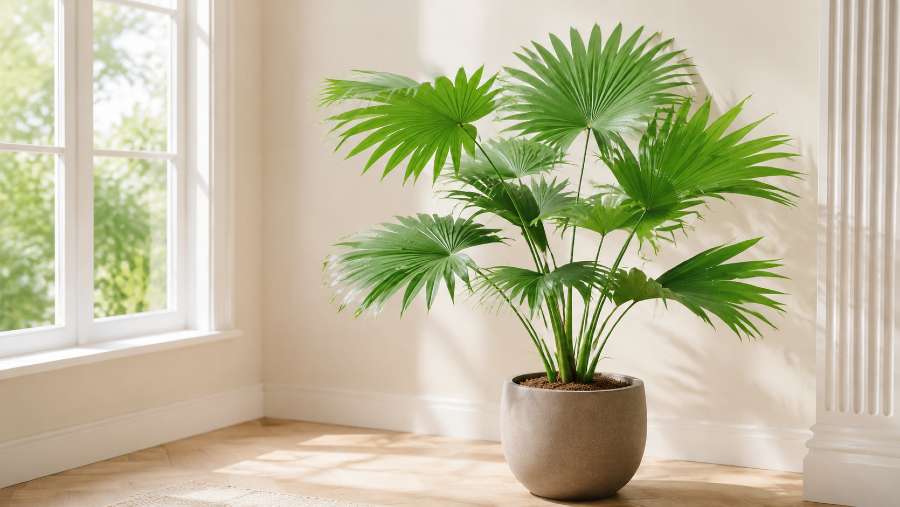
Chinese Fan Palm needs bright indoor light to maintain strong growth and its broad, fan-shaped leaves. It is better suited to a large, bright room than a dim interior corner.
An east-, south-, or west-facing window can work, depending on obstructions and the intensity of direct sun. Filter intense afternoon sunlight when the plant has not been acclimated to it.
Allow enough room around the window for the foliage to spread. Moving the palm far from the glass simply because its leaves are wide can leave it without enough usable light.
Best placement: Near a large east-, south-, or west-facing window with enough space for its fan-shaped foliage.
Read the complete Chinese Fan Palm indoor care guide.
Indoor Palm That Needs the Brightest Light
Pygmy Date Palm
Phoenix roebelenii
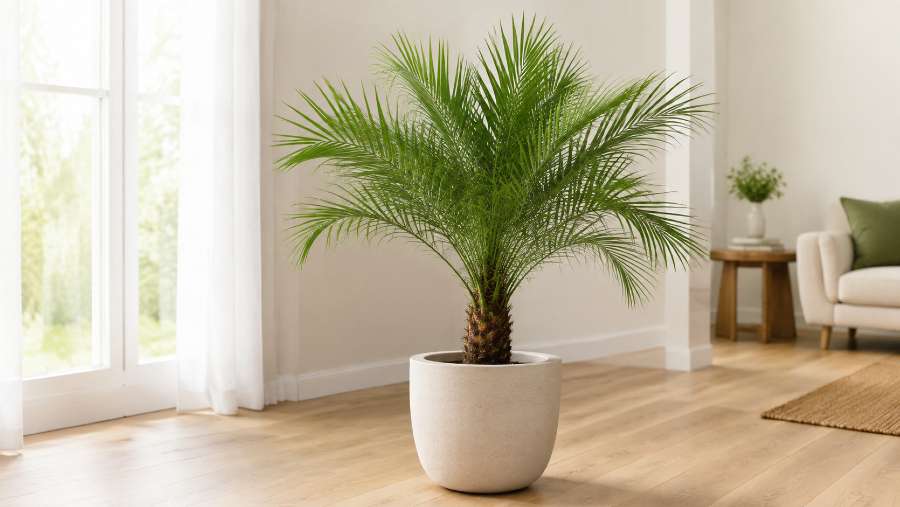
Pygmy Date Palm needs a very bright indoor location. It performs best close to a south- or west-facing window and may tolerate several hours of direct sunlight after gradual acclimation.
An unobstructed east-facing window may also work, especially when the palm receives gentle morning sun. A north-facing exposure is usually too weak unless the window is unusually large and supplemental lighting is provided.
Watch for excess heat beside the glass during summer. A palm can receive adequate light while still suffering from overheated foliage or a rapidly drying root zone.
Best placement: Close to a bright south- or west-facing window, with gradual acclimation to direct sun.
Placement Warning: Pygmy Date Palm has sharp spines near the bases of its fronds. Keep it away from narrow walkways, chairs, children’s play areas, and locations where pets may brush against it.
Read the complete Pygmy Date Palm indoor care guide.
Signs Your Indoor Palm Needs More Light
Light problems often develop gradually. A newly purchased palm may look healthy for several weeks because its existing foliage formed under brighter nursery or greenhouse conditions.
Watch the new growth and the palm’s overall condition. Several changes occurring together provide a better indication than one damaged frond.
Slow or Stalled Growth
Parlor, Kentia, and Lady Palms naturally grow slowly, so limited growth does not always signal a problem. However, a complete lack of new growth during spring and summer may indicate that the palm needs more light.
Small or Weak New Fronds
New fronds that emerge smaller, thinner, or paler than previous growth can indicate inadequate light. The palm may not be producing enough energy to support strong foliage.
Leaning Toward the Window
A palm that consistently leans or directs new growth toward the window is responding to the strongest available light. Move it closer to the light source and rotate the container about one-quarter turn every week or two.
Increasing Space Between Leaves
Stretched stems, widely spaced foliage, or a thinning canopy can develop when a palm is reaching for additional light. This is especially noticeable on clumping palms such as Bamboo, Areca, and Cat Palms.
Yellowing Older Fronds
An occasional older frond naturally turns yellow as it ages. When several fronds yellow while growth weakens, inadequate light may be contributing to the problem.
Yellowing also occurs from overwatering, poor drainage, root damage, pests, and nutritional problems. Check the complete growing environment before moving the palm or adding fertilizer.
Growing Medium That Stays Wet Too Long
Palms use water more slowly in weak light. If the growing medium remains wet much longer than it did previously, seasonal or location-related changes in light may be responsible.
Reduce watering frequency according to the condition of the root zone. Do not continue watering on the same schedule simply because it worked during brighter summer weather.
Signs Your Palm Is Receiving Too Much Direct Sun
Most indoor palms appreciate bright conditions, but foliage grown under filtered light can burn when it is suddenly exposed to intense direct sunlight.
Possible signs of excessive direct sun include:
- Bleached or faded areas on the sun-facing leaves
- Tan, brown, or crispy patches between the veins
- Damage concentrated on the side facing the window
- Rapidly drying growing medium
- Leaves becoming unusually warm beside the glass
- New damage appearing after the palm was moved to a brighter location
Move the palm slightly away from the glass or use a sheer curtain to soften intense sunlight. Do not move it directly from strong sun into a dark corner. A smaller reduction in intensity usually provides a smoother adjustment.
Acclimation Tip: When moving a palm into stronger sunlight, begin with brief exposure to gentle morning sun. Increase the exposure gradually over several weeks while watching the foliage for bleaching or brown patches.
Do Indoor Palms Need a Grow Light?
An indoor palm may need a grow light when the room lacks a suitable window, the plant must sit far from natural light, or winter conditions cause a substantial seasonal decline.
Parlor, Kentia, and Lady Palms may grow near a reasonably bright north-facing window without supplemental lighting. Higher-light palms such as Areca, Majesty, Fishtail, Chinese Fan, and Pygmy Date Palms are more likely to benefit from a grow light when natural light is limited.
A normal decorative lamp or distant ceiling fixture may make a room look brighter to you without supplying enough usable light to support plant growth. Use an actual grow light designed for plants.
Choosing a Grow Light for an Indoor Palm
A full-spectrum LED grow light works well for most indoor palms. Choose a fixture large enough to illuminate the entire canopy rather than directing a small circle of light at only the uppermost frond.
The correct distance depends on the fixture’s strength and design. Follow the manufacturer’s placement recommendations and watch the palm for signs of weak growth, bleaching, or heat stress.
As a palm becomes taller or wider, one small bulb may no longer cover the whole plant. A panel, bar-style fixture, or multiple lights can distribute illumination more evenly across the foliage.
How Long Should a Grow Light Run?
A timer provides a consistent daily schedule. Many indoor palms benefit from approximately 10–14 hours of supplemental light, depending on the strength of the fixture and how much natural light the plant already receives.
Palms also need a regular period of darkness. Do not leave the grow light running continuously. If the palm receives daylight from a window, operate the grow light during the day to extend or strengthen the existing light period.
Adjust Palm Care When Light Levels Change
Light affects more than growth. It also changes how quickly a palm uses water, how rapidly the growing medium dries, and how much fertilizer the plant can use.
Watering
A palm in bright light usually uses water more quickly than the same palm in moderate light. Check the growing medium rather than following a fixed weekly schedule.
When winter light decreases, allow more time between waterings. This is especially important for large containers, which may remain moist below the surface even when the top appears dry.
Fertilizing
Feed palms during active growth when they receive enough light to use the nutrients. Reduce or pause fertilizing when winter light is low and growth slows.
Adding fertilizer will not correct weak growth caused by inadequate light. Excess nutrients can accumulate in the container and contribute to damaged roots or brown leaf tips.
Repotting
Avoid moving a weak, light-starved palm into an oversized container. The additional growing medium will dry slowly and may increase the risk of root problems.
Improve the light first and allow the palm to regain strength. When repotting is genuinely necessary, move it into a container only one size larger.
Seasonal Light Changes
A location that works during summer may become much darker during winter. Days become shorter, the sun travels lower across the sky, and outdoor trees or buildings may cast different shadows.
Watch how the light changes rather than assuming the palm’s location will work equally well throughout the year. You may need to move the container closer to the window, open curtains earlier, or add supplemental lighting during winter.
The reverse can happen during spring. A palm that sat safely beside a window all winter may suddenly receive stronger, longer periods of direct sunlight. Move it gradually or filter the sun before foliage becomes scorched.
If you move palms outdoors for summer, begin in bright shade. Gradually introduce species that tolerate direct sun rather than placing indoor-grown foliage immediately on a sunny balcony or patio.
Common Indoor Palm Lighting Mistakes
- Assuming that a room that looks bright provides enough plant light
- Placing a palm several feet from the window without checking the light
- Treating low-light tolerance as an ability to grow in darkness
- Placing a Majesty or Pygmy Date Palm in a dim corner
- Moving nursery-grown foliage directly into intense afternoon sun
- Ignoring outdoor trees, overhangs, curtains, and neighboring buildings
- Following the same watering schedule after light levels decrease
- Using extra fertilizer to correct weak growth caused by inadequate light
- Relying on an ordinary ceiling fixture in a windowless room
- Using a small grow bulb that illuminates only part of a large palm
- Forgetting that winter and summer light can differ considerably
Decision Framework: Choose the palm that fits your available light rather than trying to force a high-light species into a dim location. Parlor, Kentia, and Lady Palms are the safest choices for moderate light. Choose Pygmy Date, Majesty, Fishtail, and Chinese Fan Palms only when you can provide a genuinely bright location.
Frequently Asked Questions
Which indoor palm needs the least light?
Parlor Palm is generally the strongest choice for lower indoor light. Kentia and Lady Palms also tolerate moderate or lower light better than most palms. All three grow more strongly when given brighter indirect light.
Can an indoor palm grow in a north-facing window?
Parlor, Kentia, and Lady Palms can grow near a reasonably bright north-facing window. Keep the palm close to the glass and watch for obstructions that reduce the available light. Higher-light palms may need supplemental lighting in the same location.
Can an indoor palm survive in a windowless room?
An indoor palm cannot grow indefinitely in a windowless room without suitable supplemental lighting. Use a full-spectrum grow light positioned close enough to illuminate the foliage, and operate it on a consistent daily schedule.
Can indoor palms receive direct sunlight?
Some palms tolerate gentle morning sun or stronger direct light after gradual acclimation. Pygmy Date Palm generally handles brighter conditions than the other palms in this guide. Foliage grown under filtered light can scorch when suddenly moved into intense direct sun.
How close should an indoor palm be to a window?
The best distance depends on the window direction, obstructions, palm species, and season. Higher-light palms usually need to remain reasonably close to the glass. Moderate-light palms have more placement flexibility but should still receive usable daylight.
Why is my palm leaning toward the window?
A palm leans toward the window because that is its strongest light source. Move it closer to the window when possible and rotate the container about one-quarter turn every week or two to encourage more balanced growth.
Why did my palm burn after I moved it to a sunny window?
The foliage was probably not acclimated to the increased sunlight. Move the palm slightly away from the glass or filter the strongest sun. Introduce additional direct light gradually over several weeks.
Can a regular lamp provide enough light for an indoor palm?
An ordinary lamp may not provide enough intensity or the right coverage for sustained plant growth. A full-spectrum LED grow light is a more dependable choice when natural light is inadequate.
Final Thoughts
Matching a palm to your available light is much easier than trying to correct a poor placement later. Parlor, Kentia, and Lady Palms are the most dependable choices for moderate or lower indoor light. Bamboo Palm fits between the lower-light and bright-light groups.
Areca, Cat, Majesty, Fishtail, and Chinese Fan Palms need brighter indirect light to maintain healthy, attractive growth. Pygmy Date Palm requires the brightest location and may tolerate some direct sunlight after gradual acclimation.
Watch how sunlight moves through your home, including seasonal changes and outdoor obstructions. Keep higher-light palms close to a suitable window, adjust watering when light levels change, and use a real grow light when natural daylight is inadequate.
Continue Exploring Indoor Palms
Choose the right palm and provide the conditions it needs:
- Best Indoor Palm Trees: 10 Choices for Real Homes
Compare palms by mature size, care level, light requirements, and available growing space. - Indoor Palms That Stay Small: 6 Compact Choices
Find manageable palms for apartments, smaller rooms, and limited floor space. - Indoor Palm Tree Care: Complete Guide for Beginners
Learn about watering, humidity, potting mix, fertilizing, and common palm problems. - Parlor Palm Indoor Care
Grow the most dependable palm for moderate and lower indoor light.
References
- Penn State Extension: Palms as Houseplants
- Clemson Cooperative Extension: Indoor Palms
- University of Minnesota Extension: Lighting for Indoor Plants
- Colorado State University Extension PlantTalk: Palms
 Steve S. is the creator of