
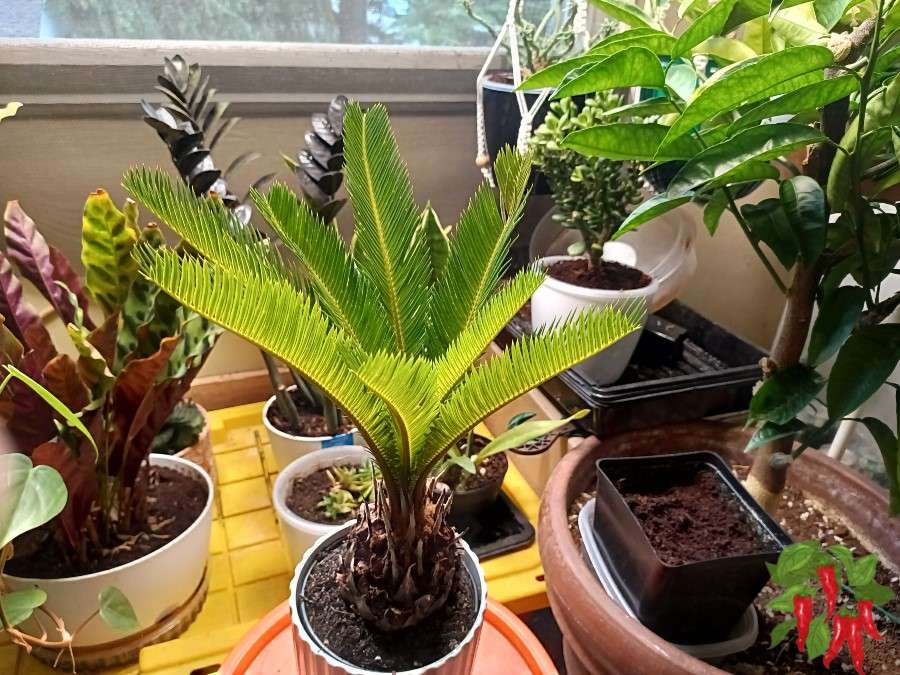
Sago Palm care indoors starts with understanding that this unusual plant isn’t really a palm at all. Cycas revoluta is a cycad, an ancient group of plants with stiff, symmetrical fronds that give Sago Palm its distinctive tropical appearance.
I’m adding a Sago Palm to my indoor plant collection and will be growing it myself. In this guide, I’ll cover the indoor conditions I’m providing, including light, watering, growing mix, containers, fertilizer, and troubleshooting. I’ll also add my video and firsthand observations as I get more experience with my plant.
What You’ll Learn
- How much indoor light a Sago Palm needs
- When and how to water without keeping the roots too wet
- Why I like coco coir and perlite for indoor growing
- What temperatures and humidity levels work indoors
- How large Sago Palms can eventually become
- How to fertilize, prune, repot, and propagate Sago Palms
- Common Sago Palm problems and what causes them
- Why Sago Palm toxicity deserves special attention
Quick Answer: How Do You Care for a Sago Palm Indoors?
Grow Sago Palm (Cycas revoluta) in bright indirect light and a fast-draining growing mix. Water thoroughly, allow the growing medium to dry substantially before watering again, and never leave the roots sitting in soggy conditions. Average household temperatures and humidity are generally suitable. Sago Palms grow very slowly, so they can remain manageable indoor plants for years. All parts of the plant are toxic if ingested, so Sago Palm requires careful placement around pets and children.
Sago Palm Care Indoors at a Glance
| Care Requirement | Indoor Sago Palm Care |
|---|---|
| Botanical Name | Cycas revoluta |
| Plant Type | Cycad — not a true palm |
| Light | Bright indirect light; tolerates some medium light |
| Water | Water thoroughly, then allow the growing medium to dry substantially before watering again |
| Growing Mix | Fast draining; coco coir and perlite work well as a base |
| Temperature | Normal warm household temperatures |
| Humidity | Average household humidity is generally suitable |
| Growth Rate | Very slow |
| Pet Safety | Highly toxic if ingested |
What Is a Sago Palm?
Despite its common name, Sago Palm isn’t a true palm. Cycas revoluta belongs to a group of ancient plants called cycads. Its palm-like appearance comes from the crown of stiff, feather-like fronds that develops around its thick central trunk.
Cycads are an ancient group of plants with a history stretching back to the age of the dinosaurs. That gives Sago Palm an interesting story in addition to its unusual appearance, even though the individual species growing today aren’t literally the same plants that lived alongside dinosaurs.
Sago Palm is native to Japan and is also called King Sago, Japanese Sago Palm, and Sago Cycad. It grows extremely slowly and can live for many years under suitable conditions.
That slow growth is useful indoors. A young Sago Palm can remain relatively compact for a long time rather than quickly turning into a large floor plant.
Sago Palms can also produce offsets, commonly called pups, around the base of an established plant. These can eventually be separated and used to propagate additional plants.
See My Sago Palm and How I’m Growing It Indoors
My Sago Palm is still a relatively small plant. From the soil line to the top of the fronds, it’s about a foot tall, or roughly 18 inches from the bottom of the container to the top of the plant.
One of the reasons I like it for an apartment is its slow growth. Sago Palms can eventually become substantial plants with a thick trunk and a wide spread of fronds, but getting there takes many years. I’m not worried about this one outgrowing my apartment anytime soon.
In the video below, I’ll show you my Sago Palm and explain how I’m growing it indoors, including its light, watering, growing mix, container, mature size, and why I’m treating it differently from many of my other indoor plants.
I’m also being careful about where I keep this plant because Sago Palm is poisonous if ingested. That’s an important consideration if you have pets or young children in your home.
How Big Does a Sago Palm Get Indoors?
Sago Palms grow very slowly, but don’t mistake slow growth for a permanently small plant.
Sago Palms can eventually become surprisingly large plants. I’ve seen old specimens with trunks around five or six feet tall and fronds extending several feet outward. Those are very old plants, however. Sago Palm grows so slowly that reaching anything close to that size can take decades.
For an apartment grower, spread may eventually matter more than height. The stiff fronds radiate outward from the central trunk, so an older plant can occupy a fairly wide area even when it isn’t especially tall.
Mine is nowhere near that size. Right now, the plant itself is only about 12 inches tall from the soil line to the top of the fronds, or around 18 inches if I measure from the bottom of the container. That’s one of the advantages of starting with a young Sago Palm in an apartment.
The bigger consideration indoors is often width rather than height. Long, stiff fronds radiate outward from the central trunk, and an established plant can develop a spread of roughly 3–5 feet. That means a Sago Palm that starts as a compact tabletop plant may eventually need considerably more horizontal space.
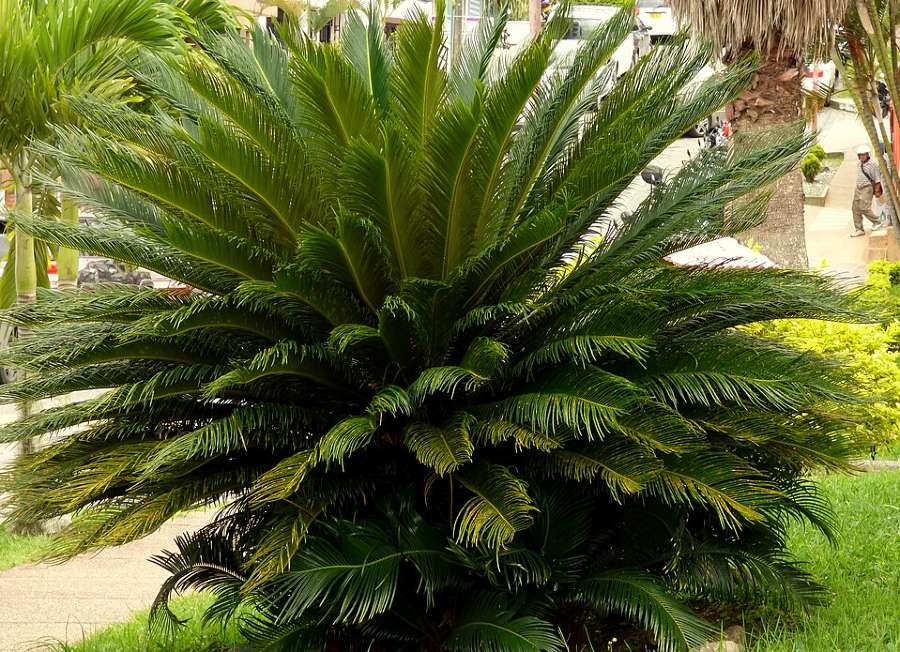
Unlike a narrow upright houseplant, you can’t simply tuck a larger Sago Palm tightly against a wall. Its fronds extend in several directions and look best when they have enough room to develop without constantly brushing furniture, walls, or people walking past.
Fortunately, Sago Palm is an extremely slow grower. A young plant can remain compact for years, giving you plenty of time before you need to move it from a table or plant stand to a larger floor location.
Space planning tip: When deciding where your Sago Palm will eventually live, think about the diameter of the crown rather than just the height of the plant. A mature indoor Sago may be relatively short compared with many indoor palms but can still occupy a surprisingly wide area.
Sago Palm Light Requirements Indoors
Bright indirect light is a good starting point for growing Sago Palm indoors. A location near a bright window can provide the light it needs while reducing the risk of exposing foliage to an abrupt change into intense direct sun.
Sago Palm can tolerate somewhat lower light, but its already slow growth may become even slower. If your home doesn’t provide enough natural light, a grow light can supplement the available daylight.
An east-facing window can provide useful morning light, while a bright south- or west-facing exposure may work when the plant is positioned appropriately for the intensity of the light.
If you’re moving a Sago Palm from relatively low indoor light into stronger sunlight, make the change gradually. Plants that aren’t accustomed to intense sun can develop damaged foliage when exposure changes too quickly.
Is Sago Palm Care Different From Indoor Palm Care?
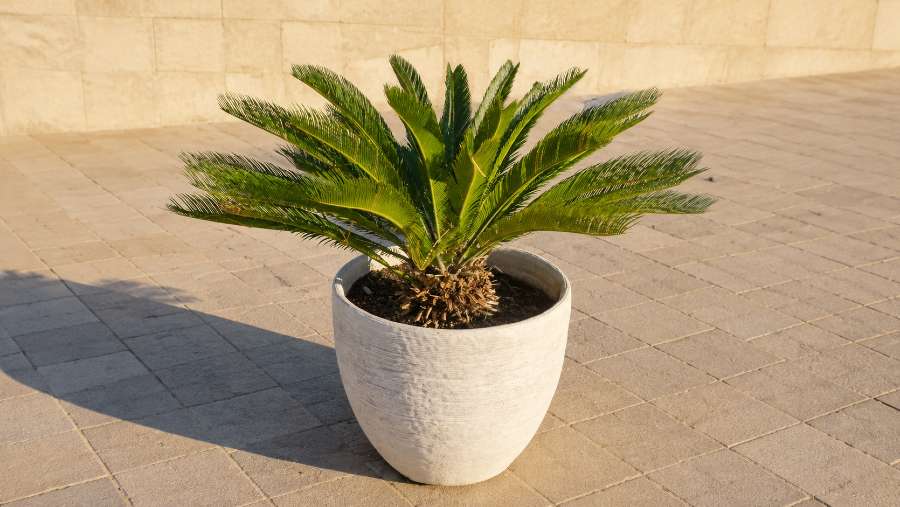
Sago Palm may look like a small palm, but its care shouldn’t automatically be treated exactly like the true palms in your indoor collection. As a cycad, it grows differently and is particularly important to protect from consistently wet growing conditions.
If you’re also growing true palms such as Kentia, Lady, Parlor, or Areca Palm, see my Indoor Palm Tree Care guide for a broader look at caring for palms indoors.
Where to Buy a Sago Palm
Sago Palms are fairly common houseplants, but the size and quality available locally can vary. I’m starting with a young plant so I can grow it indoors and follow how it develops over time.
When buying a Sago Palm, look for firm green fronds, a solid central trunk, and a plant that isn’t sitting in saturated growing medium. A smaller plant is also easier to place indoors while you learn how it responds to the conditions in your home.
How to Water a Sago Palm Indoors
One of the most important parts of Sago Palm care indoors is avoiding a growing medium that stays constantly wet. Sago Palms tolerate periods of dryness much better than they tolerate waterlogged roots.
Instead of watering on a fixed weekly schedule, check the growing medium first. Allow it to dry substantially between waterings. When it’s time to water, water thoroughly and allow excess moisture to drain from the container.
How quickly the pot dries will depend on light, temperature, container size, growing medium, and the season. A Sago Palm growing in brighter light during summer may use moisture faster than the same plant during the darker winter months.
Be especially careful with decorative cachepots and saucers. Don’t allow drained water to remain around the bottom of the growing pot.
How I’m Watering My Sago Palm
My plan is to treat my Sago Palm more like my succulents than the moisture-loving houseplants I grow. I’ll check the growing medium and water when it has dried rather than keeping it continuously moist.
I’m expecting that to work out to roughly every couple of weeks under my current indoor conditions, but I’m using that as a general guideline rather than a strict watering schedule. I’ll check the growing medium first and adjust as needed.
Signs Your Sago Palm Is Getting Too Much or Too Little Water
Yellowing foliage can have several causes, so don’t automatically reach for the watering can when you see a yellow frond. Check the growing medium and the condition of the plant first.
- Growing medium stays wet for a long time: drainage may be poor or the container may be too large.
- Yellowing combined with consistently wet conditions: overwatering or root problems should be investigated.
- Very dry growing medium and stressed foliage: the plant may have remained dry too long.
- Older fronds gradually yellowing: this can also occur naturally as the plant ages.
The condition of the growing medium usually tells you more than a calendar does. Check before you water.
Best Growing Mix for Sago Palm Indoors
Sago Palm needs a growing medium that drains freely and allows air to reach the roots. A heavy mix that remains saturated for long periods makes watering much more difficult.
For my indoor plants, I like using coco coir and perlite, and that’s the base I plan to use for my Sago Palm. Coco coir provides moisture retention without the density of a heavy potting soil, while perlite increases drainage and air space around the roots.
A simple starting mixture is approximately equal parts coco coir and perlite. The exact ratio can be adjusted depending on how quickly the container dries under your growing conditions.
A commercial cactus or palm mix can also work, particularly if it drains quickly. If a packaged potting mix seems dense or stays wet too long, adding extra perlite can improve drainage.
Choosing a Pot for Sago Palm
Sago Palms don’t need an oversized container. When repotting, move up gradually rather than placing a relatively small root system into a large volume of growing medium that may remain wet for too long.
Most importantly, use a container with drainage holes. Excess water needs a reliable way to leave the root zone after watering.
Clay and ceramic containers can also provide useful weight as a Sago Palm becomes larger. Mature fronds extend outward from the central crown, so a stable container becomes increasingly useful as the plant develops.
If you prefer the appearance of a decorative container without drainage, use it as a cachepot. Keep the Sago Palm in a draining grow pot inside it and empty any water that collects after watering.
Can You Grow Sago Palm in a Self-Watering Planter?
I use self-watering planters for many of my indoor plants, especially when I’m growing them in coco coir and perlite. I’m not planning to use one for my Sago Palm.
Sago Palm likes some moisture, but I want the growing medium to dry between waterings. A regular draining pot gives me more control over that wet-and-dry cycle than keeping a reservoir continuously available beneath the plant.
My Sago Palm came in a regular grow pot with a white decorative outer pot, so I’m going to keep the setup simple. I’ll check the growing medium before watering and let it dry between waterings rather than trying to maintain constant moisture.
Sago Palm Temperature Requirements Indoors
Normal household temperatures generally work well for Sago Palm. A reasonably warm, stable indoor environment is more important than trying to maintain an exact temperature every day.
Keep the plant away from cold drafts and sudden temperature changes. Heating and air-conditioning vents can also create localized conditions that are considerably different from the rest of the room.
You can move a container-grown Sago Palm outdoors during suitable warm weather, but a plant accustomed to indoor conditions should be introduced to stronger outdoor light gradually.
How Much Humidity Does Sago Palm Need?
You generally don’t need to create tropical greenhouse humidity to grow a Sago Palm indoors. Average household humidity should be adequate in most homes.
That makes Sago Palm somewhat easier to place than houseplants that depend on consistently high humidity. I wouldn’t add a humidifier specifically for this plant unless the surrounding air is unusually dry and the plant shows a reason for concern.
Good air movement is also useful, particularly when you’re trying to prevent the growing medium from remaining wet for excessive periods.
How to Fertilize Sago Palm Indoors
Sago Palm grows slowly, so heavy fertilization isn’t necessary. Feed during active growth in spring and summer rather than trying to force faster growth with excessive fertilizer.
A palm fertilizer containing micronutrients can be used according to its label directions. Nutrients such as magnesium and manganese are particularly worth paying attention to when growing cycads.
Slow-release fertilizer is another option. Whichever method you choose, avoid assuming that more fertilizer will make this naturally slow-growing plant grow quickly. Excess fertilizer can damage roots and foliage.
Reduce or stop fertilizing during winter when indoor growth has slowed substantially.
Pruning and Cleaning a Sago Palm
Sago Palm doesn’t require routine pruning to maintain its shape. Its symmetrical form develops naturally from new flushes of foliage emerging from the central growing point.
Remove fronds when they have become completely yellow or brown. Cut unwanted fronds near their base with clean pruning tools while taking care not to damage the trunk or new growth emerging from the center.
Avoid removing healthy green fronds simply to make the plant look more compact. Those leaves are still photosynthesizing and supporting the plant.
You can also periodically wipe dust from the foliage. Cleaning the fronds makes the plant look better and gives you an opportunity to inspect closely for scale, spider mites, mealybugs, or other problems.
Best Indoor Locations for Sago Palm
The best location for a Sago Palm combines useful light with enough room for the fronds to spread as the plant matures.
- Near an east-facing window: useful morning light without intense afternoon exposure.
- Near a bright south- or west-facing window: potentially excellent light when the plant is positioned appropriately for the intensity.
- Bright living room: a good option as the plant becomes large enough to use as a floor plant.
- Home office: its slow growth can make a young Sago Palm manageable for years.
- Under a grow light: useful when natural window light isn’t sufficient.
Placement also needs to account for toxicity. If you have pets or young children who may chew or handle plants, Sago Palm requires considerably more caution than most of the indoor palms I grow. I’ll cover that risk in detail later in this guide.
Where I’m Growing My Sago Palm
I’m giving my Sago Palm a medium-light indoor location rather than putting it in one of my darkest areas. It doesn’t need the intense light required by some indoor plants, but it still needs enough light for healthy growth.
I’m also avoiding suddenly putting it into strong direct sunlight. The stiff fronds make Sago Palm look like a sun-loving palm, but an indoor-grown plant can be damaged by too much intense sun, especially if it hasn’t been acclimated gradually.
Placement is especially important with this plant because of its toxicity. I want a location with adequate light and enough room for the fronds while also keeping the plant where it won’t be eaten or handled by pets or children.
Repotting a Sago Palm Indoors
Sago Palms grow slowly, so repotting shouldn’t be something you need to do frequently. There’s no reason to move a healthy plant into a larger container simply because another year has passed.
Instead, watch the root system and how the plant behaves in its current container. Roots filling the pot, difficulty getting water evenly through the growing medium, or a plant becoming unstable in its container can all be reasons to consider repotting.
When you do repot, move up gradually rather than choosing a dramatically larger container. Too much unused growing medium around a small root system can stay wet longer than you want for a Sago Palm.
Use a fast-draining growing mix and keep the base of the plant at approximately the same depth it was growing before. Avoid burying the trunk or crown deeper in the new container.
How to Propagate Sago Palm Pups
Mature Sago Palms can produce offsets, commonly called pups, around the base of the plant. These pups provide a practical way to propagate another Sago Palm without starting from seed.
A pup can be carefully separated from the parent plant with a clean, sharp tool. Remove as little tissue from the parent plant as possible and allow the separated pup’s wound to dry and callus before placing it into a fast-draining growing medium.
Keep the new plant warm and avoid keeping the growing medium constantly wet while roots develop. Sago Palm is naturally slow, so propagation requires patience.
Sago Palms can also be grown from seed, but seed propagation is much slower. For most indoor growers who already have a mature plant producing offsets, pups are the more practical option.
Common Sago Palm Problems and Troubleshooting
Sago Palms are tough plants, but indoor growing conditions can still cause problems. Yellowing, browning, poor growth, and damaged new foliage are symptoms rather than diagnoses, so look at the plant’s growing conditions before deciding what to change.
| Problem | Possible Cause | What to Check |
|---|---|---|
| Yellow fronds | Overwatering, natural aging, poor drainage, or nutrient problems | Growing-medium moisture, drainage, age of affected fronds, and fertilizer history |
| Brown foliage | Water stress, excessive sun, fertilizer damage, or damaged older foliage | Recent watering, light changes, and fertilizer applications |
| Little or no new growth | Naturally slow growth or insufficient light | Available light before assuming the plant needs fertilizer |
| Growing medium stays wet | Oversized pot, dense mix, poor drainage, or too-frequent watering | Drainage holes, pot size, growing mix, and watering frequency |
| New growth looks weak or discolored | Light, root, or nutrient problems | Light level, root-zone condition, and micronutrient availability |
Why Are My Sago Palm Fronds Turning Yellow?
A yellow frond doesn’t automatically mean your Sago Palm needs more water or fertilizer. Older fronds can eventually yellow naturally, while widespread or unusual yellowing can point to problems with moisture, drainage, light, roots, or nutrition.
Start with the simplest checks. Feel the growing medium, make sure water can drain freely from the pot, and consider whether the plant is receiving enough light.
Also pay attention to which fronds are yellowing. An older lower frond gradually declining is different from distorted or yellow new growth emerging from the center of the plant.
Common Sago Palm Pests Indoors
Scale insects are one of the pests worth watching closely on Sago Palm. Spider mites and mealybugs can also become problems indoors.
Inspect both sides of the fronds, along the leaflets, and around the central portion of the plant. Scale can be easy to overlook when an infestation is just beginning.
If you find pests, isolate the plant from your other houseplants while you deal with the infestation. Insecticidal soap or horticultural products labeled for the particular pest can be useful when applied according to label directions.
Regularly inspecting your plant is much easier than dealing with a large infestation. Cleaning the foliage gives you a good opportunity to look closely for pests before their numbers increase.
Is Sago Palm Toxic to Cats, Dogs, and People?
Important: Sago Palm (Cycas revoluta) is highly toxic if ingested. All parts of the plant should be treated as dangerous, with the seeds considered particularly hazardous. This plant requires careful placement in homes with pets or young children.
This is considerably different from many of the true indoor palms you may be familiar with. Don’t assume that Sago Palm has the same pet-safety profile simply because it has “palm” in its common name.
If you have a cat or dog that chews houseplants, I would choose a different plant rather than relying on a shelf or plant stand to keep a Sago Palm permanently out of reach.
If you suspect that a pet or person has ingested part of a Sago Palm, contact a veterinarian, animal poison-control service, poison-control center, or medical professional promptly rather than waiting for symptoms to appear.
Sago Palm Care Indoors FAQs
Is Sago Palm actually a palm?
No. Sago Palm (Cycas revoluta) is a cycad rather than a true palm. Its stiff, feather-like fronds give it the palm-like appearance responsible for its common name.
How much light does a Sago Palm need indoors?
Bright indirect light is a good choice indoors. Sago Palm can tolerate somewhat lower light, but growth may become even slower. A grow light can supplement natural light when necessary.
How often should I water my indoor Sago Palm?
Don’t water on a fixed schedule. Check the growing medium and allow it to dry substantially before watering again. Then water thoroughly and let excess water drain from the container.
Can I grow a Sago Palm in coco coir?
Coco coir can be used as part of the growing mix, but drainage and aeration are important. I like combining coco coir with plenty of perlite rather than using a dense growing medium that remains wet for long periods.
Why is my Sago Palm growing so slowly?
Slow growth is normal for Sago Palm. Adequate light and good care support healthy growth, but fertilizing heavily won’t turn this naturally slow-growing cycad into a fast-growing plant.
Can Sago Palm grow in low light?
It can tolerate less-than-ideal light, but that doesn’t make Sago Palm a no-light plant. Give it useful indirect light for better indoor growth.
How often should I repot a Sago Palm?
Repot based on the plant and its root system rather than following a strict schedule. Because Sago Palm grows slowly, it can often remain in the same container for several years.
Is Sago Palm safe for pets?
No. Sago Palm is highly toxic if ingested and is not a good choice for an area accessible to a cat or dog that may chew plants.
Final Thoughts
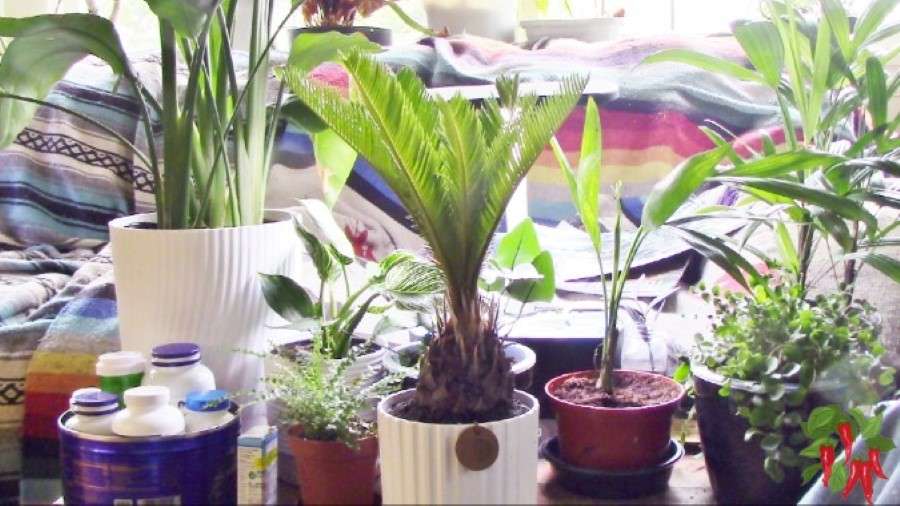
Sago Palm is an unusual choice for an indoor plant because it gives you the structured appearance of a small palm while actually being an ancient cycad. Its slow growth also means a young plant can remain manageable indoors for a long time.
The care routine is fairly straightforward: provide useful light, use a fast-draining growing mix, avoid keeping the roots constantly wet, and don’t try to force rapid growth with excessive fertilizer.
I’m just beginning to grow my own Sago Palm, so I’ll continue updating this guide with my firsthand observations as the plant settles into its indoor location. I’ll also add my video so you can see the actual plant and setup I’m using.
The biggest consideration is toxicity. If pets or young children can reach your houseplants, Sago Palm requires much more caution than most of the true indoor palms you might choose instead.
Where to Buy a Sago Palm
If you’d like to grow a Sago Palm indoors, starting with a young plant makes it easy to fit into your available space while you learn how it responds to your home’s light and growing conditions.
I’ve added the Sago Palm I’m growing here so you can see the same plant I started with.
Growing Your Sago Palm in a Container?
This guide focuses on keeping Sago Palm as an indoor houseplant. For more about choosing containers, potting, outdoor growing, and broader container care, see my Growing Sago Palms In Pots guide.
 Steve S. is the creator of