
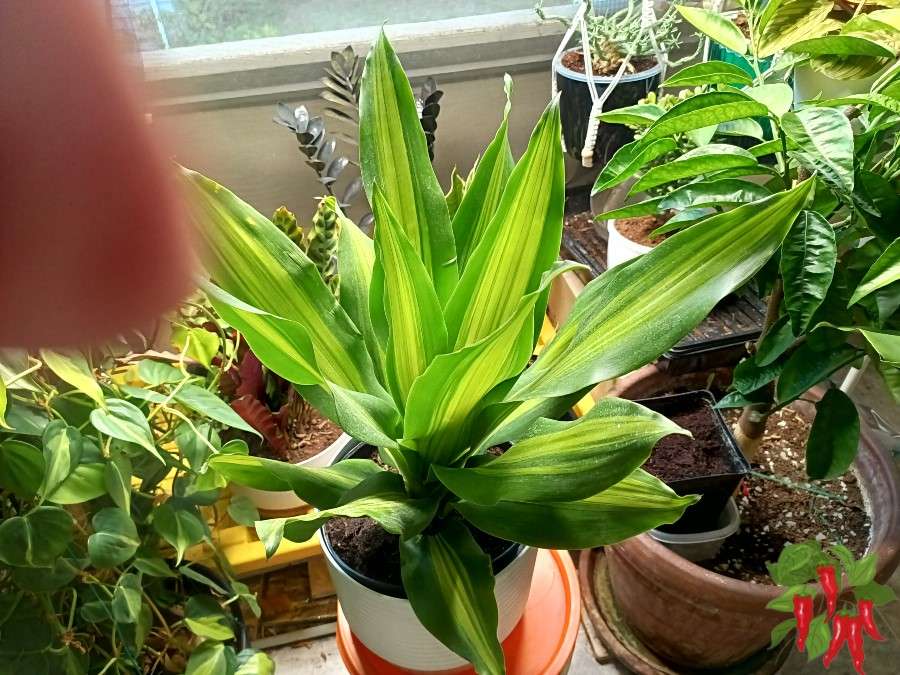
 Mass Cane Plant Care is fairly simple once you understand what this popular Dracaena needs indoors. Dracaena fragrans ‘Massangeana’, commonly called Mass Cane or Dracaena Massangeana, is known for its broad green leaves with a yellow to yellow-green stripe running through the center.
Mass Cane makes an impressive indoor floor plant as it matures. Its thick cane-like stems support clusters of long, arching leaves, giving the plant a tropical appearance without requiring especially difficult care. It grows best with good indirect light, but one reason it has remained such a popular houseplant is its ability to tolerate lower indoor light levels.
In this guide, I’ll cover the basic care your Mass Cane needs, including light, watering, growing mix, temperature, humidity, fertilizer, pruning, and repotting. I’ll also be adding my own photos, video, and growing observations as I grow my new Mass Cane indoors.
What You’ll Learn
- What a Mass Cane plant is and how it relates to the Corn Plant
- How much indoor light Dracaena Massangeana needs
- When and how to water your Mass Cane
- How to use coco coir and perlite as a growing mix
- The temperature and humidity it prefers
- How large Mass Cane can grow indoors
- When to fertilize and repot your plant
- How to prune a Mass Cane that becomes too tall
- How to recognize common Mass Cane problems
- Whether Mass Cane is safe around cats and dogs
Quick Answer
Mass Cane grows well indoors with bright, indirect light but can tolerate lower-light locations. Water when the upper portion of the growing mix begins to dry, and don’t leave the roots sitting in a constantly wet mix. A loose combination such as coco coir and perlite provides moisture retention along with good drainage. Keep your plant at comfortable household temperatures and protect it from cold drafts and sudden temperature drops.
Mass Cane Plant Care at a Glance
| Care Need | Mass Cane Preference |
|---|---|
| Botanical Name | Dracaena fragrans ‘Massangeana’ |
| Common Names | Mass Cane, Dracaena Massangeana, Corn Plant |
| Light | Bright, indirect light; tolerates lower light |
| Water | Allow the upper portion of the growing mix to begin drying between waterings |
| Growing Mix | Loose and well-draining; coco coir and perlite work well |
| Temperature | Normal warm household temperatures; protect from cold |
| Humidity | Moderate humidity; adapts to normal household conditions |
| Fertilizer | Light feeding during active growth |
| Mature Indoor Size | Often about 5–8 feet tall with a spread of roughly 2–3 feet; size can be controlled by pruning |
| Propagation | Stem and cane cuttings |
| Pet Safety | Toxic to cats and dogs if eaten |
| Common Problems | Brown tips, yellow leaves, root rot, spider mites, mealybugs |
My Mass Cane Plant
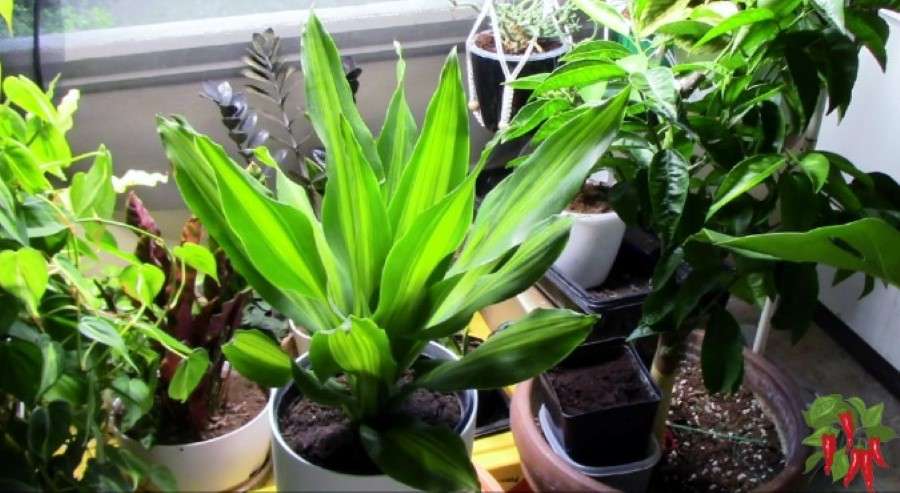
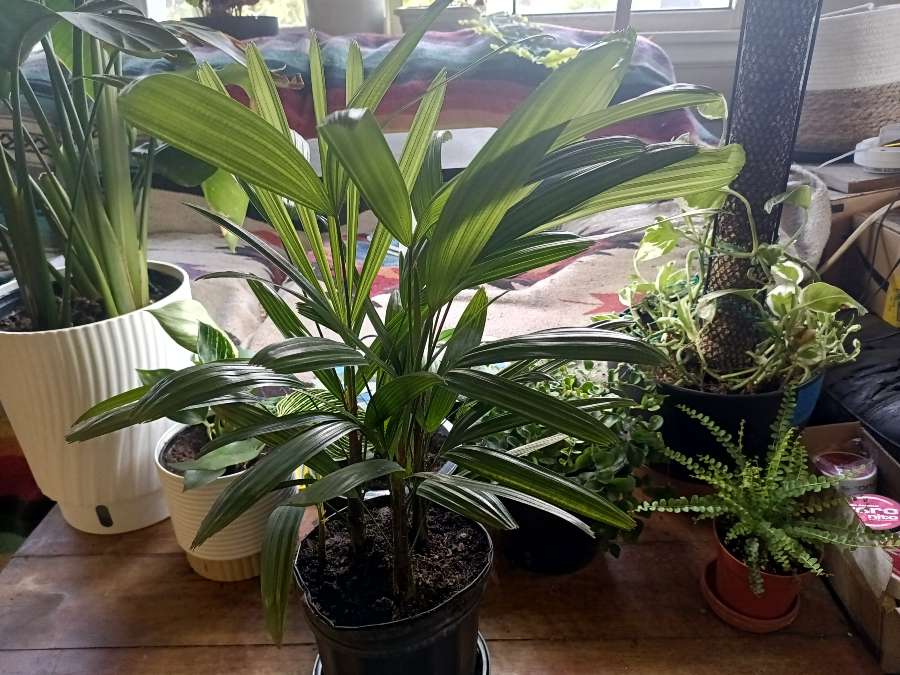
My current Mass Cane is about 18 inches tall and came from Costa Farms. It’s a healthy plant with broad green leaves and lighter green striping. It’s still fairly small, but as it matures it should develop into the tall floor-plant form that makes Mass Cane such a popular indoor Dracaena.
Mass Cane has quite a few names. You’ll see it called Mass Cane, Corn Plant, Dracaena Massangeana, or Dracaena fragrans ‘Massangeana’. Whatever name you find it under, it’s an easy plant to recognize once you’re familiar with its long striped leaves and thick cane-like stems.
One reason I like Mass Cane is that it can eventually become a substantial floor plant without getting extremely wide. The leaves at the top can spread roughly 2 to 3 feet, while the plant puts much of its growth into height. You may see plants with a single cane or several canes growing together in one container.
It’s also a good plant for apartments and beginning indoor gardeners because you have some flexibility with light. I prefer bright, indirect light, but Mass Cane will tolerate lower-light locations better than many large tropical houseplants.
How I’m Watering My Mass Cane
The main thing I’m watching with my plant is watering. I give it water and then allow the growing medium to dry down before watering again. I don’t want the roots remaining constantly wet because that can eventually lead to root problems and rot.
I use self-watering planters for quite a few of my indoor plants, but I don’t consider my Mass Cane a good candidate for a self-watering planter. For this plant, I want more control over the wet-and-dry cycle rather than maintaining constant access to a reservoir.
I like coco coir as a growing medium. I sometimes add perlite, although with careful watering I don’t always feel that perlite is necessary. The important thing for me is paying attention to the moisture in the root zone and not keeping the plant constantly wet.
My Previous Golden Heart Dracaena
I’ve grown a similar Dracaena before that was sold to me as Golden Heart. I thought that plant was particularly attractive because it had much stronger yellow coloring through the leaves.
Unfortunately, I ordered it during winter. The plant was exposed to cold somewhere during shipping and arrived with freeze damage. I tried to save it, but it never recovered.
I’ve recently ordered another Golden Heart, this time during warmer weather. The new plant will be considerably smaller than my current 18-inch Mass Cane, but once it arrives I’ll be able to grow the two plants side by side and compare their foliage and growth.
My Growing Tip: Mass Cane likes water, but that doesn’t mean the roots should stay wet all the time. I let the growing medium dry down between waterings. This is one plant where I prefer a conventional draining container rather than the self-watering planters I use for many of my other houseplants.
What Is a Mass Cane Plant?
Mass Cane is a cultivated form of Dracaena fragrans, a tropical plant native to Africa. The botanical name is commonly written as Dracaena fragrans ‘Massangeana’, although you may also see the plant sold simply as Mass Cane, Dracaena Massangeana, or Corn Plant.
The foliage makes Massangeana particularly easy to recognize. Its broad, arching leaves are dark to medium green along the outer portions of the leaf with a distinctive yellow or yellow-green stripe running through the center.
As the plant matures, the lower portions develop thick, woody-looking canes. Commercial growers commonly grow several canes of different heights together in one container. Each cane produces a cluster of foliage near the top, creating the layered appearance commonly seen in large Mass Cane floor plants.
Mass Cane is a relatively slow-growing houseplant. That can be an advantage indoors because you can enjoy a substantial floor plant without having to constantly prune or repot it to keep it from taking over the room.
Is Mass Cane the Same as a Corn Plant?
The names can be confusing because Mass Cane and Corn Plant are closely related terms, but they aren’t always being used with exactly the same meaning.
Corn Plant is a common name used for Dracaena fragrans and plants within the fragrans group. Mass Cane usually refers more specifically to Dracaena fragrans ‘Massangeana’, the familiar yellow-striped form often grown on thick canes.
This means a Mass Cane is a type of Corn Plant, while the name Corn Plant may also be used for other forms and cultivars of Dracaena fragrans.
If you want information about Dracaena fragrans more generally, see my complete Corn Stalk Dracaena Plant Care guide. This article focuses specifically on growing the yellow-striped Mass Cane indoors.
Massangeana vs. Golden Heart Dracaena
Golden Heart isn’t another name for Massangeana. Both are forms of Dracaena fragrans, but they are sold as different cultivars with noticeably different foliage.
Massangeana is the classic Mass Cane or Corn Plant, with green leaves and a lighter yellow-green stripe through the center. Golden Heart has much brighter golden-yellow variegation and stronger contrast between the center and outer portions of the leaf.
My current plant is Massangeana. I’ve also grown a Golden Heart, and I found its brighter yellow coloring more attractive. I have another Golden Heart on the way, so I’ll be able to photograph and compare the two plants side by side.
Mass Cane Light Requirements
Mass Cane is adaptable when it comes to indoor light. I would give it bright, indirect light when possible, but one of the advantages of Dracaena fragrans ‘Massangeana’ is that it can also tolerate lower-light areas of your home.
An east-facing window is a good location because it provides useful morning light without the prolonged intensity you might get from a sunnier exposure. A Mass Cane can also be placed several feet back from a bright window if you need a larger floor plant away from the glass.
The tradeoff with lower light is usually slower growth. Since Mass Cane is already a relatively slow-growing plant, don’t expect a plant several feet from a window to put on growth as quickly as one receiving brighter light.
The yellow stripe is one of the features that makes Massangeana attractive, so I would give the plant enough light to maintain good growth and coloration. If the location seems too dark or the plant isn’t growing well, move it closer to a window or supplement the natural light with a grow light.
Can Mass Cane Grow in Low Light?
Yes. Mass Cane is considered a lower-light-tolerant houseplant. That doesn’t mean it needs or prefers a dark room. It means you have more flexibility with placement than you would with an indoor plant that requires several hours of strong light every day.
For my plant, I’m interested in seeing how well it performs near an east-facing window compared with a location a few feet farther into the room. I’ll update this guide with my own observations after I’ve grown the plant in my apartment.
How to Water a Mass Cane Plant
Mass Cane doesn’t need to remain constantly wet. I prefer to check the growing mix before watering and let the upper portion begin drying rather than automatically watering on a fixed schedule.
When it’s time to water, give the root zone a thorough watering and allow excess water to drain from the container. Don’t leave the bottom of the pot standing in drainage water.
How quickly the growing mix dries will depend on your light, temperature, container size, plant size, growing medium, and time of year. A Mass Cane growing close to a bright window may use water faster than the same plant growing several feet back in lower light.
This is why I prefer checking the growing medium instead of saying a Mass Cane should always be watered every seven days or every two weeks. The plant and its growing conditions should determine when you water.
Avoid Keeping Mass Cane Constantly Wet
One of the bigger watering problems with Mass Cane is keeping the root zone wet for too long. A large decorative container can hold considerably more moisture than you might expect, particularly when the plant is growing in lower light.
Make sure excess water has somewhere to go. If your Mass Cane comes in a nursery pot placed inside a decorative container, check the outer container after watering and empty any water that collects in the bottom.
Water Quality and Brown Leaf Tips
Dracaenas can develop brown leaf tips, and water quality can sometimes contribute to the problem. If you repeatedly see brown tips despite otherwise good growing conditions, the minerals in your tap water are one thing to consider.
Distilled water, reverse-osmosis water, or suitable filtered water can be useful if your household water is causing problems. Also look at your overall watering practices and fertilizer use rather than assuming every brown tip has the same cause.
Best Growing Mix for Mass Cane
The most important thing I want from a Mass Cane growing mix is a good balance between moisture retention and drainage. The roots need access to moisture, but I don’t want them sitting in a dense, waterlogged medium.
I like using coco coir and perlite for indoor plants like this. Coco coir holds moisture while still providing structure, and perlite increases drainage and air space around the roots.
A simple starting mix is equal parts coco coir and perlite. You can adjust the proportions based on your growing conditions and how quickly the container dries.
I’ll keep the growing medium my new Mass Cane arrived in for now. I will eventually repot it into my own mix. There’s no reason to immediately disturb a healthy new plant simply because it arrived in a different growing medium.
Choosing a Container for Mass Cane
Mass Cane eventually becomes a fairly large and top-heavy floor plant, so the container needs to provide both drainage and stability. I prefer a container with drainage holes so excess water can leave the root zone after watering.
Don’t jump from a relatively small nursery pot into a huge container. Too much growing medium around a relatively small root system can remain wet longer than necessary.
Decorative pots and cachepots are fine, but pay attention to how they’re designed. Some commercially sold Mass Cane plants arrive in a nursery pot inside a decorative outer container. If yours does, make sure water isn’t accumulating unseen inside the outer pot.
Temperature for Mass Cane Plants
Mass Cane is a tropical plant and is comfortable at the same temperatures found in most homes. If you’re comfortable in the room, your Dracaena will generally be comfortable as well.
Cold is something I take more seriously with this plant because I’ve already lost one to cold damage. My previous Dracaena was ordered during winter after the weather had temporarily improved. Unfortunately, somewhere along the shipping route it was exposed to temperatures low enough to damage the plant, and it never recovered.
That experience is why I waited for warmer weather before ordering another one. Indoors, I’ll keep the new plant away from cold drafts and avoid letting its foliage sit against very cold window glass during winter.
My Growing Tip: Don’t think only about your home’s temperature when ordering tropical plants online. The plant may spend time in trucks, warehouses, sorting facilities, or on a porch before it reaches you. My first Mass Cane was damaged during winter shipping even though the weather had improved when I placed the order.
Mass Cane Humidity
You don’t need to turn your home into a greenhouse to grow a Mass Cane. Moderate household humidity should be suitable for most plants, particularly when the rest of the care is good.
I wouldn’t make humidity my first concern with this plant. Light, watering, drainage, and temperature are more useful things to get right first. If your home is exceptionally dry and the plant develops problems, you can then consider whether humidity is contributing.
Keep the leaves reasonably clean as well. Large Dracaena leaves collect dust over time, and occasionally wiping them with a damp cloth keeps the foliage looking better.
How to Fertilize Mass Cane
Mass Cane isn’t a plant I would heavily fertilize. Its naturally moderate growth rate means you don’t need to constantly push it with fertilizer.
During active growth, you can use a balanced houseplant fertilizer according to the product directions. I prefer being conservative with fertilizer rather than applying more in an attempt to make a slow-growing plant grow faster.
You can also use organic amendments such as worm castings or compost as part of your growing program. Whatever fertilizer you choose, pay attention to the plant and avoid allowing fertilizer salts to build up in the growing medium.
During periods when the plant is growing very slowly, particularly during the darker part of the year, it won’t require the same amount of feeding it might use during active growth.
How Big Does a Mass Cane Plant Get Indoors?
Mass Cane can eventually become a substantial floor plant. A mature indoor specimen commonly reaches around 5 to 8 feet tall, although the final size depends on the plant you start with, growing conditions, age, and whether you prune it.
Width matters too, especially if you’re growing one in an apartment. The arching leaves can create a spread of roughly 2 to 3 feet on a mature plant. A pot containing several canes and multiple crowns can become particularly full.
The good thing is that Mass Cane doesn’t suddenly turn into a huge plant. Its relatively slow growth gives you time to adjust its location or prune it if height eventually becomes an issue.
My current Mass Cane is about 18 inches tall, so I have a relatively young plant with plenty of growing ahead of it. I’ll use that as my starting point and track its growth under my indoor conditions.
Repotting a Mass Cane Plant
Mass Cane doesn’t need frequent repotting. Since it is a relatively slow-growing plant, I would wait until the root system has filled the existing container or there is another good reason to repot.
When you do repot, move up gradually rather than putting the plant into a container that is much larger than its current pot. A slightly larger container provides room for new roots without surrounding them with a large amount of growing mix that can remain wet for too long.
This is also a good opportunity to check the roots and replace old or compacted growing medium. I like coco coir and perlite because I can create a loose mix that holds moisture while still allowing excess water to drain.
If your Mass Cane arrives healthy and is growing well in its original container, however, there’s no reason to rush into repotting it. Give the plant time to adjust to your home first.
How to Prune a Mass Cane Plant
One advantage of growing Mass Cane indoors is that you can control its eventual height with pruning. This is particularly useful if an older plant starts approaching the ceiling or simply becomes taller than you want for its location.
Use a clean, sharp pruning tool to cut the cane back to the height you want. Dracaena can produce new growth below the cut, so pruning can also change the shape of the plant and encourage additional growing points.
You can also remove individual yellow or badly damaged leaves as needed. There’s no reason to constantly prune a healthy Mass Cane simply for the sake of pruning. If the plant fits its space and looks good, I would let it grow.
How to Propagate Dracaena Massangeana
Mass Cane can be propagated from stem or cane cuttings. This gives you a useful option if you’re pruning a plant that has become too tall because the material you remove doesn’t necessarily have to be thrown away.
One method is to take a healthy top cutting that includes part of the stem below the foliage. The cutting can be rooted in water or a suitable growing medium.
I like rooting many of my plant cuttings in coco coir. You can place the prepared cutting into moist coco coir and keep it warm while roots develop. Rooting hormone is optional, although I sometimes use it when propagating plants.
Sections of bare cane can also produce new growth. Keep track of which end of the cutting was originally pointing upward so you don’t accidentally plant a cane section upside down.
Propagation isn’t something you’ll need to do as part of routine Mass Cane care, but it’s a useful way to make additional plants or save the top of a plant when you need to reduce its height.
Common Mass Cane Problems
Mass Cane is generally an easy houseplant, but the leaves can give you useful clues when something in its growing environment needs attention. Don’t diagnose a problem from one symptom alone. Check the growing mix, roots, light, temperature, water quality, fertilizer use, and the rest of the plant before deciding what needs to change.
Yellow Leaves
Yellow leaves can occur when the root zone remains too wet, so moisture is one of the first things I would check. Make sure the growing mix is draining properly and that water isn’t collecting inside a decorative outer pot.
Also consider light, temperature, root condition, and the age of the leaf. An occasional older lower leaf turning yellow isn’t necessarily a sign that the entire plant has a problem.
Brown Leaf Tips
Brown tips are fairly common on Dracaena. Possible contributors include inconsistent watering, fertilizer buildup, water quality, very dry conditions, or other root and environmental stress.
If brown tips become a continuing problem, look at the overall growing conditions rather than automatically increasing watering. You can also consider trying distilled, reverse-osmosis, or suitable filtered water if you suspect your household water is contributing.
Drooping or Wilting Leaves
If your Mass Cane suddenly looks wilted or unusually droopy, check the growing mix before reaching for the watering can. Both a very dry root zone and unhealthy roots in an overly wet growing medium can interfere with the plant’s ability to take up water.
Root Rot
Root problems are more likely when the growing medium remains saturated for long periods. This is why I prefer a well-draining growing mix, a container with drainage, and checking moisture before watering again.
If you suspect root rot, inspect the root system and remove badly damaged material. Correct the watering or drainage problem before returning the plant to normal care.
Spider Mites, Mealybugs, and Scale
Mass Cane can occasionally attract common houseplant pests including spider mites, mealybugs, and scale. Check the leaves regularly, including the undersides and the areas where leaves meet the stem.
I avoid systemic pesticides on my indoor plants. Depending on the pest and the severity of the problem, options such as physically removing the insects, rinsing the foliage, insecticidal soap, or neem oil can be used.
Is Mass Cane Toxic to Cats and Dogs?
Mass Cane should be kept away from cats and dogs that like to chew houseplants. Dracaena fragrans is considered toxic to both cats and dogs when eaten.
The ASPCA lists Corn Plant (Dracaena fragrans) as toxic to cats and dogs. Reported signs can include vomiting, loss of appetite, increased salivation, and depression. Cats may also develop dilated pupils.
If you have a pet that regularly chews plants, place your Mass Cane somewhere the animal can’t reach it. Contact your veterinarian if you believe your pet has eaten the plant and is showing symptoms.
Mass Cane Plant Care FAQs
Is Mass Cane the same as Dracaena Massangeana?
Yes. Mass Cane is a common name used for Dracaena fragrans ‘Massangeana’. You may also see it sold as Dracaena Massangeana or as a type of Corn Plant. The yellow or yellow-green stripe running through the center of the broad leaves is one of its most recognizable features.
Is Mass Cane easy to grow indoors?
Mass Cane is a relatively easy indoor plant because it adapts to ordinary household conditions and tolerates a range of light levels. Give it adequate light, avoid keeping the roots constantly wet, protect it from cold, and use a well-draining growing medium.
How much light does a Mass Cane need?
Bright, indirect light is a good choice for Mass Cane, but the plant can tolerate lower light. An east-facing window can work very well. You can also grow it several feet back from a bright window, although growth may be slower as the available light decreases.
Can Mass Cane survive in low light?
Mass Cane is one of the larger houseplants that can tolerate lower indoor light. It doesn’t need to be placed directly against a window, but low-light tolerance doesn’t mean the plant requires darkness. Give it as much useful indirect light as your chosen location allows.
How often should I water a Mass Cane?
I wouldn’t water Mass Cane according to a fixed calendar. Check the growing medium and water when the upper portion has begun to dry. Light, temperature, plant size, container size, and the growing medium will all affect how quickly your plant needs water.
What is the best growing mix for Mass Cane?
Mass Cane needs a growing medium that retains some moisture without remaining waterlogged. I like using coco coir and perlite. A simple equal-parts mixture is a good starting point, and you can adjust it for your individual growing conditions.
How big does Mass Cane get indoors?
A mature Mass Cane can commonly reach around 5 to 8 feet tall indoors and approximately 2 to 3 feet across. Plants containing several canes can develop a particularly full appearance. Pruning allows you to control the height if the plant eventually becomes too large for its location.
Why are the tips of my Mass Cane turning brown?
Brown tips can have several causes. Check for inconsistent watering, fertilizer buildup, water quality issues, dry conditions, and root stress. Look at the entire plant and its growing conditions before deciding what needs to be changed.
Can I cut the top off a Mass Cane?
Yes. Mass Cane can be cut back when it becomes too tall. New growth can develop below the cut, and the portion you remove may also be used for propagation.
Is Mass Cane toxic to pets?
Yes. Mass Cane is a form of Dracaena fragrans, which the ASPCA lists as toxic to cats and dogs. Keep the plant away from pets that are likely to chew the foliage.
Mass Cane Plant Care: Final Thoughts
Mass Cane Plant Care doesn’t require a complicated routine. Give your Dracaena fragrans ‘Massangeana’ useful indirect light, check the growing medium before watering, provide good drainage, and protect the plant from cold temperatures.
One of the things that interests me most about this plant is its flexibility indoors. An east-facing window should provide excellent light, but Mass Cane can also tolerate being farther back from a window where many large tropical plants wouldn’t perform as well. That makes it particularly useful when you want a substantial floor plant but don’t have a sunny location available.
Its eventual size is another reason I like it as an indoor plant. Mass Cane can become 5 to 8 feet tall and develop a substantial spread, but it grows slowly enough that you have plenty of time to manage its size. If it eventually becomes too tall, you can prune the canes and potentially use the cuttings to grow new plants.
My previous experience also taught me that growing conditions aren’t the only thing to think about when buying tropical houseplants. A healthy plant can be damaged before it ever reaches your home if it is exposed to cold during shipping. That’s why I waited until warmer weather before ordering my new Mass Cane.
My current Mass Cane is about 18 inches tall and healthy, so I’ll continue updating this guide as I grow it. I’ll document how quickly it grows, how often it needs water under my conditions, and how it responds to different light levels in my apartment.
I also have another Golden Heart Dracaena on the way. Once it arrives, I’ll be able to compare the two plants side by side. My previous Golden Heart had much stronger yellow coloring, so I’m interested in seeing how the new plant compares with my current Mass Cane as they grow.
That’s where a basic care guide becomes more useful to me. The general requirements give you a starting point, but watching the plant and learning how it responds in your own home tells you how to fine-tune your care over time.
Continue Exploring Dracaena
Mass Cane is only one member of a large group of Dracaenas grown indoors. These guides can help you learn more:
- Corn Stalk Dracaena Plant Care — my complete guide to growing Dracaena fragrans indoors.
- Dracaena Indoor Plant Care — learn about indoor Dracaena care and several popular types.
References
- University of Florida IFAS Extension – Dracaena fragrans ‘Massangeana’ Corn Plant, Fragrant Dracaena
- North Carolina State Extension – Dracaena fragrans
- University of Georgia Cooperative Extension – Growing Indoor Plants with Success
- ASPCA — Corn Plant

 Steve S. is the creator of