
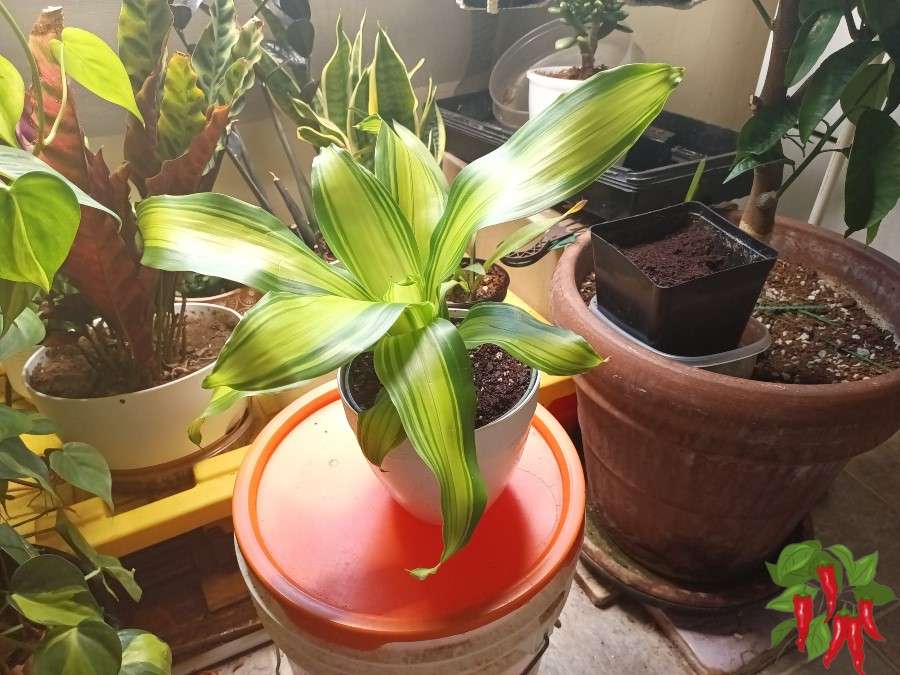
Dracaena Golden Heart Care is relatively simple, making this colorful Dracaena fragrans cultivar a good choice for indoor growers. Golden Heart is best known for its broad leaves with a bright yellow to chartreuse center surrounded by darker green.
Golden Heart has the same easy-growing qualities that make Corn Plants popular indoors, but its stronger variegation gives it a much brighter appearance. It can tolerate a range of indoor light levels, grows relatively slowly, and can eventually develop into a substantial floor plant.
I’ve grown Golden Heart before and recently ordered another one. In this guide, I’ll cover its basic indoor care and add my own photos, video, and observations as I grow the new plant. I’ll also compare it directly with the Massangeana Dracaena I’m currently growing.
What You’ll Learn
- What a Golden Heart Dracaena is
- How Golden Heart differs from Massangeana
- How much indoor light it needs
- How light affects its golden variegation
- When and how I water Golden Heart
- What growing mix I use
- How large Golden Heart can become indoors
- How to handle brown tips and other common problems
- Whether Golden Heart is safe around pets
- What I learn from growing my new plant
Quick Answer
Golden Heart Dracaena is an easy-care Dracaena fragrans cultivar grown for its bright golden-yellow and green foliage. Give it useful indirect light, allow the growing medium to begin drying between waterings, and protect it from cold temperatures. It can tolerate lower indoor light, but brighter indirect light can help produce stronger variegation.
Dracaena Golden Heart Care at a Glance
| Care Need | Golden Heart Preference |
|---|---|
| Botanical Name | Dracaena fragrans ‘Golden Heart’ |
| Common Name | Golden Heart Dracaena |
| Light | Bright indirect light for best color; tolerates lower light |
| Water | Allow the growing medium to begin drying between waterings |
| Growing Mix | Loose, well-draining growing medium |
| Temperature | Normal warm household temperatures; protect from cold |
| Growth | Relatively slow-growing |
| Indoor Size | Can eventually reach about 6 feet or more |
| Best Feature | Bright golden-yellow central variegation |
| Pet Safety | Dracaena should be kept away from cats and dogs that chew plants |
My Golden Heart Dracaena
I’ll use this section to document my own Golden Heart rather than relying only on general care recommendations. Once the plant arrives, I’ll add its actual size, condition, growing medium, foliage color, and where I decide to grow it.
Why I Bought Another Golden Heart
This isn’t my first Golden Heart. I previously owned one and particularly liked the brighter yellow variegation. Unfortunately, that plant was exposed to cold during winter shipping and never recovered from the damage.
I decided to try again, but this time I ordered during warmer weather. That gives me another opportunity to grow the plant and also lets me compare Golden Heart directly with the Massangeana Dracaena I already have.
What Is a Golden Heart Dracaena?
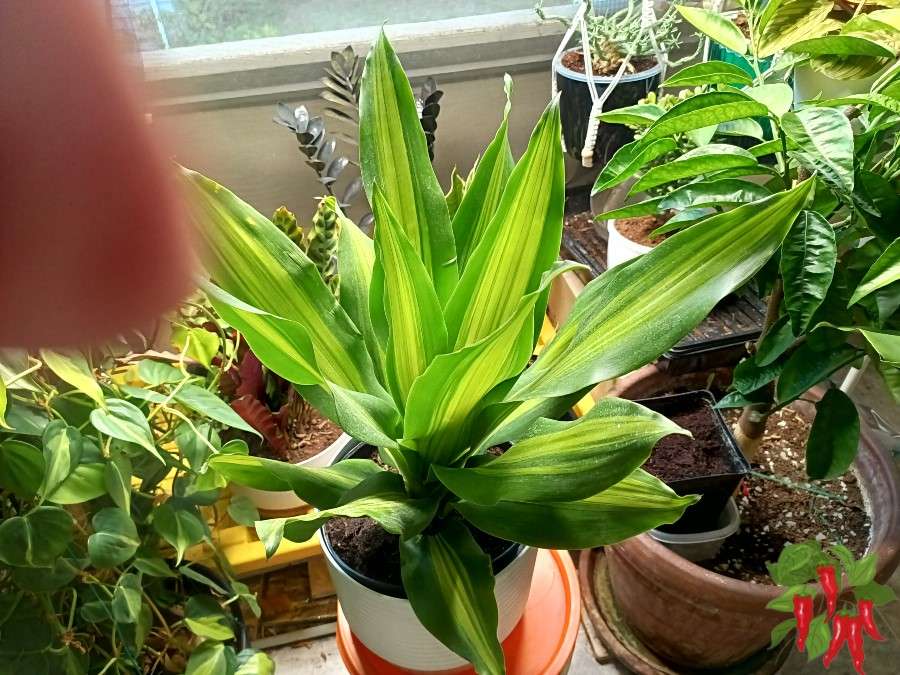
Golden Heart is a variegated Dracaena fragrans grown primarily for its colorful foliage. Its broad leaves have a bright yellow to chartreuse center surrounded by darker green, creating considerably more contrast than many traditional Corn Plants.
Like other Dracaena fragrans cultivars, Golden Heart develops an upright form and can eventually grow on a thick, cane-like stem. It is relatively slow growing, which makes its eventual size easier to manage indoors.
Golden Heart vs. Massangeana Dracaena
Golden Heart and Massangeana are both grown as forms of Dracaena fragrans, but they aren’t the same cultivar. The easiest difference to see is in the foliage.
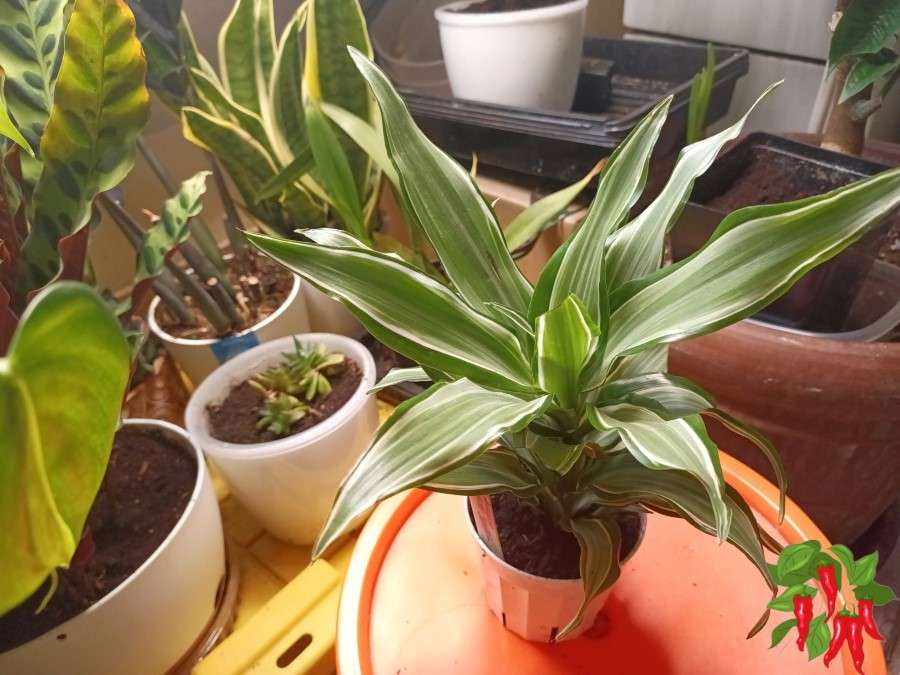
Massangeana has green leaves with a lighter yellow-green stripe through the center. Golden Heart has a brighter golden-yellow or chartreuse center that creates considerably stronger contrast with the darker green portions of the leaf.
I currently grow Massangeana and have a new Golden Heart arriving, so I’ll be able to compare the two plants side by side rather than relying on nursery photographs.
For my Massangeana growing experience, see my Mass Cane Plant Care guide.
Golden Heart Dracaena Light Requirements
Golden Heart can adapt to a range of indoor light levels, but I would favor bright, indirect light when possible. One reason is the foliage. Brighter useful light can help the plant display the stronger golden coloration that makes this cultivar distinctive.
It can tolerate lower indoor light, but low-light tolerance doesn’t mean a dark location is ideal. If you’re growing Golden Heart primarily for its variegation, giving it useful indirect light makes sense.
Does Golden Heart Lose Color in Low Light?
Lower light can result in less impressive variegation. Costa Farms specifically notes that brighter natural or artificial light helps bring out better color in Golden Heart.
How I Water Golden Heart Dracaena
Golden Heart doesn’t need constantly wet roots. I prefer to check the growing medium and allow it to begin drying before watering again rather than following a fixed calendar.
When I water, I want to thoroughly moisten the root zone and then allow excess water to drain. How quickly the container dries will depend on the plant size, light, temperature, container, growing medium, and time of year.
Would I Use a Self-Watering Planter?
I use self-watering planters for many of my indoor plants, but I don’t automatically use them for every species. I’ll decide how I want to grow my Golden Heart after I see the plant, its root system, and the growing medium it arrives in.
Water Quality and Golden Heart Dracaena
Dracaena fragrans can be sensitive to fluoride and accumulated salts. If brown leaf tips become a recurring problem, water quality is one of the things worth investigating.
I wouldn’t diagnose every brown tip as a water-quality problem, though. Watering practices, root condition, fertilizer buildup, temperature, and other growing conditions can also affect the foliage.
Best Growing Mix for Golden Heart
I want a growing medium that holds useful moisture while still allowing plenty of air around the roots. I don’t want Golden Heart sitting in a dense mix that remains saturated for long periods.
I use coco coir for many of my indoor plants and can add perlite when I want additional drainage and air space. Once my Golden Heart arrives, I’ll see what it’s currently growing in before deciding whether and when I want to move it into my own mix.
My Growing Tip: I don’t automatically repot a healthy new plant just because I use a different growing medium. If my Golden Heart arrives healthy and the existing mix is working, I’ll give the plant time to adjust before deciding whether it needs repotting.
Choosing a Container
As Golden Heart grows taller, the container needs to provide drainage and enough stability for the plant. I prefer drainage holes so excess water has somewhere to leave the root zone.
When repotting becomes necessary, I would move up gradually rather than putting a relatively small root system into a much larger container that can hold excessive moisture.
Temperature for Golden Heart Dracaena
Golden Heart is a tropical indoor plant, so ordinary warm household temperatures are a good fit. I would protect it from cold drafts and sudden temperature drops.
I have a particular reason for paying attention to cold with this plant. My previous Golden Heart suffered serious cold damage during winter shipping and never recovered.
Golden Heart Humidity
I wouldn’t make unusually high humidity a requirement for Golden Heart. Normal household conditions should be workable when the plant has appropriate light, watering, temperature, and root conditions.
Its broad leaves will collect dust, so occasionally wiping the foliage with a damp cloth can keep the plant looking better and make the golden variegation more noticeable.
How to Fertilize Golden Heart
Golden Heart is relatively slow growing, so I wouldn’t try to force rapid growth with heavy fertilizer applications. During active growth, a general houseplant fertilizer can be used according to the product directions.
I prefer conservative feeding, particularly with Dracaena because accumulated fertilizer salts can contribute to foliage problems.
How Big Does Golden Heart Dracaena Get?
Golden Heart is capable of becoming a substantial indoor floor plant. Commercial growers describe mature plants reaching about 6 feet tall or more with good care, although indoor size will depend on age, growing conditions, and pruning.
Its relatively slow growth is useful indoors because the plant doesn’t suddenly become too large for its location.
Repotting Golden Heart Dracaena
I wouldn’t repot Golden Heart simply because a certain amount of time has passed. I would look at the root system, condition of the growing medium, drainage, and whether the existing container still fits the plant.
When repotting is needed, moving up one reasonable container size is usually preferable to putting the plant into a dramatically oversized pot.
Pruning and Propagation
Golden Heart develops the cane-like growth typical of Corn Plants as it matures. If an older plant becomes taller than you want, the stem can be cut back and new growth can develop below the cut.
Dracaena fragrans can also be propagated from stem cuttings, giving you the option of rooting material removed during pruning.
Common Golden Heart Dracaena Problems
Golden Heart is generally an easy indoor plant, but I wouldn’t diagnose it from a single leaf symptom. If the plant starts looking different, I check the growing medium, roots, light, temperature, water quality, fertilizer use, and the overall condition of the plant.
Brown Leaf Tips
Brown tips are a common Dracaena complaint. Water quality and accumulated salts can contribute because Dracaena fragrans is sensitive to fluoride. Excessive drying, fertilizer buildup, and other root or environmental stresses can also contribute.
Yellow Leaves
If several leaves begin turning yellow, check the root zone before automatically adding more water. A growing medium that remains wet for too long can cause problems, particularly when the plant is growing slowly or receiving less light.
An occasional older lower leaf can also yellow and drop as a Dracaena matures and develops its cane.
Fading Golden Variegation
Golden Heart is grown specifically for its bright foliage. If the new growth isn’t showing the color you expect, light is one of the first things I would consider. Brighter indirect light can help bring out stronger variegation.
Root Problems
Roots can struggle when the growing medium remains saturated for long periods. I prefer checking moisture before watering and using a container and growing medium that allow excess water to drain.
Common Pests
Dracaenas can occasionally develop common indoor plant pests such as mealybugs, scale, thrips, or spider mites. I check the leaves, leaf bases, stems, and undersides of the foliage when inspecting the plant.
I avoid systemic pesticides on my indoor plants. If pests appear, I’ll document what I find and how I deal with them on my own Golden Heart.
Is Golden Heart Dracaena Toxic to Cats and Dogs?
Golden Heart is a Dracaena fragrans cultivar, so I would keep it away from cats and dogs that chew houseplants.
The ASPCA lists Corn Plant (Dracaena fragrans) as toxic to cats and dogs.
Dracaena Golden Heart FAQs
Is Golden Heart a Dracaena fragrans?
Yes. Golden Heart is sold by established growers as Dracaena fragrans ‘Golden Heart’, a colorful cultivar of the Corn Plant group.
Is Golden Heart the same as Massangeana?
No. They are different Dracaena fragrans cultivars. Golden Heart has stronger golden-yellow or chartreuse central variegation, while Massangeana has the more familiar green foliage with a lighter central stripe.
Does Golden Heart tolerate low light?
Golden Heart can tolerate lower indoor light, but brighter indirect light is a better choice when you want to maintain its strongest variegation.
How often should I water Golden Heart?
I wouldn’t use a fixed watering schedule. Check the growing medium and water according to how quickly it is drying under your particular light, temperature, plant size, and container conditions.
Why is my Golden Heart losing its yellow color?
Light is one factor to check. Golden Heart can tolerate lower light, but brighter indirect light can produce better variegation and stronger coloration.
How tall does Golden Heart get indoors?
Golden Heart is a relatively slow-growing Dracaena that can eventually reach around 6 feet or more indoors under good conditions.
Why does my Golden Heart have brown tips?
Possible causes include fluoride or accumulated salts, watering problems, excessive drying, fertilizer buildup, or other environmental stress. Check the plant’s overall growing conditions rather than diagnosing the problem from the leaf tip alone.
Dracaena Golden Heart Care: Final Thoughts
Dracaena Golden Heart Care should be straightforward for most indoor growers. Its ability to handle ordinary household conditions, relatively slow growth, and colorful foliage make it an interesting alternative to the more familiar Massangeana Corn Plant.
For me, the main attraction is the foliage. I owned a Golden Heart before and preferred its stronger yellow coloration, which is why I decided to buy another one.
This time I’ll be able to grow Golden Heart beside my current Massangeana. That gives me an opportunity to compare the plants under the same indoor conditions and document differences in color, growth, watering, and overall appearance.
Explore More Dracaena fragrans Growing Guides
- Dracaena fragrans Varieties: Corn Plants I Grow Indoors
- Dracaena fragrans Cultivars
- Janet Craig Dracaena Care Indoors
- Warneckii Dracaena Care Indoors: White Jewel
- Dracaena Tornado Care Indoors
- Golden Heart Dracaena Care Indoors
- Dracaena Golden Heart Care
- Mass Cane Plant Care: How to Grow Dracaena Massangeana
- Corn Stalk Dracaena Plant Care
References
- North Carolina State Extension – Dracaena fragrans
- Pacific Northwest Pest Management Handbooks – Dracaena Tip Burn
- ASPCA – Corn Plant
 Steve S. is the creator of