

Dracaena fragrans cultivars come in a surprising range of colors, leaf patterns, sizes, and growth habits. You have the familiar Mass Cane or corn plant, dark green choices like Janet Craig, brightly variegated plants like Golden Heart and Lemon Lime, and unusual compact forms like Tornado.
The names can get confusing pretty quickly. Some cultivars are sold under older botanical names, some have more than one trade name, and plants that look very different can still belong to the same Dracaena fragrans group.
I’ve started growing several of these Dracaenas myself, including Mass Cane, Golden Heart, Tornado, Janet Craig, Warneckii, and Lemon Lime. In this guide, I’ll take you through the familiar varieties as well as some of the harder-to-find cultivars, show you how they differ, and help you sort out some of those confusing Dracaena names.
What You’ll Learn
- How Dracaena fragrans cultivars differ in color, leaf pattern, size, and growth habit
- The differences between solid green, yellow and gold, white and gray, and lime-colored cultivars
- Which Dracaenas stay compact and which can develop into larger floor plants
- How popular cultivars such as Mass Cane, Janet Craig, Golden Heart, Tornado, Warneckii, and Lemon Lime compare
- Which less-common Dracaena cultivars you may encounter when shopping or collecting
- How to sort through some of the confusing names used for these plants
Quick Answer: How Many Dracaena fragrans Cultivars Are There?
There are many named Dracaena fragrans cultivars, ranging from solid dark-green plants to varieties striped with yellow, gold, white, gray, or lime. Some grow into tall cane-forming floor plants, while others remain much more compact. Familiar names include Massangeana or Mass Cane, Janet Craig, Compacta, Golden Heart, Tornado, Warneckii, Lemon Lime, Dorado, Carmen, and several less-common collector cultivars.
Although these plants belong to the same general Dracaena fragrans group, they can look surprisingly different. For most people, the easiest way to start comparing them is by foliage color, growth habit, and eventual size.
Dracaena fragrans Cultivars at a Glance
| Group | Typical Foliage | Examples | What Stands Out |
|---|---|---|---|
| Solid Green | Dark to medium green | Janet Craig, Lisa, Compacta | Classic green foliage ranging from upright cane forms to dense, compact growth |
| Yellow & Gold | Green with yellow, gold, or lime-green variegation | Massangeana, Golden Heart, Dorado, Tornado (‘Dragontwis’) | Includes the classic corn plant as well as bold golden centers, contrasting margins, and unusual twisted foliage |
| White & Gray | Green with white, cream, or gray striping | Warneckii, White Jewel | Cooler-toned variegation that contrasts with the warmer yellow and gold cultivars |
| Lime & Bright Green | Lime, chartreuse, and bright green variegation | Lemon Lime, Lemon Surprise, Limelight | Some of the brightest foliage in the Dracaena fragrans group |
Keep in mind: Dracaena names can get messy. Older botanical names, cultivar names, nursery trade names, and collector names are sometimes used differently. This table focuses on better-documented cultivars; I’ll cover some of the harder-to-verify collector names later in the guide.
What Is Dracaena fragrans?
Dracaena fragrans is a tropical African plant that has become one of the most familiar groups of indoor houseplants. It’s commonly called the corn plant or cornstalk plant because the long, arching leaves of many cultivars resemble the foliage of corn.
You’ll also sometimes see Dracaenas called dragon trees. That name has an interesting history. Dracaena comes from the Greek word drakaina, meaning “female dragon” or “she-dragon.” So the dragon connection is actually built right into the botanical name.
Dragon tree isn’t a very precise common name, however, because it’s also used for other members of the Dracaena genus. That’s one reason I use Dracaena fragrans throughout this guide when I’m talking specifically about the corn plant group.
How Do You Pronounce Dracaena?
You’ll hear Dracaena pronounced more than one way. One American English pronunciation is druh-KAY-nuh (/dɹəˈkeɪ.nə/), while druh-SEE-nuh is also widely used in horticulture.
I’ve used the hard-K pronunciation myself in some of my videos. If you’ve heard me say “druh-KAY-nuh,” there is a basis for that pronunciation. You’ll also hear growers and horticultural sources say “druh-SEE-nuh.” Either way, we’re talking about the same genus.
Why Do Dracaena fragrans Cultivars Look So Different?
This is where things get interesting. Plants sold as Dracaena fragrans don’t all look like the traditional corn plant. Breeding and selection have produced cultivars with dark green leaves, golden centers, white or gray stripes, lime-green variegation, compact rosettes, and even twisting foliage.
Their growth habits can also be quite different. Mass Cane can develop into a tall floor plant with substantial canes, while a cultivar such as Tornado remains a compact rosette. Janet Craig gives you dark green foliage, while Golden Heart and Lemon Lime provide much brighter variegation.
That’s why I’ve organized the cultivars in this guide primarily by foliage color and growth form. It makes the differences much easier to see than simply working through a long alphabetical list of names.
Why There Are So Many Dracaena fragrans Names
If you’ve tried shopping for a particular Dracaena, you’ve probably noticed that the names aren’t always consistent. The same or very similar plants can appear under different botanical names, cultivar names, common names, and nursery trade names.
Part of the confusion comes from changes in botanical classification. Plants that were commonly listed under names such as Dracaena deremensis are now generally included within Dracaena fragrans. Older books, plant tags, nursery listings, and websites may still use those earlier names.
Then you have cultivar names. Janet Craig, Massangeana, Golden Heart, Warneckii, Lemon Lime, Tornado, Compacta, and the other plants in this guide are names used to distinguish plants selected for particular foliage colors, patterns, sizes, or growth habits.
Cultivar Names and Trade Names Can Overlap
Nursery names add another layer of confusion. A plant may be sold under a shortened name, an older cultivar name, or a trade name that’s easier for customers to recognize. Those names can stick around even after botanical classifications change.
Compacta is a good example of why you sometimes have to look beyond the plant label. You’ll often see it associated with Janet Craig and sold as Janet Craig Compacta. That relationship is more useful to know than treating every name on a nursery tag as though it represents a completely unrelated type of Dracaena.
You’ll run into similar naming issues with Warneckii and some of the striped or lime-colored forms. Depending on the grower or seller, the name on the pot may emphasize the cultivar, an older group name, or a familiar commercial name.
I Focus on Identifying the Plant You Can Actually Buy
For this guide, I’m not going to get too hung up on every historical name that’s ever been used. My goal is more practical: help you recognize the Dracaena you’re looking at and understand how it differs from the others.
Where an older name or alternate name can help you identify a plant, I’ll mention it. That’s especially useful when you’re searching nurseries or online sellers because the name you’re looking for may not be the one a particular grower uses.
The foliage can often tell you more than the label. Look at whether the leaves are solid green or variegated, where the stripes appear, how broad the leaves are, and whether the plant grows as a tall cane or a compact rosette. Those characteristics make it much easier to sort through the surprisingly large Dracaena fragrans family.
Solid Green Dracaena fragrans Cultivars
The solid green cultivars are a good place to start because they show just how much variation you can get without variegation. Some develop into tall cane plants, while others remain much more compact. Their darker foliage also gives them a very different appearance from the yellow, white, and lime-striped Dracaenas we’ll look at later.
Janet Craig
Janet Craig is one of the classic dark green Dracaenas. It has broad, glossy, deep green leaves and can be grown in both upright cane and bushier forms.
What I like about Janet Craig is its simplicity. There are no yellow centers or white stripes competing for attention. You get clean, rich green foliage that works well when you want a traditional foliage plant.
It’s also one of the Dracaenas I’m growing myself, so I’ll be adding my own photos and observations as my plant develops.
Lisa
Lisa is another solid green cultivar, but its leaves are narrower and more upright than Janet Craig. That gives the plant a more vertical, architectural appearance.
It’s often sold as a taller cane plant, making it useful when you want height without a lot of bright variegation. The dark foliage also makes Lisa a good contrast to something much brighter like Lemon Lime or Golden Heart.
Compacta
Compacta takes the dark green Dracaena look in a completely different direction. Instead of long, open growth, it produces short leaves packed into dense rosettes.
You’ll frequently encounter this plant under the name Janet Craig Compacta. That’s useful to remember when you’re shopping because sellers don’t always label these Dracaenas the same way.
Compacta is slow-growing and has an almost miniature or bonsai-like appearance when young compared with the taller cane forms. Its dense growth makes it easier to fit into smaller spaces, although an older plant can eventually become several feet tall.
Green Jewel
Green Jewel is another compact solid-green form. Its leaves are broader and the rosette is more open than Compacta, giving it a fuller appearance without turning it into a large cane plant.
If you like the compact Dracaena shape but want something that looks a little broader and less tightly packed than Compacta, Green Jewel is one to look for.
Yellow & Gold Variegated Dracaena fragrans Cultivars
This group includes some of the most recognizable Dracaena fragrans cultivars. Yellow and gold variegation can appear through the center of the leaf, along the margins, or in combinations that make two related plants look surprisingly different.
Massangeana (Mass Cane)
Massangeana is the plant many people picture when they hear corn plant. It has green leaves with a yellow stripe running through the center and is commonly grown as a tall cane plant.
You’ll frequently see it sold as Mass Cane. As it develops, it can become a substantial floor plant, so this is quite a different growth habit from compact cultivars such as Tornado.
I grow Mass Cane myself, and it gives me a useful reference point for comparing the more unusual Dracaena fragrans cultivars.
Mass Cane Plant Care: How to Grow Dracaena Massangeana
Golden Heart
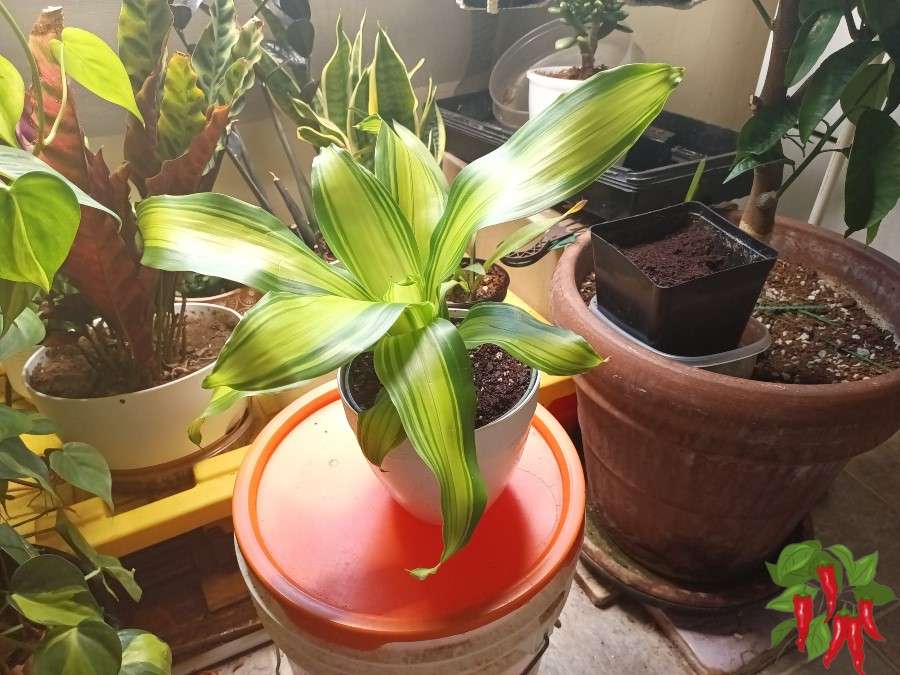
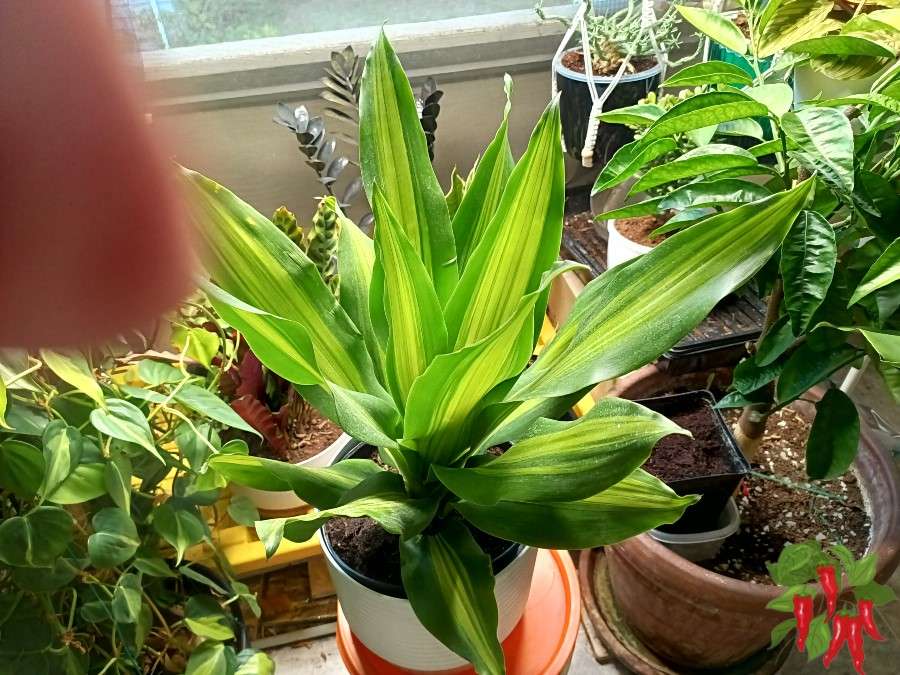
Golden Heart is one of the more colorful Dracaenas I’m growing. Its leaves have a wide golden center surrounded by broad green margins. The result is brighter and bolder than the narrower center stripe you normally see on Mass Cane.
My current Golden Heart is actually a replacement. I had one previously that suffered freeze damage after I made the mistake of ordering it during winter. I liked the plant enough that I decided to try again.
The plant I have now arrived with some curling and twisting in the leaves. I’m watching the new growth to see whether that continues as it adjusts to my indoor conditions.
Dorado
Dorado reverses the color pattern you see on cultivars with a bright center. Its dark green leaves are edged with lime green, creating a contrasting outline around the foliage.
It grows in a more compact rosette form, so Dorado is worth considering when you want yellow variegation without the size of a tall Mass Cane.
Carmen
Carmen is another compact cultivar combining green foliage with gold-colored margins. At first glance it can look similar to Dorado, which is another example of why identifying Dracaena cultivars from a quick photograph isn’t always easy.
Its compact growth and warm variegation make it useful alongside solid green plants where the gold edging becomes more noticeable.
Tornado (‘Dragontwis’)
Tornado is probably the most unusual Dracaena fragrans I’m growing. The leaves twist into whorls, creating the spiraling appearance that gives the plant its name.
The growth habit is just as interesting as the foliage. Tornado stays compact instead of developing into a tall cane. Mine grows as a tight rosette, and you can expect this cultivar to remain roughly 12 to 18 inches tall indoors.
That makes Tornado one of the most interesting choices in this entire group if you’re looking for a Dracaena for a shelf, table, plant stand, apartment, or another smaller indoor space.
White & Gray Variegated Dracaena fragrans Cultivars
The white and gray cultivars have a cooler look than the yellow and gold group. Their foliage combines green with white, cream, or silvery striping, making them especially easy to distinguish when they’re sitting next to a Mass Cane or Golden Heart.
Warneckii
Warneckii is one of the classic striped Dracaenas. Its green foliage carries contrasting white to gray striping, giving the entire plant a cooler-toned appearance.
This is another cultivar I’m adding to my own collection. Once I’ve grown and photographed it under my indoor conditions, I’ll be able to compare it directly with the yellow, gold, and lime cultivars.
White Jewel
White Jewel is one of the lighter-colored Dracaena fragrans cultivars, combining green foliage with contrasting white variegation. It gives you a brighter, cooler look than the yellow and gold coloring of plants such as Massangeana and Golden Heart.
Like Warneckii, White Jewel is worth considering if you prefer white variegation rather than yellow or lime. The lighter coloring also makes it useful for adding contrast alongside one of the solid dark-green Dracaenas.
Lime & Neon Dracaena fragrans Cultivars
If the dark green cultivars are the quiet end of the Dracaena spectrum, this group is the opposite. Lime and neon cultivars bring much brighter greens and chartreuse tones into the foliage.
Lemon Lime
Lemon Lime is one of the brightest Dracaena fragrans cultivars. Its foliage combines dark green with vivid lime-green striping, giving the plant much more color than a traditional corn plant.
This is another variety I’m growing myself. I particularly want to see how strongly it maintains that bright coloring under ordinary indoor conditions compared with the other Dracaenas in my collection.
Lemon Surprise
Lemon Surprise combines lime coloring with white variegation in a more compact rosette. It’s smaller and denser than Lemon Lime, so despite the similar names, the two plants don’t have exactly the same appearance or growth habit.
This is a good example of why I wouldn’t choose a Dracaena based on the name alone. Look at the foliage pattern and growth form as well.
Limelight
Limelight stands apart from many of the striped Dracaena fragrans cultivars because the overall foliage is bright lime to chartreuse green. Instead of a strong yellow, white, or lime stripe against darker green, the entire plant has a much brighter appearance.
That makes Limelight an interesting choice if you like the easy-growing Dracaena form but want something considerably brighter than Janet Craig or another dark-green cultivar. It can also develop into a larger upright plant with age, so I wouldn’t consider Limelight a permanently compact tabletop Dracaena.
Dracaena fragrans Cultivar Comparison
With so many Dracaena fragrans cultivars, the names and foliage patterns can get confusing. This table compares the better-documented cultivars in this guide by foliage, growth habit, relative indoor size, and how commonly you’re likely to encounter them. Exact size will vary with age, growing conditions, and how the plant has been trained by the grower.
| Cultivar | Foliage | Growth Form | Relative Indoor Size | Availability |
|---|---|---|---|---|
| Janet Craig | Dark, glossy green | Upright, often grown in bush or cane form | Medium to tall | Common |
| Lisa | Dark green, relatively narrow leaves | Upright cane | Medium to tall | Common to less common |
| Compacta | Dark green | Dense, slow-growing rosettes | Compact growth habit, but can become several feet tall with age | Common |
| Massangeana (Mass Cane) | Green with a yellow center stripe | Tall cane | Tall | Very common |
| Golden Heart | Broad golden center with green margins | Upright, cane-forming | Medium to tall | Less common |
| Dorado | Dark green with lime-green edging | Dense rosette growth | Compact to medium | Less common |
| Tornado (‘Dragontwis’) | Green and yellow-green variegation with twisted leaves | Compact, twisting rosette | Compact | Less common |
| Warneckii | Green with white to gray striping | Upright, often cane-forming | Medium to tall | Common |
| White Jewel | Green with contrasting white variegation | Upright foliage plant | Medium | Less common |
| Lemon Lime | Green with vivid lime and yellow-green striping | Upright, cane-forming with age | Medium to tall | Common |
| Lemon Surprise | Green, lime, and light variegation | Dense, compact growth | Compact to medium | Less common |
| Limelight | Bright lime to chartreuse green | Upright foliage plant | Medium to tall | Less common |
Collector’s note: This comparison table focuses on the better-documented Dracaena fragrans cultivars in this guide. You may encounter additional rare or commercial names when shopping for Dracaenas. I’ve included some of those names in the Collector’s Checklist below, but I don’t treat every uncommon trade name as a confirmed Dracaena fragrans cultivar without stronger documentation.
Special Compact and Rosette Forms
Several Dracaena fragrans cultivars develop denser or more compact growth than the traditional tall cane forms. Some work well on shelves or tables while young, although their eventual size varies considerably by cultivar.
- Compacta: Dense, dark green rosette.
- Green Jewel: Broader rosette with solid green leaves.
- Dorado: Dense rosette with dark green leaves edged in lime green
- Carmen: Compact rosette with gold variegation.
- Tornado: Twisted rosette with yellow edges.
- Lemon Surprise: Compact lime and white variegation.
Dracaena fragrans Collector’s Checklist
Dracaena naming can get especially confusing once you move beyond the common cultivars. Some older names have changed, some plants are sold primarily under nursery or trade names, and documentation for a few rare cultivars can be difficult to find.
I’ve included some of those harder-to-find names in this collector’s checklist because you may encounter them when searching for Dracaenas.
A rare name on this list doesn’t necessarily mean I’ve been able to confirm it as a currently accepted Dracaena fragrans cultivar.
Where reliable botanical, horticultural, or plant-patent documentation is available, I’ve used it. Treat some of the rarer trade names as plants to investigate rather than definitive botanical classifications.
Solid Green
- Janet Craig
- Lisa
- Compacta
- Green Jewel
- Ulises (rare/collector name)
- Victoria (rare/collector name)
Yellow & Gold Variegated
- Massangeana (Mass Cane)
- Golden Heart
- Dorado
- Carmen
- Tornado (Dragontwis’)
- Yellow Coast (rare/collector name)
- Sunshine (rare/collector name)
White & Gray Variegated
- Warneckii
- White Jewel
- White Stripe (rare/collector name)
- Silver (rare/collector name)
- Gold Coast (rare/collector name)
Lime & Neon Variegated
- Lemon Lime
- Lemon Surprise
- Limelight
- Lime Stripe (rare/collector name)
Collector’s note: Nursery and trade names can persist even when botanical classifications change, and some uncommon Dracaenas are poorly documented outside the commercial foliage industry. If I can verify additional cultivars or find one of these plants to grow myself, I’ll update this guide.
Which Dracaena fragrans Variety Should You Choose?
With this many Dracaena fragrans cultivars, choosing one can be harder than growing one. Most have similar basic care needs, so I’d make your choice primarily based on the size, growth habit, and foliage you want.
- Classic corn plant – Massangeana (Mass Cane): This is the traditional corn plant look, with long green leaves, a yellow center stripe, and canes that can eventually turn it into a substantial floor plant.
- Compact choice – Compacta: If you like dark green foliage but don’t want the open growth of a large cane plant, Compacta gives you dense foliage and a much tighter growth habit.
- Dark-green foliage – Janet Craig: Janet Craig is hard to beat when you want broad, glossy, deep green leaves without yellow, white, or lime variegation.
- Yellow and gold foliage – Golden Heart: The broad golden center surrounded by green margins gives Golden Heart a brighter and bolder appearance than the traditional Mass Cane.
- White-striped foliage – Warneckii: Warneckii replaces the warm yellow and gold colors with contrasting white-to-gray striping for a cooler-looking Dracaena.
- Bright lime foliage – Lemon Lime: If you want color, Lemon Lime stands out with vivid lime-green striping against darker green foliage.
- Small spaces – Tornado: Tornado is one I’d look at for apartments, shelves, tables, and other limited spaces. It stays compact rather than developing into a tall cane plant.
- Most unusual foliage – Tornado: Tornado gets another mention here because nothing else in this guide has quite the same twisting, whorled foliage. If you already have a traditional Dracaena and want something noticeably different, this one stands out.
You don’t have to stop at one, of course. I’m growing several of these cultivars side by side because the differences become much more obvious when you can compare the actual plants. Mass Cane, Golden Heart, Tornado, Janet Craig, Warneckii, and Lemon Lime give you six very different looks while still belonging to the same general Dracaena fragrans group.
Is Dracaena fragrans Toxic to Pets?
Yes. Dracaena fragrans is considered toxic to cats and dogs if eaten. This applies to the cultivars covered in this guide, including familiar corn plants such as Mass Cane as well as the different variegated and compact forms.
According to the ASPCA, Dracaena contains saponins. Signs reported after ingestion include vomiting, loss of appetite, increased salivation, and depression. Cats may also develop dilated pupils.
If you have a cat or dog that likes chewing houseplants, keep your Dracaena where your pet can’t reach it. This can be easier with smaller cultivars that can be placed on a plant stand or shelf, although determined cats can make almost any location interesting.
If you think your pet has eaten part of a Dracaena, contact your veterinarian or an animal poison-control service for advice.
Pet Safety Reference: ASPCA – Cornstalk Plant (Dracaena fragrans)
Dracaena fragrans Cultivars FAQs
What is the most common Dracaena fragrans cultivar?
Massangeana, commonly sold as Mass Cane or corn plant, is one of the most familiar Dracaena fragrans cultivars. It has long green leaves with a yellow stripe through the center and is commonly grown as a cane-forming floor plant.
Are Mass Cane and Dracaena fragrans the same plant?
Mass Cane isn’t a separate Dracaena species. The familiar Mass Cane is generally Dracaena fragrans ‘Massangeana’, one of the cultivars within the larger Dracaena fragrans group.
Is Janet Craig a Dracaena fragrans?
Yes. Janet Craig is included within Dracaena fragrans, although you may still encounter older names in books, nursery listings, and online. It is easily recognized by its broad, glossy, dark green foliage.
Is Compacta the same as Janet Craig?
Compacta is closely associated with Janet Craig and is commonly sold under the name Janet Craig Compacta. It has much shorter leaves packed into dense rosettes and stays considerably more compact than the typical Janet Craig form.
Which Dracaena fragrans cultivars stay small?
Several cultivars have denser or more compact growth than traditional Mass Cane. Compacta, Dorado, Tornado and Lemon Surprise are examples. Their eventual sizes aren’t identical, and “compact” doesn’t necessarily mean they’ll remain tabletop plants for life.
Which Dracaena fragrans has twisted leaves?
Dracaena Tornado is the cultivar in this guide with distinctive twisting foliage. Its leaves develop in tight whorls, producing a compact spiraling rosette rather than the long, relatively straight growth you see on many other Dracaenas.
What’s the difference between Golden Heart and Mass Cane?
Both have green and gold foliage, but the patterns are noticeably different. Traditional Mass Cane has a narrower yellow stripe running through the center of the leaf. Golden Heart has a much broader golden center surrounded by wide green margins, giving it a brighter and bolder appearance.
What’s the difference between Lemon Lime and Lemon Surprise?
Despite the similar names, they have different appearances and growth habits. Lemon Lime has long foliage with vivid lime and darker green coloring and can develop into a larger upright plant. Lemon Surprise combines lime and lighter variegation in a denser, more compact form.
Do variegated Dracaenas need more light than solid green varieties?
Variegated Dracaenas generally show their best coloring with good indirect light. Many Dracaenas tolerate lower indoor light, but lower light can mean slower growth and less impressive variegation. I prefer bright, indirect light for the colorful cultivars whenever possible.
Do all Dracaena fragrans cultivars need the same care?
Their basic indoor care is similar. They generally do well with indirect light and a wet-and-dry watering cycle rather than constantly saturated potting mix. However, growth rate, mature size, and the amount of light needed to maintain strong variegation can differ among cultivars.
Why does the same Dracaena sometimes have different names?
Dracaena naming can be confusing because botanical classifications have changed and older names are still widely used. On top of that, nurseries may use cultivar names, shortened names, and commercial trade names differently. That’s why looking at foliage pattern and growth habit can be just as useful as reading the plant tag.
Final Thoughts on Dracaena fragrans Cultivars
Before I started looking closely at Dracaena fragrans cultivars, it would have been easy to think of them all as variations of the familiar corn plant. Once you start putting them side by side, you realize how different they can be.
You can have the classic yellow-striped foliage of Mass Cane, the deep green leaves of Janet Craig, the broad golden center of Golden Heart, the white and gray striping of Warneckii, or the bright lime coloring of Lemon Lime. Then there’s Tornado, which takes the basic Dracaena form and twists the leaves into a compact rosette.
I’m growing Mass Cane, Golden Heart, Tornado, Janet Craig, Warneckii, and Lemon Lime myself. That’s going to let me do more than simply describe what these plants are supposed to look like. As they grow, I can photograph them, make videos, and compare their size, growth habits, color, and performance under the same general household conditions.
I’ll continue adding those firsthand observations and links to my individual growing guides as the plants develop. That’s one advantage of treating this as a living reference guide rather than a finished list that never changes.
If you’re choosing your first Dracaena fragrans, you don’t need to make the choice complicated. Decide whether you want a tall floor plant or something compact, then choose the foliage you like. There’s enough variety in this group that you can probably find a corn plant—or maybe I should say a she-dragon—that fits the space you have.
Keep it green.
- Dracaena fragrans Varieties: Corn Plants I Grow Indoors
- Dracaena fragrans Cultivars
- Janet Craig Dracaena Care Indoors
- Warneckii Dracaena Care Indoors: White Jewel
- Dracaena Tornado Care Indoors
- Golden Heart Dracaena Care Indoors
- Dracaena Golden Heart Care
- Mass Cane Plant Care: How to Grow Dracaena Massangeana
- Corn Stalk Dracaena Plant Care
References
- North Carolina State University Extension – Dracaena fragrans — Botanical information, common names, previous classifications, growing information, and several recognized cultivars including Compacta, Dorado, Hawaiian Sunshine, and Lemon Lime.
- North Carolina State University Extension – Dracaena — Background on the Dracaena genus, pronunciation, growing conditions, and the origin of the name from the Greek drakaina, meaning “female dragon.”
- Clemson Cooperative Extension – Dracaena — Houseplant care, mature size, propagation, and information about Massangeana, Janet Craig, Compacta, Warneckii, and other Dracaenas.
- ASPCA – Corn Plant (Dracaena fragrans) — Pet toxicity information for Dracaena fragrans, including its saponin content and reported signs of ingestion in cats and dogs.
 Steve S. is the creator of