
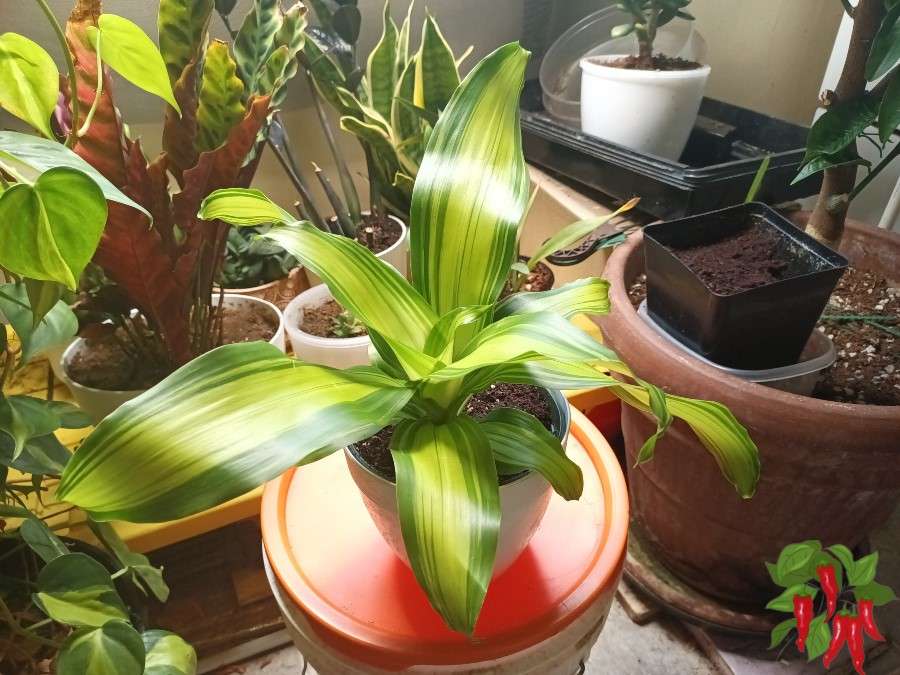
Golden Heart Dracaena is one of those houseplants that caught my attention because it looks familiar but just different enough to stand out. It is a Dracaena fragrans cultivar with broad green leaves and a bright golden stripe running through the center.
I actually grew a Golden Heart before this one. I ordered my first plant from Costa Farms during the winter, which turned out to be a mistake. It arrived with freeze damage and never really recovered. I liked the plant enough that I decided to give it another try.
The Golden Heart I’m growing now came from Andersen Farms. It’s smaller than my original plant, but it gives me another chance to grow this Dracaena indoors and see how it develops over time.
One reason I like Dracaena fragrans plants is that they’re well suited to normal homes. They don’t require extremely high humidity, they tolerate a range of indoor light conditions, and they don’t take up a huge amount of floor space as they grow taller.
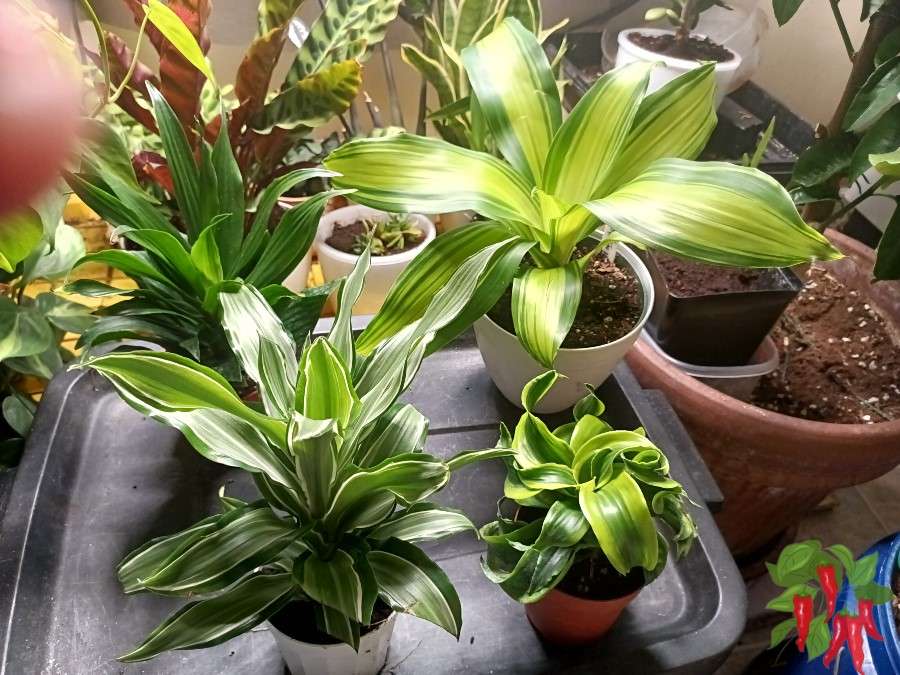
I’m growing several Dracaena fragrans varieties so I can compare them side by side. Although their basic care is similar, their leaf color, striping, growth habit, and overall appearance can be quite different. You can see them together in my Dracaena fragrans varieties guide. Golden Heart is one of the more colorful varieties I’m growing.
What You’ll Learn
- How much light Golden Heart Dracaena needs indoors
- How I decide when it’s time to water
- Why I let the potting mix dry between waterings
- What makes Golden Heart different from other Dracaena fragrans varieties
- How large Golden Heart can become indoors
- Why its upright growth can work well in apartments and smaller homes
Quick Answer: Golden Heart Dracaena Care Indoors
Golden Heart Dracaena does best in bright, indirect light and a well-draining potting mix. Let the upper couple of inches of the mix dry before watering thoroughly. Allow excess water to drain from the pot, and don’t leave the plant sitting in water. Normal household temperatures and humidity are usually fine. Golden Heart can tolerate lower light, although brighter indirect light can help it maintain its colorful foliage.
Golden Heart Dracaena at a Glance
| Botanical name | Dracaena fragrans ‘Golden Heart’ |
| Common name | Golden Heart Dracaena |
| Light | Bright, indirect light; tolerates lower light |
| Water | Water thoroughly after the upper 2 inches of potting mix have dried |
| Humidity | Average household humidity is usually adequate |
| Growth habit | Upright, cane-forming houseplant |
| Indoor size | Often around 4–6 feet tall when mature, depending on conditions and pruning |
| Growth rate | Slow to moderate indoors |
| Pet safety | Toxic to cats and dogs if eaten |
Meet My Golden Heart Dracaena
Golden Heart belongs to the Dracaena fragrans group. That’s the same species that gives us several familiar houseplants, including the traditional corn plant or Mass Cane. Golden Heart isn’t a different species. It’s a cultivar selected for its distinctive foliage.
The coloring is what immediately separates my Golden Heart from a regular corn plant. The leaves have a golden center surrounded by broad bands of green. That combination gives the plant plenty of color without making it look overly busy.
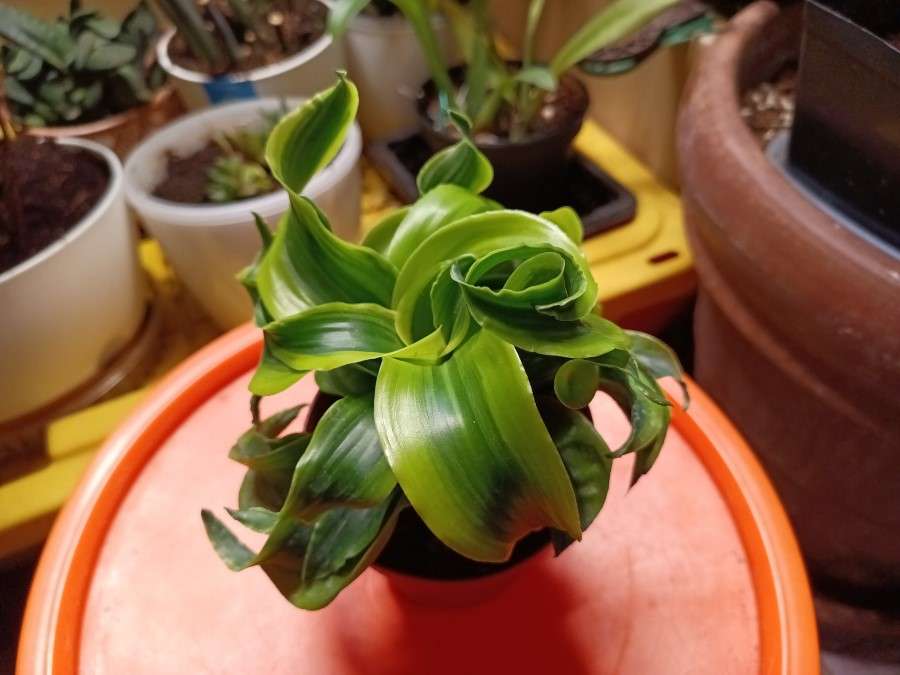
My new plant arrived with some curling and twisting in the leaves. It was grown in Florida under greenhouse conditions before coming to my home, so its growing environment has changed considerably. I’m not going to assume the curling means there’s a problem. I’ll watch the new growth and see how the plant develops as it adjusts to my conditions.
xxx
Find Dracaena Golden Heart on Amazon
I’m growing several Dracaena fragrans varieties so I can compare them side by side. Although their basic care is similar, their leaf color, striping, growth habit, and overall appearance can be quite different. Golden Heart is one of the more colorful varieties I’m growing.
How Much Light Does Golden Heart Dracaena Need?
I give Golden Heart bright, indirect light. I don’t put it where strong direct sunlight is beating down on the leaves for hours. Dracaenas are adaptable houseplants, and one of their advantages is that they can tolerate lower indoor light better than many tropical foliage plants.
There is a difference between tolerating lower light and growing at its best in lower light. Golden Heart has attractive variegated foliage, and I prefer giving it plenty of indirect light to encourage healthy growth and maintain that coloring.
This flexibility gives you quite a few placement options. A location near a bright window where the plant isn’t receiving harsh direct sun can work well. It can also grow farther back from a window if the room receives good natural light.
As with any houseplant, watch the plant rather than relying entirely on a rule. If growth becomes very slow or the plant starts losing some of its characteristic coloring, it may benefit from more light.
How I Water Golden Heart Dracaena
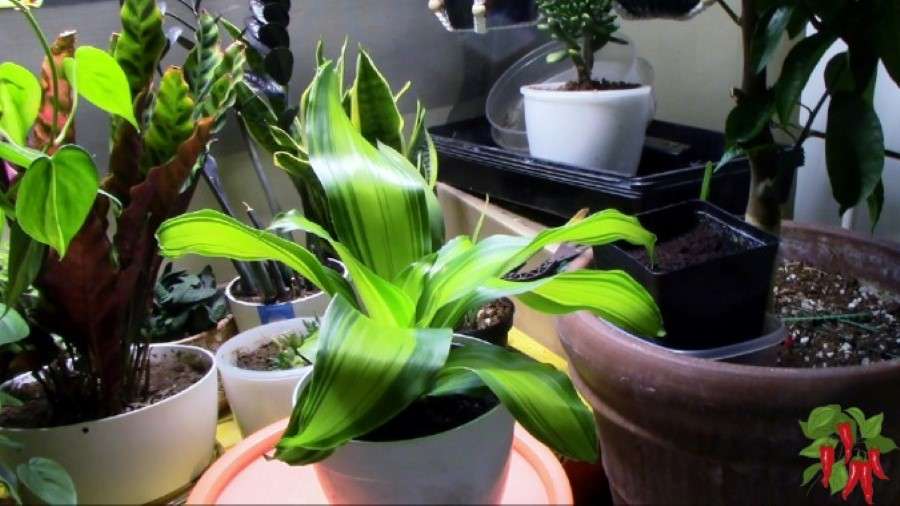
Watering is probably the most important part of Golden Heart Dracaena care. I want the potting mix to become moist when I water, but I don’t want it staying continuously wet.
I let approximately the top 2 inches of the potting mix dry before watering again. You don’t need any special equipment to check this. Stick your finger into the mix and feel it. As you get familiar with the plant, you can also lift the pot. A dry pot is noticeably lighter than one that has just been watered.
When it’s ready for water, I water thoroughly. I want the entire root zone to get wet and some water to drain from the bottom of the container. If you’re using a saucer, empty any excess water rather than leaving the pot sitting in it.
Then I let it dry down again. That’s the basic cycle I use: water thoroughly, allow the mix to partially dry, and then water thoroughly again.
Don’t Water Your Dracaena on a Calendar
I can’t tell you that your Golden Heart needs water every seven days, every 10 days, or every two weeks. There are too many variables. Pot size, plant size, potting mix, temperature, humidity, season, and the amount of light the plant receives all affect how quickly the mix dries.
In my home, I may go roughly two to three weeks between waterings. That’s an observation from my conditions, not a watering schedule you should automatically follow. During winter or when the plant is growing under lower light, it may take even longer for the potting mix to dry.
Check the plant first. If the mix is still moist where the roots are growing, I wait. If it has dried enough, I water thoroughly. That simple habit prevents a lot of the watering problems people have with houseplants.
https://link.amazon/B0hD5l4rr
Why I Don’t Use a Self-Watering Planter for Golden Heart
I use self-watering planters for quite a few of my indoor plants. Ferns and other plants that prefer consistently moist growing conditions can do very well in them. Golden Heart Dracaena is different.
I want this plant to go through the wet-and-dry cycle I described above. After I water thoroughly, I want the potting mix to gradually dry before I water again. A self-watering planter can make it more difficult to provide that cycle because its purpose is to maintain a more consistent supply of moisture.
For that reason, I grow my Golden Heart in a regular container with drainage holes. I use the same approach with some of my other plants that prefer drying between waterings, including my cycads.
Quick Tip: Whatever type of container you use, make sure excess water has somewhere to go. Good drainage makes managing moisture around the roots much easier.
Best Potting Mix for Golden Heart Dracaena
Golden Heart needs a potting mix that holds enough moisture for the roots while still allowing excess water to drain. I don’t want a heavy mix that stays saturated for long periods.
For my indoor plants, I generally prefer coco coir as the base of the growing medium, with perlite added to improve drainage and aeration. The goal is a loose mix that allows water and air to move through the root zone.
You don’t have to use exactly the same mix I use. A quality indoor potting mix can work as long as it drains freely and doesn’t remain soggy. If your mix seems too dense or holds water for a long time, adding some perlite can improve drainage.
Choosing a Container
I don’t put a small Dracaena into a huge container. Too much unused potting mix around a small root system can stay wet longer than necessary. I prefer moving the plant into a slightly larger pot when it actually needs the additional room.
Most importantly, the container should have drainage holes. When I water, I want to be able to soak the root zone thoroughly and let the excess drain away.
Temperature and Humidity
One of the reasons I like Dracaenas as houseplants is that they adapt well to normal household conditions. You don’t need to turn your living room into a tropical greenhouse to grow Golden Heart.
Average household temperatures are generally comfortable for the plant. I would keep it away from cold drafts and avoid placing it directly in front of heating or air-conditioning vents where it will experience sudden temperature changes.
Golden Heart also handles ordinary household humidity well. If your home is comfortable for you, you generally don’t need to run a humidifier just for this plant.
My new Golden Heart was grown in Florida under greenhouse conditions, and some of its leaves arrived curled or twisted. The humidity in my home is lower than what the plant may have experienced while being grown, but I’m not assuming humidity is responsible for the curling. It may simply be how some of these leaves developed. I’ll be watching the new growth as the plant acclimates.
How Big Does Golden Heart Dracaena Get Indoors?
Golden Heart can eventually become a good-sized houseplant, but it doesn’t get there overnight. Dracaenas aren’t especially fast growers indoors, which can actually be an advantage when you’re working with limited space.
You can expect a mature indoor plant to potentially reach around 4 to 6 feet tall under good conditions. Its eventual size will depend on light, container size, pruning, and how long you grow it.
What I especially like about Golden Heart is its upright growth. It uses vertical space rather than sprawling across the floor. The leaves can eventually extend a couple of feet across, but most of that foliage is higher on the plant as the cane develops.
A Good Dracaena for Apartments and Small Spaces
That upright growth makes Golden Heart a useful houseplant when you don’t have a lot of floor space. When the plant is young and small, you can grow it on a plant stand, table, or sturdy shelf. As it gets taller, it naturally transitions into a floor plant.
A corner can be a good location if enough indirect light reaches it. You get the height and colorful foliage of a larger tropical houseplant without necessarily giving up a large section of the room.
That’s one reason I’m interested in growing several Dracaena fragrans varieties. They’re adaptable plants, and their different foliage patterns give you quite a few choices without requiring completely different growing conditions for every plant.
Fertilizing Golden Heart Dracaena
Golden Heart isn’t a plant I would feed heavily. Indoor Dracaenas grow relatively slowly, so they don’t need constant fertilizer to stay healthy.
During active growth, you can use a balanced houseplant fertilizer according to the directions on the product you’re using. I would rather fertilize lightly than continually add more nutrients than the plant can use.
Keep in mind that fertilizer salts can accumulate in a container over time. Watering thoroughly enough that excess water drains from the bottom helps flush some of that buildup from the potting mix.
During winter, especially when the plant is receiving less light and growing slowly, there is little reason to push it with extra fertilizer.
Pruning Golden Heart Dracaena
Golden Heart doesn’t require much pruning when it’s young. You can remove an occasional damaged or badly discolored leaf as needed and otherwise let the plant grow.
As a Dracaena matures, it develops the cane-like growth that gives these plants their familiar tree-like appearance. If an older plant eventually becomes taller than you want, Dracaenas can be cut back to control their height. New growth can develop below the cut.
For now, I’m letting my Golden Heart grow naturally. Since this is a new plant, I’m more interested in seeing how it develops in my home and what the new foliage looks like after it has had time to acclimate.
Golden Heart vs. Mass Cane Dracaena
Golden Heart and Mass Cane are both forms of Dracaena fragrans, and their basic indoor care is very similar. The most noticeable difference is the foliage.
The familiar Mass Cane, often sold as a corn plant, has long green leaves with a lighter stripe running through the center. Golden Heart has a brighter golden center with broader green areas along the sides of the leaf. To me, the contrast gives Golden Heart a little more color while still having the classic Dracaena look.
I’m growing both plants, so I’ll be able to compare their growth and appearance under similar indoor conditions as they mature.
If you already like the traditional corn plant but want something with slightly different coloring, Golden Heart is an interesting alternative.
Common Golden Heart Dracaena Problems
Golden Heart is an adaptable houseplant, but its leaves can give you clues when growing conditions aren’t quite right. Before making a big change, look at the whole plant and think about what has changed recently.
Yellow Leaves
An occasional older yellow leaf isn’t necessarily a problem. Older leaves naturally decline as a Dracaena grows. If several leaves begin yellowing at once, especially while the potting mix remains wet, I would take a closer look at how often the plant is being watered.
Remember the wet-and-dry cycle I use. I water thoroughly and then wait until the upper portion of the potting mix has dried before watering again.
Brown Leaf Tips
Brown tips are fairly common on Dracaenas. Several things can contribute, including inconsistent watering and a buildup of minerals or fertilizer salts in the potting mix.
Dracaenas can also be sensitive to fluoride and salts in water. If brown tips become a persistent problem even though your watering looks right, your water quality is something worth considering.
I wouldn’t automatically assume brown tips mean the plant needs more humidity. Golden Heart generally handles normal household humidity quite well.
Curling or Twisting Leaves
My new Golden Heart arrived with some curled and twisted foliage. Since the plant has just gone through shipping and a major change in growing conditions, I’m giving it time before deciding whether the leaf shape means anything at all.
When you bring home a new plant, the new growth that develops in your home can tell you more than foliage that formed under completely different greenhouse conditions.
Soft Stems or Constantly Wet Soil
This is when I would be concerned about too much moisture around the roots. Check the drainage holes, potting mix, and your watering habits. If the mix remains wet for a long time, the plant may need better drainage or less frequent watering.
This is also why I don’t give my Golden Heart little splashes of water every few days. I would rather water the root zone thoroughly and then give it time to dry down.
Is Golden Heart Dracaena Toxic to Pets?
Yes. Golden Heart Dracaena should be considered toxic to cats and dogs if eaten. Dracaena fragrans contains saponins. According to the ASPCA, ingestion can cause symptoms that include vomiting, loss of appetite, depression, and increased salivation. Cats may also develop dilated pupils.
If you have a pet that likes chewing plants, keep Golden Heart somewhere the animal can’t reach it. If you believe your pet has eaten part of a Dracaena, contact your veterinarian or an animal poison-control service for advice.
You can read the ASPCA information on Dracaena fragrans for additional pet-safety information.
Other Dracaena Fragrans Varieties I’m Growing
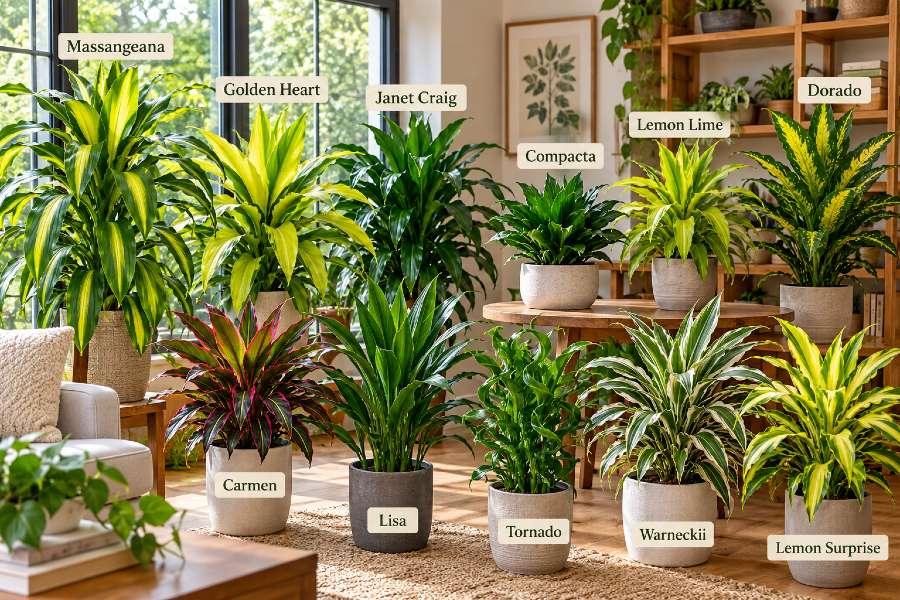
Golden Heart is only one of the Dracaena fragrans varieties I’m growing. I’m putting together a group of these plants so I can grow them under my own indoor conditions and compare them over time.
My collection includes:
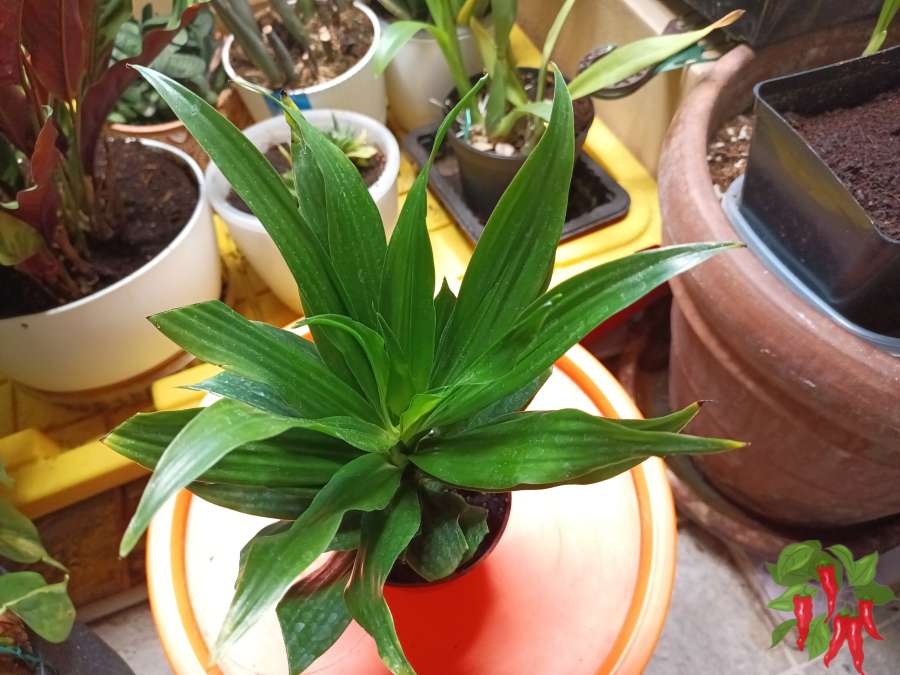
- Janet Craig – A classic dark-green Dracaena with a simple, clean appearance.
- Mass Cane – The familiar corn plant, with broad arching foliage and a lighter stripe through the leaves.
- Tornado – An unusual form with foliage that develops a twisting or spiraling appearance.
- Golden Heart – The plant I’m growing here, with its golden center and broad green margins.
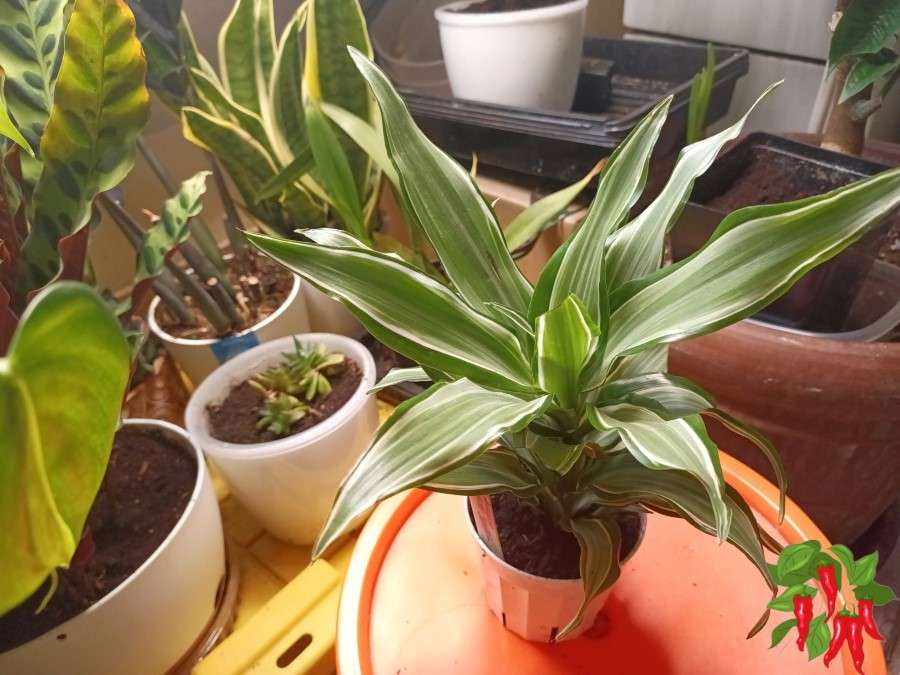
- Warneckii – A striped Dracaena with green and contrasting lighter foliage.
- Lemon Lime – A particularly colorful variety with green and bright yellow-green striping.
Although these plants share many of the same basic care requirements, they look surprisingly different when you see them together. As I grow each one, I’ll be adding individual growing guides based on my plants, photos, videos, and observations.
If you’d like to compare these plants side by side, see my Dracaena fragrans varieties guide. I compare the different leaf colors, growth habits, and other characteristics that can help you choose the right Dracaena for your indoor space.
Golden Heart Dracaena FAQs
Is Golden Heart a Dracaena fragrans?
Yes. Golden Heart is a cultivar of Dracaena fragrans. It belongs to the same species as several familiar Dracaena houseplants, including the traditional corn plant or Mass Cane.
Can Golden Heart Dracaena grow in low light?
Golden Heart can tolerate lower indoor light, which is one reason Dracaenas make useful houseplants. I prefer bright, indirect light for mine. Giving a variegated plant adequate light can also help it maintain its attractive foliage and support stronger growth.
How often should I water Golden Heart Dracaena?
Don’t rely on a fixed watering schedule. I check the potting mix and water when approximately the upper 2 inches have dried. In my home that might mean watering every two to three weeks, but your plant may dry faster or slower depending on light, temperature, humidity, pot size, and growing medium.
Should I mist Golden Heart Dracaena?
I don’t consider regular misting necessary. Golden Heart adapts well to normal household humidity. Good watering practices and appropriate light are much more important to me than routinely misting the leaves.
Can I grow Golden Heart in a self-watering planter?
I don’t grow mine that way. I prefer allowing the potting mix to partially dry between thorough waterings. Self-watering planters work well for some of my moisture-loving plants, but Golden Heart isn’t one I choose to grow with a constantly available water reservoir.
Why are the tips of my Golden Heart Dracaena turning brown?
Brown tips can have several causes. Check for inconsistent watering and excess fertilizer or mineral salts. Dracaenas are also known for sensitivity to fluoride and salts in water. Don’t automatically assume the problem is low humidity.
How tall does Golden Heart Dracaena grow indoors?
Golden Heart can eventually become a floor-sized plant and may reach roughly 4 to 6 feet indoors under good conditions. Its final size depends on growing conditions, container size, pruning, and how long you keep the plant.
Final Thoughts on Growing Golden Heart Dracaena Indoors
Golden Heart is a plant I wanted to grow again. My first one was damaged by cold weather after I made the mistake of ordering it during winter, but I liked the plant enough that I went looking for another one.
Now I get to start over with this smaller plant and watch how it develops in my home. That’s also why I’m not too concerned about the curled leaves it arrived with. What interests me more is what the new growth looks like after the plant has spent some time under my growing conditions.
For me, the biggest thing to remember with Golden Heart is simple: don’t make its care more complicated than it needs to be. Give it good indirect light, water thoroughly when it needs it, let the potting mix partially dry before watering again, and make sure excess water can drain away.
I also like the way this plant uses space. It grows upward rather than taking over a large section of the floor. You can enjoy it as a smaller plant while it’s young and eventually let it develop into a taller floor plant. That makes Golden Heart especially interesting for apartments and other indoor spaces where you have more vertical room than floor space.
I’m growing Golden Heart alongside several other Dracaena fragrans varieties, so I’ll be able to see how they compare as they mature. They may share a species and similar care, but their different colors and growth habits give each one a personality of its own.
If you’d like to compare these plants side by side, see my Dracaena fragrans varieties guide. I compare the different leaf colors, growth habits, and other characteristics that can help you choose the right Dracaena for your indoor space.
Find Dracaena Golden Heart on Amazon
- Dracaena fragrans Varieties: Corn Plants I Grow Indoors
- Dracaena fragrans Cultivars
- Janet Craig Dracaena Care Indoors
- Warneckii Dracaena Care Indoors: White Jewel
- Dracaena Tornado Care Indoors
- Golden Heart Dracaena Care Indoors
- Dracaena Golden Heart Care
- Mass Cane Plant Care: How to Grow Dracaena Massangeana
- Corn Stalk Dracaena Plant Care
References
- North Carolina State University Extension – Dracaena fragrans
- Clemson Cooperative Extension – Dracaena
- ASPCA – Cornstalk Plant (Dracaena fragrans)
 Steve S. is the creator of