
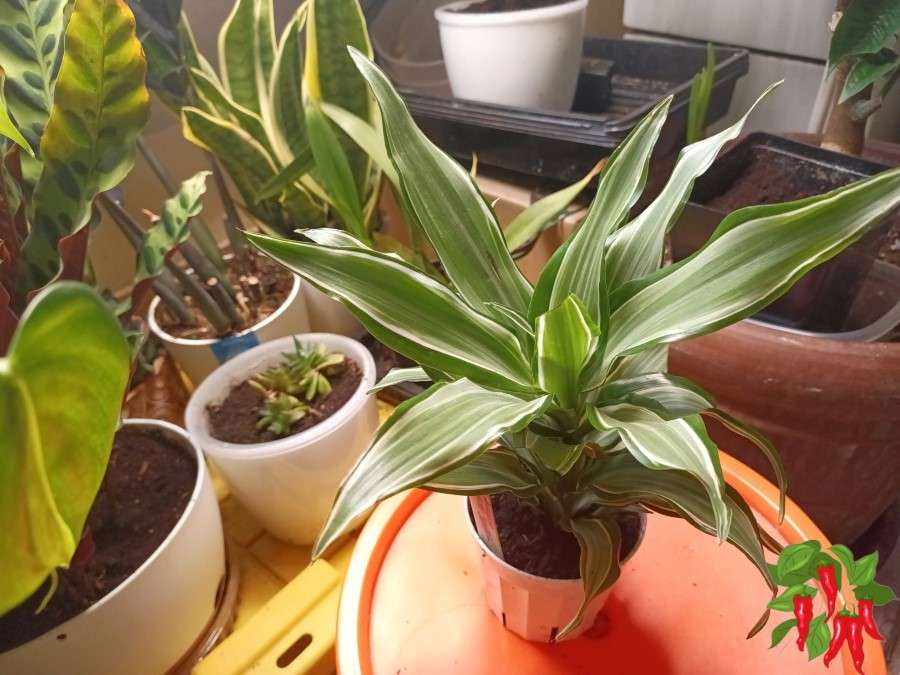
If you like variegated Dracaenas, Warneckii gives you a very different look from the yellow and lime-green varieties. The White Jewel I’m growing has green leaves marked with striking white and gray striping, giving the plant a bright appearance even though the basic care is much like my other Dracaena fragrans plants.
Mine is sold as White Jewel, a Warneckii-type Dracaena. The names can get a little confusing because you’ll find Warneckii plants with different patterns and shades of variegation, and individual selections may be sold under cultivar or trade names.
Fortunately, you don’t need to sort out every Dracaena name to grow one successfully. My White Jewel is an easy indoor plant that tolerates lower light, grows slowly, and likes its potting mix to dry down somewhat between thorough waterings. Right now mine is only about a foot tall, so it works nicely as a tabletop plant, although it can eventually become a much larger floor plant.
What You’ll Learn
- How I grow my White Jewel Warneckii Dracaena indoors
- How much light Warneckii needs
- When and how to water your plant
- What makes White Jewel different from other Dracaenas
- How large Warneckii Dracaena can grow indoors
- How to handle common growing problems
- Whether Warneckii Dracaena is toxic to cats and dogs
Quick Answer: Warneckii Dracaena Care Indoors
Warneckii Dracaena care indoors is fairly easy. I give my White Jewel good indirect light, although this Dracaena can tolerate lower indoor light. I water thoroughly and then allow the upper portion of the potting mix to dry before watering again. Normal household temperatures and humidity work well. White Jewel is a slow-growing plant, but don’t assume it will always stay small. Over time, a Warneckii can develop into a floor plant several feet tall.
White Jewel Warneckii Dracaena at a Glance
| Plant | White Jewel Warneckii Dracaena |
| Species group | Dracaena fragrans |
| Foliage | Green with contrasting white and gray striping |
| Light | Good indirect light; tolerates lower light |
| Water | Water thoroughly, then allow the upper potting mix to dry |
| Growth rate | Slow |
| Indoor size | Can eventually grow about 4–6 feet tall |
| Humidity | Normal household humidity |
| Best feature | Bright white, gray, and green striped foliage |
| Pet safety | Toxic to cats and dogs if eaten |
What Is a Warneckii Dracaena?
Warneckii is a name you’ll commonly encounter on striped Dracaenas. These plants have also been sold for years under older Dracaena classifications, which is part of the reason you’ll find different botanical and cultivar names when you start looking them up.
The important thing from a grower’s standpoint is that Warneckii belongs with the Dracaenas I’m growing as part of my Dracaena fragrans collection. The basic care is very similar. What really separates these plants is their foliage.
Instead of the solid dark green leaves of Janet Craig or the yellow-green coloring of some of the brighter cultivars, Warneckii-type plants are known for striped foliage. Depending on the particular plant you’re looking at, the color and pattern of those stripes can vary.
Is White Jewel the Same as Warneckii?
This is where Dracaena naming can get confusing. The plant I’m growing was sold as White Jewel and is identified as a Warneckii Dracaena. When you shop for Warneckii today, you’ll often encounter White Jewel and other striped selections rather than one plant with one perfectly consistent leaf pattern.
I wouldn’t assume that every plant labeled Warneckii is necessarily identical to my White Jewel. Different Warneckii-type plants can have differences in their striping, including white, gray, green, and sometimes lighter green coloration.
For this guide, I’m using my White Jewel as the plant I’m actually growing and photographing. When I discuss its white and gray striping or how the plant develops over time, those observations are about my White Jewel. The general care information applies more broadly to Warneckii Dracaenas.
What Does White Jewel Dracaena Look Like?
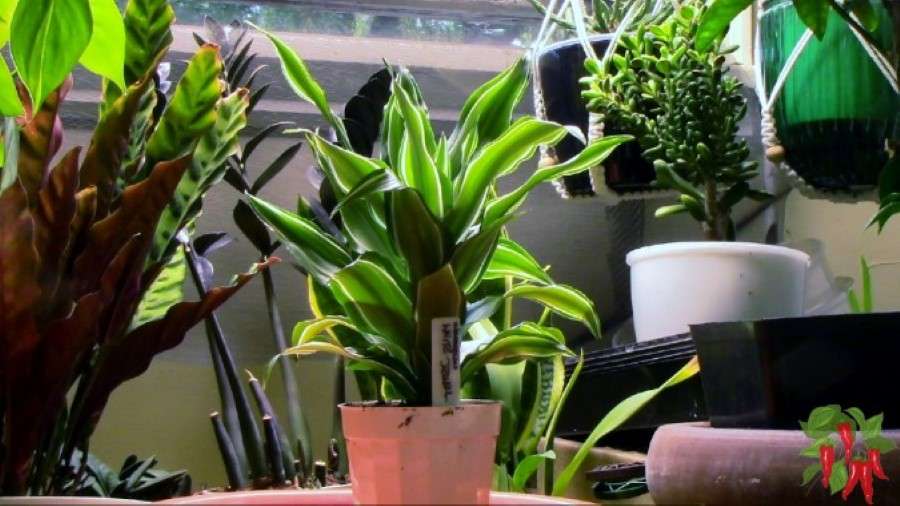
The foliage is what sold me on this one. My White Jewel has green leaves with prominent white outer striping along with gray-toned striping through the foliage. The contrast makes the plant look considerably brighter than a solid-green Dracaena.
I think it’s a really pretty plant. The white variegation stands out immediately, especially if you place it near darker green houseplants.
My plant arrived at around a foot tall, a little taller if you include the pot. At this size, it works well on a desk, table, shelf, or plant stand. Just remember that you’re looking at a young plant. White Jewel isn’t necessarily going to remain a one-foot tabletop plant forever.
Why Grow White Jewel Warneckii Indoors?
The White and Gray Striping Stands Out
For me, this is the biggest reason to choose White Jewel. If you already have several green houseplants, the white and gray striping adds something noticeably different without requiring you to grow a completely different type of plant.
It Tolerates Lower Indoor Light
White Jewel doesn’t need to occupy the brightest location in your home. I like giving Dracaenas good indirect light, but Warneckii can tolerate lower indoor light as well.
As with any low-light-tolerant plant, that doesn’t mean I’d put it in a dark room and expect it to thrive. Giving it adequate indirect light should support better growth and lets you enjoy that striped foliage.
It’s Easy to Care For
Despite the fancy foliage, White Jewel doesn’t require fancy care. Its basic needs are much like the other Dracaena fragrans varieties I’m growing. Give it appropriate light, water it thoroughly, and let the potting mix dry down somewhat before watering again.
It Can Grow With Your Space
A young White Jewel can work as a desk or tabletop plant, which is how you may first encounter it. Because it grows slowly, you can keep using it that way for quite a while.
Eventually, though, Warneckii can become a much larger plant. I would plan on roughly 4 to 6 feet as a long-term indoor possibility. That means the little plant you start with today can eventually move from your desk to a plant stand and finally become a floor plant.
Warneckii Dracaena Light Requirements
I give my White Jewel good indirect light. Warneckii Dracaena can tolerate lower indoor light, which gives you some flexibility about where you grow it, but I still want my plant receiving enough light to support healthy growth.
With White Jewel, light is also important because you’re growing the plant for that attractive variegated foliage. The combination of green, white, and gray striping is what makes this particular Warneckii stand out.
You don’t need intense direct sunlight. In fact, I would avoid putting the plant where strong direct sun can beat down on the leaves for hours. Good indirect light gives you a much easier indoor location to work with.
Can Warneckii Dracaena Grow in Low Light?
Yes, Warneckii is quite tolerant of lower indoor light. That’s one of the reasons Dracaenas have become such popular houseplants.
Just remember that low-light tolerant doesn’t mean no light. If you move your plant farther from a window, growth will probably slow and the potting mix may remain wet longer. Those changes can also affect how frequently you need to water.
If I have the choice, I’ll take good indirect light over a dark corner. White Jewel may tolerate that darker location, but I’m growing mine for those striped leaves and want to give the plant good conditions for maintaining healthy foliage.
How I Water White Jewel Warneckii
My watering method is the same basic approach I use with my other Dracaena fragrans varieties. I water thoroughly and then let the potting mix dry down somewhat before watering again.
When I water, I want the entire root ball to receive water. I don’t give the plant a little splash every few days. I water thoroughly, allow excess water to drain, and then give the roots some time before the next watering.
I don’t keep White Jewel continuously wet. That wet-and-dry cycle allows air back into the root zone and helps prevent the plant from sitting in saturated potting mix.
How Often Should You Water Warneckii?
I wouldn’t put Warneckii on a fixed watering schedule. How quickly your plant dries depends on the amount of light it receives, the size of the container, your potting mix, indoor temperature, and the time of year.
Check the potting mix instead. Once the upper portion has dried, you can water thoroughly again.
This becomes particularly important if you’re taking advantage of Warneckii’s ability to grow in lower light. A plant in lower light generally uses water more slowly, so don’t keep watering it simply because a certain number of days have passed.
Best Potting Mix for White Jewel Dracaena
I want a potting mix that holds some moisture but still drains well and allows air around the roots. White Jewel doesn’t need to sit in a heavy mix that remains saturated for long periods.
I like coco coir and perlite for indoor plants like this. Coco coir holds moisture while perlite helps create more air space and improves drainage. That works well with the way I water because I can thoroughly wet the potting mix and then allow it to gradually dry down.
If you’re using a packaged indoor potting mix, pay attention to how long it stays wet in your home. You can add perlite if you need to open the mix and improve drainage.
Fertilizing Warneckii Dracaena
White Jewel is a slow-growing plant, so I don’t see any reason to push it with a lot of fertilizer. More fertilizer isn’t going to turn a naturally slow-growing Dracaena into a fast-growing plant.
During active growth, you can use a balanced houseplant fertilizer according to the product directions. I prefer feeding moderately rather than continually adding fertilizer to the potting mix.
If the plant isn’t actively growing during the darker part of the year, its needs will be lower. As with watering, I think it makes more sense to respond to the plant and its growing conditions than to follow the calendar blindly.
Temperature and Humidity
White Jewel fits nicely into normal household conditions. You don’t need unusually warm temperatures or a greenhouse environment to grow it.
I would protect it from temperature extremes, particularly cold drafts. Avoid placing it directly against a cold window in winter or where outside air hits the foliage every time you open a door.
Normal household humidity should also be adequate. That’s another thing I like about Dracaenas. You can enjoy tropical-looking foliage without having to maintain extremely high humidity throughout the room.
How Big Does Warneckii Dracaena Get?
My White Jewel is currently only about a foot tall, so right now it’s an easy plant to keep on a desk, table, or plant stand. That small size can be a little misleading when you first buy one.
Warneckii is not necessarily a small Dracaena. It’s a slow grower, but over time I would allow room for it to become roughly 4 to 6 feet tall indoors.
The slow growth actually gives you some flexibility. You can enjoy White Jewel as a tabletop plant while it’s young and move it into a different location as it becomes larger.
Eventually, that same little striped plant can become a floor plant. That’s worth keeping in mind when you’re deciding where a Warneckii fits into your home long term.
Repotting White Jewel Warneckii
Because White Jewel grows slowly, I wouldn’t automatically repot it every year. I prefer moving a plant into a larger container when it actually needs additional root space.
When you do repot, move up gradually rather than putting a small plant into a huge container. An oversized pot holds a lot of potting mix that the roots aren’t using yet, and that extra mix can stay wet longer than you expect.
Use a container with good drainage and a potting mix that allows the roots to receive both moisture and air. After repotting, continue checking the mix before watering rather than assuming the plant will dry at the same rate it did in its old pot.
Pruning Warneckii Dracaena
A young White Jewel shouldn’t need much pruning beyond removing an occasional damaged leaf. I prefer leaving healthy foliage alone and letting the plant grow naturally.
Pruning becomes more useful later if a mature Warneckii becomes taller than you want. Dracaenas can produce new growth below a cut, so you can shorten a tall cane rather than giving up on a plant that has outgrown its location.
If you’re only dealing with a brown leaf tip, you can trim away the damaged portion for appearance. Just remember that trimming doesn’t solve whatever caused the tip to turn brown in the first place.
How to Propagate Warneckii Dracaena
If you eventually prune a mature Warneckii, don’t automatically throw away the piece you remove. Dracaenas can be propagated from stem or cane sections, giving you a chance to start another plant.
A healthy top cutting can also be rooted. Because White Jewel is a slow-growing plant, I’d expect propagation to require some patience rather than producing a large new plant quickly.
This can be especially useful years down the road if your White Jewel becomes too tall for its original location. You can reduce the height of the parent plant and potentially use the material you remove to start another White Jewel.
Common Warneckii Dracaena Problems
White Jewel is an easy plant overall, but its striped leaves can make problems especially noticeable. Brown tips, yellowing leaves, or changes in the foliage are worth paying attention to because they can give you clues about watering, light, and other growing conditions.
Brown Leaf Tips
Brown tips are a common problem with Dracaenas. Inconsistent watering, dry conditions, or a buildup of minerals and fertilizer salts in the potting mix can all contribute.
If brown tips keep appearing, I’d look at your overall growing routine rather than simply trimming them off. Make sure you’re watering thoroughly and allowing the upper portion of the potting mix to dry before watering again.
You can trim a brown tip if its appearance bothers you. I like to follow the natural shape of the leaf rather than cutting straight across it.
Yellow Leaves
An occasional older leaf turning yellow isn’t necessarily a problem. Older foliage eventually ages and is replaced by new growth.
Several yellowing leaves at the same time deserve a closer look. If the potting mix is staying wet, I’d check your watering routine and drainage first.
Remember that a Warneckii growing in lower light may use water more slowly. Don’t keep watering according to the calendar when the potting mix hasn’t had a chance to dry down.
Why Is My White Jewel Losing Its Variegation?
White Jewel is grown for its contrasting green, white, and gray foliage, so changes in that pattern are going to be more noticeable than they would be on a solid-green Dracaena.
If your plant is growing in a very dark location and the new foliage isn’t looking as good, I’d try moving it somewhere with better indirect light. Warneckii can tolerate lower light, but that doesn’t mean the darkest location in your home is the best place to grow a variegated plant.
Give it good indirect light and watch the new leaves. Those new leaves will tell you more about how the plant is responding than foliage that developed before you bought it.
Drooping Leaves
If the leaves begin drooping, check the potting mix before automatically adding water. A dry plant may be ready for a thorough watering, but overly wet roots can also cause a plant to struggle.
That’s why I prefer using the condition of the potting mix instead of one symptom to decide when to water. If the mix is still wet, more water isn’t the answer.
Warneckii Dracaena Pests
Warneckii can occasionally attract the same pests you find on many indoor foliage plants, including spider mites, mealybugs, and scale.
Check both sides of the leaves and the areas where the foliage meets the stem. Mealybugs are usually fairly easy to recognize because they can look like little pieces of white cotton. Scale may look more like small bumps attached to the plant.
Spider mites are smaller and can be harder to spot. Fine webbing, tiny speckles on the foliage, or leaves that start looking dull can be signs that it’s time to inspect the plant more closely.
I like to keep an eye on newly purchased plants before putting them right in the middle of the rest of my collection. Finding a pest on one plant is much easier to deal with than finding it after it has spread to several.
Is Warneckii Dracaena Toxic to Pets?
Yes. Warneckii is a Dracaena, and Dracaena plants are considered toxic to cats and dogs. The ASPCA lists Dracaena species as containing saponins.
If eaten, symptoms can include vomiting, loss of appetite, increased salivation, and depression. Cats may also develop dilated pupils.
That includes the White Jewel I’m growing. If your cat or dog likes chewing houseplants, keep White Jewel somewhere your pet can’t reach it.
You can find additional information from the ASPCA Animal Poison Control Center.
Frequently Asked Questions About Warneckii Dracaena
Is White Jewel a Warneckii Dracaena?
Yes. The White Jewel I’m growing was sold as a Warneckii Dracaena. Warneckii plants can be sold with different patterns and cultivar or trade names, so I wouldn’t assume every plant labeled Warneckii will look exactly like my White Jewel.
Can Warneckii Dracaena grow in low light?
Warneckii tolerates lower indoor light quite well. I still prefer giving my White Jewel good indirect light, particularly because I’m growing it for its attractive striped foliage. Low-light tolerant doesn’t mean the plant should be kept in a dark room.
How often should I water White Jewel Dracaena?
I don’t use a fixed watering schedule. I water thoroughly and then let the upper portion of the potting mix dry before watering again. Light, temperature, pot size, potting mix, and the season will all affect how quickly that happens.
How big does Warneckii Dracaena get indoors?
My White Jewel is only around a foot tall right now, but I wouldn’t consider Warneckii a permanently small plant. It grows slowly and can eventually become roughly 4 to 6 feet tall indoors.
Can I keep White Jewel on a desk?
Yes, while it’s young. Mine is currently small enough to work nicely as a desk or tabletop plant. Because White Jewel grows slowly, you should be able to enjoy it that way for quite a while. Eventually, it may become large enough that a plant stand or floor location makes more sense.
Does White Jewel need high humidity?
No. White Jewel can grow under normal household humidity. You don’t need to maintain greenhouse humidity to grow this Dracaena indoors.
Why does White Jewel have different names?
Dracaena naming can get confusing because you’ll encounter older botanical classifications along with cultivar and trade names used by growers and sellers. White Jewel is the name on the Warneckii plant I’m growing, so that’s the name I use when discussing my specific plant.
Final Thoughts
White Jewel is one of those plants where the foliage really does most of the work. The white, gray, and green striping gives it a completely different appearance from a solid-green Janet Craig or one of the yellow and lime-green Dracaena fragrans varieties.
Mine is still a young plant at around a foot tall, and right now it makes a nice tabletop plant. It arrived in excellent condition, and I’m looking forward to seeing how the striping and overall shape develop as it grows.
Care is pretty straightforward. I give my White Jewel good indirect light, water it thoroughly, and then let the potting mix dry down somewhat before watering again. It doesn’t require unusually high humidity, and its ability to tolerate lower light gives you some flexibility about where you grow it.
Just don’t mistake its current size for its eventual size. Warneckii is slow growing, but over time this little desk plant can become a 4- to 6-foot floor plant. For me, that’s part of the appeal. You can enjoy White Jewel at several different stages as it grows with your indoor space.
Explore More Dracaena fragrans Growing Guides
- Dracaena fragrans Varieties: Corn Plants I Grow Indoors
- Dracaena fragrans Cultivars
- Janet Craig Dracaena Care Indoors
- Warneckii Dracaena Care Indoors: White Jewel
- Dracaena Tornado Care Indoors
- Golden Heart Dracaena Care Indoors
- Dracaena Golden Heart Care
- Mass Cane Plant Care: How to Grow Dracaena Massangeana
- Corn Stalk Dracaena Plant Care
References
- North Carolina State Extension. Dracaena fragrans.
- University of Florida IFAS Extension. Dracaena fragrans, Corn Plant.
- Missouri Botanical Garden. Dracaena fragrans.
- ASPCA. Dracaena. Toxic and Non-Toxic Plants.
 Steve S. is the creator of