
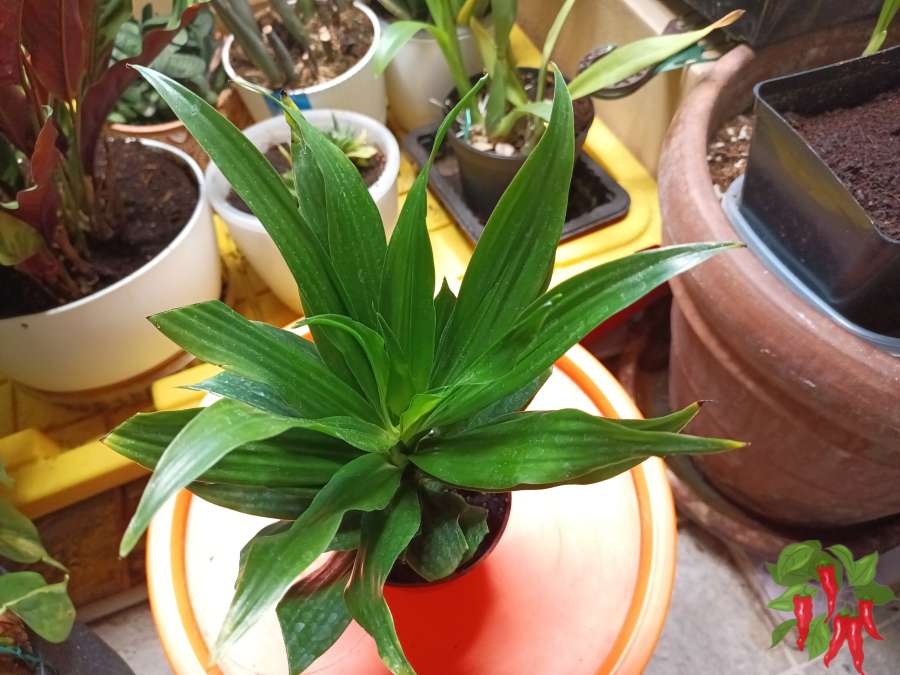
Some Dracaenas get your attention with yellow stripes, white margins, or unusual twisting leaves. Janet Craig takes a much simpler approach. Its broad, dark green leaves give you a classic tropical houseplant without a lot of extra color or pattern.
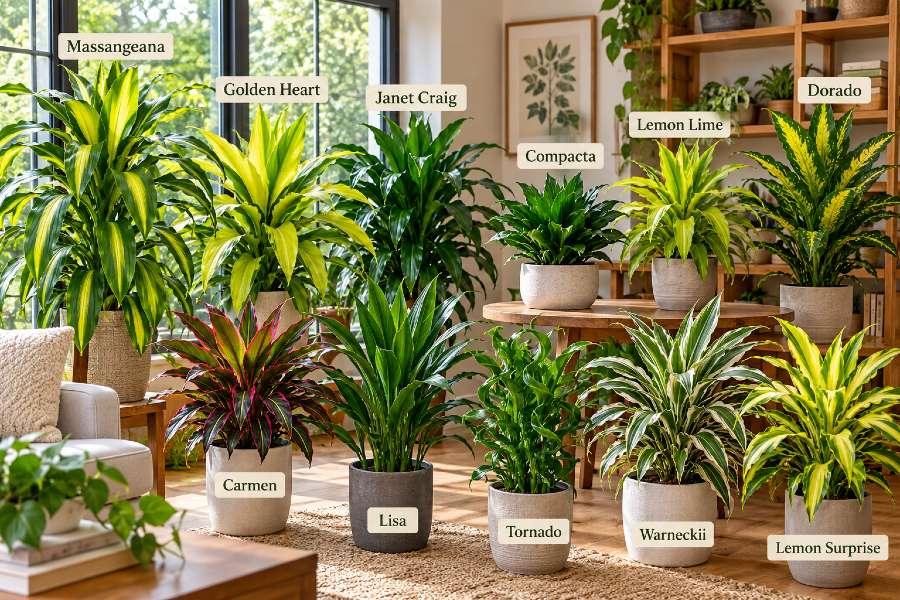
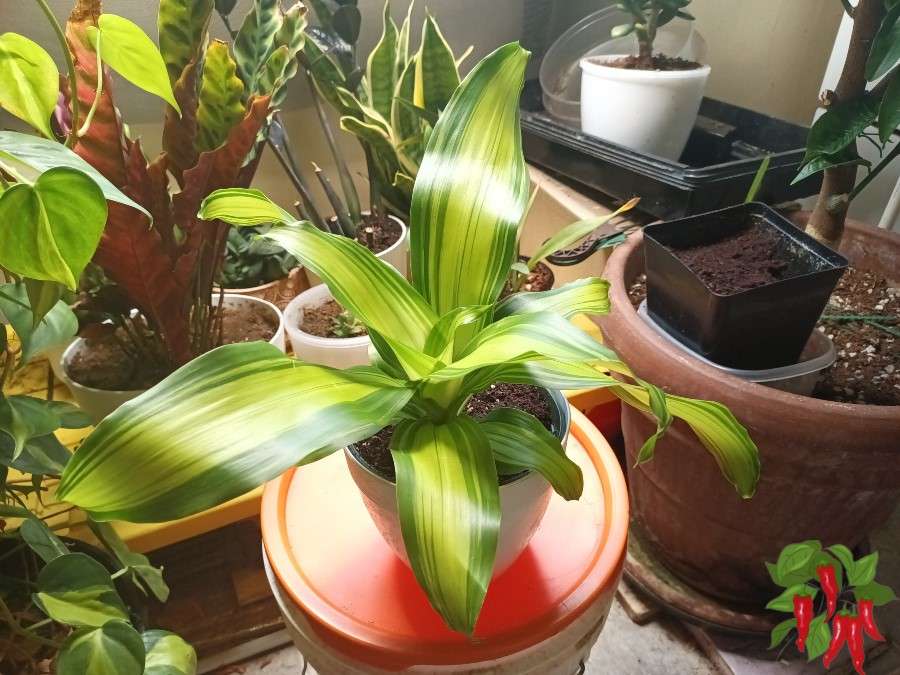
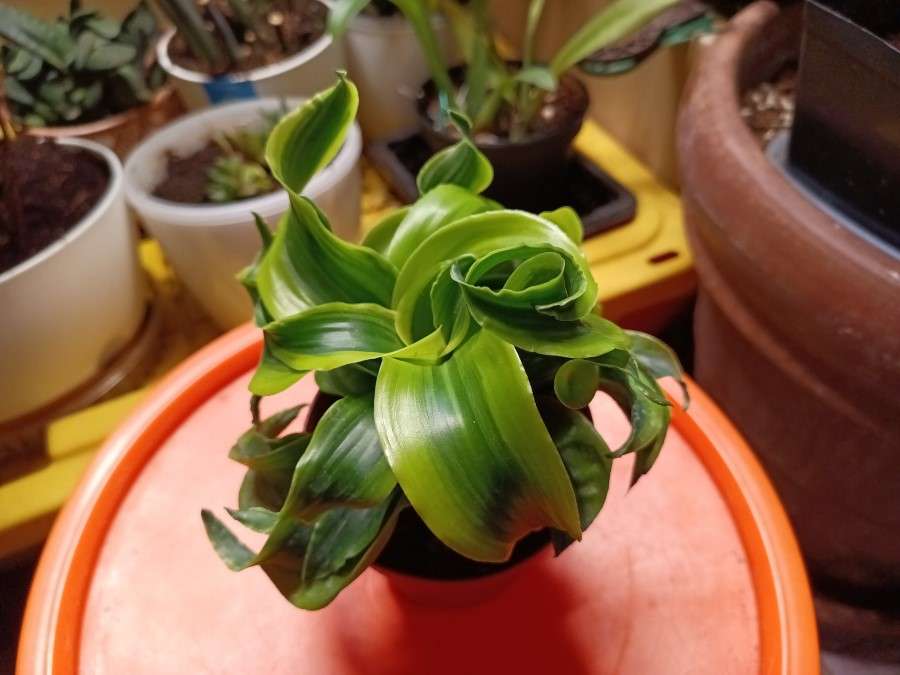
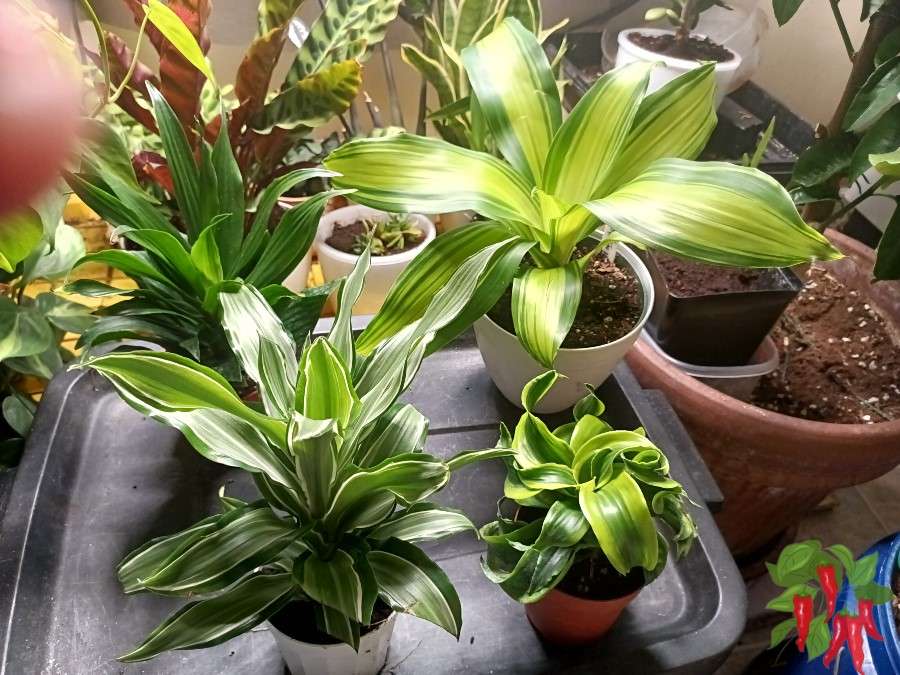
I’m growing Janet Craig along with several other Dracaena fragrans varieties, and that’s what makes this plant interesting to me. Put it next to Golden Heart, Lemon Lime, or one of the striped varieties and you can really appreciate how different that deep green foliage looks.
It’s also an easy plant to fit into normal indoor conditions. Janet Craig tolerates lower light better than many large houseplants, grows relatively slowly, and doesn’t require unusually high humidity. Give it good light, don’t keep the roots constantly wet, and you have a plant that can stay with you for years.
What You’ll Learn
- How I grow Janet Craig Dracaena indoors
- How much light Janet Craig needs
- When and how to water your plant
- How large Janet Craig can grow indoors
- The difference between Janet Craig and Janet Craig Compacta
- How to handle common Janet Craig problems
- Whether Janet Craig is toxic to cats and dogs
Quick Answer: Janet Craig Dracaena Care Indoors
Janet Craig Dracaena is an easy indoor foliage plant with broad, solid dark green leaves. I give mine bright, indirect light, although Janet Craig handles lower light quite well. Water thoroughly, let excess water drain, and then allow the upper portion of the potting mix to dry before watering again. Normal household temperatures and humidity work well. Janet Craig grows slowly, but given enough time it can develop into a substantial floor plant around 5 to 6 feet tall.
Janet Craig Dracaena at a Glance
| Botanical name | Dracaena fragrans ‘Janet Craig’ |
| Common name | Janet Craig Dracaena |
| Light | Bright, indirect light; tolerates lower light |
| Water | Water thoroughly, then allow the upper potting mix to dry |
| Indoor height | Can eventually reach about 5–6 feet |
| Growth rate | Slow |
| Foliage | Broad, solid dark green leaves |
| Humidity | Normal household humidity |
| Best feature | Simple dark foliage and good indoor adaptability |
| Pet safety | Toxic to cats and dogs if eaten |
What Is a Janet Craig Dracaena?
Janet Craig is a dark green cultivar of Dracaena fragrans, the same general group that includes many of the plants sold as corn plants. You may also find Janet Craig under the older botanical name Dracaena deremensis ‘Janet Craig.’
What makes Janet Craig easy to recognize is what it doesn’t have. There isn’t a yellow center stripe like you’ll see on some corn plants, and there aren’t bright white or lime-green margins. The leaves are broad, thick, and dark green.
I think that’s really the appeal of this variety. Not every foliage plant needs variegation. Janet Craig gives you a mass of deep green foliage that works just about anywhere you want a tropical-looking indoor plant.
It’s also quite tolerant of indoor conditions. I prefer giving mine bright, indirect light, but Janet Craig handles lower light well. That’s useful if you’re trying to grow a larger foliage plant in a room that doesn’t have enough light for something like a Bird of Paradise.
Janet Craig vs. Janet Craig Compacta
One thing to watch when you’re shopping is the name Janet Craig Compacta. That’s not the plant I’m growing here.
My plant is the regular Janet Craig. It may look fairly compact while it’s young, especially when you buy a smaller plant, but don’t assume it’s going to stay that size. Janet Craig is a slow grower that can eventually become a tall floor plant.
Janet Craig Compacta is the smaller, more compact form. Its leaves are packed much more tightly together, giving the plant a dense appearance and making it a better choice when you specifically want a Dracaena that stays smaller.
So if you’re buying one of these plants, check the label. Janet Craig and Janet Craig Compacta aren’t interchangeable names. The regular Janet Craig I’m growing is the larger plant.
Why Grow Janet Craig Indoors?
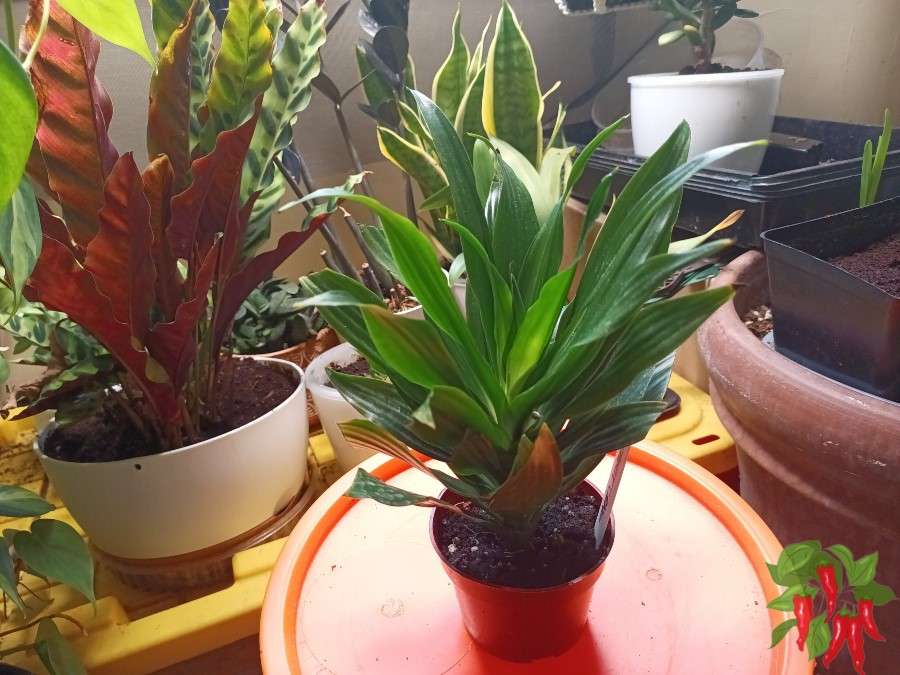
With so many colorful Dracaena varieties available, you might wonder why you’d choose one that’s simply green. For me, that’s exactly what gives Janet Craig its place in the collection.
Dark Green Foliage
The broad, deep green leaves give Janet Craig a clean appearance. If you don’t want yellow, cream, white, or lime-green variegation, this is a Dracaena worth looking at.
Good Low-Light Tolerance
Janet Craig is quite tolerant of lower indoor light. I still prefer bright, indirect light when it’s available because low-light tolerant doesn’t mean a plant doesn’t need light. But having that flexibility gives you more choices about where you can grow it.
Slow Growth Can Be an Advantage
This isn’t a plant that’s going to suddenly take over your room. Janet Craig grows slowly. Although it can eventually become 5 or 6 feet tall, reaching that size takes time.
That’s actually useful indoors. You can enjoy a smaller Janet Craig for quite a while without constantly repotting or trying to figure out where you’re going to put a plant that’s suddenly twice its original size.
It Fits Normal Household Conditions
I also like plants that don’t require me to turn my home into a greenhouse. Janet Craig handles normal household conditions well. You don’t need extremely high humidity or an elaborate growing setup.
Give it appropriate light, water it properly, and avoid keeping the roots continuously wet. That’s a pretty manageable routine for a plant that can eventually give you several feet of dark green foliage.
Janet Craig Dracaena Light Requirements
I give my Janet Craig bright, indirect light. That’s a good place to start if you have the choice because it gives the plant plenty of light for steady growth without exposing the leaves to strong direct sun.
One of Janet Craig’s useful features, though, is its ability to tolerate lower light. You don’t necessarily need your brightest window for this plant. It can work in rooms where some of the more light-hungry tropical plants would struggle.
There is a difference between tolerating low light and actually growing well in darkness. The farther you move a plant from a window, the less usable light it receives. In lower light, I’d expect Janet Craig to grow even more slowly, and the potting mix may also take longer to dry.
That’s important because your watering schedule needs to change with the amount of light the plant receives. I don’t water my Dracaenas according to a calendar. I check the potting mix and water based on what the plant actually needs.
How I Water Janet Craig Dracaena
My watering method for Janet Craig is pretty simple. I water the potting mix thoroughly and allow excess water to drain from the bottom of the container. Then I let the upper portion of the mix dry before I water again.
What I don’t want is for the roots to stay constantly wet. Dracaena roots benefit from having some air around them between waterings, so I’m looking for a wet-and-dry cycle rather than continuously moist potting mix.
How quickly that happens depends on your conditions. A plant receiving brighter light may use water faster than the same plant growing farther from a window. Pot size, temperature, season, and the type of potting mix you’re using can all change how frequently you need to water.
That’s why I wouldn’t tell you to water Janet Craig every seven days or every two weeks. Check your plant instead. Once the upper portion of the potting mix has dried, you can water thoroughly again.
Don’t Let Janet Craig Sit in Water
Whatever container you use, make sure excess water has somewhere to go. If you’re using a decorative outer pot or saucer, don’t leave the plant sitting in a pool of drainage water.
Janet Craig can forgive you for letting the potting mix dry somewhat. Constantly saturated roots are a different story, and that’s something I try to avoid with my Dracaenas.
Best Potting Mix for Janet Craig
For Janet Craig, I want a potting mix that holds enough moisture for the roots but still drains well and allows air into the root zone. You don’t need a heavy mix that stays saturated for long periods.
I like coco coir and perlite for many of my indoor plants. The coco holds moisture while the perlite helps open the mix and improve drainage and aeration. The goal isn’t to make the mix dry immediately. I want it to take up water thoroughly and then gradually dry down before the next watering.
If you’re using a regular commercial indoor potting mix, pay attention to how it behaves rather than just what’s printed on the bag. If it remains wet for a long time under your indoor conditions, adding some extra perlite can help improve drainage and aeration.
Does Janet Craig Need Fertilizer?
Janet Craig is a slow-growing plant, so I don’t see any reason to push it with heavy fertilizer. Fertilizer should support healthy growth rather than force the plant to grow faster than it naturally wants to.
During active growth, you can use a balanced houseplant fertilizer according to the product directions. I would rather feed lightly than continually add fertilizer to the potting mix, especially with a plant that isn’t growing rapidly.
If your Janet Craig is barely growing during the darker part of the year, it isn’t using nutrients at the same rate as a plant actively producing new leaves. That’s another reason I prefer responding to the plant and its growing conditions instead of following a rigid schedule.
Temperature and Humidity
Normal household temperatures work well for Janet Craig. If you’re comfortable in the room, your plant will generally be comfortable too.
I would keep it away from cold drafts and sudden temperature extremes. That includes cold air coming through a door in winter as well as placing the plant directly in front of a heating or air-conditioning vent.
You also don’t need greenhouse humidity to grow Janet Craig. Normal household humidity is usually adequate. That’s another reason this plant works well indoors—you don’t have to build your entire room around its humidity requirements.
How Big Does Janet Craig Dracaena Get?
Don’t let the size of a young Janet Craig fool you. This isn’t necessarily a small Dracaena.
Janet Craig grows slowly, but the regular form can eventually become a substantial floor plant. I would plan on roughly 5 to 6 feet indoors if you allow the plant to continue growing over the years.
That slow growth can actually make the plant easier to manage. You aren’t buying a small plant today and discovering six months from now that it has outgrown the space you had planned for it.
As it matures, Janet Craig develops more of the upright appearance you’d expect from a larger Dracaena. Its broad dark green foliage gives it a full appearance, particularly while the plant is younger and the leaves are concentrated closer together.
Can You Keep Janet Craig Smaller?
You don’t necessarily have to let Janet Craig reach its maximum indoor size. Keeping it in a reasonably sized container can help keep the plant manageable, and its naturally slow growth gives you plenty of time before size becomes an issue.
I wouldn’t deliberately crowd the roots to the point that the plant is struggling. But you also don’t need to move a Dracaena into a dramatically larger pot every time you see a root. Moving up gradually makes more sense.
If you specifically want a much smaller plant, remember that Janet Craig Compacta exists. The regular Janet Craig I’m growing is capable of becoming a tall floor plant even though it may look compact when it’s young.
Repotting Janet Craig Dracaena
Because Janet Craig grows slowly, repotting shouldn’t need to become an annual project. I would repot when the plant actually needs more root space rather than automatically moving it into a larger container every spring.
When you do repot, don’t make a huge jump in container size. Moving into a pot that’s only somewhat larger gives the roots additional room without surrounding them with a large amount of unused potting mix that may remain wet too long.
This is also a good time to check the roots and replace old or compacted potting mix. Make sure the new container has adequate drainage before putting the plant back in place.
Pruning Janet Craig
You may eventually need to prune a mature Janet Craig if it becomes taller than you want. Dracaenas can produce new growth below a cut, so pruning gives you a way to control height rather than getting rid of a healthy plant simply because it has reached the ceiling.
You can also remove individual damaged or badly discolored leaves as needed. I wouldn’t remove healthy green foliage just to make the plant look tidier. Those leaves are doing the work of supporting the plant.
How to Propagate Janet Craig
If you eventually prune a tall Janet Craig, the material you remove gives you an opportunity to propagate another plant. Stem or cane sections can produce roots and new growth.
A top cutting with healthy foliage can also be rooted to start another Janet Craig. Because this is naturally a slow-growing Dracaena, propagation isn’t something I’d expect to happen overnight. Give the cutting warmth, appropriate moisture, and time to establish itself.
Propagation can be particularly useful with an older plant. Instead of simply throwing away the top when you shorten a tall Janet Craig, you may be able to turn that piece into another plant while allowing the original cane to produce fresh growth.
Common Janet Craig Dracaena Problems
Janet Craig is a pretty forgiving houseplant, but the leaves can usually give you some clues when something isn’t right. Watering is one of the first things I’d look at, followed by light and the condition of the potting mix.
Brown Leaf Tips
Brown tips are fairly common on Dracaenas. Dry conditions, inconsistent watering, or a buildup of minerals and salts in the potting mix can all contribute to browning at the ends of the leaves.
If you’re seeing repeated brown tips, look at your watering routine first. Make sure you’re watering thoroughly rather than giving the plant small amounts of water at a time. It’s also worth considering your water quality and how much fertilizer you’re using.
You can trim off a brown tip for appearance if you want, but I’d also try to figure out why it developed. Trimming fixes the appearance, not the cause.
Yellow Leaves
An occasional older leaf turning yellow isn’t something I’d immediately worry about. Plants naturally replace older foliage as they grow.
If several leaves begin yellowing at once, especially while the potting mix remains wet, I’d take a closer look at watering and drainage. Janet Craig likes to be watered thoroughly, but I let the upper portion of the potting mix dry before watering again.
Remember that a Janet Craig growing in lower light may use water more slowly. The same watering routine that works near a bright window could keep the roots too wet in a darker location.
Pale or Weak New Growth
Janet Craig naturally has dark green leaves. If new growth seems unusually weak or the plant isn’t performing well, look at the amount of light it’s receiving.
This plant tolerates lower light, but that doesn’t mean darkness is ideal. Moving it closer to a source of bright, indirect light may give it better growing conditions.
Drooping Leaves
If your Janet Craig suddenly begins drooping, check the potting mix before reaching for the watering can. Drooping can occur when a plant is too dry, but roots sitting in overly wet soil can also cause problems.
That’s why I prefer checking the soil rather than diagnosing a plant from one symptom. If the mix is very dry, the plant may simply be ready for water. If it’s still wet, adding more water isn’t going to help.
Janet Craig Dracaena Pests
Janet Craig can occasionally attract common indoor plant pests such as spider mites, mealybugs, and scale. I like to catch pest problems while they’re still small rather than waiting until insects have spread throughout the plant.
Check both sides of the leaves, where the leaves meet the stem, and around new growth. Mealybugs can look like small bits of white cotton, while scale may appear as small raised bumps attached to the plant.
Spider mites can be harder to see. Fine webbing, stippling, or a generally dull appearance to the foliage can be signs that you need to take a closer look.
I also like to keep new houseplants separated from the rest of my collection for a while when possible. It’s much easier to deal with a pest on one new plant than after it has moved onto several others.
Is Janet Craig Dracaena Toxic to Pets?
Yes. Janet Craig is a Dracaena, and Dracaena plants are considered toxic to cats and dogs. The ASPCA lists Dracaena species as containing saponins.
If eaten, Dracaena can cause symptoms that include vomiting, loss of appetite, increased salivation, and depression. Cats may also develop dilated pupils.
If you have a cat or dog that likes chewing houseplants, keep your Janet Craig somewhere your pet can’t reach it. You can find additional information from the ASPCA Animal Poison Control Center.
Frequently Asked Questions About Janet Craig Dracaena
Is Janet Craig a Dracaena fragrans?
Yes. Janet Craig is generally classified as a cultivar of Dracaena fragrans. You’ll still find the older name Dracaena deremensis ‘Janet Craig’ in plant listings and older references, which can make the naming confusing.
Can Janet Craig grow in low light?
Janet Craig is quite tolerant of lower indoor light, which is one of its best features as a houseplant. I still prefer giving mine bright, indirect light when possible. In lower light, expect slower growth and check the potting mix carefully because it may take longer to dry between waterings.
How often should I water Janet Craig?
I don’t water Janet Craig according to a fixed schedule. I water thoroughly and then let the upper portion of the potting mix dry before watering again. How long that takes depends on your light, temperature, pot size, potting mix, and time of year.
How tall does Janet Craig get indoors?
The regular Janet Craig is capable of becoming a substantial floor plant. I would plan for a mature plant to eventually reach around 5 to 6 feet tall indoors. It’s a slow grower, so reaching that size takes time.
Is Janet Craig the same as Janet Craig Compacta?
No. The Janet Craig I’m growing is the regular form, not Janet Craig Compacta. Compacta has much tighter, denser growth and stays considerably smaller. Check the plant label when you’re buying one because the similar names can easily cause confusion.
Why are my Janet Craig leaves turning brown?
Brown leaf tips can have several causes, including inconsistent watering, dry conditions, or mineral and fertilizer salt buildup. If browning keeps appearing on new leaves, look at your overall growing conditions rather than simply trimming the damaged tips.
Does Janet Craig need high humidity?
No. Janet Craig generally does well with normal household humidity. You don’t need to maintain tropical greenhouse humidity to grow it successfully indoors.
Final Thoughts
Janet Craig isn’t the flashiest Dracaena I’m growing, and I think that’s part of what makes it interesting. There are no yellow centers, white margins, or twisting leaves. You simply get broad, thick, dark green foliage.
It’s also a practical houseplant. Janet Craig handles lower light better than many larger tropical plants, grows slowly, and doesn’t demand unusually high humidity. I give mine bright, indirect light when possible, water thoroughly, and then let the upper portion of the potting mix dry before watering again.
Just remember that the regular Janet Craig isn’t really a miniature Dracaena. The plant may look fairly compact when it’s young, but given enough time it can develop into a 5- to 6-foot floor plant. If you specifically want the smaller version, look for Janet Craig Compacta.
I’m growing Janet Craig alongside several other Dracaena fragrans varieties, so I’ll be able to see how it develops compared with the more colorful cultivars. For now, I can see why this simple dark green Dracaena has remained such a popular indoor plant.
Explore More Dracaena fragrans Growing Guides
- Dracaena fragrans Varieties: Corn Plants I Grow Indoors
- Dracaena fragrans Cultivars
- Janet Craig Dracaena Care Indoors
- Warneckii Dracaena Care Indoors: White Jewel
- Dracaena Tornado Care Indoors
- Golden Heart Dracaena Care Indoors
- Dracaena Golden Heart Care
- Mass Cane Plant Care: How to Grow Dracaena Massangeana
- Corn Stalk Dracaena Plant Care
References
- North Carolina State Extension. Dracaena fragrans.
- University of Florida IFAS Extension. Dracaena fragrans, Corn Plant.
- Missouri Botanical Garden. Dracaena fragrans.
- ASPCA. Dracaena. Toxic and Non-Toxic Plants.
 Steve S. is the creator of