
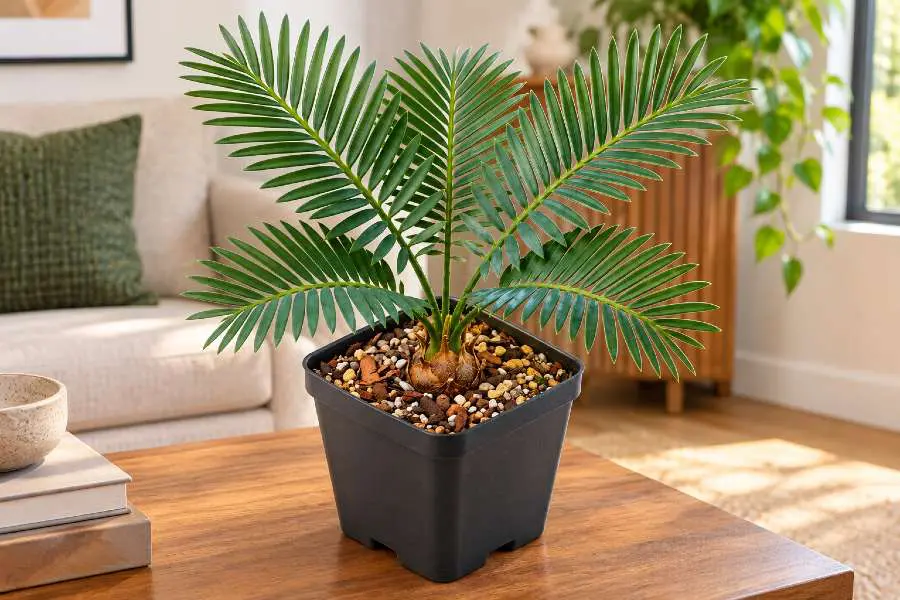
Dioon edule care indoors starts with understanding what this unusual plant actually is. Although its stiff, arching leaves give it a palm-like appearance, Dioon edule is not a palm. It is a cycad native to Mexico and belongs to an ancient group of seed-producing plants.
Dioon edule is especially interesting as a container plant because of its slow growth, attractive blue-green foliage, and ability to tolerate relatively dry conditions once established. It is also more cold-tolerant than many plants with a tropical appearance.
In this guide, we’ll look at light, watering, growing medium, fertilizer, temperature, repotting, propagation, and common problems. I’ll also share how I’m growing my own Dioon edule and what I’ve observed from the plant firsthand.
What You’ll Learn
- What Dioon edule is and why it isn’t a true palm
- How much light Dioon edule needs
- When and how to water this slow-growing cycad
- What type of growing medium provides the drainage it needs
- How temperature affects indoor and outdoor growing
- How and when to fertilize
- How slowly Dioon edule grows
- How it differs from the better-known Sago Palm
- Common pests and growing problems to watch for
Quick Answer
Dioon edule is a very slow-growing Mexican cycad that prefers plenty of light, excellent drainage, and careful watering. Allow the growing medium to begin drying between waterings rather than keeping the roots constantly wet. Indoors, place it in one of your brightest locations. Its slow growth makes younger plants well suited to container growing.
Dioon Edule Care at a Glance
| Care Requirement | Dioon Edule Preference |
|---|---|
| Plant Type | Evergreen cycad |
| Light | Bright light indoors; full sun to partial shade outdoors |
| Water | Allow the growing medium to begin drying between waterings; avoid waterlogged conditions |
| Growing Medium | Excellent drainage is essential |
| Growth Rate | Very slow |
| Fertilizer | Light feeding during active growth |
| Outdoor Hardiness | More cold-tolerant than many cycads; protect container plants from severe cold |
| Common Problems | Overwatering, poor drainage, root rot, scale, and occasional leaf damage |
My Dioon Edule: Video and Growing Notes
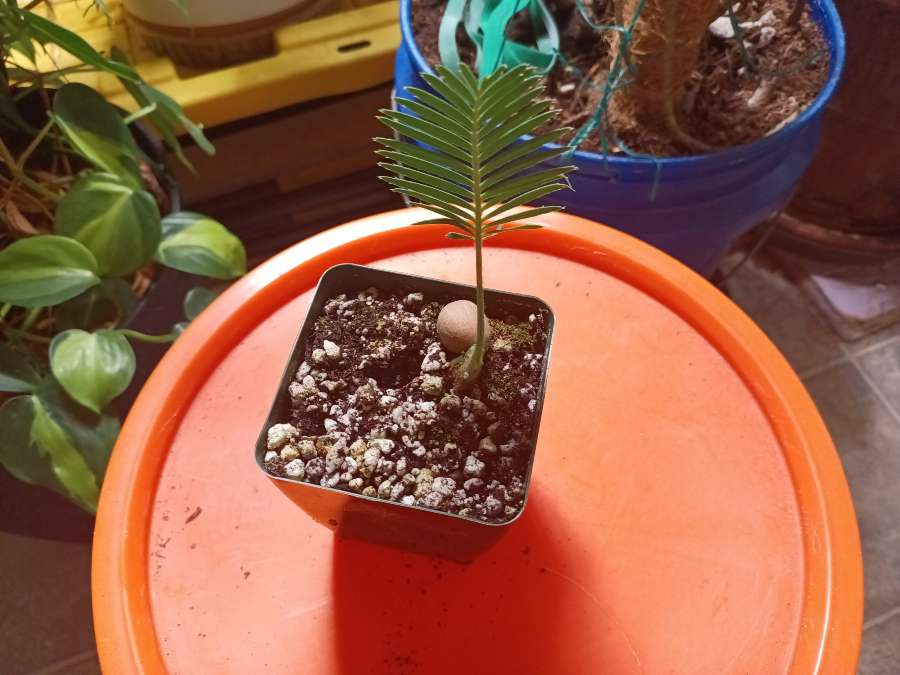
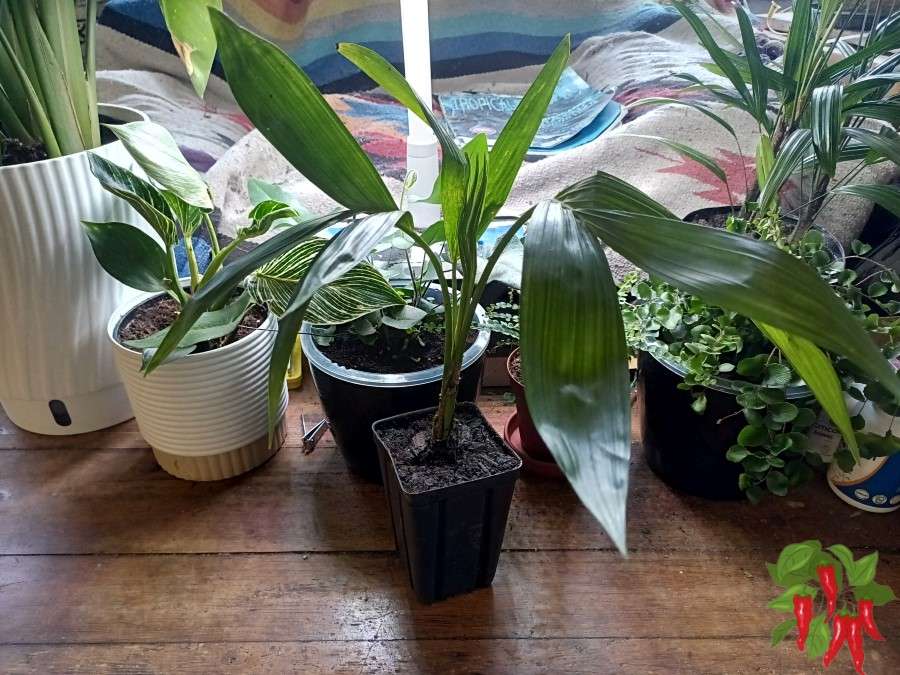
The Dioon edule I bought is a very young plant—basically a well-rooted seedling with a single frond. I thought I was ordering a more mature cycad with several fronds and a more developed caudex, based on the seller’s photos, so I was disappointed by the size when it arrived.
The plant itself is healthy. My complaint is with how it was advertised rather than the condition of the plant. This is something to watch when buying Dioon edule online. Because it grows so slowly, larger specimens can be considerably more expensive. Look carefully at the listing to see whether you’re buying a seedling or the larger plant shown in the photos.
I paid more than $40 for mine on Amazon and later found similar-sized seedlings on Etsy for around half that price. Since this can be a harder cycad to find, it’s worth shopping around on Etsy, eBay, specialty plant sellers, and other sources rather than assuming the first plant you find is a good value.
I’m going to keep this little plant and see how it develops. It doesn’t take up much space, and with such a slow growth rate, I’m certainly not worried about it outgrowing my apartment anytime soon.
What Is Dioon Edule?
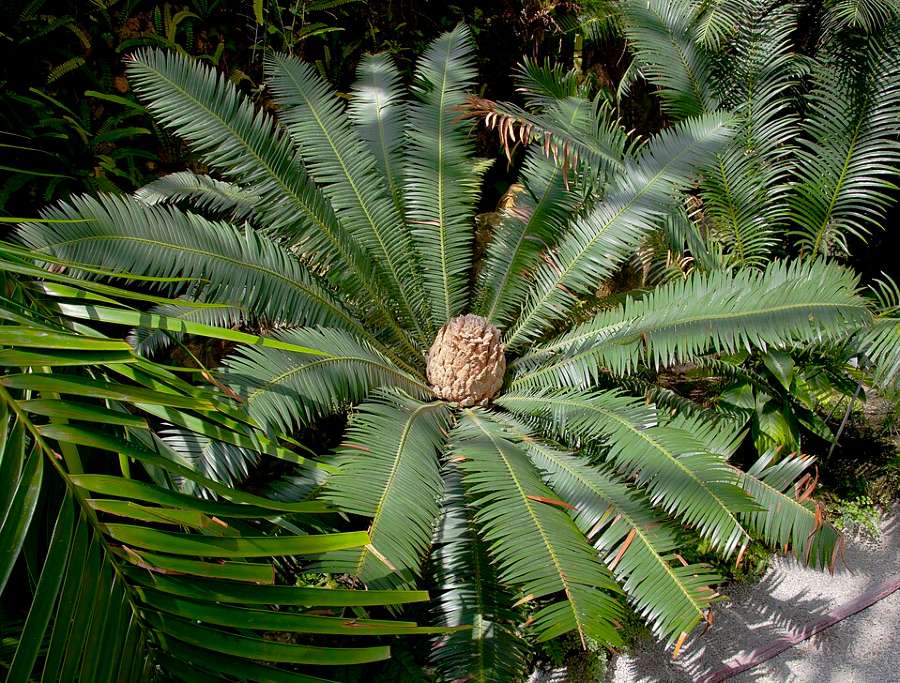
Dioon edule is a cycad native to Mexico. Cycads are an ancient group of seed plants that existed long before many of the flowering plants we grow today.
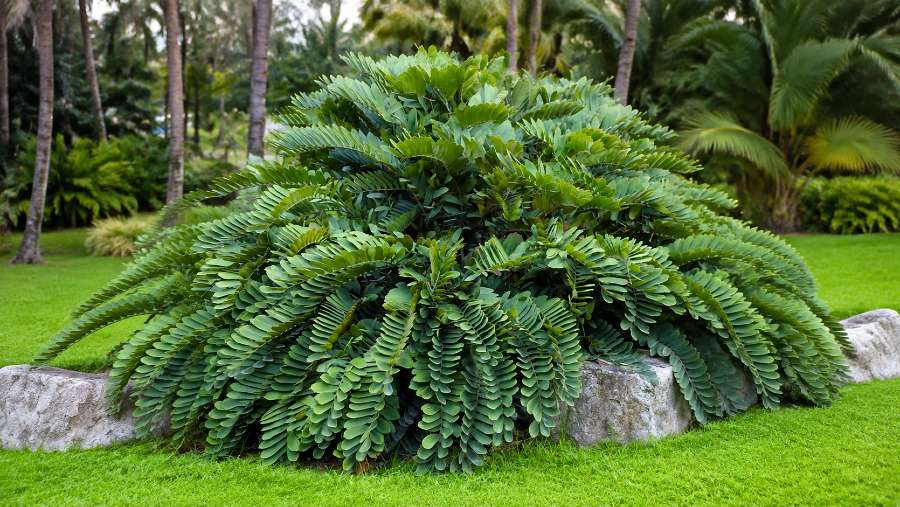
At first glance, Dioon edule can easily be mistaken for a palm. The plant develops a central woody trunk or caudex topped by a crown of long, pinnate leaves. Each leaf consists of numerous narrow leaflets, giving the plant its distinctive palm-like appearance.
Unlike flowering plants, Dioon edule produces cones. Individual plants are male or female, with each producing its own type of reproductive cone.
One of the defining characteristics of Dioon edule is its extremely slow growth. This can be an advantage when you’re growing one in a container because you won’t need to constantly accommodate a rapidly expanding plant. Mature specimens can eventually become substantial plants, but reaching that size takes many years.
Is Dioon Edule a Palm?
No. Dioon edule may look like a small palm, but botanically it is a cycad. The resemblance comes from its woody central trunk and crown of long, feather-like leaves.
This is similar to the familiar Sago Palm, which is also a cycad rather than a true palm. That’s why you’ll sometimes see cycads grouped with palms in nurseries and garden centers even though they belong to a completely different group of plants.
Dioon Edule vs. Sago Palm
Dioon edule and Sago Palm have a similar overall appearance, and both are slow-growing cycads that can be grown in containers. However, they are different plants from different genera.
Dioon edule tends to develop long, narrow, blue-green to gray-green foliage and is particularly interesting for growers looking for a less common cycad. Sago Palm (Cycas revoluta) is much more familiar and is widely sold as an indoor and patio plant.
Both plants grow slowly, so either can remain manageable in a container for a long time. Later in this guide, I’ll cover the specific growing conditions I use for my Dioon edule.
Dioon Edule Light Requirements
Dioon edule grows best with plenty of light. Indoors, give it one of the brightest locations you have available. A sunny south-facing window is a good choice if you have one.
If your home doesn’t provide enough natural light, you can supplement it with an LED grow light. Good light will help support healthy foliage and new growth when the plant produces a new flush of leaves.
One difference I’ve noticed between this plant and my Sago Palm is light. My Sago can tolerate shadier conditions, but I would give Dioon edule plenty of bright light. If you’re growing one indoors, this isn’t a plant I would put in a dark corner.
How To Water Dioon Edule
Dioon edule is relatively drought-tolerant once established, and one of the most important things you can do is avoid keeping its roots constantly wet.
Rather than watering on a fixed schedule, check the growing medium. Allow it to begin drying before watering again. When you do water, water thoroughly and make sure excess water can drain freely from the container.
Young plants may need more consistent moisture while becoming established. During cooler months, growth and water use can slow, so check the growing medium before automatically reaching for the watering can.
I treat Dioon edule as a plant that wants to be watered and then allowed to begin drying out. It doesn’t like staying in a cold, wet growing medium, and root rot is one of the main problems I would watch for.
For that reason, I wouldn’t grow mine in a self-watering planter. I prefer a well-draining coco coir and perlite mix and a container that lets excess water drain freely.
Quick Tip
With a slow-growing cycad like Dioon edule, good drainage and careful watering go together. Don’t judge watering needs by the calendar. Check the growing medium and the plant instead.
Best Growing Medium for Dioon Edule
Excellent drainage is one of the most important requirements when growing Dioon edule in a container. The roots need moisture, but they also need plenty of air around them. A growing medium that stays wet for too long can create problems for this slow-growing cycad.
I grow my Dioon edule in a mixture of coco coir and perlite. Coco coir holds moisture while the perlite improves drainage and aeration around the roots. This gives me a growing medium that retains some moisture without staying heavy and waterlogged.
The container should also have drainage holes so excess water can escape freely after watering.
Choosing a Container
Dioon edule grows very slowly, so there is usually no reason to put a small plant into an excessively large container. Choose a pot that accommodates the existing root system while providing some room for additional growth.
Choosing a Container
Whatever growing medium you use, the container needs drainage holes. Water should be able to move through the growing medium and escape rather than collecting around the roots.
Dioon edule grows very slowly, so there is usually no reason to put a small plant into an excessively large container. Choose a pot that accommodates the existing root system while providing some room for additional growth.
Dioon Edule Temperature and Cold Tolerance
Dioon edule is reported to be one of the more cold-hardy cycads, with established plants capable of surviving temperatures down to around 10°F under suitable conditions.
That doesn’t mean I would try growing one outdoors through a cold winter. I’m growing Dioon edule as an indoor container plant, where I can provide much more stable temperatures and protect it from freezing conditions.
For indoor growing, ordinary comfortable household temperatures work well. There’s no reason to test the lower limits of a plant’s cold tolerance when you’re growing it as a houseplant.
Humidity and Air Circulation
Dioon edule doesn’t require the extremely high humidity associated with some tropical houseplants. This makes it easier to accommodate in an ordinary indoor growing area.
Good air circulation is useful, particularly when the plant is grown indoors or when conditions are cool and damp. You don’t need to create a greenhouse environment around the plant.
How To Fertilize Dioon Edule
Because Dioon edule grows slowly, it doesn’t need aggressive fertilizing. Light feeding during active growth is generally enough.
A balanced fertilizer can provide supplemental nutrients during the growing season. Follow the directions for the fertilizer you’re using rather than trying to force faster growth by feeding heavily.
Additional nutrients may encourage stronger growth, but Dioon edule is still an inherently slow-growing plant. That’s part of its natural growth habit.
Repotting Dioon Edule
One advantage of growing such a slow-growing plant is that repotting shouldn’t be a constant job. There is no reason to move Dioon edule into a larger container simply because a certain amount of time has passed.
Instead, look at the plant and its root system. If the roots have filled the existing container or the plant clearly needs additional space, move it into a slightly larger pot with fresh, well-draining growing medium.
Avoid jumping from a small pot into an unnecessarily large container. A large volume of growing medium surrounding a relatively small root system can remain wet longer than you expect.
Does Dioon Edule Need Pruning?
Dioon edule requires very little routine pruning. Its leaves form the crown of the plant, so there is no reason to prune healthy foliage simply to control its naturally slow growth.
Leaves that are dead, badly damaged, diseased, or heavily infested with pests can be removed when necessary. Use clean cutting tools and avoid damaging the trunk or new growth emerging from the center of the plant.
How To Propagate Dioon Edule
Dioon edule can be propagated from seed or from pups that sometimes develop around the base of mature plants. Either way, patience is important. This is naturally a very slow-growing cycad.
Growing Dioon Edule From Seed
Seed is one way to start new Dioon edule plants. Germination itself may not be especially difficult when you have viable seed and suitable conditions, but developing a substantial plant takes much longer.
Use a well-draining growing medium and keep the seed warm while it germinates. Once seedlings begin growing, avoid keeping the young root system constantly wet.
Propagating Dioon Edule From Pups
Older plants may produce pups around the base. These can provide another way to propagate Dioon edule without starting from seed.
If you remove a pup, handle it carefully and establish it in a small container with excellent drainage. Don’t put a small pup into an oversized container that will stay wet for long periods.
Common Dioon Edule Pests
Dioon edule is generally a tough plant, but that doesn’t mean it will never have pest problems. Regularly looking over the foliage makes it easier to catch an infestation before it becomes severe.
Scale Insects
Scale can be a problem on cycads. Check the leaves carefully, including the undersides, and pay particular attention to plants that have recently been added to your collection.
An isolated plant is much easier to deal with than allowing a pest problem to spread throughout your indoor plant collection.
Caterpillars
Outdoor plants can occasionally suffer chewing damage from caterpillars. Inspect damaged foliage and remove visible caterpillars when practical. More extensive infestations may require additional treatment.
Dioon Edule Diseases and Growing Problems
Many problems with Dioon edule come back to the same basic issue: too much moisture around the roots. A slow-growing cycad doesn’t need to sit in constantly wet growing medium.
Root Rot
Poor drainage and excessive watering can lead to root problems and rot. This is why I put so much emphasis on using a container with drainage holes and a growing medium that allows excess water to escape.
Cold and wet conditions can be an especially poor combination. As temperatures fall and growth slows, pay attention to how long the growing medium remains wet.
Leaf Scorch
Intense sunlight combined with very hot, dry conditions can damage the foliage. A plant that has been growing indoors can also be damaged if it is suddenly moved directly into intense outdoor sunlight.
If you’re moving your Dioon edule outdoors for the warmer months, gradually acclimate it to stronger sunlight.
Dioon Edule Growth Rate and Mature Size
A young Dioon edule is a very manageable container plant. Depending on its age, a young plant may be around 1 to 2 feet tall and wide, with most of that size coming from its spreading leaves rather than a tall trunk.
As the plant gets older, the leaves become longer and the crown becomes wider. An older container-grown Dioon edule can eventually take up several feet of space, so leaf spread is something to consider when choosing an indoor location.
Very old specimens can eventually reach around 6 to 8 feet tall and develop a substantial woody trunk, with individual leaves extending several feet from the crown. However, Dioon edule grows extremely slowly, so this is a long-term mature size rather than something you should expect from a young houseplant.
In fact, Dioon edule can reportedly live for hundreds of years, with exceptionally old plants potentially approaching 1,000 years. When you look at its lifespan that way, there really isn’t any reason for this plant to grow quickly.
For indoor growers, its slow growth is an advantage. A young plant can remain a manageable container specimen for many years before its eventual size becomes a concern.
Is Dioon Edule Toxic to Pets?
I would not consider Dioon edule a pet-safe houseplant. Dioon edule is a cycad, and cycads are a group of plants that can be extremely dangerous when eaten by pets.
The ASPCA warns that cycads are highly toxic to pets. Although its plant database specifically identifies Cycas and Zamia species rather than Dioon edule, the ASPCA also cautions pet owners about cycads as a group. The seeds are considered especially dangerous, but other parts of cycads can also present a poisoning risk.
Signs of cycad poisoning can include vomiting, bloody or dark stools, diarrhea, increased thirst, bruising, jaundice, and serious liver damage or liver failure. Severe poisoning can be fatal.
Pet Safety Warning
Keep Dioon edule where cats, dogs, and other pets cannot chew or eat any part of the plant. I would be especially careful if the plant ever produces seeds.
If you think your pet has eaten part of a cycad, contact your veterinarian or the ASPCA Animal Poison Control Center immediately. You can read the ASPCA’s cycad toxicity information here.
Dioon edule Care Indoors FAQs
Is Dioon edule a palm?
No. Although it has a palm-like appearance, Dioon edule is a cycad. Its crown of long pinnate leaves growing from a woody trunk is what gives it the appearance of a small palm.
Can you grow Dioon edule indoors?
Yes. Its extremely slow growth makes a young Dioon edule suitable for container growing. The biggest consideration indoors is light. Give the plant one of the brightest locations available in your home and supplement natural light with a grow light if necessary.
How often should you water Dioon edule?
Don’t water Dioon edule according to a fixed calendar. Check the growing medium and allow it to begin drying before watering again. When you water, water thoroughly and allow the excess to drain from the container.
Does Dioon edule need full sun?
Dioon edule can grow in full sun to partial shade outdoors. Indoors, give it plenty of bright light. Plants being moved from indoor conditions into stronger outdoor sunlight should be acclimated gradually.
How fast does Dioon edule grow?
Very slowly. Dioon edule is known for its extremely slow growth, and mature specimens can be very old plants. This slow growth is one reason younger plants work well in containers.
How big does Dioon edule get?
Dioon edule can eventually become a substantial plant with a woody trunk and long arching leaves. Mature plants can reach several feet tall, but reaching that size can take many years.
What is the difference between Dioon edule and Sago Palm?
Both are cycads rather than true palms, but they belong to different genera. Dioon edule is a Mexican cycad with narrow blue-green to gray-green foliage, while the commonly grown Sago Palm is Cycas revoluta. Both are slow growers that can be maintained in containers.
Why is my Dioon edule not producing new leaves?
Don’t assume a lack of new leaves means your plant is unhealthy. Dioon edule naturally grows very slowly. Check that the plant has adequate light, appropriate watering, good drainage, and healthy existing foliage before deciding there is a problem.
Final Thoughts on Growing Dioon Edule
Dioon edule is an unusual choice if you like the appearance of palms but want to grow something a little different. It isn’t actually a palm at all, but an ancient cycad with a distinctive crown of stiff, blue-green foliage.
Its extremely slow growth is one of the reasons I think it is particularly interesting as a container plant. You aren’t dealing with a plant that will suddenly double in size and overwhelm your growing space. A young specimen can remain manageable for a long time.
The main things to concentrate on are light, drainage, and watering. Give Dioon edule plenty of light, use a well-draining growing medium, and don’t keep the roots constantly wet. During active growth, light feeding can provide the nutrients the plant needs without trying to force an inherently slow-growing plant to grow faster.
If you have the patience for a slow-growing plant, Dioon edule can give you the palm-like appearance of a cycad while remaining manageable in a container for many years.
Happy gardening, and keep it green!
Explore More Indoor Palms and Cycads
If you enjoy growing Dioon edule, explore more of my guides to palms, cycads, and other palm-like houseplants:
References
- University of Florida IFAS Extension — Dioon
- University of Arizona Campus Arboretum — Dioon edule
- University of Wisconsin Extension — Cycads

 Steve S. is the creator of