
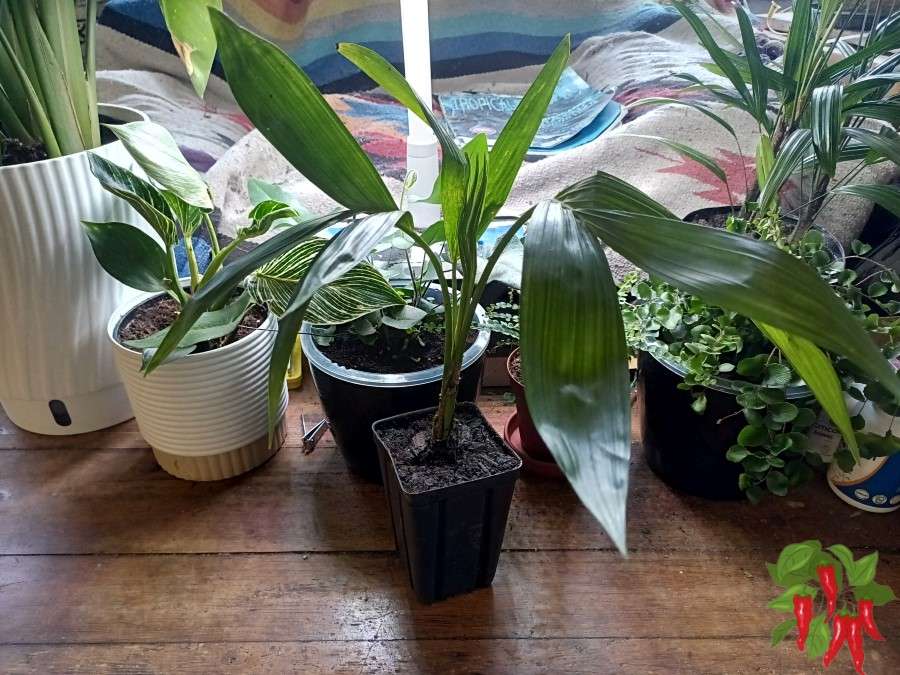
Kentia Palm is one of my favorite choices if you want the look of a large, elegant indoor palm without needing a room filled with intense sunlight. Its long, arching fronds have a softer, more graceful appearance than many of the palms commonly sold as houseplants.
The botanical name is Howea forsteriana. Kentia Palm is naturally slow growing and has a long history as an indoor palm because it adapts surprisingly well to household conditions.
I chose Kentia Palm along with Lady Palm as two of my best palm choices for lower-light indoor spaces. Neither palm actually prefers a dark room, but both are more forgiving of lower indoor light than many tropical palms.
I’m growing my own Kentia Palm indoors and will also be adding a video to this guide so you can see the actual plant I’m working with. In this guide, I’ll cover Kentia Palm care indoors, including light, watering, growing mix, humidity, fertilizer, repotting, placement, and the problems you may encounter as the palm grows.
What You’ll Learn
- How much indoor light a Kentia Palm really needs
- When and how to water Howea forsteriana
- What growing mix and container work best
- How to manage humidity and indoor temperatures
- How large Kentia Palms can become indoors
- Where to place one in an apartment or home
- How to prevent common Kentia Palm problems
Quick Answer
Kentia Palm (Howea forsteriana) grows best indoors with bright indirect light but is unusually tolerant of lower-light conditions for a palm. Water when the upper 1–2 inches of growing mix begin to dry, use an airy, well-draining mix and a container with drainage holes, and avoid keeping the roots constantly wet. Kentia Palm grows slowly, handles normal household conditions well, and can eventually become a substantial floor plant with long, arching fronds.
Kentia Palm Care at a Glance
| Botanical Name | Howea forsteriana |
| Common Name | Kentia Palm, Paradise Palm |
| Light | Bright indirect light; tolerates lower light |
| Water | Water when upper 1–2 inches begin to dry |
| Growing Mix | Airy and well-draining while retaining some moisture |
| Humidity | Average household humidity is usually suitable; moderate humidity is beneficial |
| Temperature | About 65–80°F works well indoors |
| Growth | Slow-growing, upright palm with arching feather-like fronds |
| Indoor Size | Often 5–12 feet over time under suitable conditions |
| Pet Safety | Generally considered non-toxic to cats and dogs |
What Is a Kentia Palm?
Kentia Palm (Howea forsteriana) is native to Lord Howe Island, Australia. In its natural environment it develops into a true tree-sized palm, but its slow growth makes it surprisingly adaptable to container growing indoors.
The foliage is one of the main reasons this palm stands out. Long fronds arch outward from the plant, with narrow leaflets creating the classic feather-like palm appearance. As the plant becomes larger, those arching fronds can give it an impressive tropical presence without looking as rigid as some other indoor palms.
Young Kentia Palms sold as houseplants may look fairly small and manageable. Don’t let the nursery pot determine where you plan to keep the plant permanently. This is a slow-growing palm, but an established Kentia can eventually become a large floor plant.
Its ability to handle lower indoor light is another reason Kentia Palm has remained popular as a houseplant. Lower-light tolerance doesn’t mean it should be kept in a dark corner. Give it usable indirect light and you’ll have a better chance of maintaining attractive growth.
See My Kentia Palm and How I Grow It Indoors
The Kentia Palm I’m growing is still a juvenile plant, only about 12–16 inches tall right now. It has a single stem and doesn’t yet look much like the large Kentia Palms you may have seen in upscale hotels and other indoor spaces.
That’s one of the interesting things about growing this palm from a young plant. As a Kentia matures, it develops the long, graceful, arching fronds that give the palm its classic appearance. Mine has a long way to go, and because Kentia Palm is naturally slow growing (3-10 inches a year), I’m not expecting that transformation to happen quickly.
In the video below, I’ll show you my young Kentia Palm and explain why I chose it for a lower-light area of my apartment. I also cover light, watering, mature size, propagation, and the coco coir and perlite growing mix I like to use.
My plan is to eventually grow this palm in a corner. That doesn’t mean a dark corner. As I mention in the video, photosynthesis still requires light. Kentia Palm tolerates lower light better than many palms, but it still needs useful indirect light to grow.
Why I Chose Kentia Palm for Lower-Light Indoor Spaces
One reason I wanted to grow Kentia Palm is its reputation for handling lower indoor light better than many palms. I chose it along with Lady Palm as my two best low-light palm choices for ordinary homes and apartments.
That distinction is important. A Kentia Palm can tolerate lower light, but that doesn’t mean low light produces its best growth. In a brighter location with indirect light, you can generally expect stronger growth than you would in a dim corner.
The advantage is flexibility. You don’t necessarily need your brightest south-facing window just to keep a Kentia Palm happy. That makes it useful when your prime window space is already occupied by plants that require much stronger light.
Kentia Palm is also slow growing. For apartment growers, that’s an advantage because you can start with a relatively small plant without immediately worrying about it taking over the room.
How Big Does a Kentia Palm Get Indoors?
Kentia Palm isn’t a miniature palm. Although growth is slow, mature indoor plants can eventually reach roughly 5–12 feet tall under favorable conditions.
Kentia Palm isn’t a miniature palm. Although growth is slow, mature indoor plants can eventually reach roughly 5–12 feet tall under favorable conditions.
You can generally expect only about 3–10 inches of growth per year, depending on light, growing conditions, and the age of the palm.
That’s why a small Kentia Palm can remain manageable indoors for many years.
Height isn’t the only space requirement to consider. Mature fronds arch outward and can extend several feet, so the palm needs open space around its canopy as it develops.
In a small apartment, you can manage the plant for quite a while because of its slow growth. Eventually, however, it is better suited to a floor location than a tabletop or narrow plant shelf.
Don’t try to control its eventual size by keeping it in an excessively small container. Instead, repot gradually and choose a location that gives the fronds room to develop without constantly brushing against walls, furniture, or foot traffic.
Kentia Palm Light Requirements
Kentia Palm does best with bright indirect light, but its ability to tolerate lower light is one of its biggest advantages as an indoor palm.
An east-facing window is an excellent location because the plant receives useful light and relatively gentle morning sun. A bright north-facing window can also work well.
If you’re using a south- or west-facing window, you may need to position the palm farther into the room or soften intense sunlight with a sheer curtain. A young palm that has been grown under protected nursery conditions shouldn’t suddenly be placed in harsh afternoon sun.
In a lower-light room, watch the plant rather than relying entirely on the direction of the window. Very slow or weak new growth can indicate that the palm would benefit from a brighter position.
Low-Light Palm Tip
Kentia Palm and Lady Palm are two of my favorite palm choices when intense window light is limited. Both tolerate lower light, but neither is a no-light plant. Give them as much useful indirect daylight as your space allows without exposing the foliage to harsh direct sun.
For a broader look at lighting, watering, humidity, and other requirements shared by indoor palms, see my Indoor Palm Tree Care guide.
Where to Buy a Kentia Palm
Kentia Palms can be harder to find locally than common palms such as Majesty or Parlor Palm. I purchased mine online as a young plant in a four-inch grower’s pot so I could grow it indoors and follow its development over time.
Don’t be surprised if a Kentia Palm costs more than some faster-growing palms. Kentias grow slowly and are normally propagated from seed.
A nursery has to keep that plant growing in its facilities much longer before it reaches a saleable size, and that extra growing time is one reason larger Kentia Palms can become expensive.
Find the Kentia Palm I purchased on Amazon
How to Water a Kentia Palm Indoors
Kentia Palm likes consistent moisture, but it is much easier to damage the roots by keeping the growing mix constantly wet than by allowing the upper portion to dry slightly between waterings.
A good starting point is to check the upper 1–2 inches of growing mix. When that area begins to feel dry, water thoroughly enough to moisten the root zone and allow excess water to drain from the bottom of the container.
Don’t use a fixed watering schedule. A Kentia Palm near a bright window during summer may use water much faster than the same plant during winter when growth and light levels have slowed.
Container size makes a difference too. My young Kentia Palm is starting in a four-inch grower’s pot, so it won’t behave like a mature palm growing in a large floor container. Small pots can dry surprisingly quickly, while large containers may remain moist for much longer.
Signs Your Kentia Palm May Need Water
- The upper growing mix feels dry.
- The container feels noticeably lighter.
- The growing mix is beginning to pull away from the sides of the pot.
- Leaflets begin developing dry or crispy edges.
Brown tips don’t automatically mean your Kentia Palm needs more water. Dry indoor air, inconsistent watering, fertilizer salts, and mineral buildup can produce similar symptoms.
Signs Your Kentia Palm May Be Staying Too Wet
- The growing mix remains wet for many days.
- Several fronds begin yellowing.
- The plant declines even though the growing mix is moist.
- The growing mix develops a stale or unpleasant smell.
If the root zone remains wet for an unusually long time, check the drainage holes, growing mix, container size, temperature, and available light before watering again.
Best Growing Mix for Kentia Palm
Kentia Palm needs a growing mix that provides a balance between moisture retention and drainage. The roots shouldn’t dry completely every few days, but they also need air around them.
For my indoor plants, I like using a coco coir and perlite base, and that’s the approach I’m using with my Kentia Palm. I especially like this combination in a self-watering planter. The coco coir holds useful moisture while the perlite adds air space, helping me keep the root zone moist without leaving it soggy.
A simple Kentia Palm mix can include:
- 2 parts buffered coco coir
- 1 part perlite
- A small amount of compost or worm castings if you want to add organic matter
You can also use a commercial indoor palm or houseplant mix. If it seems heavy or compacted straight from the bag, adding additional perlite can improve drainage and aeration.
Whatever mix you choose, the goal is the same: retain enough moisture for steady root access while allowing excess water to move through the container.
Pots and Drainage
I strongly prefer growing Kentia Palm in a container with drainage holes. This lets you water the root zone thoroughly without leaving the bottom of the pot sitting in trapped water.
I’m also comfortable using a self-watering planter with Kentia Palm when it’s paired with an airy growing medium such as coco coir and perlite.
I like this setup because it helps provide more consistent moisture without requiring me to guess when the entire container has dried.
The important part is still making sure the root zone stays moist rather than constantly saturated.
You can still use an attractive decorative pot. One easy approach is to keep the palm in a draining nursery or grow pot and place that container inside a decorative cachepot.
After watering, check the outer container and remove any accumulated water.
Avoid moving a small Kentia Palm directly into a huge floor planter simply because you know the plant will eventually become large. Too much unused growing mix around a small root system can remain wet for a long time.
Increase container size gradually as the root system develops.
Quick Tip
A large decorative pot doesn’t have to be the actual growing container. Keeping your Kentia Palm in a slightly smaller draining inner pot can make watering easier while still giving you the finished look you want indoors.
Kentia Palm Humidity Requirements
Kentia Palm adapts reasonably well to normal household humidity, which is another reason it has been used as an indoor palm for so long.
Moderate humidity can help keep the long fronds looking their best, but you don’t need greenhouse-level humidity to grow one successfully.
Very dry indoor air can contribute to brown leaf tips, particularly during winter when heating systems are running. Keep the palm away from heating vents and other sources of continuously hot, dry air.
If your apartment becomes extremely dry, a humidifier near a group of tropical plants is a more effective way to increase humidity than repeatedly misting the leaves.
Grouping compatible houseplants together can also create a slightly more humid microclimate immediately around the foliage, although it won’t dramatically raise humidity throughout the room.
Best Temperature for Kentia Palm Indoors
Kentia Palm is comfortable at many of the same temperatures people prefer indoors. A range around 65–80°F works well for routine indoor growing.
More important than chasing an exact temperature is avoiding extremes and sudden changes. Keep the palm away from cold exterior drafts, heating vents, fireplaces, and leaves pressed against very cold window glass.
You may find much wider temperature-tolerance numbers listed for Kentia Palm because mature plants can also be grown outdoors in suitable climates. Those extremes aren’t particularly useful for indoor care. Stable household temperatures are a much better target.
How to Fertilize a Kentia Palm
Kentia Palm is naturally slow growing, so heavy fertilization isn’t necessary. Trying to force faster growth with extra fertilizer can create more problems than it solves.
During active spring and summer growth, you can use a balanced houseplant or palm fertilizer according to the product directions. I prefer feeding conservatively rather than assuming more fertilizer will produce a better palm.
Reduce or stop fertilizing when growth slows substantially during the darker months of the year.
Over time, fertilizer salts can accumulate in container growing mixes. Periodically watering thoroughly enough for excess water to drain from the bottom of the container can help flush some accumulated soluble salts.
If you’re using coco coir as the primary growing medium, remember that it isn’t a complete source of plant nutrition by itself. Your Kentia Palm will eventually depend on the nutrients you provide through fertilizer or amendments in the mix.
Pruning and Cleaning a Kentia Palm
Kentia Palm doesn’t need regular shaping. Its naturally arching fronds are a major part of its appearance, so most pruning should be limited to genuinely damaged or dead foliage.
If an entire frond has turned brown and died, remove it cleanly near its base with sanitized pruning shears.
Don’t remove healthy green fronds simply because they’re older or extending farther than you would like. The palm relies on its green foliage for photosynthesis, and pruning isn’t a practical way to permanently keep a Kentia Palm small.
If only the very tips are brown, you can trim the dead tissue for appearance while leaving the healthy green portion of the leaflet intact.
The long fronds also collect dust indoors. Wipe the leaflets gently with a damp cloth or occasionally rinse the foliage. Clean leaves look better and receive light more effectively.
Cleaning is also a good opportunity to inspect the leaflets, midribs, and stems for early signs of pests.
Best Indoor Locations for Kentia Palm
Kentia Palm’s combination of graceful foliage and lower-light tolerance gives you more placement options than you have with many large tropical plants.
Near an East-Facing Window
An east-facing window is one of the easiest locations. It provides useful morning light without the intensity of hot afternoon sun.
Near a Bright North-Facing Window
Kentia Palm is one of the palms I would consider for a bright north-facing window. Growth may be slower than it would be under stronger indirect light, but the plant’s shade tolerance gives you more flexibility.
A Few Feet Back From a Brighter Window
A Kentia Palm can work well inside a bright living room rather than directly against the glass. This is especially useful near south- or west-facing windows where direct afternoon sunlight may be too intense.
Living Room Corners
The palm’s height and arching foliage make it a natural floor plant for an open living room corner. Make sure the location still receives useful daylight and has enough room for the fronds to spread.
Home Offices
Kentia Palm can add substantial greenery to an office without requiring your brightest window. Its slow growth also means you won’t be constantly pruning or rearranging the plant.
Bedrooms
A bedroom with a suitable window can also work. Choose Kentia Palm for its appearance and ability to adapt to indoor conditions rather than expecting it to function as an air-cleaning appliance.
Repotting a Kentia Palm
Because Kentia Palm grows slowly, it doesn’t need to be moved into a larger container every year. Unnecessary repotting can disturb a plant that is perfectly comfortable where it is.
Consider repotting when:
- The root system has become crowded throughout the container.
- Roots are emerging from the drainage holes.
- The growing mix has broken down and no longer drains properly.
- The palm has become unstable in its existing container.
- Water runs through an extremely root-filled pot without adequately moistening the root zone.
When it is time to repot, choose a container only slightly larger than the existing one and use fresh, airy growing mix.
Handle the root system carefully. Kentia Palm doesn’t benefit from aggressive root disturbance, so there’s no reason to tear apart a healthy root ball just to remove every trace of the old growing mix.
After repotting, return the palm to stable indoor conditions and resume normal care rather than immediately applying heavy fertilizer.
Can You Propagate a Kentia Palm?
Kentia Palm is normally propagated from seed, not by stem cuttings or division. This is different from a clumping palm such as Lady Palm, which naturally produces rhizome offshoots that can be separated.
You may see several Kentia Palm seedlings growing together in one nursery container to create a fuller-looking plant. Those individual seedlings shouldn’t be treated like offshoots from a single clumping palm.
For most indoor growers, propagation isn’t an important part of Kentia Palm care. Buying a healthy young plant and concentrating on growing it well is considerably more practical than starting this naturally slow-growing palm from seed.
Common Kentia Palm Problems and Troubleshooting
Kentia Palm is fairly adaptable for an indoor palm, but its foliage can still show signs of stress when watering, light, humidity, or root conditions aren’t quite right. Because the plant grows slowly, I prefer correcting the growing conditions rather than trying to force recovery with extra fertilizer.
Brown Leaf Tips
Brown tips are one of the most common problems you may notice on an indoor Kentia Palm. Dry indoor air can contribute, but it isn’t the only possible cause.
Check several possibilities:
- The growing mix has been allowed to become excessively dry.
- Indoor air is extremely dry.
- The palm is near a heating or cooling vent.
- Fertilizer salts have accumulated in the growing mix.
- Watering has been inconsistent.
You can trim dead brown tips for appearance while leaving the healthy green portion of the leaflet intact. Correcting the underlying problem is more important than trimming the damage.
Yellow Fronds
An occasional older frond eventually yellowing isn’t necessarily cause for concern. If multiple fronds begin turning yellow, however, check the root zone and your watering routine.
Growing mix that remains saturated for too long can stress the roots. Poor drainage, an oversized container, low light, and frequent watering can all cause the root zone to remain wet longer than expected.
Don’t automatically respond to yellow foliage by adding more water. Check the moisture level first.
Dry or Crispy Fronds
Large areas of dry, crispy foliage can develop if the palm becomes excessively dry or is exposed to very hot, dry air. Strong direct sunlight can also damage foliage that has been grown under lower-light conditions.
Check both the growing mix and the plant’s location. If the root zone is already moist, adding more water isn’t likely to solve a problem caused by intense sunlight or extremely dry air.
Pale or Scorched Leaves
Kentia Palm tolerates relatively low light, and plants grown under those conditions shouldn’t be moved suddenly into intense direct sunlight. Pale, bleached, or scorched patches can indicate excessive sun exposure.
Move the palm farther from the window or filter strong sunlight. If you want to increase its light exposure, make the change gradually.
Drooping Fronds
Remember that Kentia Palm naturally produces gracefully arching fronds, so some downward curvature is normal.
A sudden change in the plant’s posture is more important. Check whether the growing mix has become extremely dry or remained wet for an unusually long period. Root stress can affect the entire plant.
My Kentia Palm Isn’t Growing
Kentia Palm is naturally slow growing, especially indoors. A healthy plant doesn’t need to produce new fronds constantly.
If growth appears completely stalled over a long period, evaluate the amount of light the palm receives. Kentia Palm may survive in relatively low light while producing very little new growth.
Also consider temperature, root health, and nutrition. Don’t assume that slow growth means the plant needs a large dose of fertilizer.
Root Rot
Root problems are most likely when the growing mix remains saturated for extended periods. Dense growing mix, poor drainage, oversized pots, and excessive watering can all contribute.
If the palm is declining while the root zone remains consistently wet, inspect the roots. Healthy roots should feel firm. Soft, dark, deteriorating roots indicate a problem and should be removed with clean tools before the palm is replanted into fresh, well-draining growing mix.
Common Kentia Palm Pests
Kentia Palms grown indoors can occasionally develop the same pests you find on many other tropical houseplants. Regular inspection is particularly useful because pests are much easier to manage before populations become large.
Spider Mites
Spider mites can become a problem in warm, dry indoor environments. Look closely for fine webbing and tiny pale or stippled areas across the leaflets.
Scale Insects
Scale insects may look like small brown or tan bumps attached to the leaves or stems. Inspect both sides of the foliage and along the central portions of the fronds.
Mealybugs
Mealybugs have a white, cottony appearance and tend to collect in protected areas of the plant. Check around the bases of leaves and other places where the insects can remain hidden.
If you find pests, isolate the palm from your other houseplants while you deal with the infestation. Cleaning the foliage regularly also gives you a convenient opportunity to inspect the plant before a small pest problem becomes a large one.
Is Kentia Palm Safe for Cats and Dogs?
Kentia Palm (Howea forsteriana) is generally considered a non-toxic palm for cats and dogs, making it a useful option when you’re choosing larger houseplants for a home with pets.
Non-toxic doesn’t mean you should encourage pets to eat the foliage. Chewing can damage the palm, and eating plant material can still potentially cause digestive upset even when the plant isn’t considered poisonous.
If you have a cat or dog that regularly chews houseplants, positioning the palm where repeated chewing is less likely is still a sensible precaution.
Does Kentia Palm Purify Indoor Air?
Kentia Palm is frequently promoted as an air-purifying plant, sometimes with claims that it removes compounds such as formaldehyde or benzene from indoor air.
Plants can interact with airborne compounds under controlled experimental conditions, but that doesn’t mean a Kentia Palm will function like an air purifier in your bedroom or living room. A normal home has a much larger volume of air along with ventilation and continuous air exchange.
I would choose Kentia Palm for its graceful foliage, lower-light tolerance, slow growth, and ability to adapt to indoor conditions rather than expecting it to meaningfully clean the air in your apartment.
For actual indoor air management, ventilation, controlling pollution sources, and appropriate mechanical filtration are much more important.
Kentia Palm vs Lady Palm for Low Light
I chose Kentia Palm and Lady Palm as my two best low-light palm choices because both give you more flexibility than many palms when you’re growing indoors.
They don’t look alike, though, and that can make choosing between them fairly easy.
| Feature | Kentia Palm | Lady Palm |
|---|---|---|
| Foliage | Long, feather-like arching fronds | Broad, segmented fan-shaped leaves |
| Growth Habit | Upright with long spreading fronds | Dense, upright clumping growth |
| Growth Rate | Slow | Slow |
| Lower-Light Tolerance | Very good for a palm | Very good for a palm |
| Indoor Appearance | Graceful, classic tropical palm | Dense, architectural and bamboo-like |
| Best Choice If… | You want long, elegant feathered fronds | You prefer compact, upright fan foliage |
Neither should be treated as a plant for a windowless room. Their advantage is that they can tolerate less intense indoor light than many palms while still giving you the appearance of a substantial tropical houseplant.
FAQs About Kentia Palm Care Indoors
Can a Kentia Palm really grow in low light?
Yes. Kentia Palm is unusually tolerant of lower-light conditions for a palm. However, low-light tolerance isn’t the same as preferring darkness. Bright indirect light generally supports better growth, while very dim conditions can make an already slow-growing palm grow even more slowly.
How often should I water a Kentia Palm?
Check the growing mix instead of following a calendar. Water when the upper 1–2 inches begin to dry, then water thoroughly and allow the excess to drain. Container size, light, temperature, season, and growing mix all affect how quickly the palm needs water.
Why does my Kentia Palm have brown tips?
Brown tips can result from dry air, inconsistent watering, accumulated fertilizer salts, or other environmental stress. Check the growing conditions before automatically increasing watering.
How big does a Kentia Palm get indoors?
Kentia Palms can eventually become substantial floor plants, often reaching approximately 5–12 feet indoors under suitable conditions. Their slow growth means it can take many years for a young plant to approach mature indoor size.
Does Kentia Palm need direct sunlight?
No. Kentia Palm does well in bright indirect light and tolerates lower light. Gentle morning sunlight may be fine, but harsh direct afternoon sun can damage foliage, particularly on a plant that has been grown under shaded conditions.
Is Kentia Palm difficult to grow indoors?
Kentia Palm is relatively adaptable as palms go. The biggest priorities are avoiding constantly saturated growing mix, providing usable indirect light, and accepting its naturally slow growth rather than trying to force it with extra fertilizer.
Final Thoughts: Kentia Palm Care Indoors
Kentia Palm earns its reputation as one of the better palms for indoor growing. You get the classic tropical appearance of long, arching fronds along with a plant that is more forgiving of lower indoor light than many palms.
For me, Kentia Palm and Lady Palm stand out as two of the best choices when you’re looking for a palm for a lower-light home or apartment. Lady Palm gives you dense fan-shaped foliage, while Kentia Palm gives you the graceful feathered appearance most people picture when they think of a palm.
Give your Kentia Palm useful indirect light, let the upper growing mix begin to dry before watering again, provide good drainage, and fertilize conservatively. Most importantly, be patient. This is a naturally slow-growing palm.
I’m starting with a young plant, so I’ll be able to follow how mine develops and adapts to indoor conditions over time. I’ll update the guide as I gain more firsthand experience growing it.
Where to Buy a Kentia Palm
Kentia Palms aren’t always as easy to find locally as common indoor palms such as Majesty or Parlor Palms. I purchased mine online as a young plant in a four-inch grower’s pot so I could grow it indoors and follow its development over time.
Find the Kentia Palm I purchased on Amazon
Continue Exploring Indoor Palms
References
- Clemson Cooperative Extension – Indoor Palms
- Penn State Extension – Palms as Houseplants
- NC State Extension – Howea forsteriana

 Steve S. is the creator of