
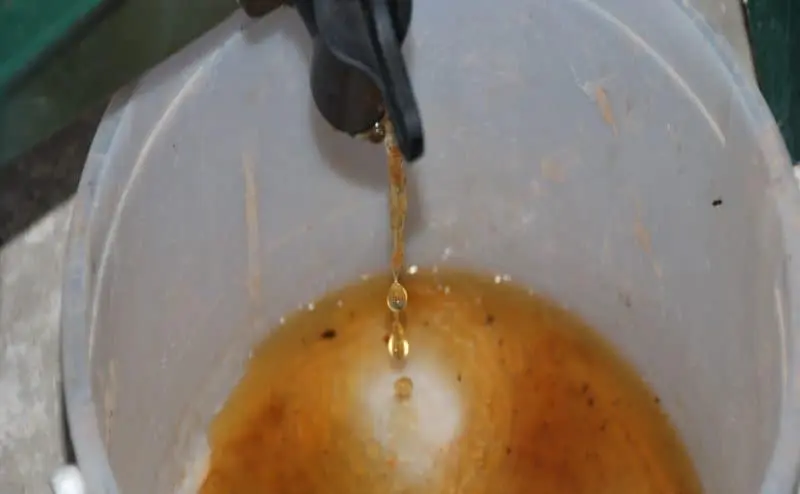
Confused about worm tea vs leachate? I used to think the liquid from my worm bin was tea too. But they’re not the same.
Real worm tea is a nutrient-packed brew made from castings. Leachate, on the other hand, can be unsafe and should be used with caution.
Worm Tea Vs Leachate What’s the Difference?
Worm tea is made by soaking worm castings in a porous bag in water. Leachate is what comes out of the bottom of a worm bin and some do call this worm tea, but it is not the same.
I thought worm tea came out of the spigot on the bottom of a worm bin and maybe you do too.
But this liquid, although sometimes called worm tea is not anything like real worm tea and is better to be thrown away. It is called leachate.
What Is The Difference Between Worm Tea And Worm Leachate?
Worm leachate is the liquid that collects inside a worm bin. It is unprocessed by the worms and lacks the nutrients and good organisms found in worm castings. The best way to think about it is as raw sewage.
Worm tea is made by putting worm castings in a porous bag and soaking them in water. It has been fully processed by the worms and contains more nutrients and beneficial bacteria than found in leachate.
Can You Use Worm Leachate?
You can use worm leachate, but with caution, but some say it should be thrown away. Because it has not been processed, it can contain bad bacteria. It is recommended not to use it on edible plants. It can be diluted and fed to houseplants according to some.
If your worm bin is not overly wet, there should not be a lot of this leachate being produced. It is usually much darker in color than worm tea.
Often, it is runoff that has been anaerobically (without oxygen) processed, whereas worm castings and worm compost are produced aerobically (with oxygen).
Anaerobic compost is often smelly while aerobic composting does not produce odors. If your leachate has a strong smell you should discard it.
I am surprised that many people refer to this as worm tea even though it isn’t. In older information about worm composting this is often referred to as worm tea and considered good to feed to your plants.
But true worm tea is made from worm castings and not this leachate.
It may be possible to re-use the leachate by diluting it with 10 parts water to 1 part leachate. You could use the bubbler for 24 hours (see below).
However, your best bet is to discard the leachate. Pour it down the sink or toilet, or dump it on the driveway. If you decide to re-use leachate, apply it only to decorative plants. https://unclejimswormfarm.com/re-use-worm-leachate-worm-tea/
Make Worm Tea Instead Of Using Leachate
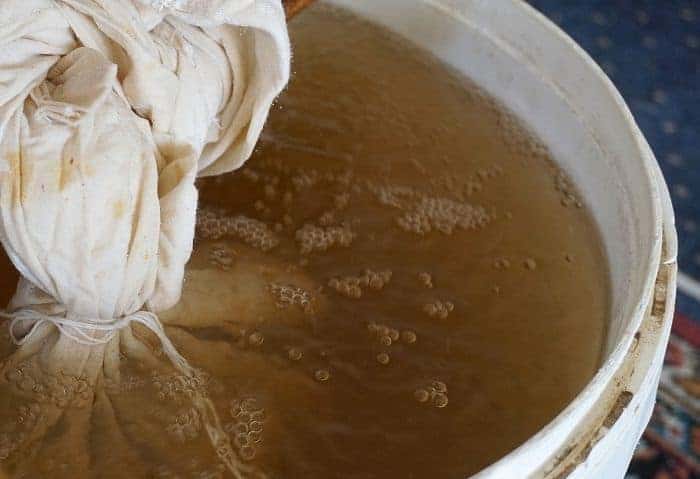
Worm tea is very easy to make. It is safe to use on all plants and provides more nutrients and beneficial bacteria.
All you need to do is fill a porous cloth bag (like the one your worms came in) with worm castings and give it a soak.
You can watch the video below to learn how to make worm tea. But I want to make a suggestion. You need to use water free from chlorine or chloramine.
I don’t know if his method will work for chloramine so I recommend using SeaChem Prime for this. I use it in my fish tanks and a little goes a long way. Otherwise, any tap water conditioner at Petco should work.
Just make sure to read the label. If you are not adding Ascorbic Acid to your water you probably won’t need to adjust the pH of your water either.
For best results use airstones in the bucket to keep things aerobic and add a bit of molasses to feed the microbes. If you don’t want to go to that much trouble, you can just let it soak overnight and use it the next day.
Not sure if worm composting is for you? Read my article to find out more about worm composting Worm Composting In Your Apartment – How To Turbo-charge Your Garden
Worm Tea vs Leachate — FAQs
What is the difference between worm tea and leachate?
Worm tea is brewed from finished worm castings in water (often aerated), producing a microbe-rich, plant-safe liquid. Leachate is the raw liquid draining from a worm bin; it can contain anaerobic byproducts and harmful microbes and is not the same as tea.
Is leachate safe to use on plants?
Use leachate with caution, if at all. Avoid edible plants. If you choose to use it, dilute at least 1:10 with water and test on non-edible ornamentals first. Discard any leachate that smells sour or rotten.
How do I make real worm tea?
Place mature castings in a porous bag, soak in dechlorinated water 12–24 hours (ideally with an airstone), and optionally add a small amount of unsulfured molasses to feed microbes. Strain before use.
Do I need to aerate worm tea?
Aeration helps keep the brew oxygenated and encourages beneficial microbes. Non-aerated “steeped” tea can work if used the same day, but aerated tea is generally more microbially active.
What water should I use for brewing?
Use chlorine/chloramine-free water. Use a carbon filter, or treat with a conditioner that neutralizes chloramine before brewing.
How long does worm tea last?
Worm tea is best used within 24 hours (aerated) or 1–2 days (non-aerated) if kept cool and loosely covered. Discard if it develops off odors or visible film growth.
How do I apply worm tea?
Dilute 1:5 to 1:10 with water. Drench soil at the root zone or use as a gentle foliar spray (avoid spraying in direct sun). Apply every 2–4 weeks during active growth.
Can worm tea replace fertilizer?
Worm tea offers microbes and soluble nutrients but isn’t a high-NPK fertilizer. Use it to complement balanced organic nutrition and good soil practices, not as the sole nutrient source for heavy feeders.
Why does my bin produce so much leachate?
Excess leachate usually means the bin is too wet. Reduce juicy scraps, add dry bedding (shredded paper, coco coir), improve drainage, and keep airflow adequate to favor aerobic conditions.
What does bad leachate or tea smell like?
Healthy worm tea smells earthy. Sour, sulfurous, or rotten odors indicate anaerobic conditions—discard and adjust your process before the next brew.
Is leachate ever useful?
If it smells neutral/earthy, you may dilute heavily (≥1:10) and apply to non-edible ornamentals only. When in doubt, discard down a sanitary drain and focus on brewing proper worm tea instead.
Do I need molasses in worm tea?
A small amount can boost microbial activity in an aerated brew. Avoid overuse, and always keep the solution well oxygenated to prevent unwanted microbe growth.
🌿 Sustainable Gardening Guides
Want to grow greener indoors? Start with our favorite sustainable gardening tips and make every plant choice count.
- ♻️ Why Compost at Home?
- 🪱 Vermicomposting for Apartments
- 🍂 Bokashi Composting: Start a Bokashi Bucket
- 🌱 Composting Indoors Without Worms
- 🧃 Worm Tea vs Leachate
- 🌻 Best Indoor Composting Ideas
- 🍃 Eco-Friendly Indoor Garden Setup
- 🐞 Eco-Friendly Pest Control
- 💧 Conserve Water in Your Indoor Garden
- 🌍 Reduce Your Carbon Footprint
- 🪴 Eco-Friendly Pots and Planters
- 🌿 Benefits of Organic Fertilizers
- 🏡 Sustainable Gardening Overview
- 🌾 Small Scale Permaculture
- 🔋 Renewable Energy for Gardens
- See all articles in our Sustainable Gardening category
 Steve S. is the creator of