
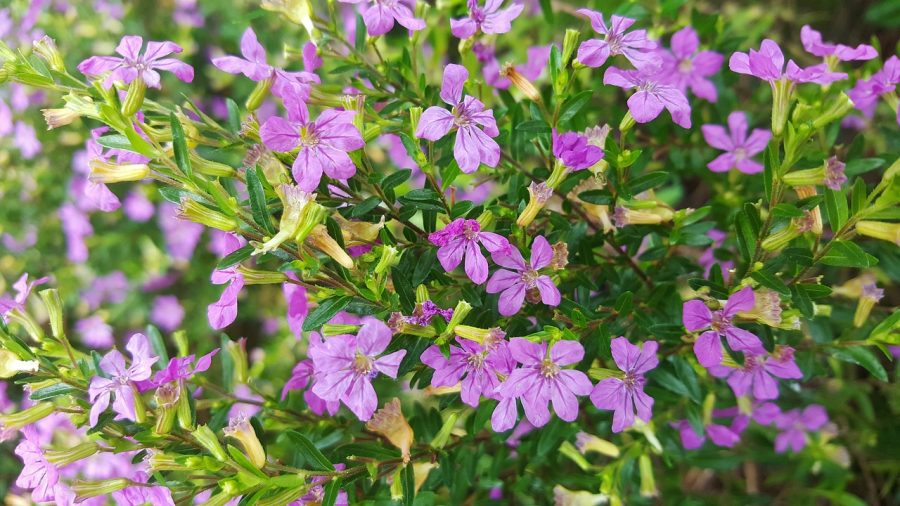
Cuphea (Mexican heather / false heather) is a compact flowering plant that stays neat in pots and blooms best with bright light, well-drained soil, and steady watering.
What You’ll Learn
- How to grow Cuphea (Mexican heather) successfully in pots
- The light level that keeps it blooming instead of getting leggy
- How often to water containers without causing root rot
- The best potting mix for drainage and steady growth
- How to prune for fuller plants and longer bloom time
- When and how to overwinter Cuphea before frost
Quick Start: Growing Cuphea in Pots
- Light: Full sun to bright partial sun (at least 6 hours daily)
- Soil: Well-draining potting mix
- Water: Keep evenly moist, never soggy
- Fertilizer: Light feeding every 4–6 weeks in the growing season
- Best for: Containers, borders, balconies, patios
Cuphea (Mexican heather or false heather) is a compact flowering plant that performs especially well in pots. It stays neat, blooms heavily in warm weather, and handles heat better than many small flowering plants.
If you’re looking for straightforward Cuphea plant care, focus on three things: bright light, fast-draining soil, and steady—but not soggy—moisture. Get those right, and it rewards you with continuous color from spring through fall.
The biggest mistake I see with Cuphea in containers isn’t underwatering — it’s keeping the soil too wet or growing it in too much shade. Both lead to weak growth and fewer blooms.
Below, I’ll walk you through exactly how to grow Mexican heather in pots, how to prune it for fuller shape, and how to overwinter it before frost if you’re outside warm zones.
 American Plant Exchange Mexican Heather – 6-Inch with Pot – Easy Care for Home, Garden, or Patio
Introduction To Cuphea Plant Care
Are you looking for a beautiful and low-maintenance plant to brighten up your living space?
Look no further than the Cuphea hyssopifolia, also known as the Mexican heather!
With its delicate pink flowers and lacey foliage, this popular plant is perfect for pots and containers.
In this guide, we’ll walk you through everything you need to know about Cuphea plant care, so you can keep your Mexican heather thriving all year round!
Meet the Cuphea hyssopifolia

According to Wikipedia: Cuphea hyssopifolia, also known by the common names Mexican heather or false heather, is a small flowering shrub that belongs to the family Lythraceae. It is native to Mexico and some parts of Central America, but due to its popularity, it can now be found in many parts of the world.
It has thin, lacey foliage and produces small, delicate pink flowers. It is a perfect choice for those looking to add a splash of color to their indoor or outdoor space. Cuphea hyssopifolia, the false heather, Mexican heather, Hawaiian heather or elfin herb, is a small evergreen shrub native to Mexico, Guatemala, and Honduras.
It grows to about 60 cm (24 in) high by 90 cm (35 in) wide and has purple, lavender or white colored flowers and fine foliage. Its leaves are small, narrow and dark green. The fruit is a capsule that contains small globose seeds.
Why Cuphea hyssopifolia is perfect for pots and containers
Cuphea hyssopifolia is a popular choice for pots and containers for a few reasons.
• Mexican Heather is a relatively small plant, so it can fit into smaller spaces.
• Cuphea has a compact growth habit, which makes it perfect for containers.
• Mexican Heather thrives in summer and needs less watering than some other plants, which makes it ideal for those who don’t have time to constantly water their plants.
• Cuphea hyssopifolia must have well-drained soil, which is easy to achieve in a container setting.
All of these factors make it a great choice for those looking to add some greenery to their balcony, patio, or indoor space.
Mexican heather is a resilient plant that can withstand intense summer heat and direct sunlight.
When planting this outdoor species, it’s best to select a location that receives several hours of the afternoon sun and some partial shade during the day.
This plant is drought resistant and tolerates hot summers.
They are tender plants that when grown outdoors and require good drainage and frost-free climates.
It is well-suited to winter conditions in USDA hardiness zones 9 to 11. If you plant it outside do so after all danger of frost is past.
Cuphea Plant Care in pots can allow you to move the plant indoors or outdoors depending on the season but make sure to bring it in before the first frost.
Mexican Heather Plant Care Reference Guide
| Characteristic | Details |
|---|---|
| Common Name | Mexican Heather, False Heather |
| Botanical Name | Cuphea hyssopifolia |
| Native Habitat | Mexico, Guatemala, and Honduras |
| Plant Type | Evergreen flowering shrub |
| Growth Pattern | Compact, bushy, spreading habit |
| Mature Size | Up to 24 in. tall × 35 in. wide (60 × 90 cm) |
| Watering | Keep soil evenly moist but well-drained; avoid waterlogging |
| Light/Sun Exposure | Full sun to partial shade; 6+ hours of bright light daily |
| Soil Type | Well-draining potting mix; sandy or loamy soil |
| Soil pH | Slightly acidic (5.5 – 6.5) |
| Temperature | Prefers 60–85°F (15–29°C); frost-sensitive |
| Humidity | Moderate; tolerates average household humidity |
| Bloom Time & Flower Color | Blooms spring to fall; pink, lavender, or white flowers |
| Potential Problems | Root rot from overwatering; pests like spider mites, aphids, and whiteflies |
| Repotting | Every 2 years; refresh soil and trim roots if pot-bound |
| Hardiness Zones (USDA) | 9 – 11 (grown as annual or container plant in cooler zones) |
Red Mexican Cigar Plant And Mexican Firecracker Plant
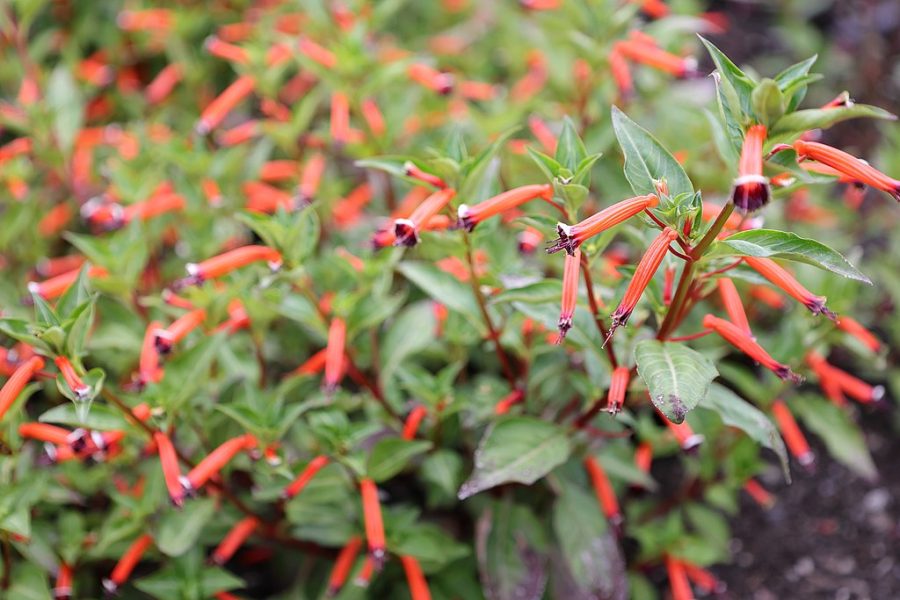 Cephas, CC BY-SA 4.0, via Wikimedia Commons
The Red Cigar Plant and the Mexican Firecracker Plant are related to Mexican Heather.
Both plants belong to the same botanical family, Bignoniaceae, which includes approximately 800 species of trees, shrubs, and vines.

The scientific name of the red cigar plant is Cuphea ignea, while the Mexican firecracker plant is known as Cuphea micropetala.
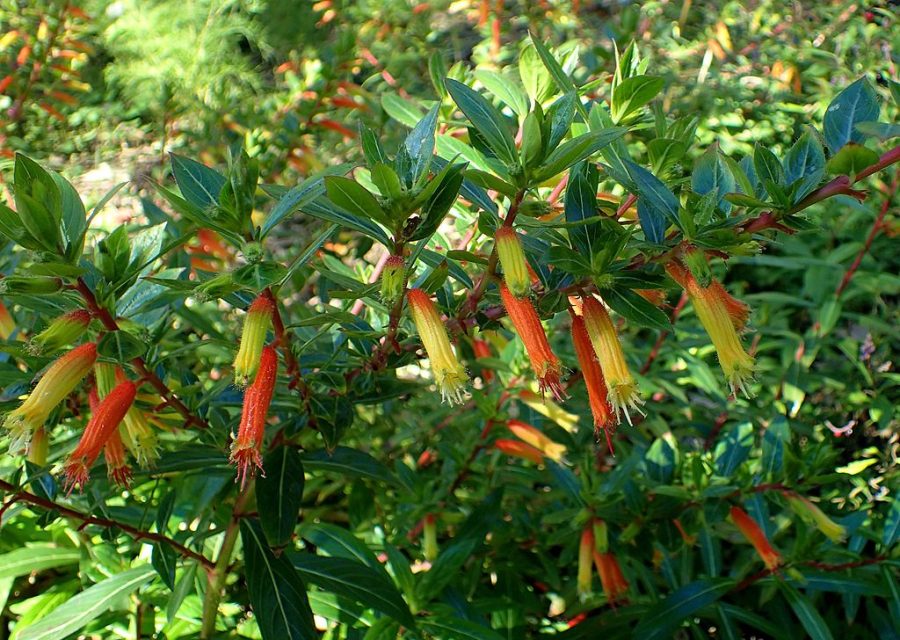 Krzysztof Ziarnek, Kenraiz, CC BY-SA 4.0, via Wikimedia Commons
These two species are closely related and share many similarities in their appearance and growing requirements.
Both plants are known for their showy, tubular flowers that are brightly colored and attract hummingbirds and other pollinators.
The flowers of the red cigar plant are typically red or orange-red, while the Mexican firecracker plant has orange-yellow flowers with red stripes.
In summary, the red cigar plant and the Mexican firecracker plant are members of the same botanical family and share many similarities in their appearance and growing habits.
Other species of Cuphea
There are many different species of Cuphea, which is a large genus of plants in the Bignoniaceae family. Here are some examples of other species of Cuphea:
Cuphea hyssopifolia: Also known as false heather or Mexican heather, this is a popular garden plant with small, delicate leaves and small, tubular flowers in shades of pink, white, or purple. It is native to Mexico and Central America.

Cuphea ignea: Commonly known as cigar plant or firecracker plant, this species has bright red, tubular flowers that resemble a lit cigar. It is native to Mexico and parts of Central America.
Cuphea viscosissima: This species, commonly known as sticky Cuphea, has small, pink or purple flowers that bloom from summer to fall. It is native to the southwestern United States, Mexico, and Central America.
Cuphea micropetala: Also known as Mexican firecracker plant, this species has bright orange-yellow flowers with red stripes. It is native to Mexico and Central America.
Cuphea carthagenensis: Commonly known as Colombian waxweed or clara, this species has small, white, waxy flowers that bloom from summer to fall. It is native to Central and South America.
Cuphea llavea: This species, commonly known as bat-faced Cuphea, has purple and red flowers that resemble a bat’s face. It is native to Mexico and Central America.
These are just a few examples of the many different species of Cuphea.
Each species has its own unique characteristics and growing requirements, but many share similar traits, such as showy, tubular flowers that attract hummingbirds and other pollinators.

Light Requirements
Cuphea blooms best with strong light. In pots, aim for at least 6 hours of bright light daily. Full sun produces the heaviest flowering, while partial sun still works as long as the plant stays compact and not stretched.
If the plant becomes thin, leggy, or stops blooming, light is usually the issue. Too much shade leads to soft growth and fewer flowers.
Best Placement for Potted Cuphea
- Outdoors: Full sun to bright partial sun. In very hot climates, morning sun with light afternoon protection works well.
- Balconies & patios: Choose the brightest exposure available.
- Indoors: Place in a south- or west-facing window. If natural light is limited, supplement with an LED grow light.
Using grow lights: Keep fluorescent lights 6–12 inches above the plant. LEDs vary by strength—follow manufacturer height guidelines and raise the light if you see leaf bleaching. Limit artificial light to about 12 hours daily using a timer.
Quick test: Watch the location for a full day and count actual hours of direct sun—not just bright daylight.
In cooler zones where Cuphea is grown in containers, strong light becomes even more important indoors during winter. Without it, the plant may survive but won’t bloom heavily.
Now that you know how to provide the right amount of light for your Cuphea hyssopifolia, let’s talk about its watering needs.
As with any plant, getting the watering just right is crucial to the plant’s health and growth.
In this section, we’ll discuss how much and how often you should water your Cuphea, so you can keep it happy and healthy.
So, grab your watering can, and let’s dive in!
Watering Needs
Cuphea likes evenly moist soil—but it hates sitting in water. In pots, the goal is steady moisture with fast drainage.
The most common mistake isn’t underwatering. It’s keeping the soil constantly wet, which leads to root rot and weak growth.
How Often to Water Cuphea in Pots
Water when the top inch of soil feels dry. Stick your finger into the soil—if it’s dry at the first knuckle, it’s time.
- Summer: Every 2–3 days in hot weather, depending on pot size and sun exposure.
- Mild weather: Once or twice per week.
- Winter (indoors): Allow soil to dry slightly more between waterings.
Always water thoroughly until excess drains from the bottom. Empty the saucer so roots aren’t sitting in water.
If leaves yellow and soil stays wet for days, improve drainage or reduce watering. If leaves droop and soil is bone dry, increase frequency slightly.
Soil Requirements
Cuphea needs fast-draining soil. In containers, heavy soil is the quickest way to cause root problems.
Use a high-quality potting mix designed for containers. Avoid garden soil—it compacts easily and holds too much moisture in pots.
Best Potting Mix for Cuphea
- Standard all-purpose potting mix as a base
- Add perlite or coarse sand if drainage needs improvement
- Ensure the container has drainage holes
Cuphea prefers slightly acidic soil (around pH 5.5–6.5), but it’s not overly sensitive as long as drainage is good.
Quick check: After watering, the soil should feel moist—not muddy—and excess water should drain within seconds, not minutes.
Soil Requirements
Now that we’ve covered Cuphea hyssopifolia’s light and watering needs, let’s talk about soil.
Having the right type of soil is important for the plant’s overall health and growth.
In this section, we’ll discuss the type of soil that Mexican Heather prefers and how you can ensure your plant has the best soil possible.
So, grab your gardening gloves, and let’s dig in!
Cuphea hyssopifolia soil requirements

Mexican Heather prefers well-drained soil that is slightly acidic with a pH level between 5.5 and 6.5.
This type of soil will allow the plant’s roots to breathe and absorb nutrients properly, which will result in healthy growth and blooming.
Providing well-drained soil for Cuphea hyssopifolia in pots
To provide well-drained soil for your Cuphea hyssopifolia, you can use a high-quality potting mix that is specifically designed for container gardening.
Avoid using garden soil, as it can become compacted and hinder the plant’s growth.
You can also mix in some sand or perlite to improve drainage.
Make sure the pot has drainage holes to allow excess water to escape, and add a layer of gravel or broken pot pieces at the bottom of the pot to help with drainage.
Finally, if you notice that the soil is staying too wet, you can add more perlite or sand to improve drainage.
Fertilizer
We’re almost done with our Cuphea hyssopifolia care guide, but before we wrap up, let’s talk about fertilizer.
While Cuphea hyssopifolia doesn’t require a lot of fertilizer, a little bit of food can go a long way in promoting healthy growth and blooming.
In this section, we’ll discuss when and how to fertilize your plant to get the best results.
So, grab your fertilizer, and let’s get started!
Fertilizer requirements of Cuphea hyssopifolia

Cuphea hyssopifolia doesn’t require a lot of fertilizer, but it will benefit from a little boost of nutrients.
Try liquid plant food at half-strength.
You can fertilize your plant every 4-6 weeks during the growing season (spring and summer) using a balanced fertilizer with equal amounts of nitrogen, phosphorus, and potassium.
Avoid over-fertilizing, as this can lead to salt buildup in the soil, which can damage the plant’s roots.
Properly fertilizing Cuphea hyssopifolia in pots
To properly fertilize your Cuphea hyssopifolia in pots, follow the instructions on the fertilizer package carefully, and dilute the fertilizer to half-strength before applying.
You can use a liquid or water-soluble fertilizer, or you can use slow-release granules that will gradually release nutrients over time.
Water your plant thoroughly before fertilizing to avoid fertilizer burn, and avoid getting fertilizer on the leaves or flowers, as this can cause damage.
Finally, make sure to rinse the pot with water after fertilizing to avoid salt buildup in the soil.
Pruning and Maintenance
Cuphea hyssopifolia is a relatively low-maintenance plant, but it still requires a bit of care to keep it looking its best.
In this section, we’ll cover pruning and maintenance tips to help your plant stay healthy and beautiful.
From deadheading spent blooms to shaping your plant, we’ll walk you through everything you need to know to keep your Cuphea hyssopifolia in tip-top shape!
How to prune and maintain Cuphea hyssopifolia in pots
Pruning is an important part of maintaining the health and appearance of your Cuphea hyssopifolia.
Regular deadheading, or removing spent blooms, will encourage the plant to produce more flowers.
You can also pinch back the tips of the plant to promote bushier growth and prevent it from getting too leggy.
Finally, you may need to trim back any dead or damaged branches to keep your plant looking neat and healthy.
Keeping Cuphea Plants healthy and thriving
In addition to pruning, there are a few other things you can do to keep your Cuphea hyssopifolia healthy and thriving.
First, make sure to check for pests and diseases regularly and take action if you notice any issues.
Secondly, consider repotting your plant every couple of years to give it fresh soil and room to grow.
Finally, remember to adjust your watering and fertilizing routines as needed based on the weather and the growth of your plant.
With a little bit of care and attention, your Cuphea hyssopifolia will reward you with beautiful blooms all season long!
Propagation:

Mexican heather can be propagated through seeds or cuttings.
To propagate from seeds, collect the seed pods from the mature plant and allow them to dry out.
Once the pods have split open, collect the seeds and plant them in a well-draining soil mix. Keep the soil moist and warm until the seeds germinate.
To propagate from cuttings, take 3 to 4-inch stem cuttings from the parent plant, making sure to remove any leaves from the lower part of the cutting.
Dip the cut end in a rooting hormone and plant the cutting in a well-draining soil mix.
Keep the soil moist and warm, and provide some shade until the cutting develops roots and begins to grow.
Both methods of propagation can be successful, but propagating from cuttings is often easier and faster.
Once the new plants have developed roots and are growing well, they can be transplanted to their permanent location in the garden.
Pests and Diseases
Like any plant, Cuphea hyssopifolia is susceptible to pests and diseases.
But don’t worry – with a little bit of knowledge and care, you can keep your plant healthy and happy.
In this section, we’ll cover some common pests and diseases that may affect your Cuphea hyssopifolia, as well as tips on how to prevent and treat them.
Let’s dive in!
Cuphea hyssopifolia may be susceptible to pests such as spider mites, aphids, and whiteflies.
Diseases such as root rot and fungal infections may also occur, especially if the plant is overwatered or not provided with enough sunlight.
To prevent pests, make sure to keep your plant clean and free from debris, as pests are attracted to dirty, cluttered environments.
Regularly check the plant for signs of pests, such as webbing or small insects.
To treat pests, you can use insecticidal soap or neem oil, both of which are natural and effective methods.
To prevent diseases, make sure to provide adequate drainage and avoid overwatering the plant.
If you notice signs of fungal infection or root rot, you may need to remove any affected leaves or even repot the plant in fresh, well-draining soil.
It’s also a good idea to make sure the plant is not overcrowded, as this can lead to increased humidity and the spread of disease.
False Heather FAQs
If you’re interested in adding a vibrant, easy-to-care-for plant to your garden or home, false heather, also known as Cuphea or Mexican Heather, might be the perfect fit.
This plant is not only visually appealing but also quite versatile in terms of care.
Whether you’re a seasoned gardener or a beginner, you probably have a few questions about how to get the best out of your false heather plant. Below are some frequently asked questions to guide you.
Q: Does false heather like sun or shade?
A: False Heather prefers full sun to partial shade. However, it is adaptable and can tolerate different light conditions.
Q: Is False Heather an annual or perennial?
A: False heather is generally a perennial in warmer climates but is often treated as an annual in colder regions.
Q: How do you take care of a false heather plant?
A: Plant it in well-drained soil, water it moderately, and place it in a location with good sunlight. Fertilize lightly during the growing season.
Q: Is Cuphea the same as Mexican Heather?
A: Yes, Cuphea is the botanical name for what is commonly known as Mexican heather or false heather. They are the same plant.
Cuphea Plant Care Conclusion

And there you have it, everything you need to know about Cuphea hyssopifolia plant care!
Whether you’re a seasoned gardener or just starting out, this beautiful and low-maintenance plant is perfect for pots and containers.
With proper light, watering, soil, and fertilization, your Mexican heather will thrive and provide a burst of color to any space.
And with some simple pruning and pest prevention, you can keep it healthy for years to come. Happy gardening!
Final thoughts on growing and caring for Cuphea hyssopifolia
Recap of the key points of Cuphea hyssopifolia care in pots:
Cuphea hyssopifolia, also known as Mexican heather, is a popular plant for pots and containers due to its compact size, lacey foliage, and small pink flowers.
Cuphea hyssopifolia requires bright, indirect light and well-draining soil. It is also drought-tolerant and can handle some periods of dryness.
Proper watering is important for Cuphea hyssopifolia in pots. Water when the top inch of soil is dry and avoid overwatering, which can lead to root rot.
Fertilize Cuphea hyssopifolia once a month with a balanced, water-soluble fertilizer during the growing season.
Pruning is not required for Cuphea hyssopifolia, but you can pinch back the tips to encourage bushiness and remove any dead or damaged foliage.
Common pests and diseases that affect Cuphea hyssopifolia include spider mites, whiteflies, and root rot.
Regular inspections and prompt treatment can help prevent and control these issues.
B. Final thoughts on growing and caring for Cuphea hyssopifolia:
Overall, Cuphea hyssopifolia is a low-maintenance and beautiful plant that is perfect for pots and containers.
As long as you provide it with the right growing conditions, your Mexican heather will thrive and add a pop of color to any space.
Remember to keep an eye out for pests and diseases, and prune and fertilize as needed.
With these tips and some TLC, you can enjoy your Cuphea hyssopifolia for years to come!
Read more: 20 Benefits Of Keeping Indoor Plants For Improved Lifestyle
Sustainable Apartment Gardening
🏙️ Apartment Gardening
Turn your apartment into a thriving garden! Explore easy guides for veggies, herbs, fruits, and flowering plants—all grown indoors.
-
- 🥕 Harvesting Carrots in Containers
- 🍅 Growing Tomatoes Indoors For Beginners
- 🌱 The Best Vegetables To Grow Indoors
- 🥔 How To Grow Potatoes In A 5-Gallon Bucket Indoors
- 🧄 Growing Garlic Indoors In Pots
- 🥬 How To Grow Bok Choy Indoors
- 🫘 Growing Green Beans In Pots
- 🧅 Growing Leeks In Containers
- 🥕 How To Grow Carrots Indoors
- See all articles in our Apartment Gardening category
 Steve S. is the creator of