Want to know how to grow scallions indoors? These green onions are easy to grow in containers, don’t take up much space, and give you a fresh supply of onion greens for salads, soups, and just about anything else you’re cooking.
Scallions are sometimes called bunching onions, and unlike regular bulb onions, they are generally grown for their long white stems and green tops. You can start them from seed, use starter plants, or even regrow the rooted ends of scallions purchased at the grocery store.
I prefer growing scallions from seed in coco coir. For this grow, I’m using 2-gallon fabric grow bags filled with coco coir and Burpee Evergreen Long White Bunching Onion seeds. It’s a simple setup that works well for indoor gardening, especially when you don’t have much room.
Let’s go over planting, lighting, watering, thinning, and harvesting so you can grow your own scallions indoors.
🌱 What You’ll Learn
- The difference between scallions, green onions, and bunching onions.
- How to start scallions from seed in indoor containers.
- Why I prefer growing scallions in coco coir.
- How deep to plant seeds and how far apart to space seedlings.
- When to thin and harvest scallions for the kitchen.
- How to keep a supply of scallions growing with repeat sowings.
🧅 Quick Answer: How to Grow Scallions Indoors
To grow scallions indoors, fill a container with potting mix or coco coir, sow the seeds about 1/4 inch deep, and keep the growing medium evenly moist until they germinate. I like to sow seeds roughly an inch apart and thin the seedlings to about two inches apart as they grow.
Place your container in a sunny window or under a grow light. Scallions need plenty of light to develop strong, healthy green tops. If you’re growing in straight coco coir, you’ll also need to provide nutrients because coco coir doesn’t supply enough fertilizer on its own.
You can begin harvesting smaller scallions whenever they’re large enough to use. For more mature plants, expect roughly 60–80 days from seed, depending on the variety and growing conditions. Sow another batch every few weeks if you want a more continuous supply.
🌿 Growing Scallions Indoors at a Glance
| Growing Requirement | Recommendation |
|---|---|
| Plant | Scallions or bunching onions (Allium fistulosum) |
| Growing Method | Containers or fabric grow bags |
| Container Size | I use 2-gallon fabric grow bags |
| Growing Medium | Coco coir or a well-draining potting mix |
| Planting Depth | About 1/4 inch deep |
| Seed Spacing | Sow about 1 inch apart; thin to roughly 2 inches |
| Lighting | Bright light from a sunny window or suitable grow light |
| Watering | Keep evenly moist without leaving the roots waterlogged |
| Fertilizer | Provide nutrients regularly when growing in coco coir |
| Harvest Time | Approximately 60–80 days from seed; smaller plants can be harvested earlier |
| Continuous Harvest | Sow additional seeds every few weeks |
Remember: You don’t have to wait for scallions to reach full size before harvesting them. I often sow a little heavier than necessary and use the thinnings in salads or other dishes. That way, nothing goes to waste.
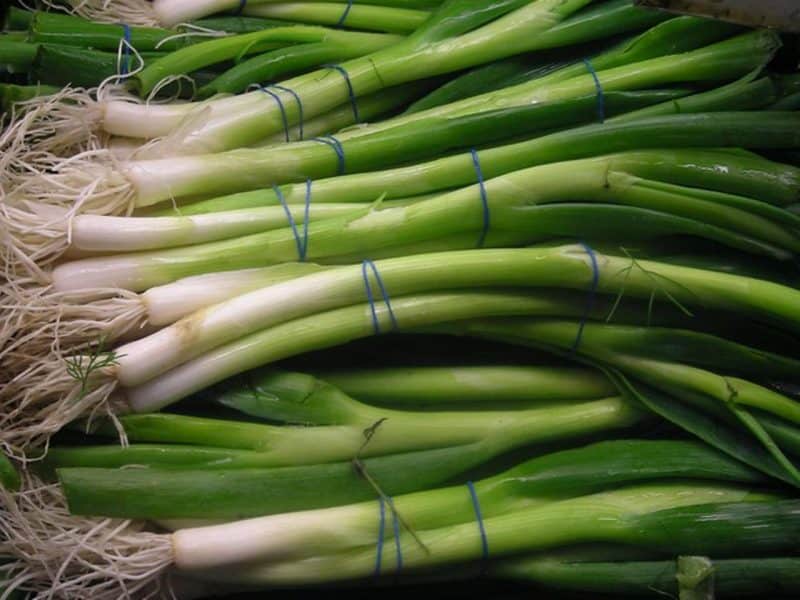
Scallions Vs Green Onions

Burpee Parade Scallion Onion Seeds 1500 seeds
The terms scallion and green onion are often used interchangeably. As far as using them in a recipe they are interchangeable.
But there are some differences. Scallions don’t develop a bulb, instead, they grow a long white shank with a green top.
But often young onion plants are bunched and sold as green onions. The only real difference is they will have a small round bulb on the end.
If you want to grow scallions the best bet is to buy scallion seeds or plants. To grow green onions you would buy regular onion seeds and harvest while young.
You also can grow scallions from plants in your produce section and we will talk more about how to regrow green onions later.
How To Grow Scallions Indoors

Scallions are very easy to grow indoors in containers and there are several ways to grow them.
Scallions grow quickly and can be harvested in 60 to 80 days. Scallions(Allium fistulosum) are different from onions (Allium cepa).
Also, scallions are generally eaten raw although they can be cooked too.
Sometimes Allium cepa is sold as spring onions or green onions when young. Confused yet?
One easy way to be sure you grow scallions is from seed. Another method uses the rooting part of a scallion to grow a new plant.
Growing Green Onions From Seed In Containers
I am going to be growing scallions from seed. That way I can be sure I am actually growing scallions.
I will be using Burpee Evergreen Long White Bunching Onions which are actually scallions despite the bunching onion name.
There are many other varieties of green onions and many other seed companies I prefer Burpee.
I have used Burpee Seeds for many years with great results. So if it ain’t broke don’t fix it.
Growing Scallions Indoors
I will be raising my scallions in 2-gallon grow bags filled with coco coir. I prefer coco coir to potting mixes.
Coco coir is a sustainable resource. It weighs half what soil weighs. It provides better aeration and moisture-holding properties too.
Use soil if you wish but once you learn how to use coco coir you will find it will outperform soil mixes every time.
https://www.indoorvegetablegrower.com/growing-vegetables-in-coco-coir/
I try to sow my seeds about an inch apart but sometimes they end up closer. I bury them about 1/4 inch deep.
Often I just scatter them on the surface and then sprinkle loose coco coir over the seeds to cover them up.
I think it is better to sow more than you need rather than end up with too few plants because you can always thin out thick sowings.
If you don’t have enough plants you can resow but that will produce plants several weeks behind and they may get crowded out by the larger plants.
You will probably want to thin your plants about 2 inches apart. The tops will grow between 1 and 3 feet tall depending on the variety.
It is best to harvest scallions before they flower. For a continuous harvest sow more scallions every few weeks.
You can harvest smaller scallions at any time. They will still have a great flavor even when they are smaller.
This is another advantage to seeding a bit heavy because you can harvest the thinnings for eating in salads or other dishes.
You can grow scallions from starter plants. They should be available at most garden centers or you can order them online.
Don’t confuse them with onion sets which will grow regular onions and not scallions.
Using starts costs more than using seeds but if you are new to gardening the results are surer and harvests will come sooner too.
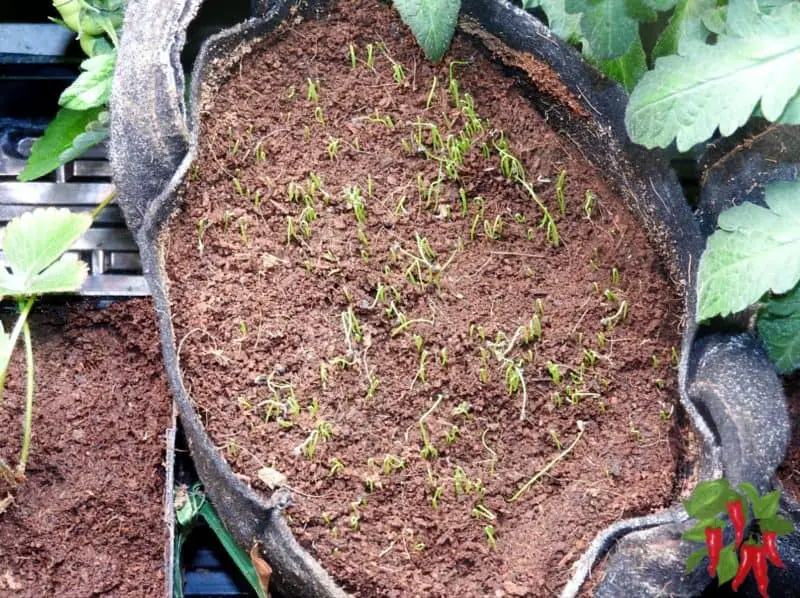
Scallions Are Up
My scallions are up. Yay! I seeded them really heavy so thinning will definitely be needed.
These scallions are in a 2-gallon fabric pot filled with coco coir.
I sprinkled the seeds on top of the coco and then sprinkled about 1/4 inch of loose coco on top of them.
I like to grow vegetables indoors with coco coir rather than using potting soil.
It weighs much less and you can downsize your pots when using coco coir. It also works better.
🌱 Growing Scallions Indoors FAQs
Are scallions and green onions the same thing?
The terms scallions and green onions are often used interchangeably, especially in grocery stores and recipes. True bunching onions (Allium fistulosum) don’t develop the large bulbs associated with regular onions. However, young bulb onions (Allium cepa) are also commonly sold as green onions. Both can be used in much the same way in the kitchen.
How long does it take to grow scallions indoors?
Scallions generally take about 60–80 days to reach a good harvesting size when grown from seed. The exact time depends on the variety, lighting, temperature, and growing conditions. You can harvest smaller scallions earlier, so there’s no need to wait until every plant reaches full size.
Can you grow scallions indoors year-round?
Yes. Scallions can be grown indoors throughout the year as long as they receive enough light and suitable temperatures. A sunny window may work, but an LED grow light can provide more consistent lighting, especially during the shorter days of winter.
Can you grow scallions in straight coco coir?
Absolutely. I grow my scallions in straight coco coir using 2-gallon fabric grow bags. I prefer coco coir because it’s lightweight, holds moisture well, and provides good aeration around the roots. Just remember that coco coir doesn’t provide all the nutrients plants need, so you’ll have to supply fertilizer as they grow.
How deep should you plant scallion seeds?
I plant scallion seeds about 1/4 inch deep. Sometimes I scatter the seeds over the surface of the coco coir and sprinkle a thin layer of loose coir over them. Keep the growing medium evenly moist while the seeds germinate.
How far apart should scallions be planted?
I usually sow scallion seeds about an inch apart and thin the seedlings to roughly two inches apart as they grow. Sometimes I sow more heavily because I can harvest the extra seedlings for salads and other dishes. That way, the thinnings don’t go to waste.
How much light do scallions need indoors?
Scallions grow best with plenty of bright light. A sunny window can work, but if the plants become thin, pale, or stretched, they probably need more light. A suitable LED grow light is a good option for indoor growing, particularly during winter.
Can you regrow scallions from grocery store green onions?
Yes. If the scallions still have their roots attached, you can plant the white bases in a container or temporarily place them in water. The green tops can regrow from the remaining bases. For longer-term growing, I prefer planting them in a growing medium where the roots can receive nutrients.
Will scallions grow back after cutting?
Scallions can produce new green growth after cutting if you leave the lower portion of the plant and its roots intact. However, repeated harvests may produce smaller or slower-growing leaves. Growing additional scallions from seed is a good way to maintain a steady supply.
What is the best way to keep harvesting scallions indoors?
I recommend sowing a new batch of scallion seeds every few weeks instead of planting everything at once. You can harvest the larger plants first, use smaller thinnings when needed, and let the remaining scallions continue growing. This gives you a more consistent supply of fresh green onions for the kitchen.
🌱 Growing Scallions Indoors: Final Thoughts
Growing scallions indoors is one of the easier ways to keep fresh vegetables coming from a small growing space. They don’t need large containers, and you can start harvesting them before they reach full size.
For my scallions, I use 2-gallon fabric grow bags filled with coco coir. I prefer growing this way because the coir is lightweight, holds moisture well, and provides plenty of air around the roots. Just remember to provide nutrients when growing in straight coco coir.
I also like to sow my seeds a little heavier than recommended. That gives me extra seedlings to thin out, and those young scallions are perfectly good to eat. You don’t have to waste them or wait until every plant is full-grown.
If you want a steady supply, try planting another batch every few weeks. With enough light, regular watering, and a little fertilizer, you can grow scallions indoors throughout the year.
Whether you’re growing them for salads, soups, or just to have fresh green onions handy when cooking, scallions are worth making room for in your indoor garden.
Keep it green, and happy growing!
Sustainable Apartment Gardening
🏙️ Apartment Gardening
Turn your apartment into a thriving garden! Explore easy guides for veggies, herbs, fruits, and flowering plants—all grown indoors.
-
- 🥕 Harvesting Carrots in Containers
- 🍅 Growing Tomatoes Indoors For Beginners
- 🌱 The Best Vegetables To Grow Indoors
- 🥔 How To Grow Potatoes In A 5-Gallon Bucket Indoors
- 🧄 Growing Garlic Indoors In Pots
- 🥬 How To Grow Bok Choy Indoors
- 🫘 Growing Green Beans In Pots
- 🧅 Growing Leeks In Containers
- 🥕 How To Grow Carrots Indoors
- See all articles in our Apartment Gardening category
📚 References & Further Reading
- 🌱 University of Minnesota Extension – Growing Scallions in Home Gardens – Covers bunching onions, planting depth, seed spacing, watering, thinning, and harvesting.
- 🧅 University of Illinois Extension – Onion – Explains the differences between scallions, green onions, and mature onions, along with growing and harvesting recommendations.
- 💧 University of Minnesota Extension – Small-Scale Hydroponics – Provides guidance on growing vegetables without soil, including nutrients, lighting, and indoor growing systems.
- 🌿 University of Illinois Extension – Regrowing Scrap Veggies – Explains how to regrow green onions from the rooted white bases of store-bought plants.
 Steve S. is the creator of