
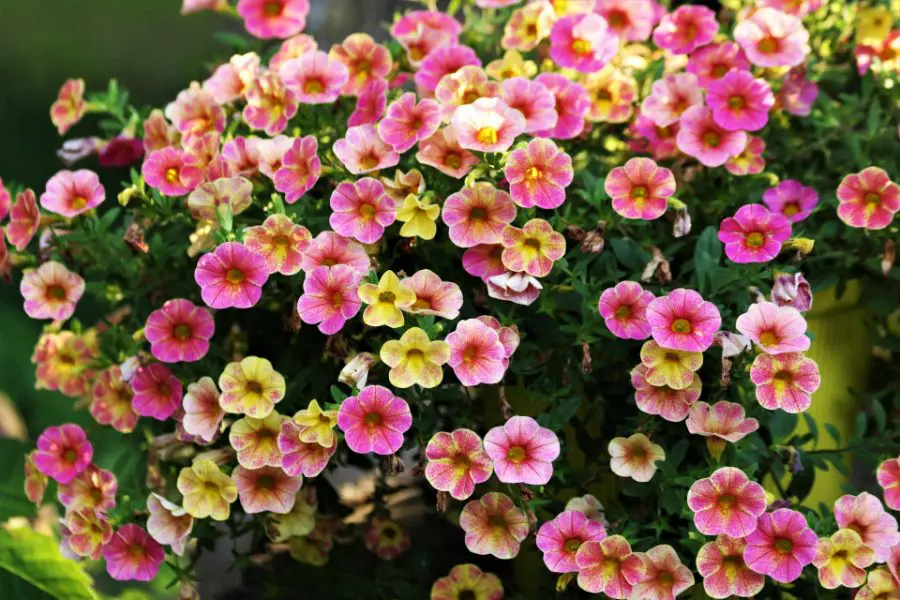
How To Care For Calibrachoa Hanging Baskets starts with plenty of sunlight, consistent watering, good drainage, and regular feeding. Give these fast-growing plants what they need and they can produce masses of colorful flowers from spring until frost.
Calibrachoa, commonly called Million Bells, is especially well suited to hanging baskets. Its trailing stems spill over the sides as they grow, creating the cascading display that makes these plants so popular for patios, balconies, porches, and other sunny spaces.
In this guide, I’ll show you how to plant and care for Calibrachoa, including the growing medium I recommend, watering, light, fertilizer, pruning, winter care, propagation, and what to do when your plant isn’t growing or flowering as expected.
What You’ll Learn
- Why Calibrachoa works so well in hanging baskets and containers
- How much sunlight Million Bells needs for good flowering
- When and how to water hanging baskets
- Why I use coco coir and perlite as a growing medium
- How often to fertilize Calibrachoa
- How to keep plants full instead of leggy
- How to troubleshoot poor flowering, wilting, and leaf problems
- How to overwinter and propagate Calibrachoa
Quick Answer
For healthy Calibrachoa hanging baskets, provide at least 6 hours of sun each day and use a container with excellent drainage. I like a mix of coco coir and perlite because it holds moisture while allowing excess water to drain. Water when the top inch begins to dry, feed regularly during active growth, and pinch or prune long stems when needed to keep the basket full and flowering.
Calibrachoa Hanging Baskets at a Glance
| Care Requirement | What Calibrachoa Needs |
|---|---|
| Common Name | Million Bells |
| Light | Full sun; at least 6 hours daily |
| Water | Water when the top inch begins to dry; baskets may need daily watering during hot weather |
| Growing Medium | Coco coir and perlite for moisture retention and drainage |
| Container | Hanging basket or pot with good drainage |
| Planting | About 3 starter plants per 10-inch hanging basket |
| Fertilizer | Regular feeding during the growing and blooming season |
| Growth Habit | Trailing and cascading |
| Bloom Season | Spring until frost |
| Deadheading | Generally optional because Calibrachoa is self-cleaning |
| Winter Hardiness | Tender perennial in Zones 9–11; commonly grown as an annual elsewhere |
| Common Problems | Root rot, aphids, spider mites, poor flowering, and nutrient problems |
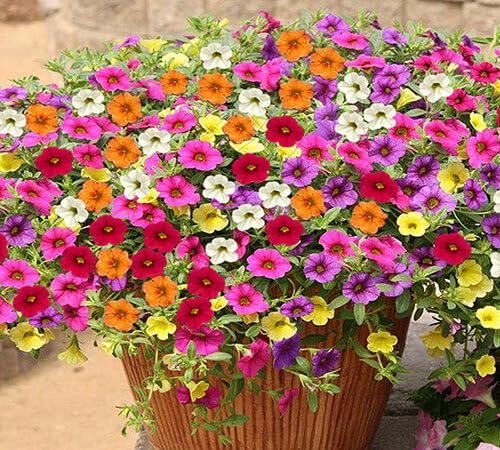
Can Calibrachoa Grow in Pots?
Absolutely! Calibrachoa, with their compact growth and cascading blooms, are perfectly suited for pot cultivation.
Whether it’s a small pot on your windowsill or a large container on your patio, these plants can thrive and add a splash of color.
Just remember, they prefer well-drained moist soil and a sunny spot to show off their vibrant flowers.
Brief Overview of Calibrachoa (also known as Million Bells or Superbells)
Let’s get to know Calibrachoa a bit better. These delightful plants, often referred to as Million Bells or Superbells, are native to South America and are cherished for their abundant, bell-shaped flowers.
They come in a rainbow of colors, from bright yellows and pinks to deep blues and purples.
They are great for container gardens. Their trailing habit makes them an excellent choice for hanging baskets, but they’re equally stunning in garden beds or as a border plant.
Despite their delicate appearance, they’re surprisingly hardy and are prolific bloomers from spring until the first frost.
Calibrachoa Plant Care Reference Guide
| Characteristic | Details |
|---|---|
| Common Name | Calibrachoa (Million Bells) |
| Botanical Name | Calibrachoa spp. |
| Native Habitat | South America |
| Plant Type | Tender Perennial (grown as annual in cold climates) |
| Growth Pattern | Trailing, cascading |
| Mature Size | 6–12 inches tall, spreads up to 18 inches |
| Watering | Keep soil evenly moist; water when top inch is dry |
| Light/Sun Exposure | Full sun (6+ hours daily) |
| Soil Type | Well-draining; coco coir and perlite mix ideal |
| Soil pH | Slightly acidic to neutral (5.5–6.5) |
| Temperature | 60–75°F ideal; avoid frost |
| Humidity | Moderate humidity preferred |
| Bloom Time & Flower Color | Spring to frost; available in red, pink, yellow, blue, purple, and more |
| Potential Problems | Root rot from overwatering, aphids, spider mites, nutrient deficiency |
| Repotting | Repot when rootbound or to refresh soil yearly |
| Hardiness Zones (USDA) | 9–11 (grown as annual elsewhere) |
Importance of Proper Care for Calibrachoa Hanging Baskets
Now, you might be wondering why it’s so important to know how to care for Calibrachoa hanging baskets properly.
Well, like any plant, Calibrachoa will only reach its full potential with the right care.
Proper watering, sunlight, soil, and fertilization are key to their health and blooming.
When cared for correctly, these plants can reward you with a profusion of blooms throughout the growing season, transforming your space into a vibrant, living piece of art.
Plus, understanding their needs can help you troubleshoot any issues that might arise, ensuring your Calibrachoa continues to thrive.
Understanding Calibrachoa

Ready to dive deeper into the world of Calibrachoa?
In this section, we’ll explore the fascinating origins and characteristics of these vibrant plants, discover the different varieties, and answer some common questions like Do Calibrachoa come back every year? and How long does Calibrachoa last?
Understanding these aspects will not only enrich your gardening knowledge but also help you provide the best care for your Calibrachoa.
So, let’s embark on this botanical journey and get to know Calibrachoa a little better!
Origin and Characteristics of Calibrachoa
Hailing from South America, Calibrachoa is a delightful plant that’s won the hearts of gardeners worldwide.
They belong to the Solanaceae family, which interestingly, also includes food crops like tomatoes and potatoes.
Calibrachoa is known for its profusion of bell-shaped flowers that resemble tiny petunia plants, hence their other popular name, Million Bells.
These plants have a trailing habit, making them perfect for adding a waterfall of color to hanging baskets or containers.
They’re also quite hardy and can bloom continuously from spring until the first frost.
Different Varieties of Calibrachoa
There’s a Calibrachoa for every color palette! These plants come in a wide range of colors, including coral, yellow, orange, red, pink, blue, purple, burgundy, lavender, and cream.
Some popular varieties include ‘Cabaret Hot Pink’, ‘Cabaret Purple Glow’, ‘Million Bells Terra Cotta’, ‘MiniFamous Double Blue’, and ‘Superbells Pomegranate Punch’.
Each variety has its unique charm, but all share the same vibrant, prolific blooming habit that Calibrachoa is loved for.
You probably can find them at your local garden center and if not you can buy Calibrachoa plants and seeds online.
Does Calibrachoa Come Back Every Year?
Calibrachoa is a tender perennial, which means they can come back year after year in warmer climates (USDA Zones 9-11).
However, in colder regions, they are often grown as annuals. If you live in a cooler area and want to see your Calibrachoa return, consider overwintering them indoors.
With a bit of care, you can enjoy their vibrant colors year after year!
How Long Does Calibrachoa Last?
With proper care, Calibrachoa can bloom from spring until the first frost, providing you with a long season of vibrant colors.
Even though they are short-lived perennials, their prolific blooming habit makes them a worthwhile addition to any garden.
Remember, regular watering, plenty of sunlight, and feeding can help extend their blooming period and keep your Calibrachoa looking their best.
Planting Calibrachoa
Now that we’ve got to know Calibrachoa a bit better, it’s time to roll up our sleeves and get planting!
In this section, we’ll discuss the ideal conditions for planting Calibrachoa, the best soil and pots to use, and how many plants you should place in a hanging basket.
We’ll also provide a step-by-step guide to planting Calibrachoa in hanging baskets.
Whether you’re a seasoned gardener or a beginner, these tips will help you create a stunning display of Million Bells. So, let’s get started!
Calibrachoa Soil
When it comes to soil, Calibrachoa isn’t too picky, but there are a few things to keep in mind.
These plants prefer well-drained soil, as they don’t like to sit in waterlogged conditions.
A good quality potting mix, preferably one that’s peat-based, is usually a great choice.
If you’re planting in garden beds, consider amending the soil with organic material to improve its richness and drainage.
Remember, a happy Calibrachoa is one that has its roots in the right soil!
The Benefits of Using Coco Coir and Perlite Instead of Peat
While peat has been a traditional choice for many gardeners, there’s been a shift towards more sustainable and equally effective alternatives like coco coir and perlite. Here’s why:
Coco Coir: This is a by-product of the coconut industry and is a peat-like substance that’s excellent at retaining water.
It’s also pH neutral, which is beneficial for plants like Calibrachoa that prefer slightly acidic to neutral soil.
Plus, coco coir is a renewable resource, making it a more environmentally friendly choice compared to peat, which takes centuries to form and is harvested faster than it can regenerate.
Perlite: This is a form of volcanic glass that’s heated until it expands into a lightweight, porous material.
It’s fantastic for improving soil drainage, which is crucial for Calibrachoa.
It also helps aerate the soil, allowing plant roots to take in oxygen more efficiently.
Like coco coir, perlite is a sustainable choice and doesn’t deplete natural peatlands.
By using a mix of coco coir and perlite, you can create a soil environment that retains moisture, drains well, and provides ample oxygen to your Calibrachoa roots, all while being kinder to the planet.
Calibrachoa Pots
Calibrachoa is versatile and can thrive in various pots, from hanging baskets to window boxes and even large containers.
The key is to ensure the pot has sufficient drainage holes to prevent waterlogging.
Also, consider the size of the pot. A larger pot will allow more room for growth and hold more soil, which can retain moisture longer.
How Many Calibrachoa in a Hanging Basket
Wondering how many Calibrachoa plants to put in a hanging basket?
A good rule of thumb is to allow three plants per 10-inch hanging basket or container.
This will give each plant enough space to grow and spread without overcrowding, leading to a fuller and more attractive display.
Remember, Calibrachoa has a trailing habit, so they’ll fill out the basket beautifully as they grow.
Ideal Conditions for Planting
Calibrachoa loves the sun, so choose a location that gets at least six hours of sunlight each day.
While they can tolerate partial shade, too little sun can result in fewer blooms.
As for temperature, they prefer a mild to warm climate and can even tolerate a light frost.
However, they’ll start to thrive when the danger of severe frost has passed, usually in early spring.
When planting, ensure the soil is moist and well-draining. If you’re planting in a pot or basket, make sure it’s filled with good quality, well-draining potting mix.
A step-by-step guide to planting Calibrachoa in hanging baskets
Ready to bring some Calibrachoa charm to your space? In this section, we’ll walk you through a step-by-step guide to planting Calibrachoa in hanging baskets.
Don’t worry if you’re new to this; we’ll make it as simple and enjoyable as possible.
By the end of this guide, you’ll be well on your way to creating a stunning display of cascading blooms that will be the envy of your neighborhood.
So, let’s get our gardening gloves on and start planting!
Step-by-Step Guide to Planting Calibrachoa
Choose Your Basket: Start by selecting a hanging basket that has good drainage. Remember, Calibrachoa doesn’t like to sit in waterlogged soil.
Prepare Your Soil: Fill the basket with a mix of coco coir and perlite. This combination will ensure good moisture retention and excellent drainage.
Plant Your Calibrachoa: Make a hole in the soil large enough to accommodate the root ball of your Calibrachoa plant.
Carefully remove the plant from its nursery pot, place it in the hole, and gently cover the roots with soil.
If you’re planting multiple Calibrachoas in one basket, remember to allow three plants per 10-inch basket.
Water Thoroughly: After planting, give your Calibrachoa a good drink of water. Ensure the water drains out of the bottom of the basket to avoid waterlogging.
Find the Perfect Spot: Hang your basket in a location that receives at least six hours of sunlight each day.
Care for Your Plant: Keep the soil consistently moist but not waterlogged, and feed your Calibrachoa with a water-soluble fertilizer or a slow-release fertilizer to encourage blooming.
Calibrachoa Companion Plants
Calibrachoa are sociable plants that play well with others! When choosing companion plants, consider those that have similar light and water requirements. Here are a few suggestions:
Petunias: With their similar growth habits and care requirements, petunias make excellent companions for Calibrachoa.
Verbena: Verbena’s clusters of flowers complement the bell-shaped blooms of Calibrachoa beautifully.
Lobelia: The delicate, trailing habit of lobelia can add a different texture to your hanging basket.
Bacopa: Bacopa’s small, star-shaped flowers can provide a lovely contrast to Calibrachoa’s larger blooms.
Remember, the best companion plants are those that you love and will enjoy caring for alongside your Calibrachoa!
Calibrachoa Care

Now that we’ve got our Calibrachoa comfortably settled in their new hanging baskets, it’s time to talk about care.
In this section, we’ll delve into the specifics of Calibrachoa care, from watering and sunlight requirements to soil preparation and fertilization.
We’ll also discuss their heat tolerance and USDA hardiness zones. With the right care, your Calibrachoa will reward you with a stunning display of blooms throughout the growing season.
So, let’s get started and learn how to keep our Calibrachoa happy and healthy!
Calibrachoa Water Requirements
Calibrachoa enjoys a drink, but it’s all about balance. They need to be kept well-hydrated but not waterlogged.
The key is to let the top inch or so of the soil dry out between waterings.
This approach ensures that your Calibrachoa gets the moisture it needs without the risk of root rot.
Watering: Frequency and Amount

The frequency of watering your Calibrachoa will depend on several factors, including the weather and the size of your pot or basket.
In hot, dry conditions, you might need to water your plants daily, or even twice a day.
In cooler or cloudy weather, watering every few days might be sufficient.
A good rule of thumb is to check the soil regularly. If it feels dry to the touch an inch below the surface, it’s time to water.
When you do water, do so deeply until water drains out of the bottom of the pot or basket.
Calibrachoa Light Requirements
Sunlight is a crucial ingredient for a blooming Calibrachoa.
These plants love the sun and bloom best with at least six hours of full sun exposure each day.
However, they can tolerate partial shade, especially in warmer areas.
Insufficient sun exposure can result in fewer blooms, so make sure your hanging baskets are in a sunny spot!
Soil: Ideal Soil Conditions and How to Prepare It
As we’ve mentioned before, Calibrachoa prefers well-drained soil. A mix of coco coir and perlite is a great choice as it retains moisture while ensuring good drainage.
If you’re planting in garden beds, consider amending the soil with organic material to improve its richness and drainage.
Fertilizing Calibrachoa
Calibrachoa are heavy feeders, so regular feeding is essential for their growth and blooming.
You can feed them with a slow-release fertilizer at planting time, and then supplement with a diluted liquid fertilizer every couple of weeks throughout the growing season.
Be careful not to over-fertilize, though, as this can do more harm than good.
Calibrachoa Heat Tolerance
Calibrachoa is pretty tough when it comes to heat. They’re drought and heat-tolerant plants, but for the best blooms, don’t let them dry out repeatedly.
If you live in a particularly hot area, providing some afternoon shade can help protect your plants from the intense heat.
Calibrachoa USDA Hardiness Zones
Calibrachoa is a tender perennial that’s winter hardy to USDA Zones 9-11. This means that in these zones, your Calibrachoa can come back year after year.
In colder zones, they’re often grown as annuals. But don’t worry, with proper care and a bit of protection from frost, you can enjoy your Calibrachoa even if you live outside these zones.
How to winterize Calibrachoa in pots
Winterizing Calibrachoa in pots involves a few steps to ensure they survive the colder months, especially if you live in a region where temperatures drop below freezing.
Here’s a step-by-step guide:
Move Your Pots: If possible, move your Calibrachoa pots to a sheltered location, such as a patio, porch, or against a wall. This can help protect them from harsh winter winds and frost.
Water Less Frequently: During winter, Calibrachoa’s growth slows down, and they require less water.
Overwatering can lead to root rot, especially in colder temperatures. So, reduce your watering frequency and only water when the top inch of soil feels dry to the touch.
Protect from Frost: If a frost is forecasted, cover your Calibrachoa with a frost cloth or move them indoors if possible. Remember, while Calibrachoa can tolerate a light frost, they’re not fans of freezing temperatures.
Consider Overwintering Indoors: If you live in a region with harsh winters, consider overwintering your Calibrachoa indoors.
Before the first frost, move your pots to a cool, bright location inside, such as a sunroom or near a south-facing window.
Keep them watered, but allow the soil to dry out between waterings.
Prune and Feed: In early spring, as temperatures start to rise, prune your Calibrachoa back to about half their size to encourage new growth.
Feed them with a slow-release fertilizer to give them a boost for the growing season ahead.
Remember, each plant and situation is unique, so adjust these steps as needed based on your specific conditions.
Pruning and Maintenance
As we continue our journey in Calibrachoa care, let’s turn our attention to pruning and maintenance.
These tasks might seem a bit daunting if you’re new to gardening, but don’t worry!
With a little bit of knowledge and some simple tools, you can keep your Calibrachoa looking its best.
In this section, we’ll discuss when and how to prune your plants, the importance of deadheading, and how these practices contribute to the overall health and beauty of your Calibrachoa.
So, let’s grab our pruning shears and get started!
When and How to Prune Calibrachoa
Pruning is an essential part of Calibrachoa care, helping to maintain their shape and encourage more blooms.
The best time to prune your Calibrachoa is in late summer or early fall when their growth begins to slow down.
Here’s how to do it:
Identify the Stems to Prune: Look for stems that are overgrown or have fewer flowers. These are the ones you’ll want to prune.
Make the Cut: Using a pair of clean, sharp pruning shears, cut the stem back to about half its length.
Make your cut just above a leaf node (where a leaf joins the stem). This encourages the plant to branch out and produce more flowers.
Repeat: Continue this process, pruning about one-third of the plant at a time. This helps to maintain the overall shape of the plant and encourages new growth.
Remember, pruning isn’t just about cutting back your plant. It’s also an opportunity to check for any signs of disease or pests.
If you notice anything unusual, like discolored leaves or spots, be sure to treat it promptly to keep your Calibrachoa healthy.
Importance of Deadheading and How to Do It
Deadheading, or the process of removing spent flowers, is another important aspect of Calibrachoa care.
While Calibrachoa is considered a self-cleaning plant (meaning it naturally drops its spent flowers), a little bit of manual deadheading can encourage the plant to produce more blooms.
Here’s how to deadhead your Calibrachoa:
Identify Spent Blooms: Look for flowers that are wilting, turning brown, or otherwise past their prime. These are the ones you’ll want to remove.
Pinch or Cut: Using your fingers or a pair of clean, sharp pruning shears, gently pinch or cut off the spent flower. Be careful not to damage the stem or any nearby buds.
Repeat: Continue this process throughout the blooming season. Regular deadheading can keep your Calibrachoa looking fresh and full of color.
Remember, while deadheading can be beneficial, it’s not strictly necessary for Calibrachoa. If you prefer a more hands-off approach, your plants will still bloom beautifully without it.
Troubleshooting Common Problems
Even with the best care, Calibrachoa can sometimes run into a few issues.
But don’t worry, most of these problems are easily solvable once you know what to look for.
In this section, we’ll discuss how to identify and treat common pests and diseases that might affect your Calibrachoa.
We’ll also address common issues like poor blooming, wilting, and leaf discoloration.
With these troubleshooting tips in your gardening toolkit, you’ll be well-equipped to keep your Calibrachoa healthy and vibrant.
So, let’s dive in and learn how to tackle these common problems!
Identifying and Treating Common Pests and Diseases
Calibrachoa can sometimes be affected by pests and diseases. Here are a few common ones and how to deal with them:
Aphids: These tiny insects can be green, yellow, black, or red. They suck the sap from your plants, which can lead to yellowing leaves and stunted growth.
If you notice aphids, you can spray your plants with a mixture of water and mild dish soap, or use a commercial insecticidal soap.
Spider Mites: These tiny mites can cause yellow or brown spots on your Calibrachoa’s leaves. They’re often found on the undersides of leaves and can be difficult to see with the naked eye.
If you suspect spider mites, try spraying your plants with a strong jet of water to dislodge them, or use neem oil or a miticide.
Root Rot: If your Calibrachoa’s leaves are wilting or turning yellow, and the plant seems generally unhealthy despite proper care, it might be suffering from root rot.
This is often caused by overwatering. If you suspect root rot, you may need to repot your plant in fresh, well-draining soil, and be careful to avoid overwatering in the future.
Addressing Common Issues Like Poor Blooming, Wilting, and Leaf Discoloration

Poor Blooming: If your Calibrachoa isn’t blooming as much as you’d like, it might not be getting enough sunlight.
Remember, these plants love full sun and need at least six hours of sunlight each day to bloom their best.
Lack of nutrients can also lead to poor blooming. Make sure you’re feeding your Calibrachoa regularly with a balanced, slow-release fertilizer.
Wilting: Wilting can be a sign of either overwatering or underwatering. Check the soil to determine which might be the case.
If the soil is dry, your plant needs more water. If it’s soggy, you might be watering too much and need to let the soil dry out a bit.
Leaf Discoloration: Yellowing leaves can be a sign of several issues, including overwatering, underwatering, or a nutrient deficiency.
Check your watering practices first, and if those seem fine, consider whether your plant might need more fertilizer.
If the leaves are turning brown, your plant might be getting too much sun and could benefit from a bit of afternoon shade.
Remember, the key to solving most plant problems is to catch them early.
Regularly check your Calibrachoa for signs of pests or disease, and address any issues as soon as you notice them.
Winter Care for Calibrachoa

As the seasons change and the chill of winter approaches, you might be wondering how to keep your Calibrachoa thriving.
While these plants love the warmth of the sun, they can also handle cooler temperatures with a bit of preparation and care.
In this section, we’ll discuss how to prepare and care for your Calibrachoa during the winter months.
From moving your plants to a sheltered location to adjusting your watering schedule, we’ll cover all the essential tips to ensure your Calibrachoa stays healthy and ready to bloom again come spring.
So, let’s bundle up and get started on winter care for Calibrachoa!
How to Prepare and Care for Calibrachoa in Winter
Winter care for Calibrachoa involves a few key steps to ensure they survive the colder months, especially if you live in a region where temperatures drop below freezing.
Here’s how to prepare and care for your Calibrachoa in winter:
Move Your Pots: If possible, move your Calibrachoa pots to a sheltered location, such as a patio, porch, or against wall. This can help protect them from harsh winter winds and frost.
Water Less Frequently: During winter, Calibrachoa’s growth slows down, and they require less water.
Overwatering can lead to root rot, especially in colder temperatures. So, reduce your watering frequency and only water when the top inch of soil feels dry to the touch.
Protect from Frost: If a frost is forecasted, cover your Calibrachoa with a frost cloth or move them indoors if possible.
Remember, while Calibrachoa can tolerate a light frost, they’re not fans of freezing temperatures.
Consider Overwintering Indoors: If you live in a region with harsh winters, consider overwintering your Calibrachoa indoors.
Before the first frost, move your pots to a cool, bright location inside, such as a sunroom or near a south-facing window.
Keep them watered, but allow the soil to dry out between waterings.
Prune and Feed: In early spring, as temperatures start to rise, prune your Calibrachoa back to about half their size to encourage new growth.
Feed them with a slow-release fertilizer to give them a boost for the growing season ahead.
Remember, each plant and situation is unique, so adjust these steps as needed based on your specific conditions.
With the right care, your Calibrachoa can survive the winter and be ready to bloom beautifully again in the spring.
Propagating Calibrachoa

As you become more familiar with caring for Calibrachoa, you might find yourself wanting to grow more of these vibrant, blooming beauties.
That’s where propagation comes in! Propagation is a gardening technique that allows you to create new plants from the ones you already have.
In this section, we’ll explore why propagation through cuttings is preferred for Calibrachoa and provide a step-by-step guide to doing it yourself.
So, if you’re ready to expand your Calibrachoa collection and share the joy of these plants with others, let’s dive into the world of propagation!
Why Propagation Through Cuttings is Preferred
Propagation through cuttings is often preferred for Calibrachoa for a few reasons.
First, it’s a relatively quick and straightforward process. Within a few weeks, you can have new plants that are ready to bloom.
Second, cuttings ensure that the new plants will be genetically identical to the parent plant.
This means that all the characteristics you love about your Calibrachoa like its color, size, and growth habit will be present in the new plants.
It’s also worth noting that many Calibrachoa varieties are hybrids, which means they don’t produce seeds that are true to type.
So, if you want to replicate a specific variety, propagation through Calibrachoa cuttings is the way to go.
Step-by-Step Guide to Propagating Calibrachoa
Here’s a simple step-by-step guide to propagating Calibrachoa through cuttings:
Choose the Right Stem: Look for a healthy, vigorous stem that has several leaves but no flowers. The best time to take cuttings is in the morning when the plant is fully hydrated.
Make the Cut: Using a clean, sharp pair of pruning shears, cut the stem about 4-6 inches from the tip. Make sure to make the cut just below a leaf node (where a leaf joins the stem).
Prepare the Cutting: Remove the leaves from the lower half of the cutting. This helps to reduce moisture loss and encourages the cutting to focus its energy on root development.
Rooting Hormone (Optional): While not necessary, you can dip the cut end of the stem in rooting hormone to encourage faster root growth.
Plant the Cutting: Plant the cutting in a pot filled with a well-draining potting mix, such as a mix of half perlite and half coco coir or peat moss.
Make sure the leaf nodes (where you removed the leaves) are below the soil surface as this is where the new roots will emerge.
Care for the Cutting: Place the pot in a warm, bright location out of direct sunlight.
Keep the soil consistently moist but not waterlogged. In a few weeks, the cutting should develop roots and begin to show new growth.
Transplant: Once the cutting has developed a strong root system and is growing well, it can be transplanted to a larger pot or outside, depending on the season and your climate.
Remember, patience is key when propagating plants. Give your cuttings the care they need, and in time, you’ll be rewarded with new Calibrachoa plants to enjoy and share.

How To Care For Calibrachoa FAQs
How often should I water Calibrachoa hanging baskets?
Water your Calibrachoa when the top inch of the growing medium feels dry. Hanging baskets can dry quickly, especially during hot, sunny, or windy weather, so check them regularly. During very hot weather, you may need to water daily or even twice a day. Water thoroughly until excess water drains from the bottom of the basket.
How much sun does Calibrachoa need?
Calibrachoa blooms best with at least six hours of sunlight each day. It can tolerate some partial shade, but too little light usually means fewer flowers and less compact growth. In particularly hot climates, some afternoon shade can also help protect the plant from intense heat.
What is the best growing medium for Calibrachoa?
Calibrachoa needs a growing medium that holds some moisture while still draining well. I like using coco coir mixed with perlite. Coco coir helps retain moisture, while perlite improves drainage and aeration around the roots.
Does Calibrachoa need to be deadheaded?
Usually not. Calibrachoa is considered self-cleaning, so spent flowers normally drop on their own. You can remove old flowers if you want to keep the basket looking especially tidy, but regular deadheading isn’t necessary for a good display.
How do I keep Calibrachoa from getting leggy?
Make sure your plant is receiving plenty of sunlight and don’t be afraid to prune long stems. Cutting back overgrown stems encourages branching and helps produce a fuller, more compact basket. You can prune gradually rather than cutting the entire plant back at once.
Why isn’t my Calibrachoa blooming?
Start by checking the amount of sunlight your plant receives. Calibrachoa needs plenty of sun for heavy flowering. Nutrition can also be a factor because these plants are heavy feeders. Regular feeding during the growing season, along with proper watering and good drainage, can help keep the flowers coming.
Why are my Calibrachoa leaves turning yellow?
Yellow leaves can have several causes, including too much water, too little water, poor drainage, or a nutrient problem. Check the moisture level first and make sure water can drain freely from the basket. If watering and drainage look good, consider whether the plant needs feeding.
How many Calibrachoa plants should I put in a 10-inch hanging basket?
Three starter plants are a good choice for a 10-inch hanging basket. This gives each plant room to establish while still producing the full, cascading appearance you’re looking for as the plants mature.
Do Million Bells come back every year?
Million Bells, or Calibrachoa, are tender perennials in USDA Zones 9–11. In colder climates, they’re usually grown as annuals. You can also try overwintering a container indoors in a cool, bright location and moving it back outside when warm weather returns.
What’s the difference between Calibrachoa and petunias?
Calibrachoa and petunias are related and their flowers look similar, but they are different plants. Calibrachoa generally produces smaller, more numerous flowers and has a trailing growth habit that makes it especially useful for hanging baskets. Calibrachoa is also self-cleaning, so it usually requires less deadheading than many petunias.
How To Care For Calibrachoa Hanging Baskets: Conclusion
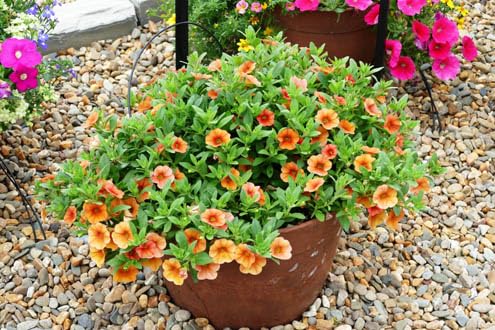
How To Care For Calibrachoa Hanging Baskets Final Thoughts
Calibrachoa is one of my favorite types of plants for creating a hanging basket packed with color. Its naturally trailing growth habit allows the stems and flowers to spill over the sides, and a healthy basket can keep blooming from spring until frost.
The biggest things to watch are sunlight, watering, drainage, and fertilizer. Give your Calibrachoa plenty of sun and don’t let a hanging basket dry out completely during hot weather. At the same time, you don’t want the roots sitting in a waterlogged growing medium.
That’s one reason I like using coco coir and perlite. The coco coir helps hold the moisture container plants need, while the perlite provides drainage and aeration. It’s a simple combination that works well for hanging baskets.
Calibrachoa is also a fairly hungry plant when it’s growing and flowering heavily. Regular feeding throughout the growing season can make a noticeable difference in how well the basket fills out and continues producing flowers.
If your basket starts looking long or thin later in the season, don’t give up on it. Check the light, water, and fertilizer first, and prune back some of the longer stems if needed. New branching can help restore a fuller appearance and give the plant fresh growth for more flowers.
In colder climates, you can simply enjoy Calibrachoa as a long-blooming annual, or experiment with bringing a favorite plant indoors for winter. You can also take cuttings if there’s a particular variety you’d like to grow again.
With a sunny location and a little regular attention, Calibrachoa can turn a simple hanging basket into a cascade of flowers that lasts for most of the growing season.
Happy gardening, and keep it green!
🌼 Backyard Gardening Guides
- 🏡 Backyard Gardening Ideas (Pillar Guide)
- 🌳 Red Tip Photinia Privacy Hedge
- 🌸 Planting Dahlia Seeds
- 🪴 Best Soil for Dahlias in Pots
- 🫐 Growing Blueberries in Pots
- 🌿 Cold Hardy Tea Plant
- 🧄 Growing Goji Berries in Pots
- 🌱 How to Grow Creeping Thyme
- 🌺 Growing Balloon Flowers from Seed
- 🌼 Growing Penstemon in Pots
- 🐝 Growing Echinacea in Pots
- 🪻 Plant Creeping Phlox
- 🌞 Care for Verbena in Pots
- 🌾 Growing Poppies in Pots
- 🌷 Dahlia Care in Pots
- See all articles in our Backyard Gardening category
 Steve S. is the creator of