

Growing hydroponic sweet potatoes indoors is possible, and you don’t need a complicated system to do it. I’m growing Okinawan purple sweet potatoes in 5-gallon buckets filled with coco coir, using an automated top-feed drip system to deliver water and nutrients.
Living in Western Washington, I don’t have the warm growing season that sweet potatoes prefer. That’s one reason I decided to grow them indoors under LED grow lights. With hydroponics, I can control the lighting, nutrients, and watering instead of depending on our unpredictable weather.
In this article, I’ll show you my actual setup, including the buckets, Canna Coco, FloraFlex irrigation system, Jack’s 3-2-1 nutrients, and HLG grow light. I’ll also share photos and videos of how the plants developed during their first month.
What You’ll Learn
- How to grow hydroponic sweet potatoes indoors without soil
- Why I chose Okinawan purple sweet potatoes
- How to grow sweet potato slips in 5-gallon buckets
- Why I use Canna Coco as my hydroponic growing medium
- How my FloraFlex top-feed drip irrigation system works
- How I use Jack’s 3-2-1 hydroponic nutrients
- My automated watering and LED lighting schedules
- What my sweet potato plants looked like after one month
- What to consider when growing sweet potatoes in a limited indoor space
Quick Answer
Yes, you can grow sweet potatoes hydroponically indoors. I’m growing Okinawan purple sweet potato slips in 5-gallon buckets filled with Canna Coco. An automated FloraFlex top-feed drip system delivers Jack’s 3-2-1 nutrient solution from a 20-gallon reservoir, while an HLG 650R LED grow light provides the lighting.
My system waters the plants for three minutes, three times daily, and the grow light runs for 12 hours. The plants showed strong vine growth during their first month. However, growing healthy vines is only part of the process. Sweet potatoes also need enough root space, warmth, and time to develop their edible storage roots.
🍠 Hydroponic Sweet Potatoes at a Glance
| Growing Requirement | My Hydroponic Setup |
|---|---|
| Crop | Okinawan purple sweet potatoes |
| Growing Method | Substrate hydroponics with automated top-feed irrigation |
| Containers | 5-gallon buckets, one slip per bucket |
| Growing Medium | Canna Coco buffered coconut coir |
| Irrigation | FloraFlex manifolds with open-ended drip tubing |
| Watering Schedule | 3 minutes, 3 times daily, adjusted as needed |
| Reservoir | 20-gallon nutrient reservoir |
| Nutrients | Jack’s 3-2-1 hydroponic nutrient formula |
| Nutrient Solution pH | Target 5.8–6.2 |
| Grow Light | HLG 650R LED, dimmed for the grow space |
| Lighting Schedule | 12 hours daily |
| Temperature | Warm growing conditions, preferably around 70–85°F |
| Growing Space | Indoor grow closet |
| First-Month Results | Healthy plants with vigorous vine growth; tuber yield not yet documented |
Why Grow Hydroponic Sweet Potatoes?
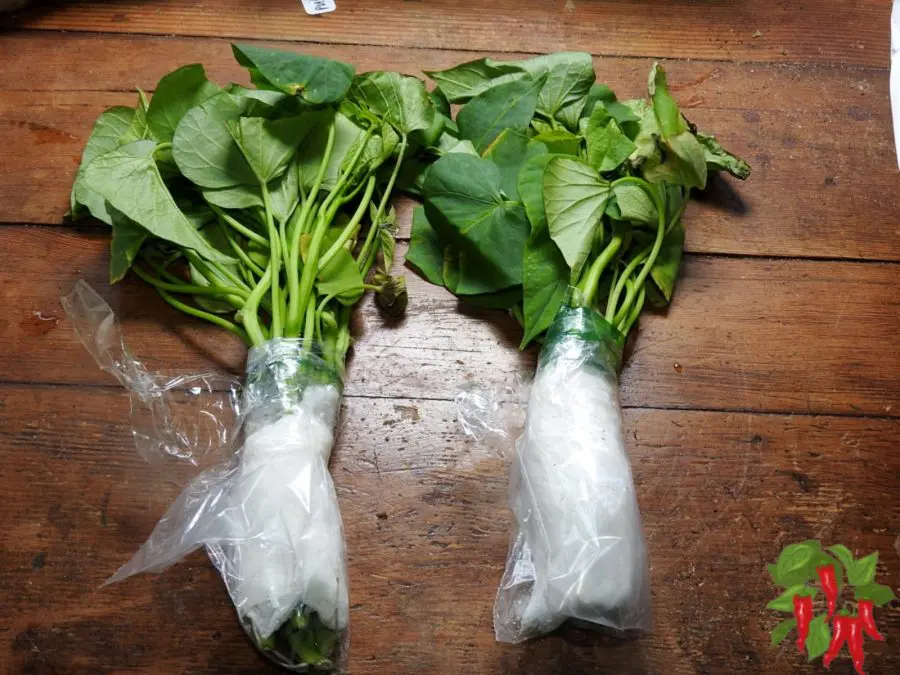
I love sweet potatoes but storebought sweet potatoes leave a lot to be desired. Quality is variable and they are not cheap to buy either.
Unfortunately growing sweet potatoes outdoors in my Western Washington climate is a no-go.
We just don’t get enough heat in a cool maritime climate.
But I can grow sweet potatoes indoors in 5-gallon buckets.
But I want to automate the lighting and watering and that’s where growing sweet potatoes hydroponically comes in.
I am growing Purple Okinawan Sweet Potatoes. They taste different than regular sweet potatoes.
They are sweeter and also drier. If you ever had roasted chestnuts the taste is kind of similar.
I got mine on Amazon here. They are pricey but I will only have to buy them once.

10 Purple Sweet Potato Slips – Cuttings – Okinawa Sweet Potato
I tried raising slips from storebought sweet potatoes before but they are treated with sprout inhibitors. You also have no idea what kind they are
So I took the plunge and received really healthy slips that had already started growing roots.
Let’s plunge into this exciting world and find out how your own bucket can be the starting point of an amazing hydroponic journey.
Growing Hydroponic Sweet Potatoes
Hey there, folks! Ready for a fascinating journey through the world of hydroponic sweet potatoes?
We’re about to unfold a story that takes us from simple five-gallon buckets to thriving green plants, all nurtured without a speck of soil.

10 Purple Sweet Potato Slips – Cuttings – Okinawa Sweet Potato
We’ll be exploring the ins and outs of hydroponics, the role of coco coir, and the mechanics of a top-feed drip system.
Not forgetting, of course, the tips and tricks to keep your grow lights on point.
So stick around and let’s turn your curiosity into a green thumb adventure!
Catching Up on Our Sweet Potato Journey
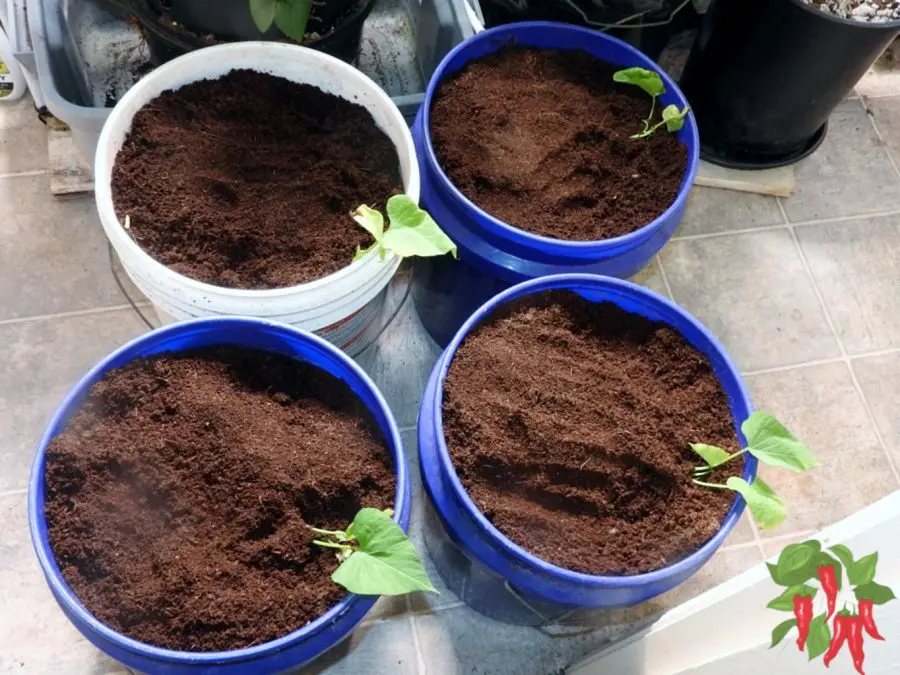
Remember the journey we began in the last video? The little sweet potato slips we planted in five-gallon buckets, cozily nestled in coco coir?
Fast forward to today, and you wouldn’t believe the progress they’ve made.
Only a week later, those tiny slips have flourished beautifully in their new hydroponic home, inside a neatly set-up grow closet.
The sweet potatoes are off to a fantastic start, promising a fruitful yield ahead. Let’s dig into how we got them thriving so well!

The Basics of Hydroponics
Hello, fellow growers! Ready to dive deeper into the magic of hydroponics?
This method, which might seem a tad unconventional to some, actually holds an impressive potential for cultivating our beloved sweet potatoes, and a whole lot more.
It’s all about swapping the soil for some water, nutrients, and a little bit of science. Intriguing, right?
So, let’s clear the fog and get the lowdown on hydroponics and why coco coir is our new best friend in this adventure.
Prepare to have your gardening world turned upside down – in the best way possible!
Unraveling Hydroponic Cultivation
Here’s the big reveal, my gardening friends! Hydroponic cultivation is essentially a super cool way of saying we’re growing plants in water, not soil.
It’s like giving your plants a VIP all-inclusive resort experience, directly delivering all the nutrients they need right to their roots.
And the cherry on top? It’s sustainable, efficient, and perfect for indoor gardening.
The Sweet Side of Hydroponics: Sweet Potatoes
Now, sweet potatoes and hydroponics might sound like an odd pair, but trust me, they’re a match made in gardening heaven.
Sweet potatoes thrive in hydroponic systems because they get their nutrients and water directly, no soil-borne diseases to worry about, and the growth? It’s off the charts!
Coco Coir: The Unsung Hero of Hydroponics

Ever heard of coco coir? It’s like the silent hero in our hydroponic saga.
Derived from coconut husks, it’s an inert, eco-friendly medium that just loves water as much as hydroton, another popular hydroponic medium.
While it may look similar to soil I assure you it is totally different. If you treat it like soil you get soil results.
But if you use it as a hydroponic growing medium the way it is meant to be used the growth and yields will explode far beyond what soil can produce.
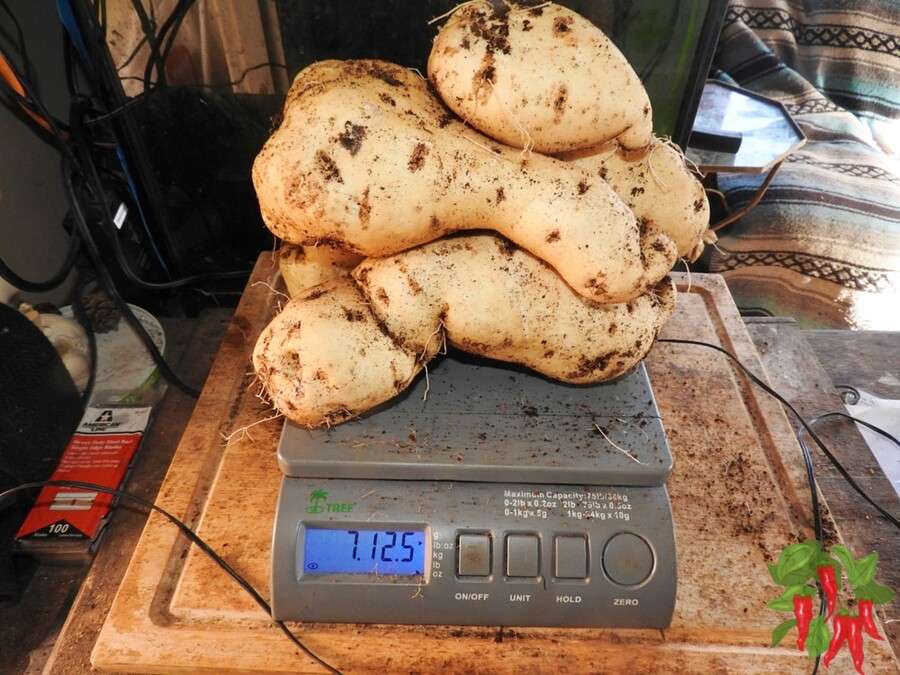
I use only Canna Coco because it is prebuffered and the quality is great. I prefer using Canna Coco Bricks but it is available in bags too.
Perfect for our water-loving sweet potatoes, don’t you think?
Coco coir is a safe place for our sweet potatoes to hang out and soak up all the good stuff they need to grow.
Plus, it never likes to dry out, making it an ideal choice for our hydroponic setup.
The Setup
Alright, folks, it’s time to roll up our sleeves and get our hands dirty, metaphorically speaking, of course, as we’re going hydroponic!
You may be wondering, how exactly does one set up their own hydroponic system at home?
Don’t sweat it, we’ve got you covered. We’re about to delve into all the nitty-gritty of our setup, from our simple yet effective five-gallon buckets to the intricate top-feed drip system.
Let’s embark on this journey together, transforming your space into a thriving hub for your sweet potatoes. Here we go!
Your Hydroponic Haven: Five-Gallon Buckets and Coco Coir
So, let’s begin with the basics. Remember our sweet potato slips tucked away into five-gallon buckets?
Those buckets are now their haven, filled to the brim with coco coir, an ideal hydroponic medium.
It’s kind of like giving them their own personal condos to grow and thrive in.
It is recommended to only use one sweet potato slip per bucket so they have lots of room to grow and the sweet potatoes will be larger that way.
And, the coco coir is just perfect – it’s like a water-loving, nutrient-holding cushion for the plants!
Mastering Water Delivery: The Top Feed Drip System

Next up, we have the lifeblood of our hydroponic setup: the top feed drip system.
It’s like a fancy irrigation system for your sweet potatoes, delivering the right amount of water and nutrients directly to their roots.
And as for the drip tubing, we’ve got a nifty trick up our sleeves. We’re using open-ended tubing instead of emitters.
Why, you ask? Because it’s a charm, it just doesn’t get plugged up!
The Unsung Hero: FloraFlex Manifold and Tubing Setup

And do you know what’s the hero behind our top feed drip system? It’s the FloraFlex manifold and tubing setup.
We have two manifolds, each with eight tubes coming out – imagine an octopus and you’re on the right track.
With four 5-gallon buckets, each has four drip outlets, ensuring a smooth and even distribution of water and nutrients.

Timed to Perfection: Feeding and Watering Schedule
With the setup in place, let’s talk about feeding and watering.
Our handy pump, on a timer, makes sure the plants get a generous 3-minute watering session thrice a day.
It’s like a well-scheduled spa treatment for your sweet potatoes, only with water and nutrients instead of facials and massages!
The Nutrient Storehouse: The 20-Gallon Reservoir and Jacks Nutrients
Last but not least, we have our nutrient storehouse, a 20-gallon reservoir loaded with Jacks Nutrients, following the 3-2-1 formula.
This is a 3 part system using 3 parts Jacks Hydroponic Nutrients, 2 parts Calcium Nitrate and 1 part Epsom Salts (available at any drug store)
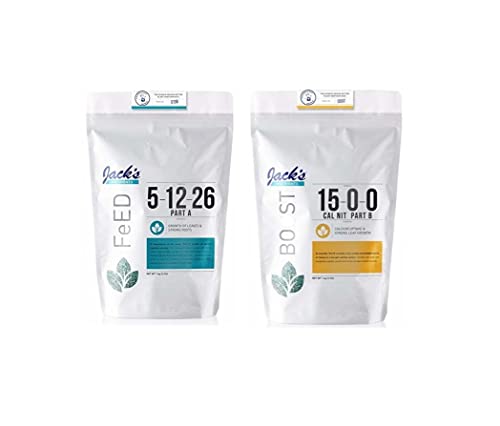
These nutrients are an absolute bargain, they work wonders and are even used in commercial greenhouses.
All the essential goodies our sweet potatoes need are here, ready to be delivered straight to their roots!
Lighting and Automation

Hey there, fellow green enthusiasts! Now that we’ve got our hydroponic setup humming along smoothly, it’s time to shed some light on the subject, quite literally!
Lighting and automation play crucial roles in our sweet potato journey, ensuring our plants get their daily dose of ‘sunshine’ and stay well-hydrated, all while you can sit back and watch them flourish.
The HLG 600 is top of the line and will easily cover a 4×4 area. It was designed to grow cannabis but it is expensive. The Spider Farmer SF200O is a quality alternative for a 2×4 area.
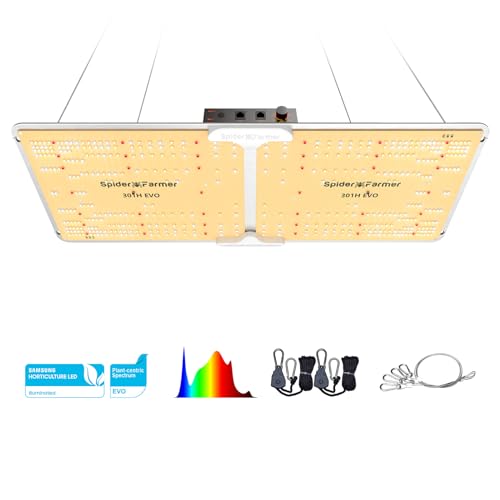
So, are you ready to illuminate your hydroponics knowledge and explore how automation can turn your setup into a nearly self-sustaining sweet potato factory? Let’s dive right in!
Meet the Sunrise: The Automated Light System
Let’s kick things off with our automated light system. Just like clockwork, it ticks away, giving our sweet potatoes a solid 12 hours of light each day.
It’s our very own mechanical sunrise and sunset! Set on a timer, it ensures our plants get their daily dose of light, crucial for their growth, without us having to lift a finger. Pretty neat, right?
Keeping Things Flowing: Minimal Maintenance
The best part about our setup? It requires minimal maintenance. With everything automated, all you have to ensure is that the reservoir stays full. That’s it!
It’s as simple as keeping an eye on the water level, topping it up when necessary, and letting the automated system do the rest. You’re free to sit back, relax, and watch your sweet potatoes thrive!
Star of the Show: The HLG 650R LED Light
Speaking of lights, let me introduce you to the star of our setup: the HLG 650R LED light. It is very similar to the HLG 600 but does not seem to be available anymore.
This powerhouse of a light doesn’t just shine, it dazzles! Its potency goes above and beyond our requirements for the grow closet, meaning we actually have to dial it down a notch.
But boy, does it deliver when it comes to aiding plant growth!
Light Up Right: Choosing the Perfect Grow Light
So, how do you pick the perfect light for your grow space? Light is the lifeblood of any indoor garden, but it’s not one-size-fits-all.
Remember, our HLG 650R LED light is pretty powerful, so a closet or a small grow tent may not need something this intense.
The key is to consider your grow space’s size and the light’s output.
This light could cover a 4×4 to 5×5 space easily and although it is dimmable you probably won’t need a light this large.
Don’t worry, we’ll walk you through how to figure this out in another article. After all, we’re all about keeping things bright and happy here!
Possibilities Beyond Sweet Potatoes
Greetings, aspiring indoor gardeners! Are you enjoying our hydroponic sweet potato adventure?
Well, hold on to your gardening gloves because we’re about to expand your horizons even further.
Yes, hydroponics is awesome for sweet potatoes, but guess what? It’s not just limited to them.
A world of leafy greens, vibrant flowers, and even more veggies can thrive in your hydroponic system too!
So, ready to explore the endless possibilities that extend beyond our beloved sweet potatoes?
Let’s step into this expansive hydroponic universe together!
Broaden Your Hydroponic Horizons: Beyond Sweet Potatoes
Fellow growers, there’s an entire hydroponic world out there just waiting for you to explore!
While we love our sweet potatoes, they’re just the beginning of this exciting journey.
Imagine cultivating crisp lettuce, fragrant herbs, colorful peppers, flourishing tomato plants, or even vibrant flowers, all hydroponically grown in your own home.
At this point in time I actually have some Dahlia tubers alongside my sweet potatoes.
The possibilities are endless! If you can dream it, you can probably grow it hydroponically. So, why not give it a try?
A Leaf from My Book: Former Cannabis Cultivation
And if you’re wondering about my hydroponics experience, well, let’s just say I’ve had an interesting journey.
You see, there was a time when I was cultivating cannabis in my grow closet. Yep, you heard right – cannabis!
But now, I’ve traded in my cannabis leaves for a variety of other green, leafy plants.
And guess what? I’m still using the same hydroponics equipment. It just goes to show, once you’ve got the basics down, you can grow pretty much anything hydroponically!
The Next Chapter: Peek into the Closet Setup
The green curtain is about to rise, folks! Next up, we’re about to take you on a grand tour of our grow closet, where our sweet potatoes have been happily growing.
I can already hear your eager questions: What’s in there? How is it set up? What makes it so special?
I promise we’ll delve into all the specifics, revealing every nook and cranny, in our upcoming content.
So, stay tuned for that behind-the-scenes look!
A Green Promise: More In-depth Information Coming Up
And that’s not all. We’re committed to making your hydroponics journey as smooth and informative as possible.
So, in our future articles, we’ll dive deeper, exploring topics like the perfect light for your grow space, nurturing other vegetables, and much more.
We’ll keep the information flowing, aiming to equip you with all the knowledge you need to make your hydroponic garden flourish.
So, keep those gardening gloves close, because our green adventure is far from over!
Hydroponic Sweet Potatoes At One Month
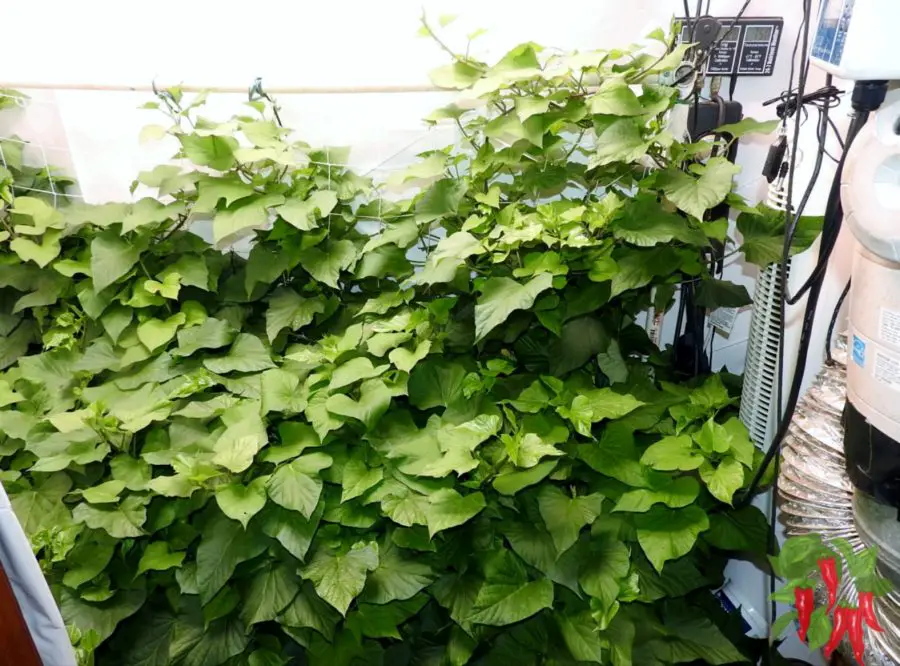
Here are my sweet potatoes at one month. They are in 5-gallon buckets filled with coco coir and watered with a top-feed drip system.
Growth is very good and they are very healthy. At some point, I may need to start trimming vines back. Right now it’s fun watching them take over the closet.
🍠 Growing Hydroponic Sweet Potatoes FAQs
Can sweet potatoes be grown hydroponically?
Yes, sweet potatoes can be grown hydroponically. I’m growing Okinawan purple sweet potatoes in 5-gallon buckets filled with coco coir. An automated top-feed drip system delivers water and nutrients directly to the roots. The plants have shown excellent vine growth, although developing the edible storage roots is the real test of the system.
Can you grow sweet potatoes in straight coco coir?
Yes. I grow my sweet potatoes in straight Canna Coco, which is a buffered coconut coir growing medium. It holds moisture while maintaining air space around the roots. Because coco coir contains very few nutrients, I supply everything the plants need through my hydroponic nutrient solution. You don’t have to add potting soil to grow sweet potatoes this way.
What nutrients do hydroponic sweet potatoes need?
Sweet potatoes need nitrogen, phosphorus, potassium, calcium, magnesium, and essential micronutrients. I use Jack’s 3-2-1 hydroponic nutrient formula, which combines Jack’s Hydroponic fertilizer, calcium nitrate, and Epsom salts. The important thing is providing complete nutrition without excessive nitrogen, which can encourage vine growth at the expense of storage root development.
How often should you water sweet potatoes growing in coco coir?
I use a top-feed drip system that runs for three minutes, three times daily. This keeps the coco coir supplied with nutrient solution while allowing excess water to drain. Your watering schedule may be different depending on container size, plant growth, temperature, and irrigation flow rate. Coco coir works well with frequent irrigation as long as the roots receive enough oxygen and the containers drain properly.
What pH is best for hydroponic sweet potatoes?
For my coco coir hydroponic system, I target a nutrient solution pH of 5.8–6.2. This slightly acidic range works well with the hydroponic nutrients I use. Check the reservoir regularly because pH can change as plants absorb nutrients and water.
How much light do hydroponic sweet potatoes need indoors?
Sweet potatoes need strong light for healthy growth. I’m using an HLG 650R LED grow light on a 12-hour schedule. Because it’s a powerful fixture, I dim it to suit my grow closet. The amount of light your plants need depends on the fixture, growing area, and distance from the canopy. Strong, consistent lighting is especially important when growing sweet potatoes indoors.
Can you grow sweet potatoes in 5-gallon buckets?
Yes. I’m growing one Okinawan purple sweet potato slip per 5-gallon bucket. The buckets provide room for the roots while fitting into my indoor grow closet. However, container size can limit the number and size of storage roots. Larger containers may provide more growing space, but a 5-gallon bucket is a practical starting point for experimenting with hydroponic sweet potatoes.
How long does it take to grow hydroponic sweet potatoes?
Sweet potatoes generally need around 90–150 days to produce harvestable storage roots, depending on the variety and growing conditions. Hydroponics doesn’t automatically shorten that growing period. My plants showed vigorous vine growth during their first month, but that doesn’t tell us how large the eventual harvest will be. Warm temperatures, adequate light, balanced nutrition, and sufficient root space all play a part.
Hydroponic Sweet Potatoes Final Thoughts
And just like that, we’re wrapping up our hydroponic sweet potato adventure, my fellow plant enthusiasts.
We’ve planted, nurtured, and learned so much together! But remember, this is not the end.
Rather, it’s the start of many more green ventures that we’ll embark upon together.
As we conclude today’s post, let’s look back at our journey, relish our learnings, and gear up for the exciting road ahead.
After all, the world of hydroponics has so much more in store for us. Ready to keep growing? Let’s wrap things up for now!
Celebrating Our Sweet Potato Success
Before we wrap things up, let’s take a moment to appreciate our thriving sweet potato plants.
They’ve started off strong, and they’re only going to get better from here!
And the best part? We’ve done this together. This green journey has been nothing short of incredible, and it’s all thanks to our hard work, dedication, and of course, our lovely sweet potato plants!
Keep Growing, Keep Shining: Words of Encouragement
To all my fellow gardeners out there, remember that every leaf, every root, and every flower you nurture is a testament to your green thumb.
So, keep gardening, keep exploring, and keep it green. There’s a whole world of plant wonders waiting to be discovered, and you’ve got the best tool in your hand, your passion for gardening.
So, here’s to many more days of joyful gardening!
Signing Off, Until Next Time
And with that, it’s time for me to say goodbye…for now!
It’s been wonderful sharing this hydroponic sweet potato journey with you.
I hope you’ve enjoyed it as much as I have, and I can’t wait for our paths to cross again in the world of hydroponics.
Until then, keep your green thumb waving high, and happy gardening! See you all soon, folks!
See on Amazon 10 Purple Sweet Potato Slips – Cuttings – Okinawa Sweet Potato
Read more: How To Grow Vegetables In A Closet For Beginners
Read more: Using A Grow Tent For Vegetables
💧 Indoor Hydroponic Gardens
Want fresh veggies year-round in small spaces? Explore beginner-friendly hydro systems, closet grow setups, self-watering hacks, and gear reviews that make indoor gardening simple.
-
- 🚪 How to Grow Vegetables in a Closet
- 🧰 How to Turn a Closet into a Grow Room
- 🏕️ Using a Grow Tent for Vegetables
- 🎪 Are Grow Tents Worth It for Vegetables?
- 🏢 Apartment Kitchen Garden: Smart Space Ideas
- 🏙️ Hydroponic Apartment Garden: How to Start
- 🥔 Growing Sweet Potatoes Indoors
- 🧱 Small Closet Grow Room Setup
- See all articles in our Indoor Hydroponic Gardens category
📚 References & Further Reading
- 🍠 Oklahoma State University Extension – Sweet Potato Production – Covers growing temperatures, sweet potato slips, irrigation, fertilization, root development, and harvesting.
- 🌱 University of Georgia Extension – Sweet Potato Production and Pest Management in Georgia – Explains storage root formation, the importance of growing conditions, and why healthy vines don’t always mean a good harvest.
- 💧 Penn State Extension – Hydroponics Systems and Principles of Plant Nutrition – Explains hydroponic growing systems, essential plant nutrients, and using soilless media such as coconut coir.
- 🌿 University of Georgia Extension – Growing Guide: Sweet Potatoes – Practical guidance on starting slips, rooting cuttings, planting, and watering.
 Steve S. is the creator of